




















Poland – lost places, remnants of WW II, most of them freely accessible. Ugly concrete constructions turned into street art. And a few pretty dark chapters of history. Probably not the odd tourist path.
A trip thru northern Poland, from Germany to Lithuania – Poznan, Torun, Gdansk, and Masuria.
We’re walking along the gravel road thru the beautiful pine forest, singing birds abound, the leaves rustle under our feet. We have the impression it’s a pretty untouched landscape with very little influence from human activities. Among us are a few families with their unruly kids and a few cyclists – a peaceful Sunday afternoon.
But also some guys with buzz cuts, in black clothes, arms and necks heavily tattooed. Definitely not nice tattoos.
After a few 100m we reach an old concrete construction surrounded by a huge hill of solid earth. An entrance with a signboard telling us it’s a silo. A gate leads to the middle of this strange concrete cylinder, but we quickly realize it wouldn’t be easy to enter. The whole corridor leading in is some meters deeper and mostly submerged. Ok, we have to climb up this artificial, overgrown hill. On top, we look into the construction – a huge cylinder about 30m deep. Google tells us it’s the ruins of an industrial complex erected during WW II to produce tons of nitroglycerine. There are more than a dozen of these silos scattered thru the forest.
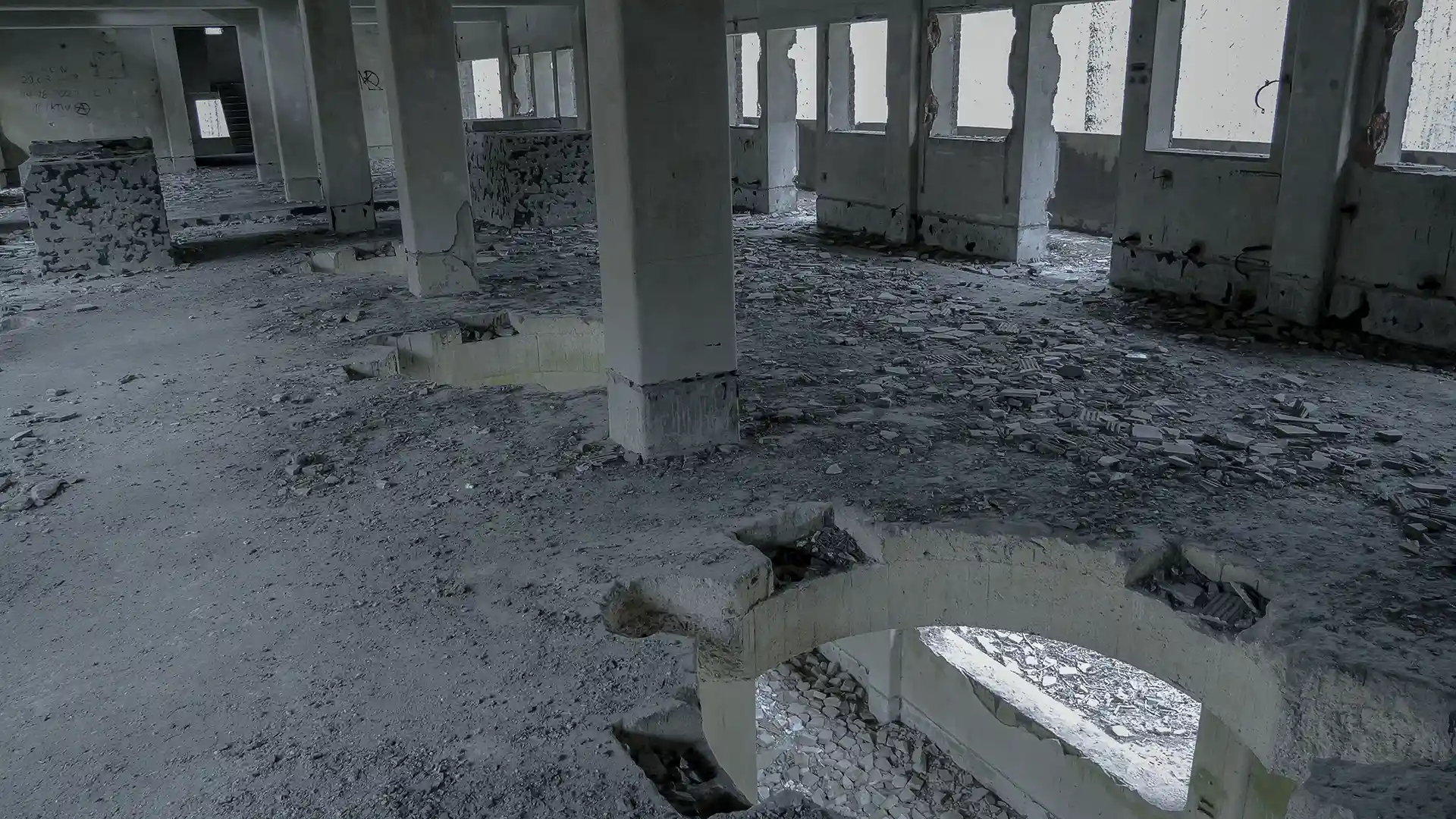
We sneak on, approaching a big decaying multistorey building. From far, it looks like a ramshackle parking garage. A signboard informs us that this was the very place where they produced the explosives.
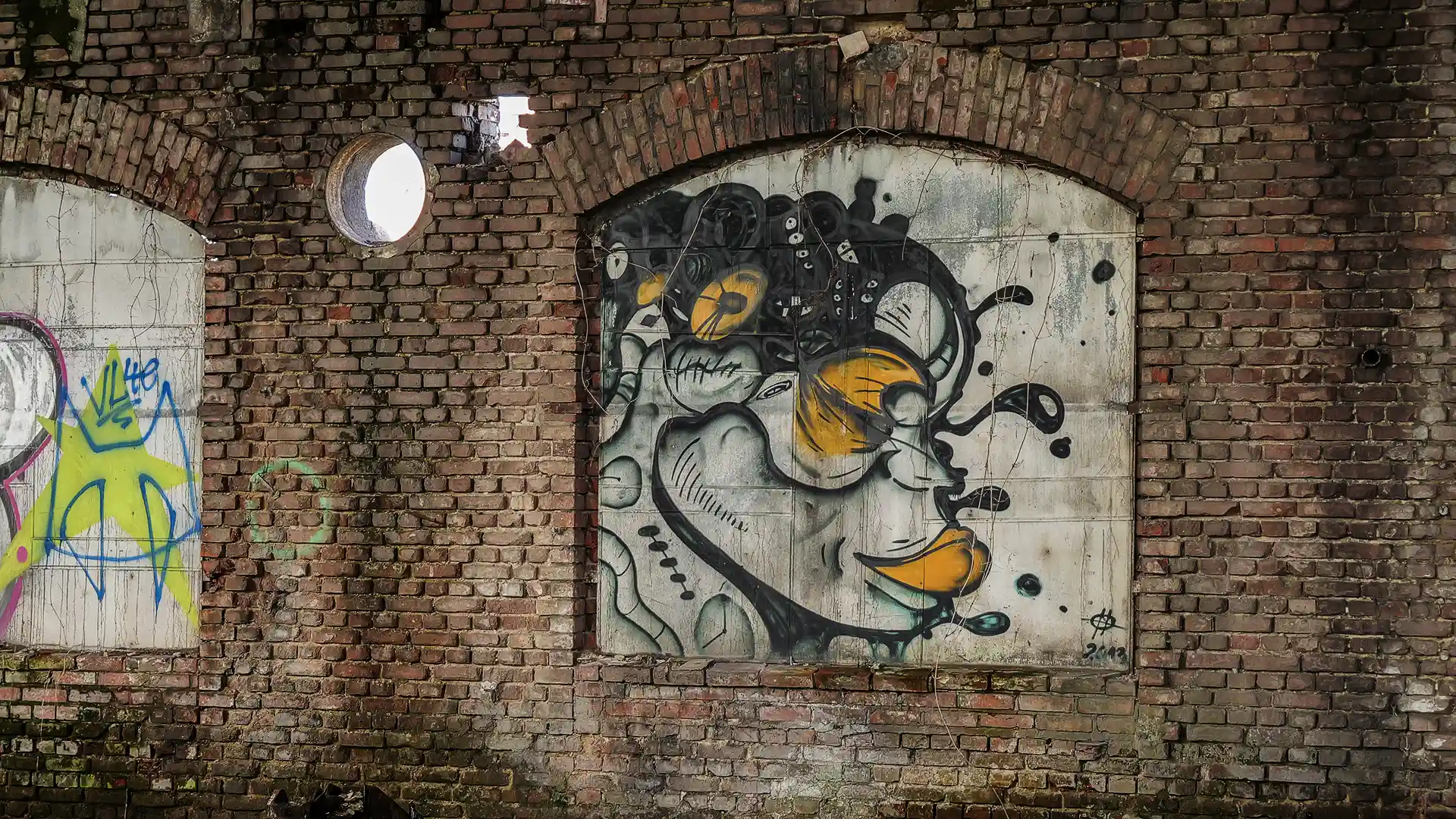
After WW II, the Russians removed all the equipment for their own use. Just the concrete construction remained. We climb up to the roof, carefully avoiding all the holes in the floors, a bit astonished by the texts and artistic “paintings” we discover on the decaying walls. Finally, we’re on the roof – among a group of these black-clothed young men hanging around and drinking beer. An uncomfortable situation. Definitely not the kind of guys we want to interact with, so we quickly leave.
Back to today morning: we left the German town of Pirna, headed towards Poland – and to a pretty different world. True, maybe a visit to the forests of Krzystkovice to see some of the worst periods of German history is not the typical starting point for a visit to this country, but it’s a sad reminder of what has happened.
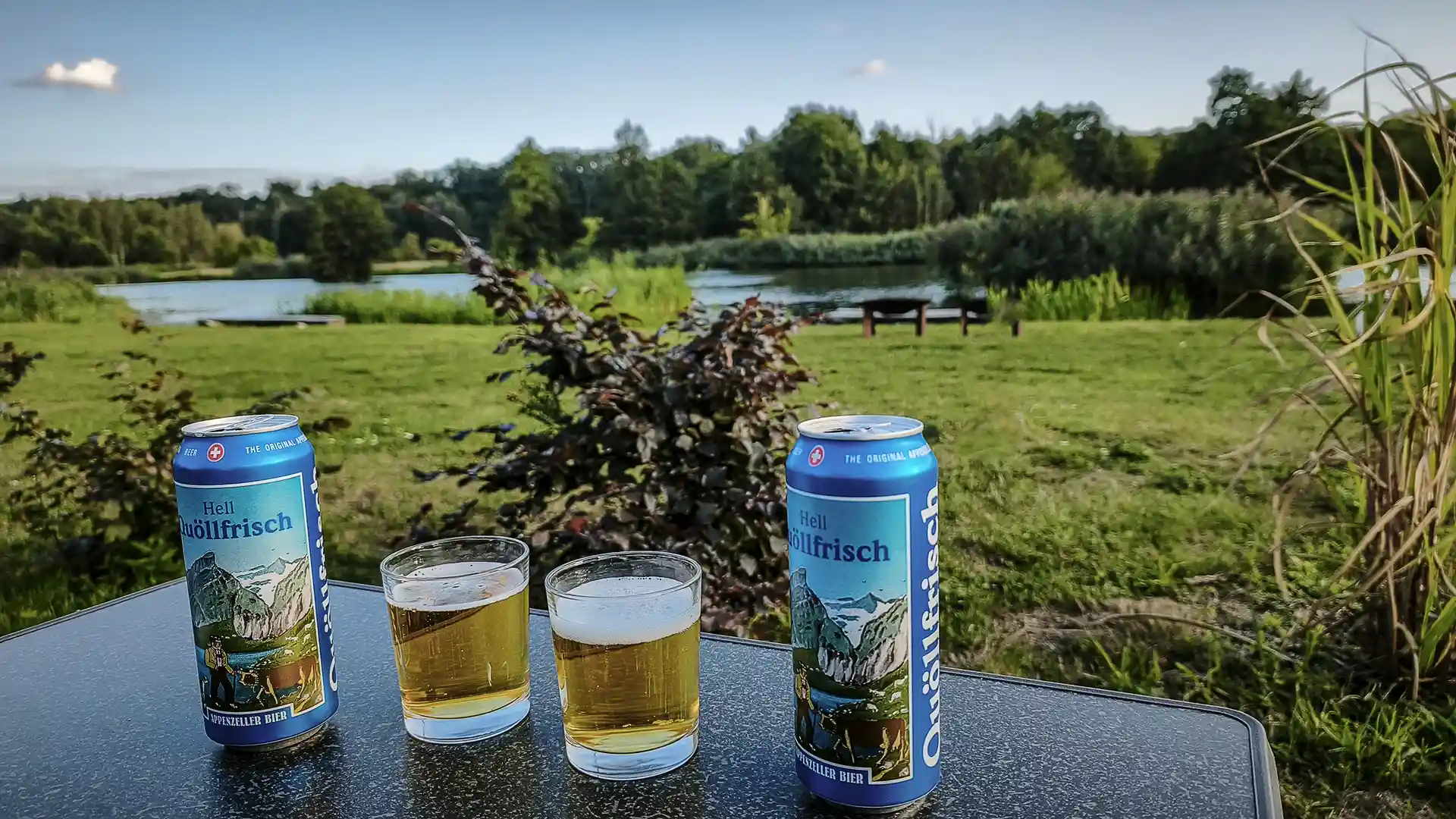
After this rather thought-provoking visit, we head on to experience some of Poland’s magic: a tiny campsite by the Bobr River. Next to nobody there, and the perfect opportunity to recover from the horror of WW II’s weapon machinery.
The next day we’re on our way to Poznan and Torun, and the day after to Gdansk on the Baltic Sea. A pretty long drive thru flat land, farmland on both sides, not much to see.
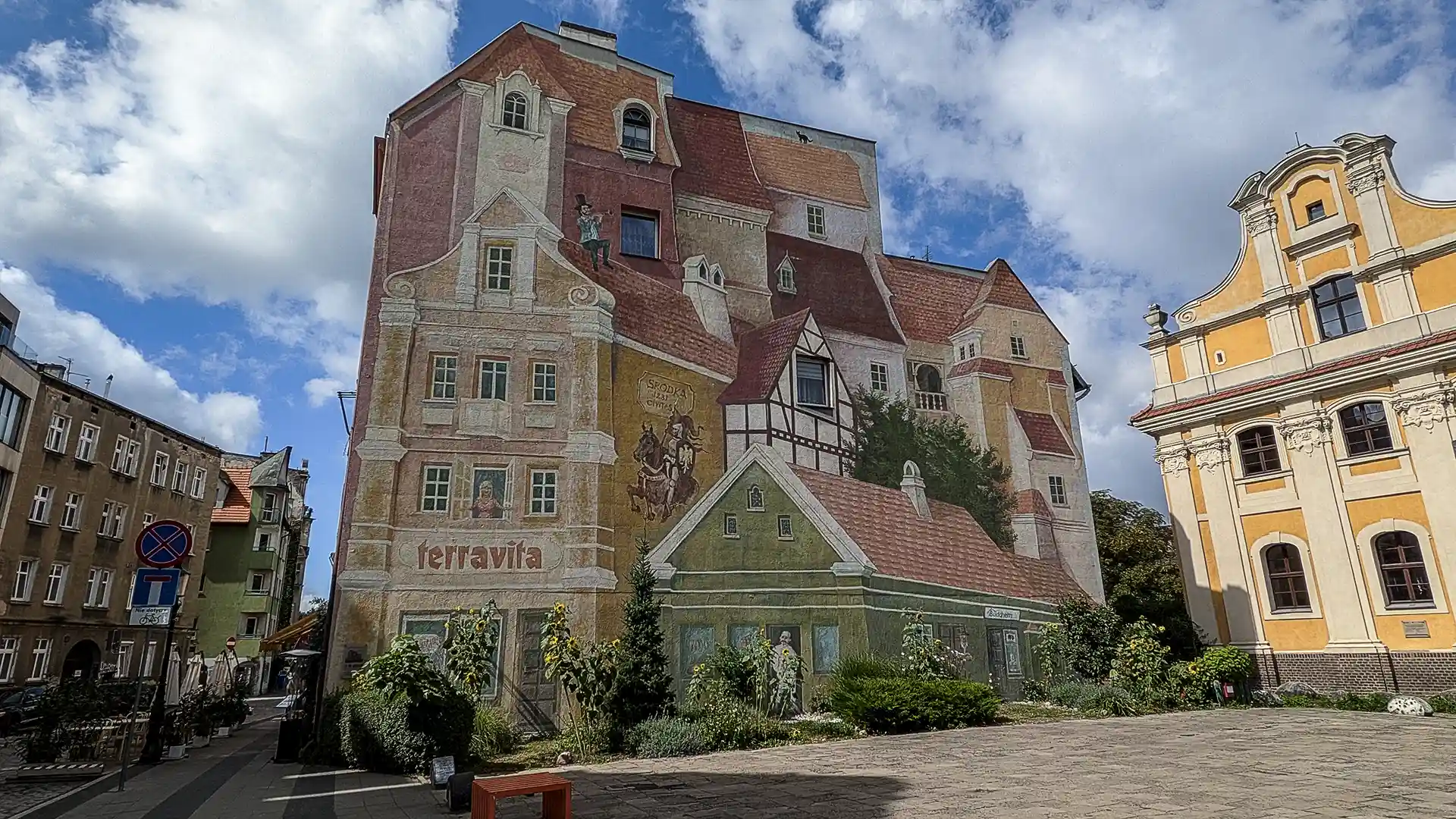
A short visit to Poznan’s main square with its famous colorful merchants’ houses, and their even more famous mural in the Srodka neighborhood .
Then on to Torun. Their old town is a UNESCO Heritage Site. In the evening we have a look at it, followed by a decent, filling Polish dinner.
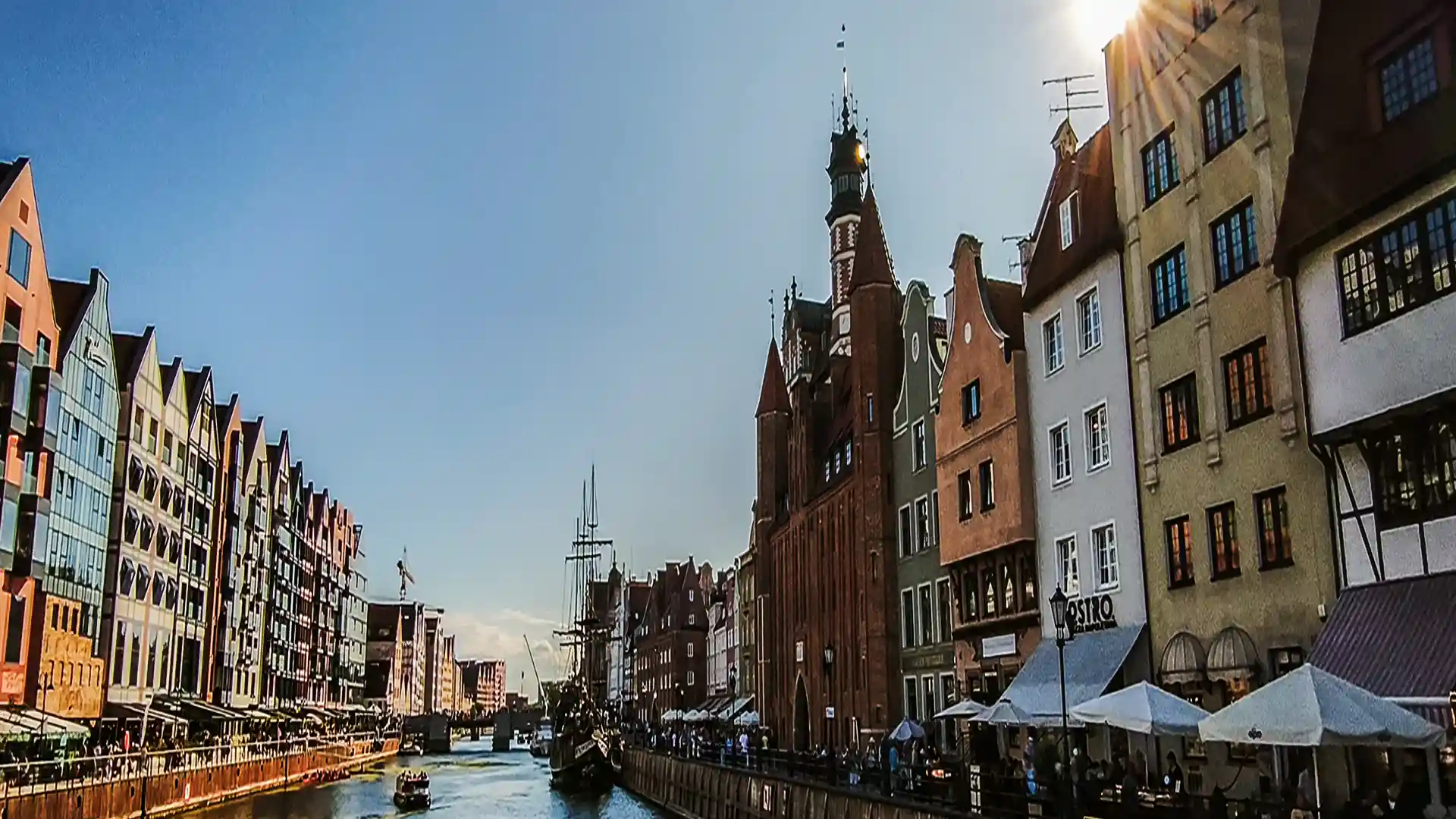
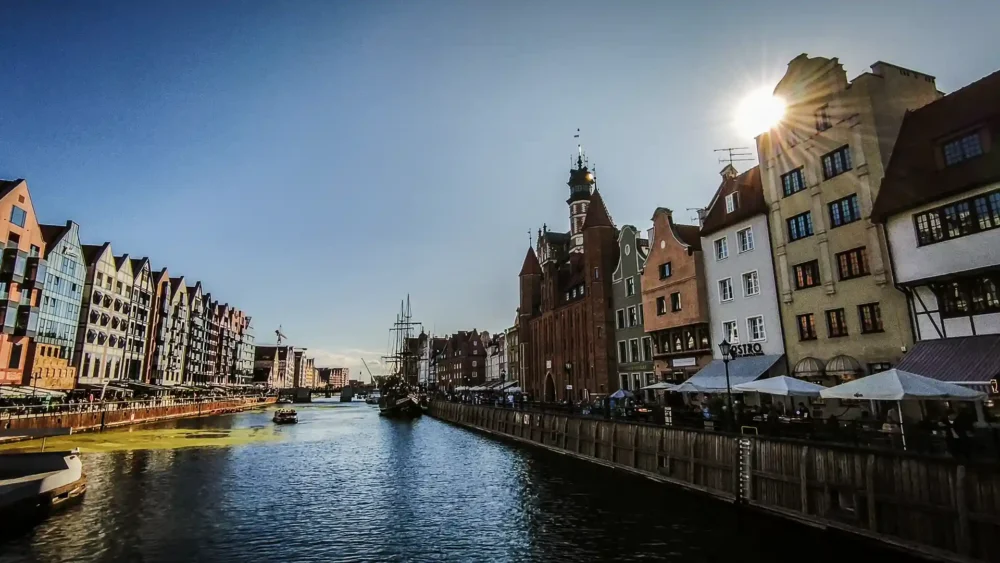
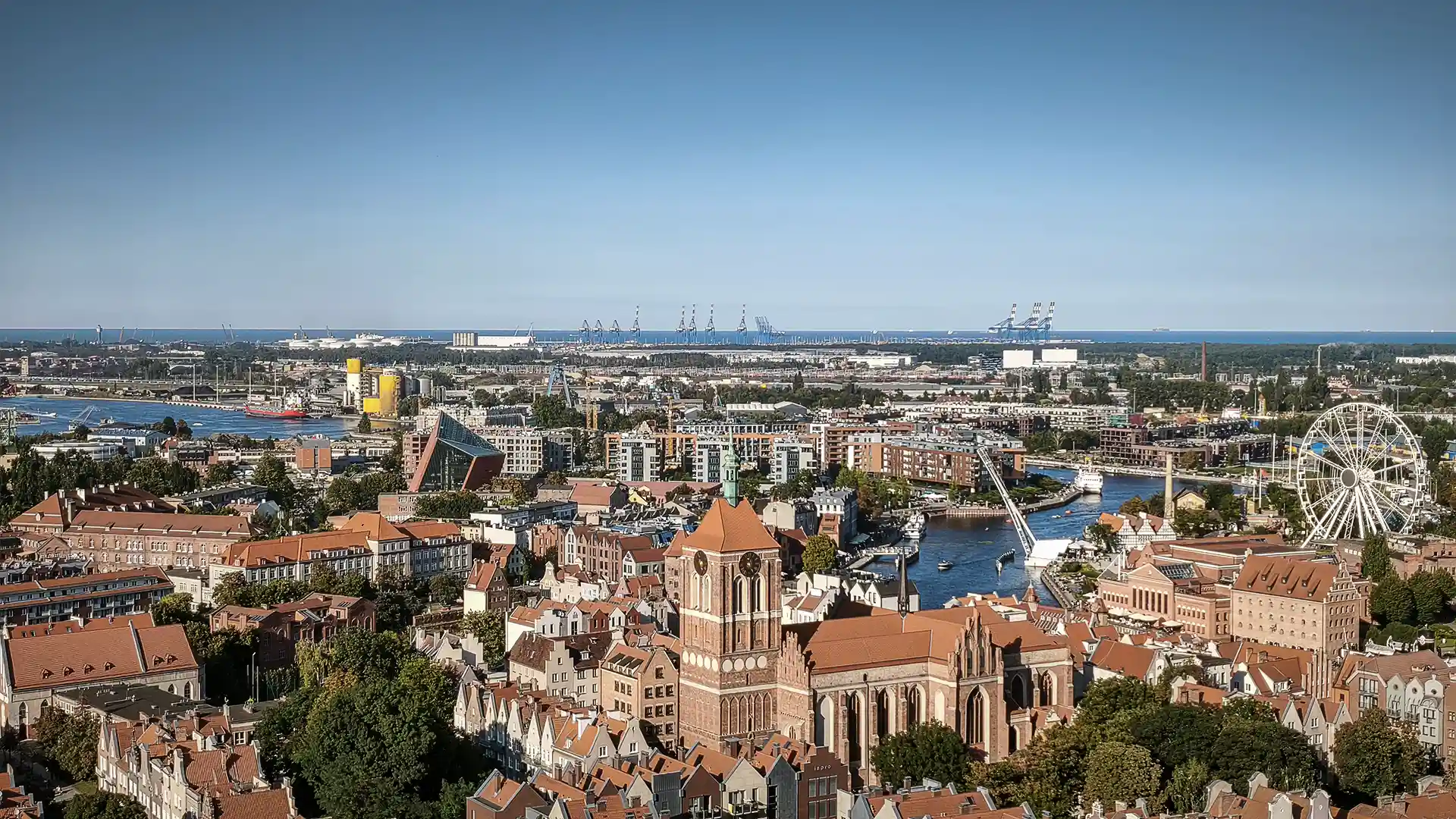
We’re sneaking along Motlawa River, towards Gdansk’s old town. We’re busy reminiscing about our trip to French Polynesia earlier this year, and exchanging how boring it was to get back to ordinary and odd life after that. No wonder, a few days ago we learned that Jenny, part of our Polynesian dream team, will join us for a few days to recover from the cruelties of her normal working routine. Great, happy to go for it.
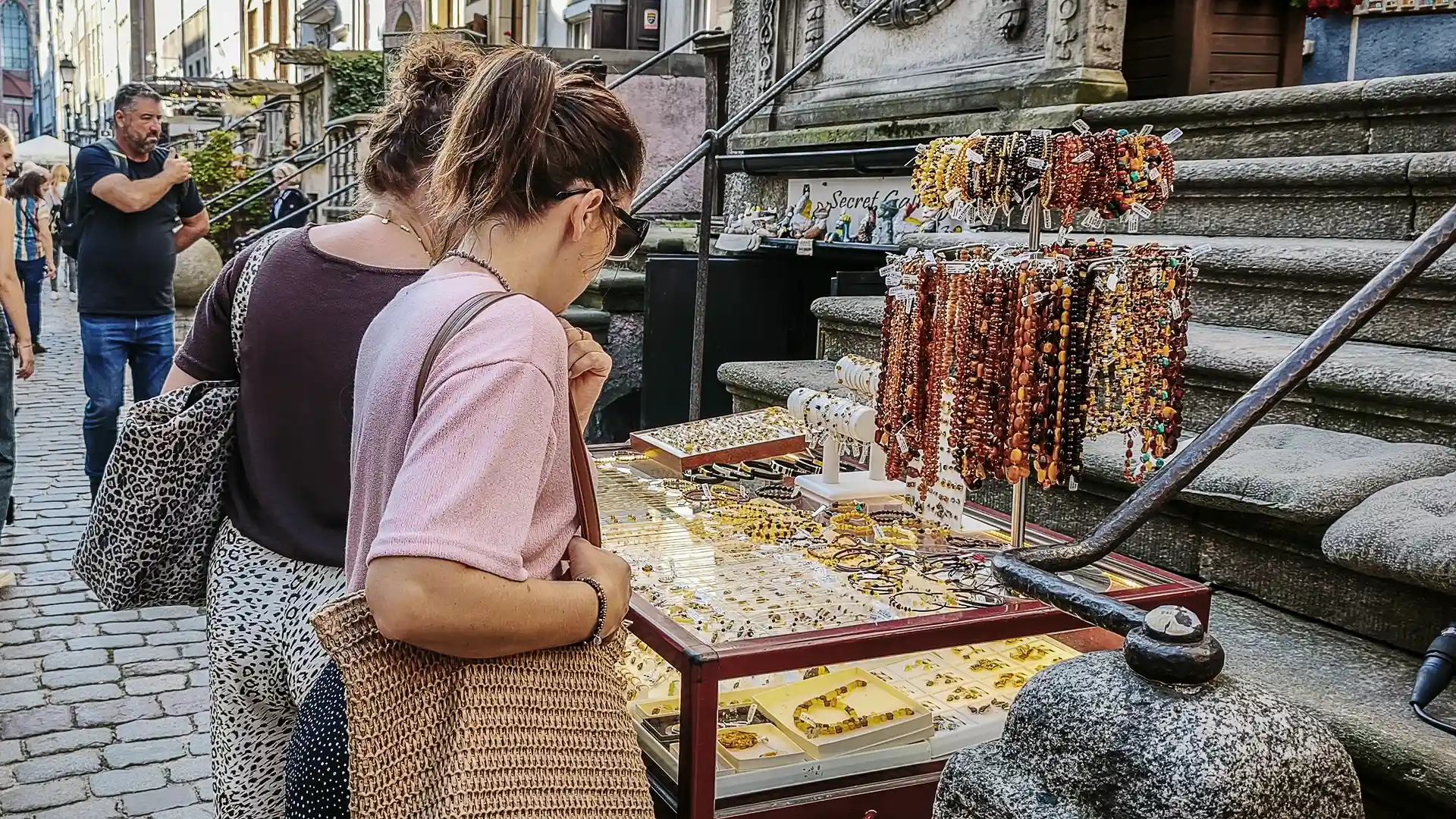
We’re on the typical tourist route thru the town, wondering how many others have the same idea. We’re asking ourselves how much of the amber offered everywhere is simply produced by the Chinese plastic industry.
Finally, we climb up the 430 stairs on the tower of Bazylika Mariacka.
True, they reconstructed the historic buildings beautifully in the decades after their destruction by the Red Army in March 1945.
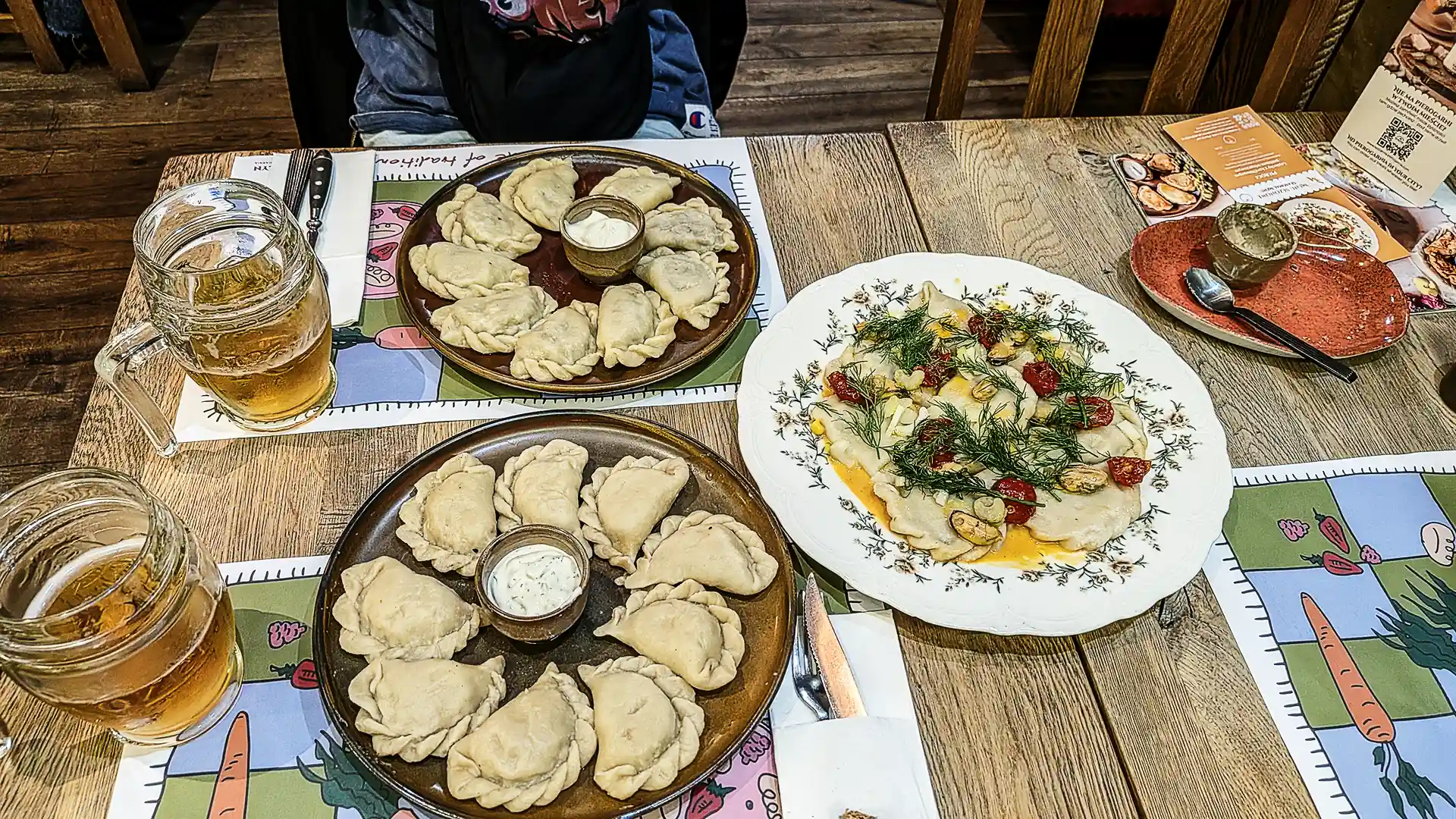
And then, we have a sumptuous dinner with wonderful pierogis (and some beer).
But of course, Gdansk must have more to offer and we have more to explore. But that’s for tomorrow.
Immediately, a pretty unfriendly guy approaches us, shouting “no photos,” and the iron gates of the rundown mechanical workshop close.
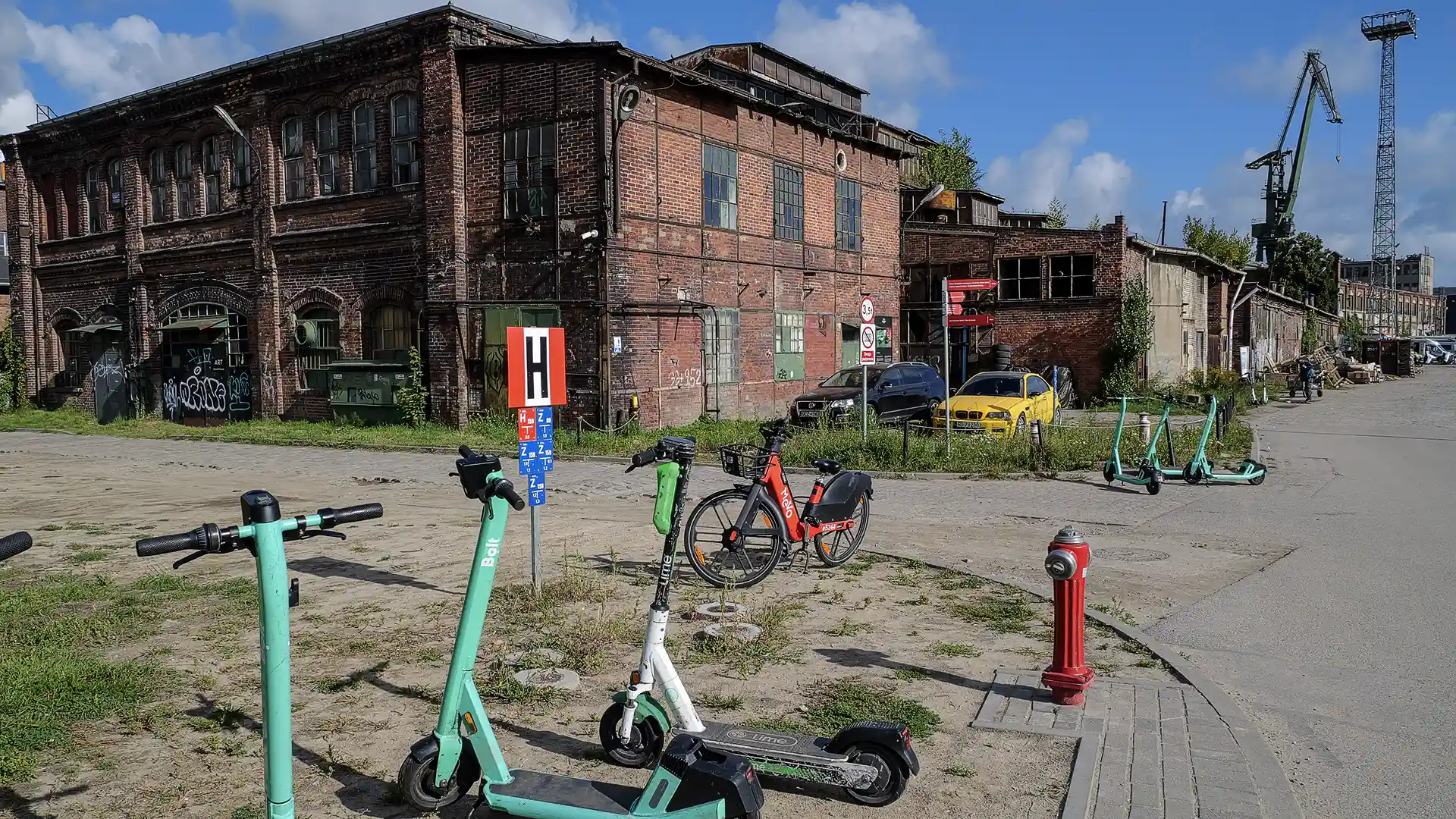
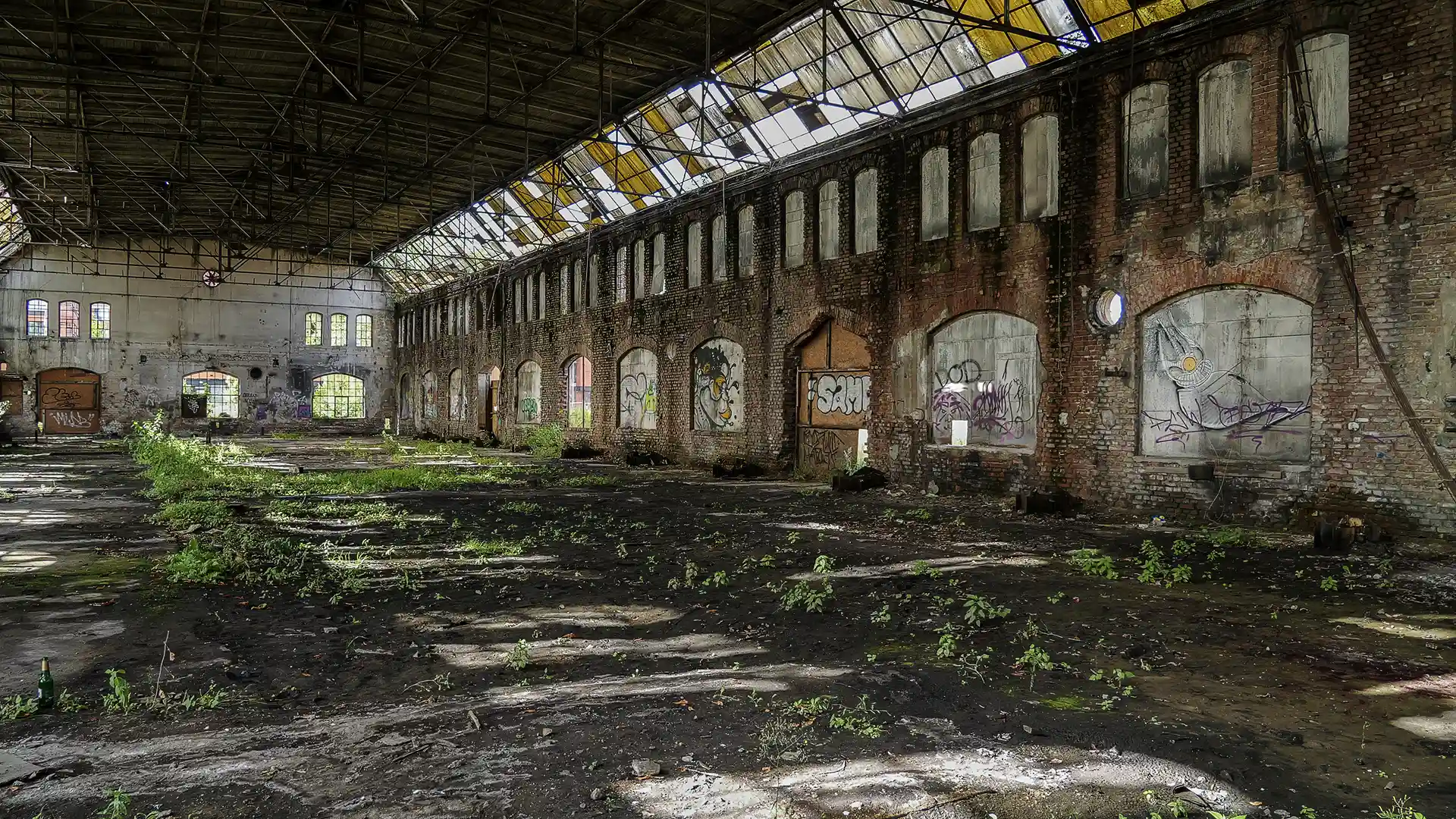
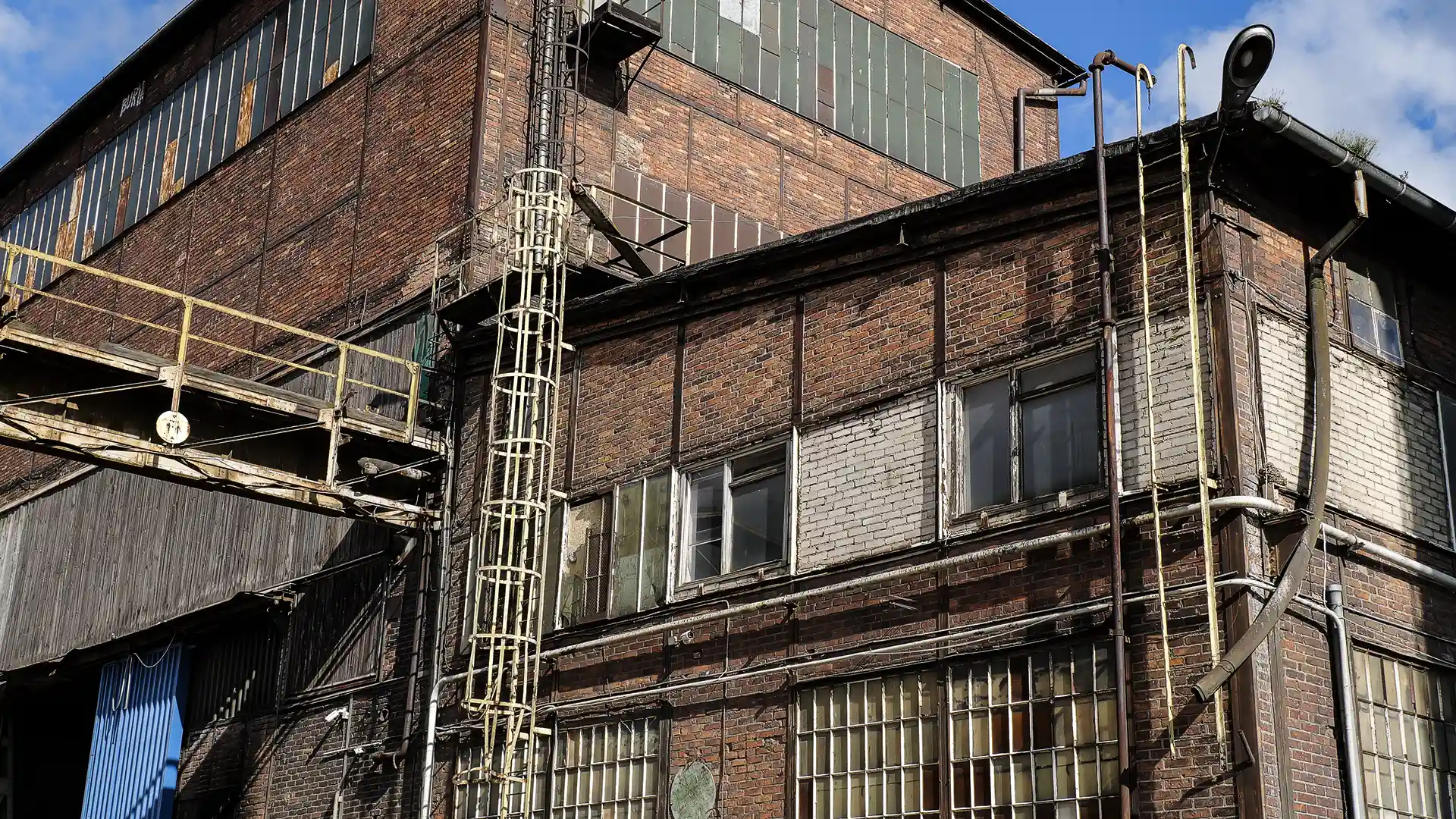
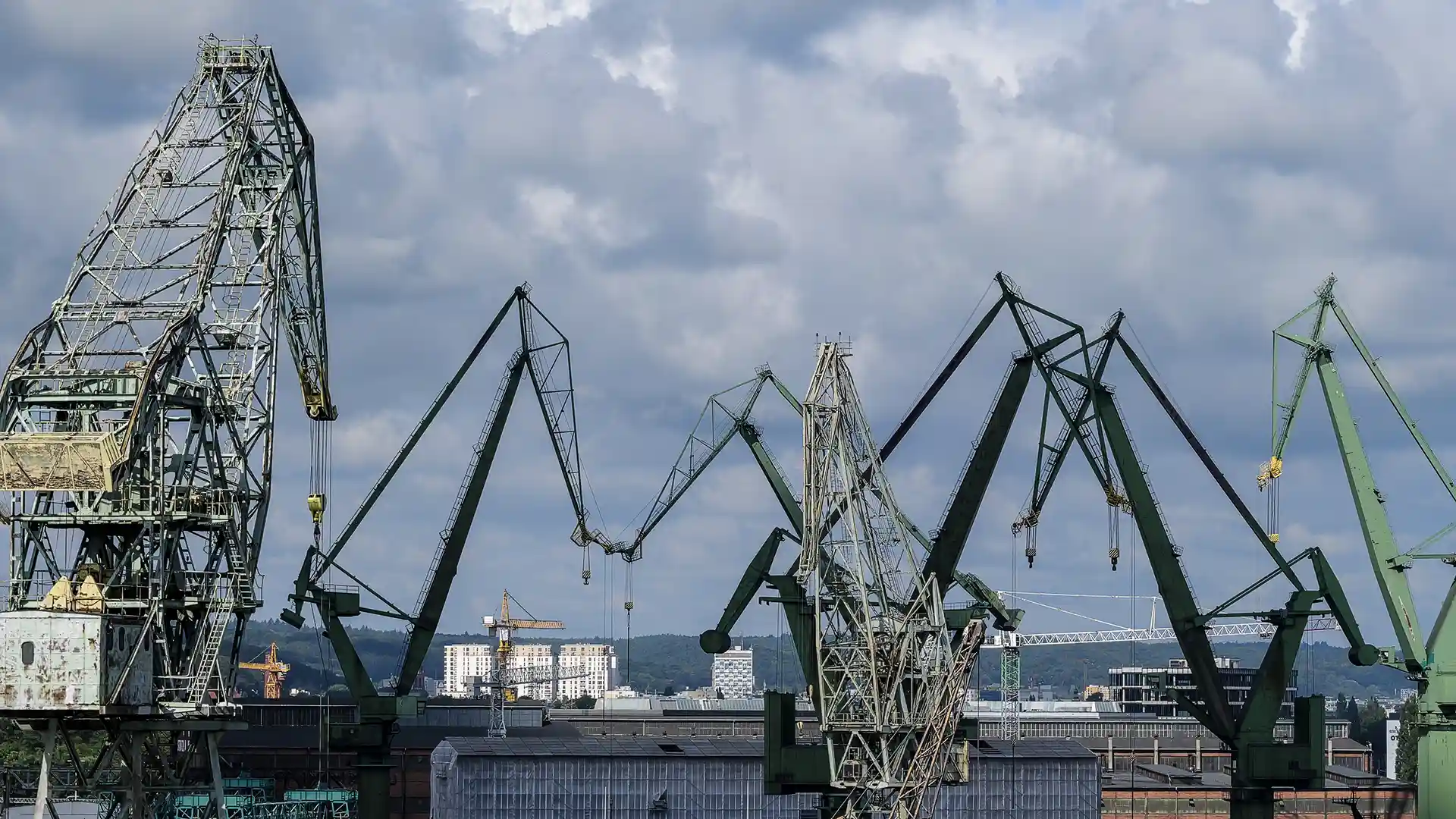
We’re strolling along the decaying buildings of the former Gdansk shipyard. As Google tells us, there’s a walking tour to see the most impressive parts of these monuments of Polish socialism and birthplace of the Solidarność movement Just, it looks like the negotiations between its initiators and dozens of recalcitrant, squatting enterprises have not yet fully succeeded.
Whatever, we stroll along the decaying buildings, carefully watching the potholes in the streets, enter the buildings where we can and leave out the places with grumbling guys. Soon after, Martin tries hard to get this black stuff off his newly bought sneakers. When exploring a huge hall, there’s some blackish stuff on the floor. Of course, we think that’s just mud as part of the roof has broken. Far from that – it’s smelly black oil covering most of the floor, and Martin is standing right in the middle of it. Finally, no problem. Just the sneakers changed color, and maybe there’s the strong smell of oil. But who cares.
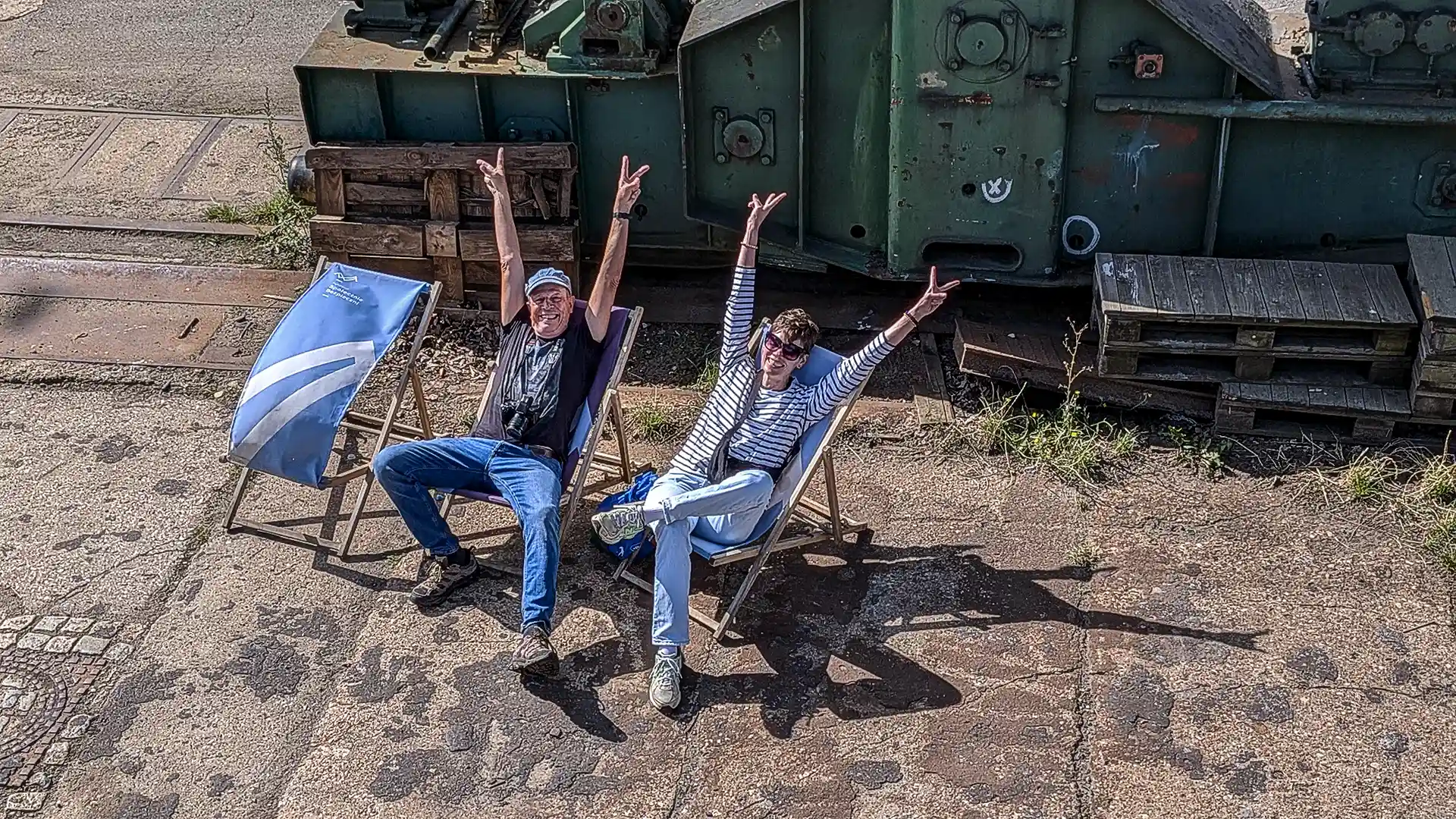
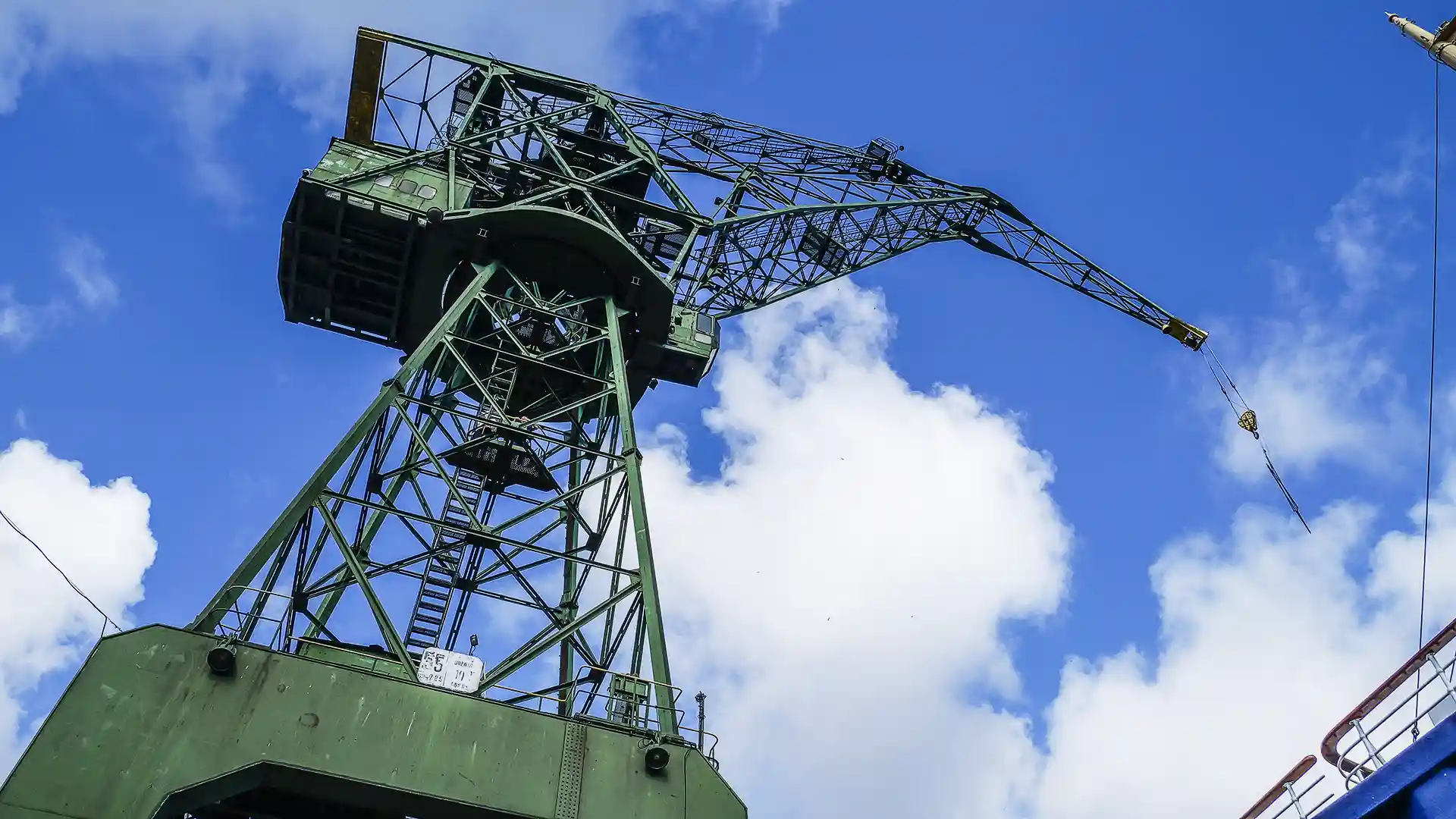
Soon after, we find the highlight of the wharf area: an old rusty crane we can climb for a few Zlotis. Not for the fainthearted, but what a construction, and what a view from the top. And back to earth, we’re already in the town’s party alley. Really cool place, just a bit annoying that it’s not yet an evening during the weekend and everything is closed by now. Let’s put it on the bucket list for next time in Gdansk.
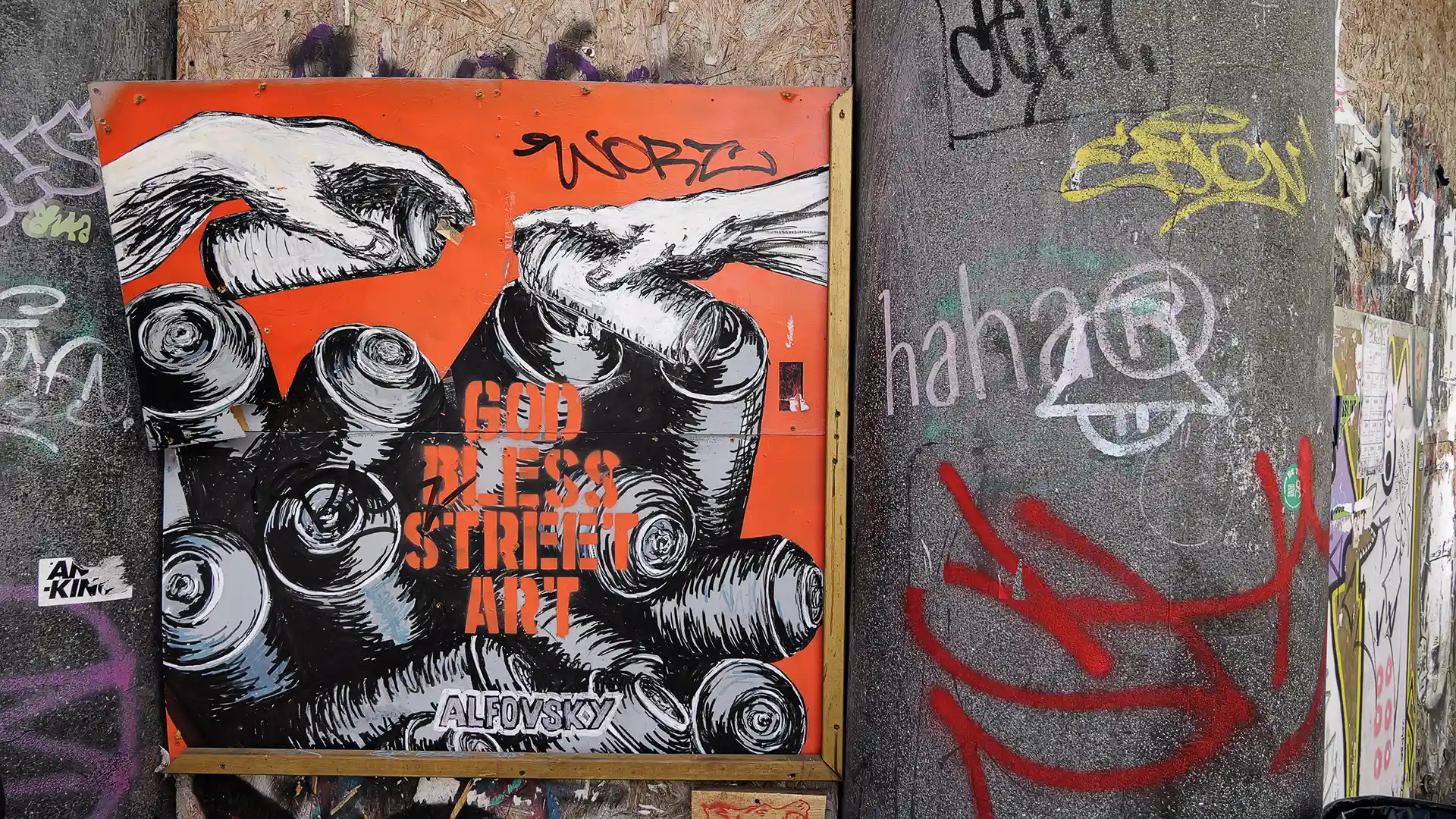
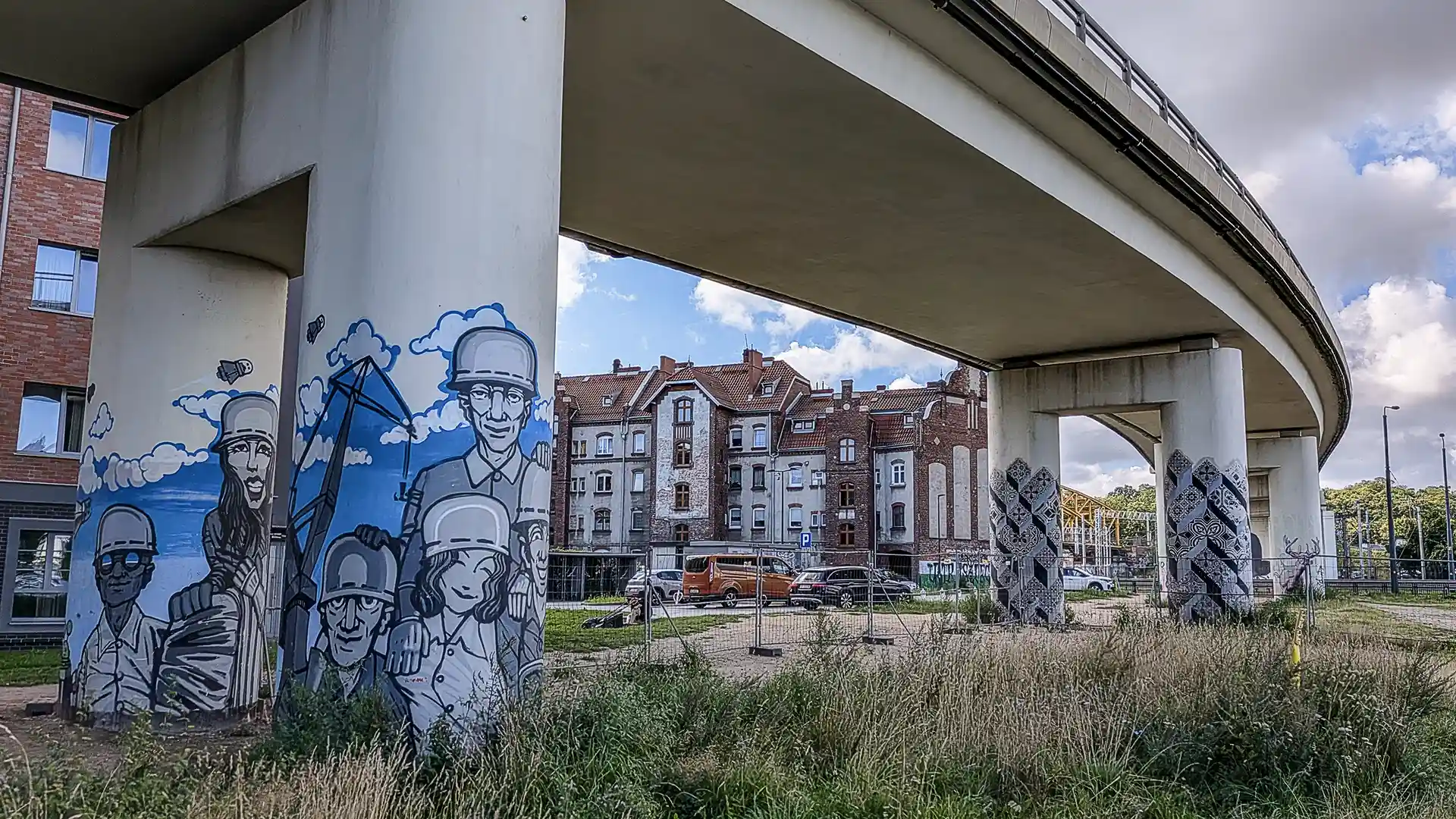
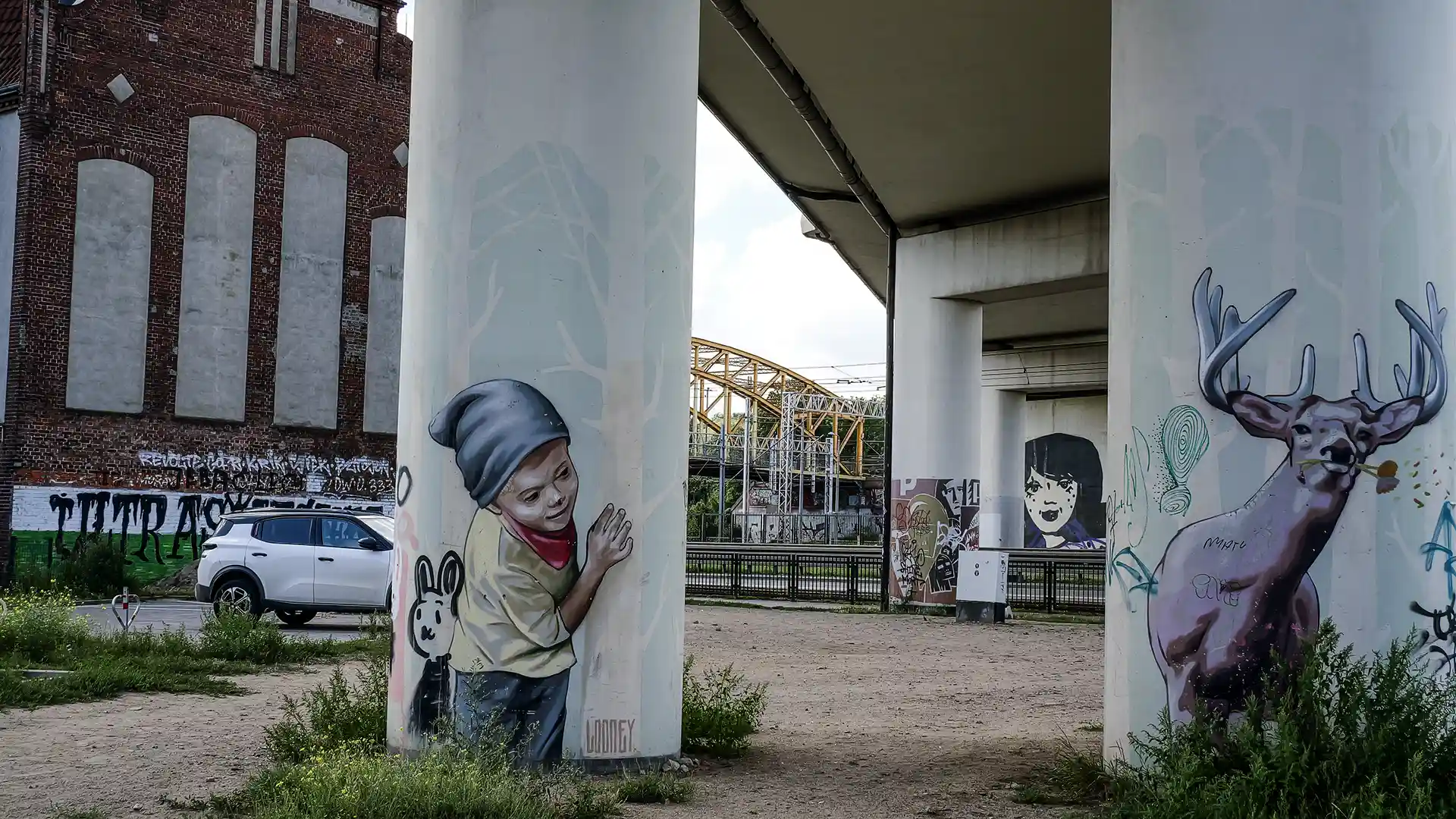
An ordinary highway bridge. Ugly as usual – still, the piers are something special. As everywhere in Poland, constructions that may not look cool enough are getting beautified with street art. Guys in Swizzyland, take an example from that.
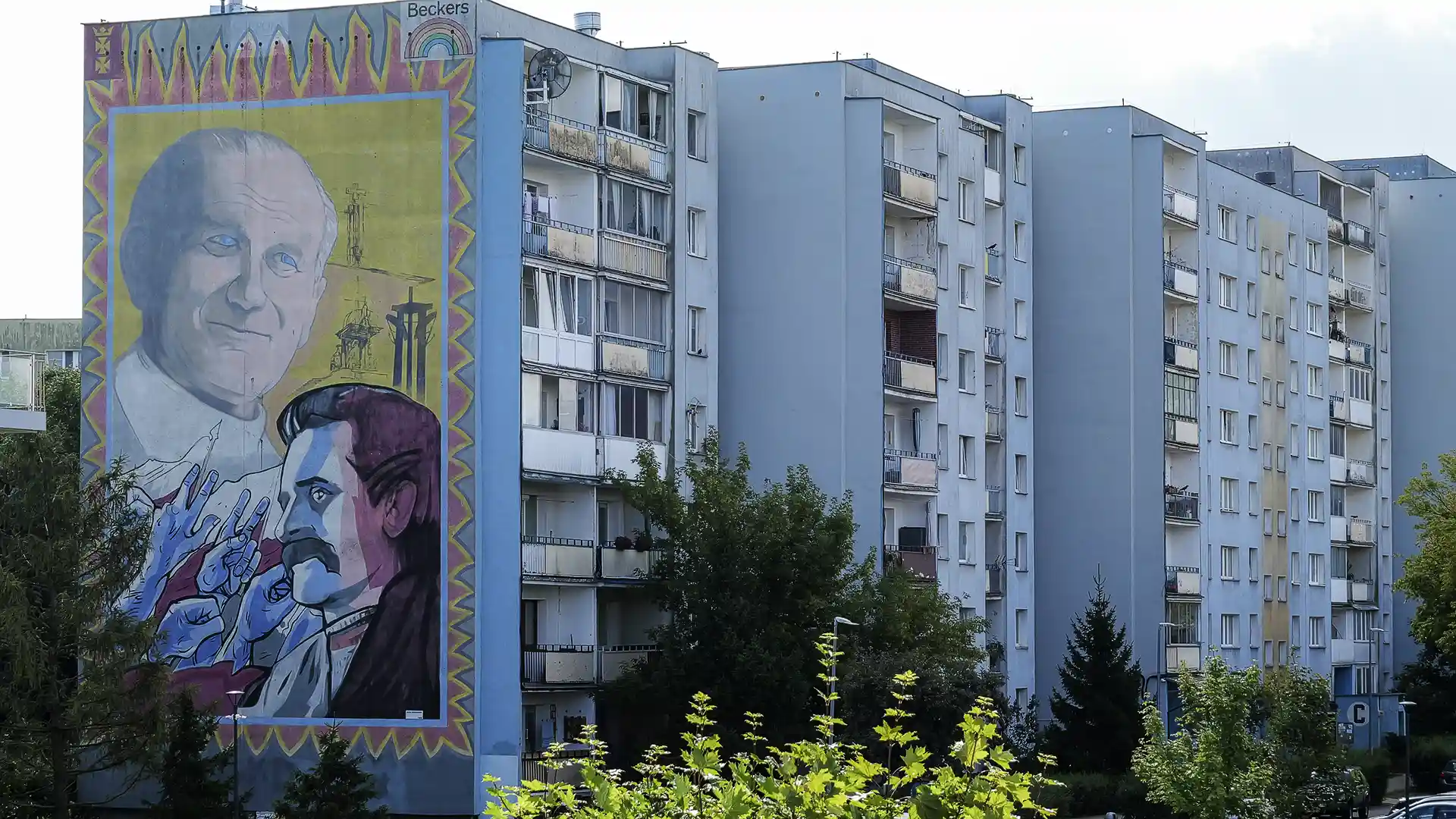
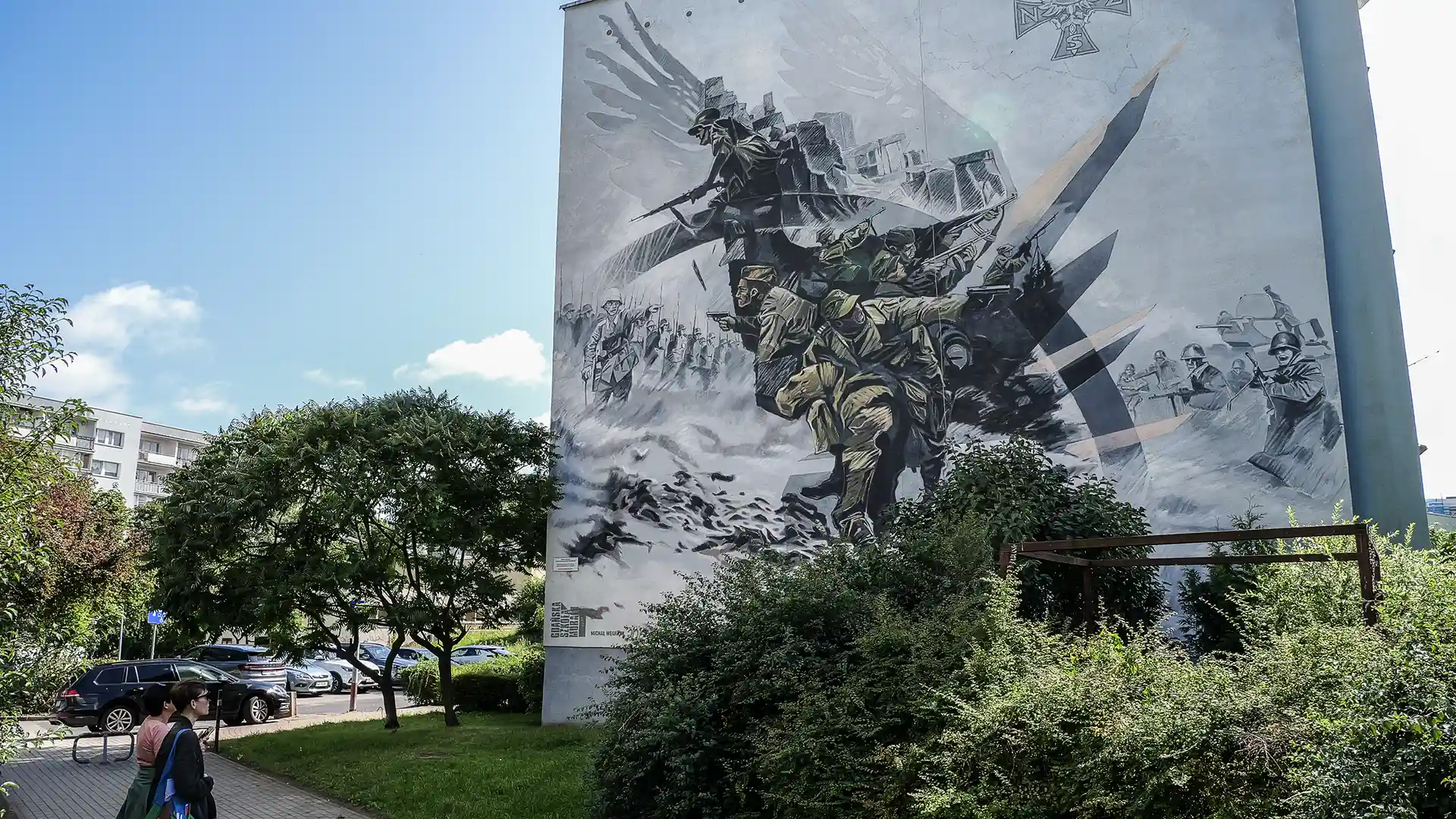
We’re on the way to the famous scheme of prefabricated apartments (Plattenbausiedlung) in Zaspa, a suburb of Gdansk. Renowned artists participated in beautifying these ugly apartment blocks. It’s about 20 minutes by tram to reach them.
We have to admit, we’re a bit disappointed – the murals are definitely huge, but not much more than that. Mostly old, fading paintings with not too much content. No idea why there’s such a hype around them.
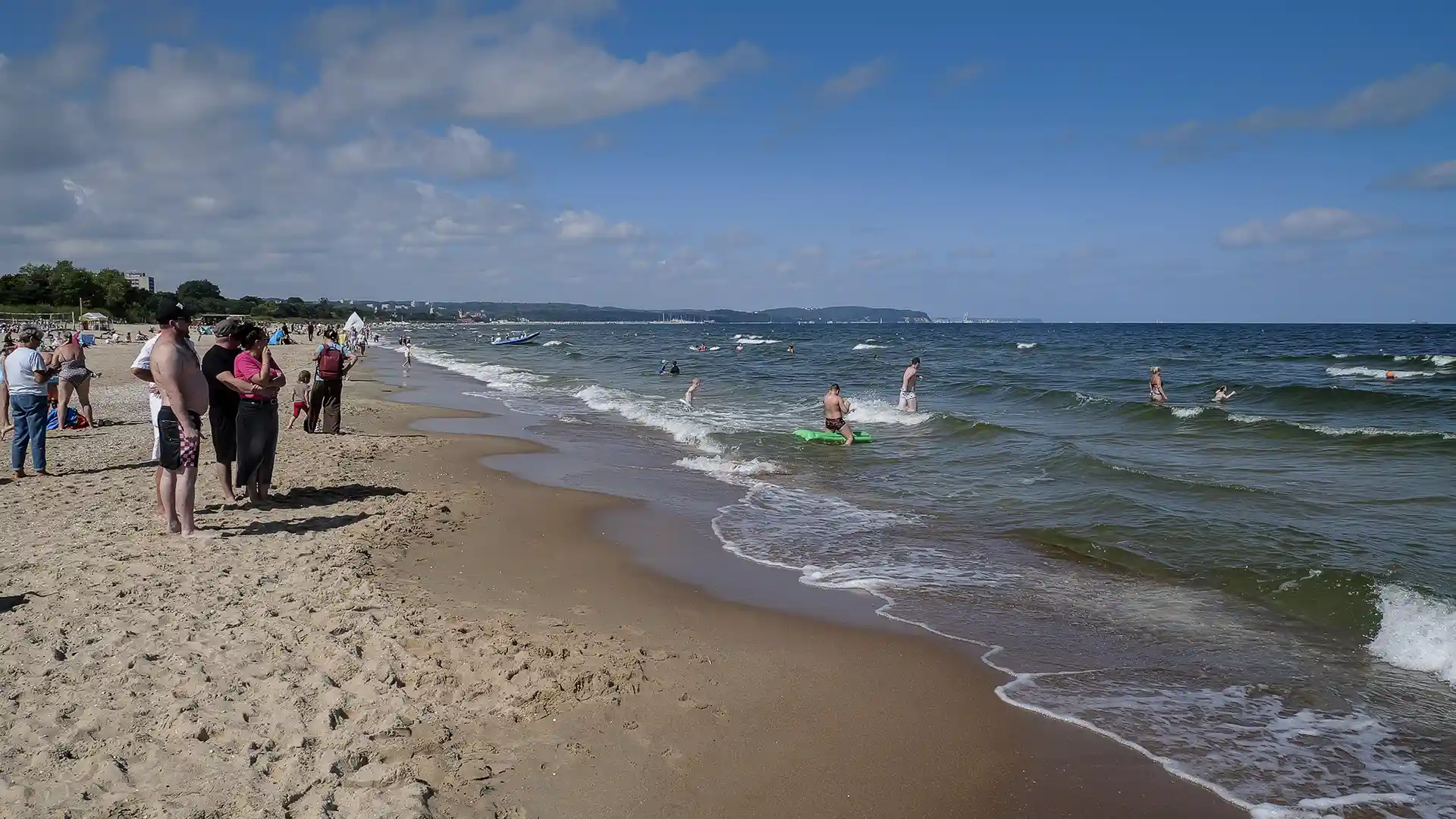
We need to chill a bit – what could be better than a beautiful beach? Another short ride with a tram, and we’re enjoying a bit of sun, sand and sea.
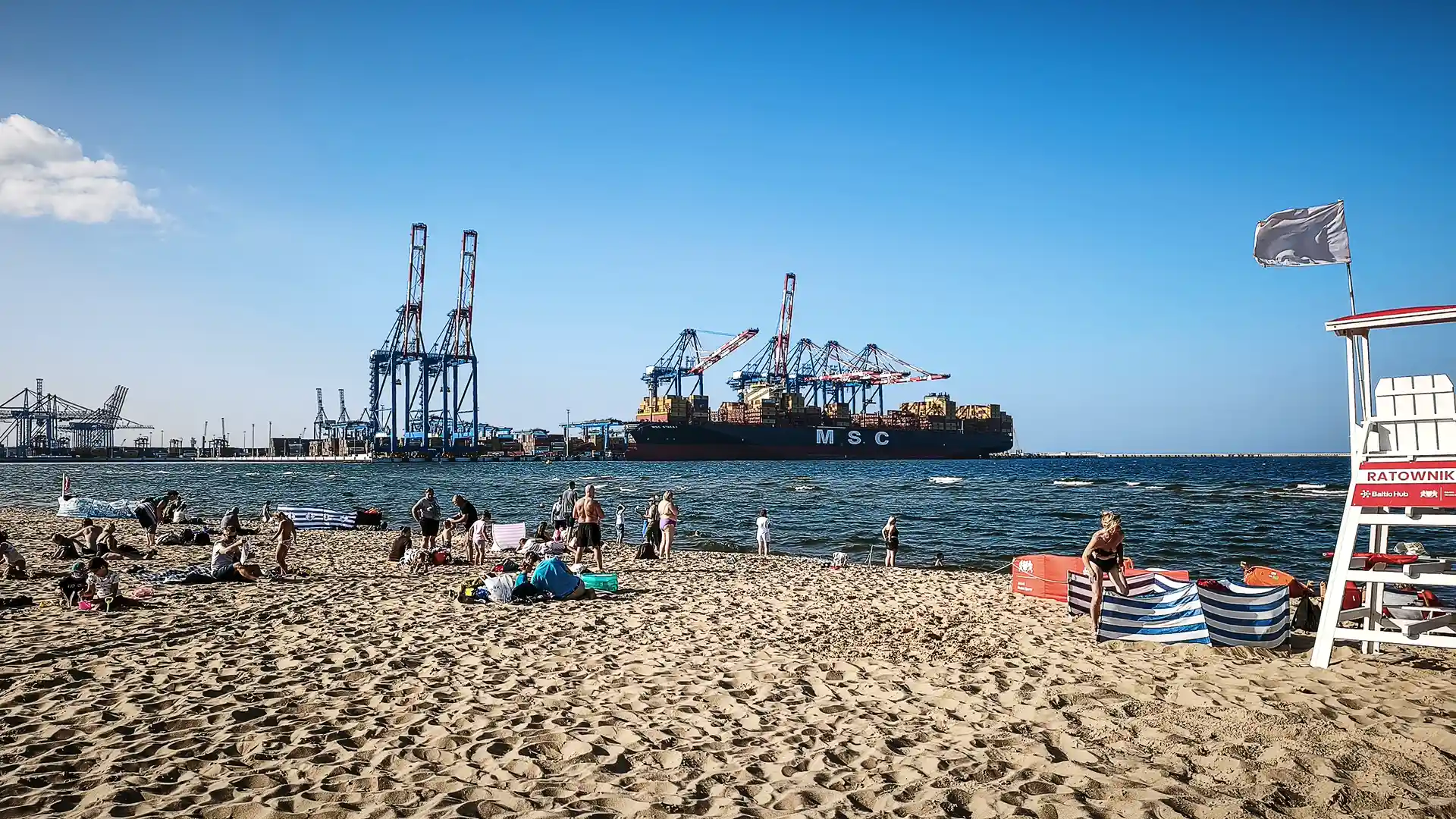
The last day in Gdansk. A last stroll thru the old town, some shopping to replace things we’ve lost during our trip, then we have to bid farewell to Jenny. What a pity, she has to return to gruesome salary slavery. And us, we move on a bit to a place near the beach east of Gdansk. We have to admit, we didn’t know that the campsite is just next to the Baltic Container Hub.
Anyway, it’s just for a night. The next morning we drive on to Masuria, this lake-filled region in the northeast, making it 1 of the most beautiful regions of Poland.
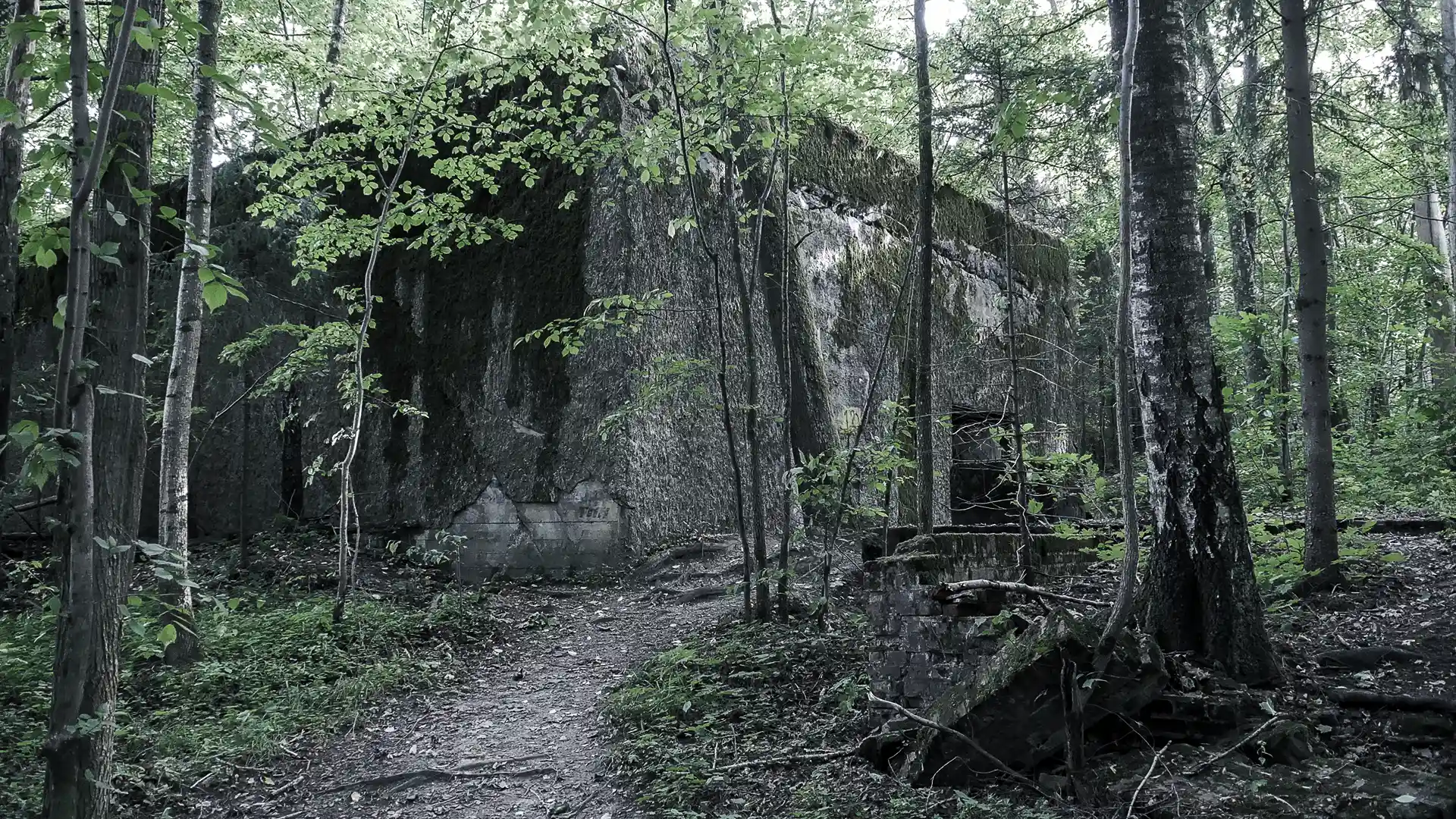
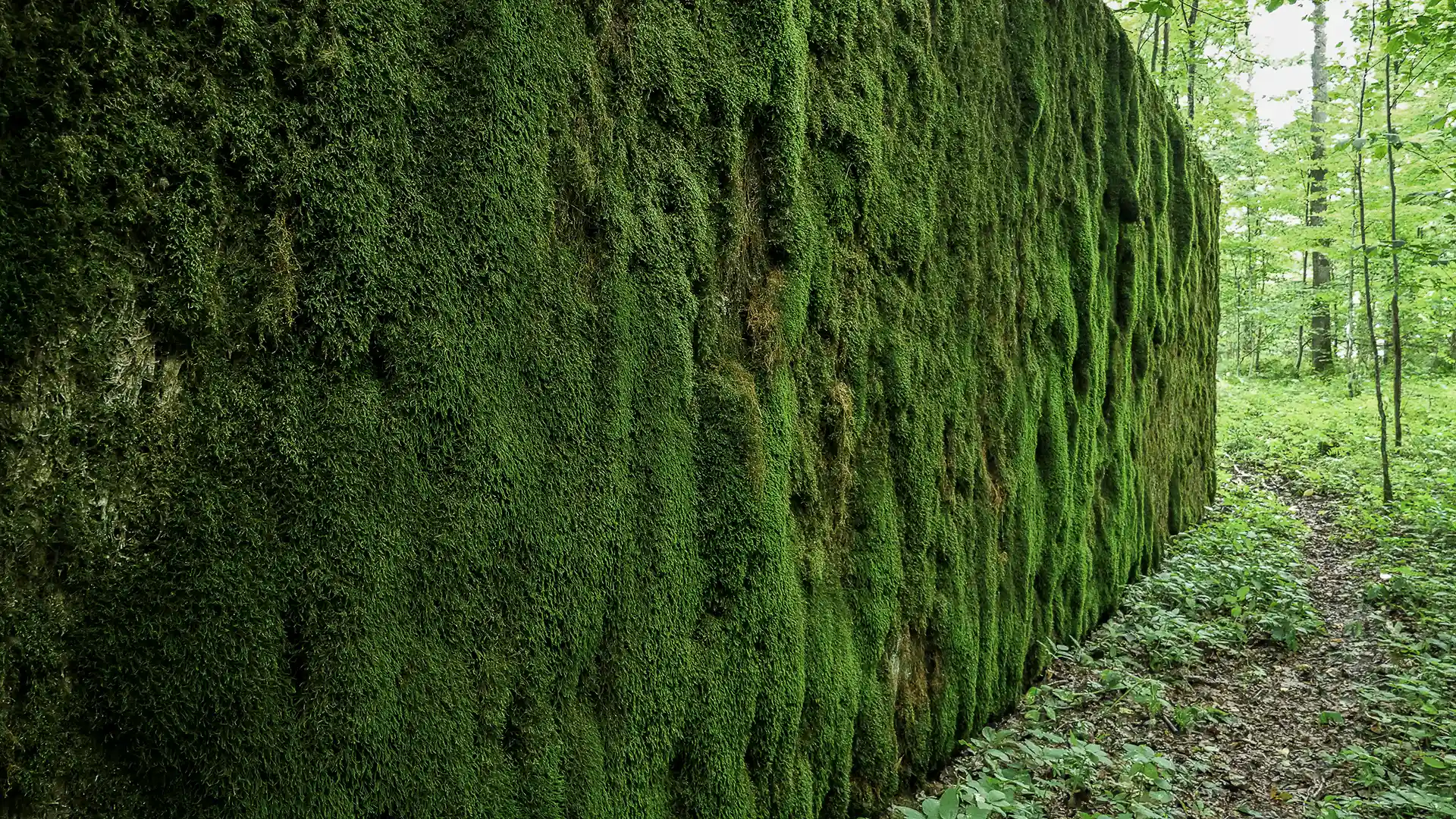
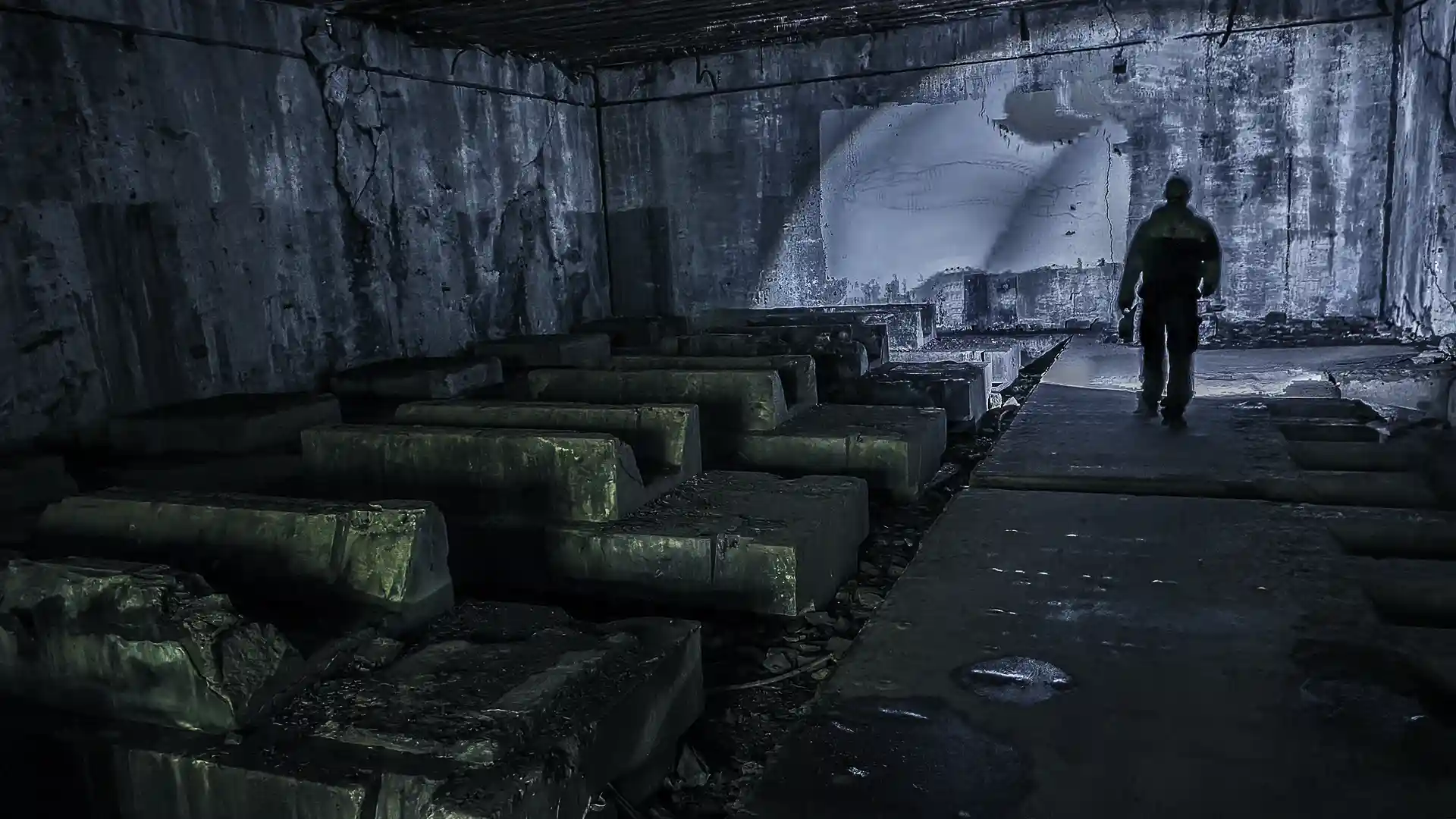
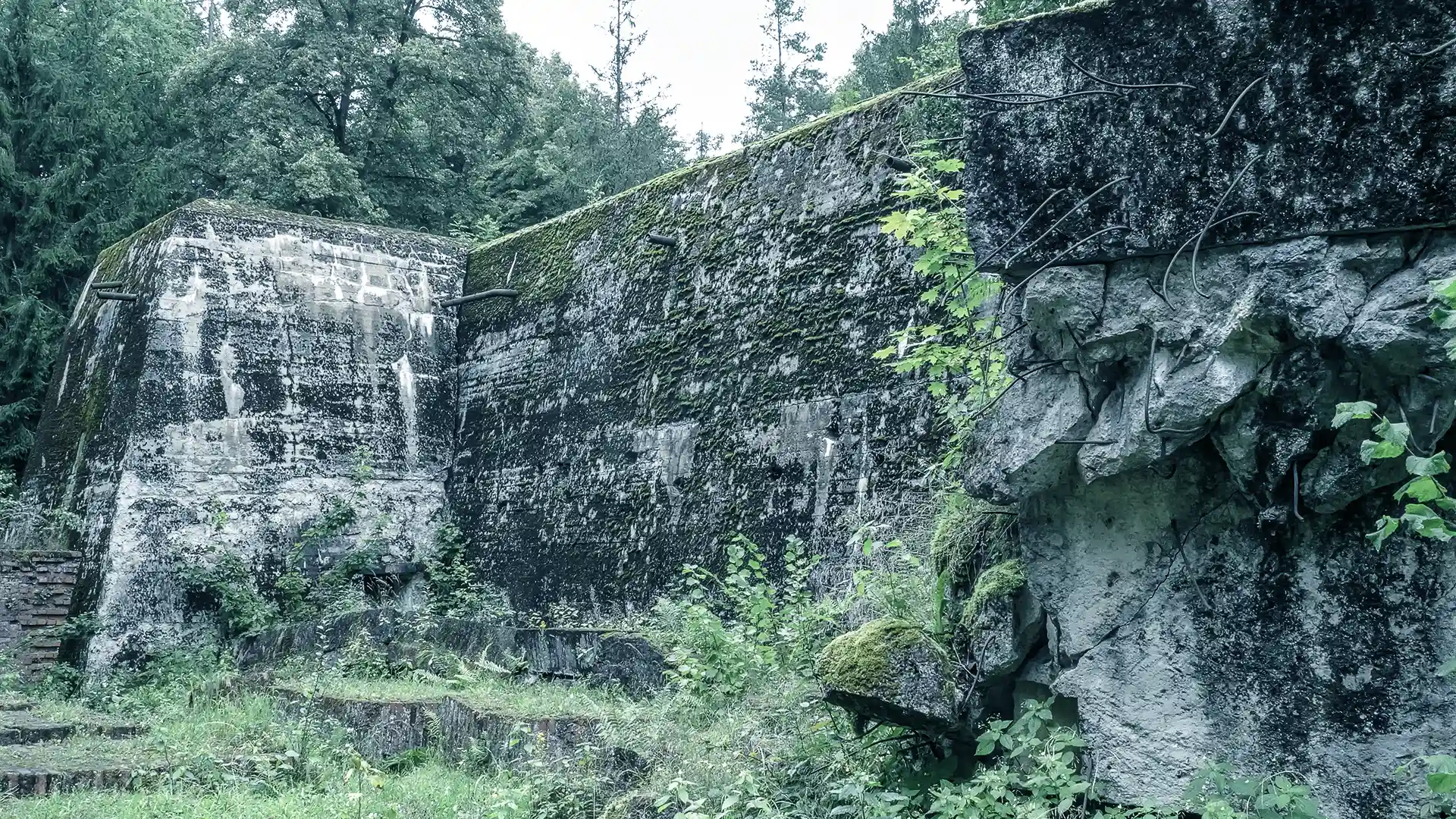
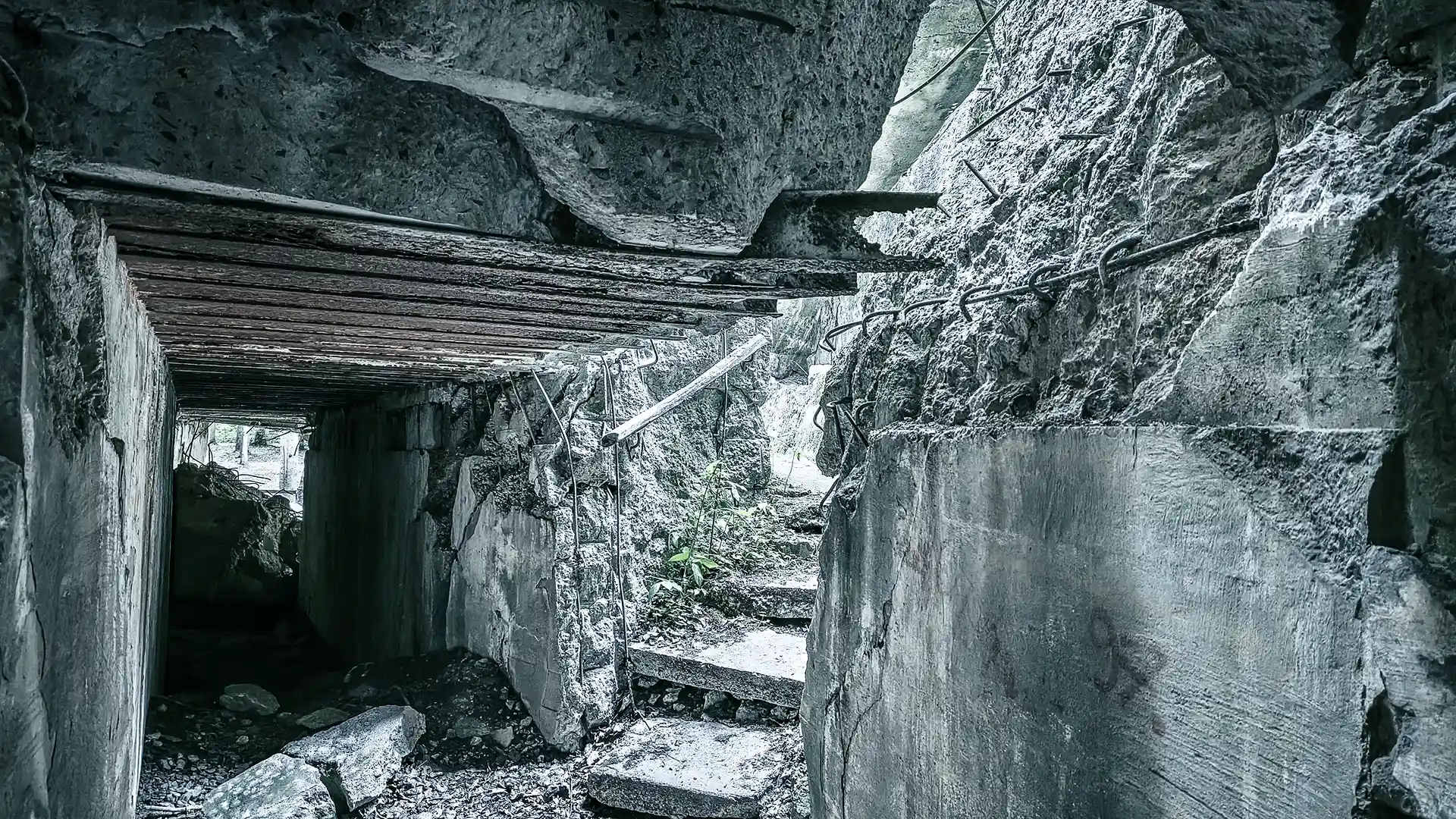
Another forest full of ghosts of a dark past. We follow a decaying cobblestoned road. In the distance, the silhouettes of massive, moss-covered concrete constructions. The part-time command center of the Nazi war machine in Mamerki, in the middle of the Masurian Lake District. Huge bunkers for the generals and other high-ranking figures responsible for so much suffering on the fronts of WW II.
Most of them are freely accessible. The opportunity to explore these dark, damp witnesses to a horrifying era. Of course, a time we thought was long gone until our dreary neighbor Wladimir invaded Ukraine.
For us, it’s more about the the remains, atmosphere, and absurdity of these places — definitely not glorifying what happened there. And to avoid these really strange guys in military outfit again hanging around.
Still, things get even darker at the next place: Wolfschanze (Wolf’s Lair), the occasional headquarters of the Führer of the 1000-year Reich.
It’s quite a touristy place. Mainly Polish tourists come to see how difficult it is to blow up fortified buildings made to last for 1000 years.
We walk along the paved trails leading from 1 pile of rubble to the next. Each 1 was the bunker for one of the Nazi VIPs, and the 1 with more than 8m thick concrete walls was specially built for the man responsible for all this mess at that time. True, it’s pretty nuts to convert such a place into a tourist attraction. Maybe it should be a memorial to show future generations the consequences of populism, excessive nationalism and patriotism mixed with dehumanizing ideology.
Finally, we find ourselves in a small museum exposing whatever they found at this place. Of course, many things nobody want to see. But also a few signs showing how ideologized, twisted, and small-minded the society was at that time.
We need a change. Can’t see things like that anymore.
A few km further, we sneak along a waterway that was built at the beginning of the 20th century, but never became functional: the Masurian Canal. A canal 110km long, with 10 locks to climb more than 100m. Construction was stopped during WW II, leaving a few locks to visit. Real lost places in the forests.
Guys,
that’s it for Poland – at least for now – and for this post.
Please just be patient until we post the next 1.
Cheeeers
Monika’n’Martin