











Beautiful old towns, weird Soviet leftovers, abandoned places, strange sights, some beaches, and a few moments where we wonder, “What the hell are we looking at?”
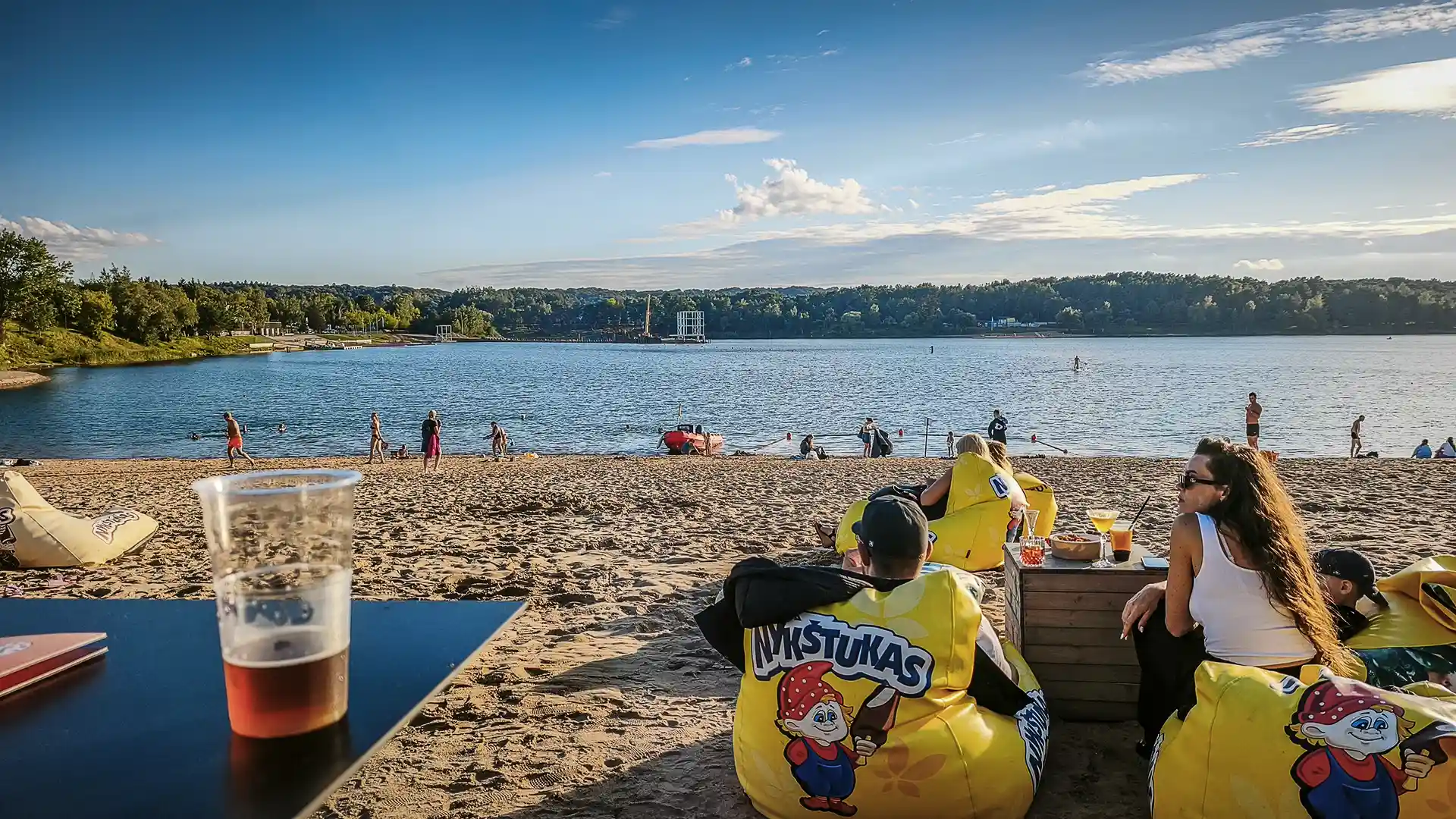
We’re sipping a beer in plastic cups at the beach bar. On the shores of Lake Lampedis. In front of us, a couple is lounging in beanbags provided by Nykstukas, sipping their colorful cocktails. Of course, we’re discussing what has happened to us. Are we suddenly in the world of the beautiful and rich? No, it’s easy. We’re in Kaunas at a lousy lake, sipping our beer and enjoying another world.
Definitely, we don’t want to complain about the Polish mentality, but our impression is that people in Poland can sometimes seem a bit grumpy, not particularly open to foreigners, and rather quiet and reserved, which may be related to the exceptionally limited knowledge of foreign languages. True, the few people we had the chance to discuss with for a little longer suddenly changed a lot, were friendly and inviting. A bit like the Swizzies living in a remote mountain valley.
Whatever, we’ve arrived in Lithuania — and there, it’s really different. So, let’s see how it is outside this beach bar.
This morning we’ve left our campsite in the Masurien Lake District. We’re on our way to Lithuania. It’s quite a few km – especially as a road closure forces us to make a detour. So, a little extra sightseeing we didn’t really ask for.
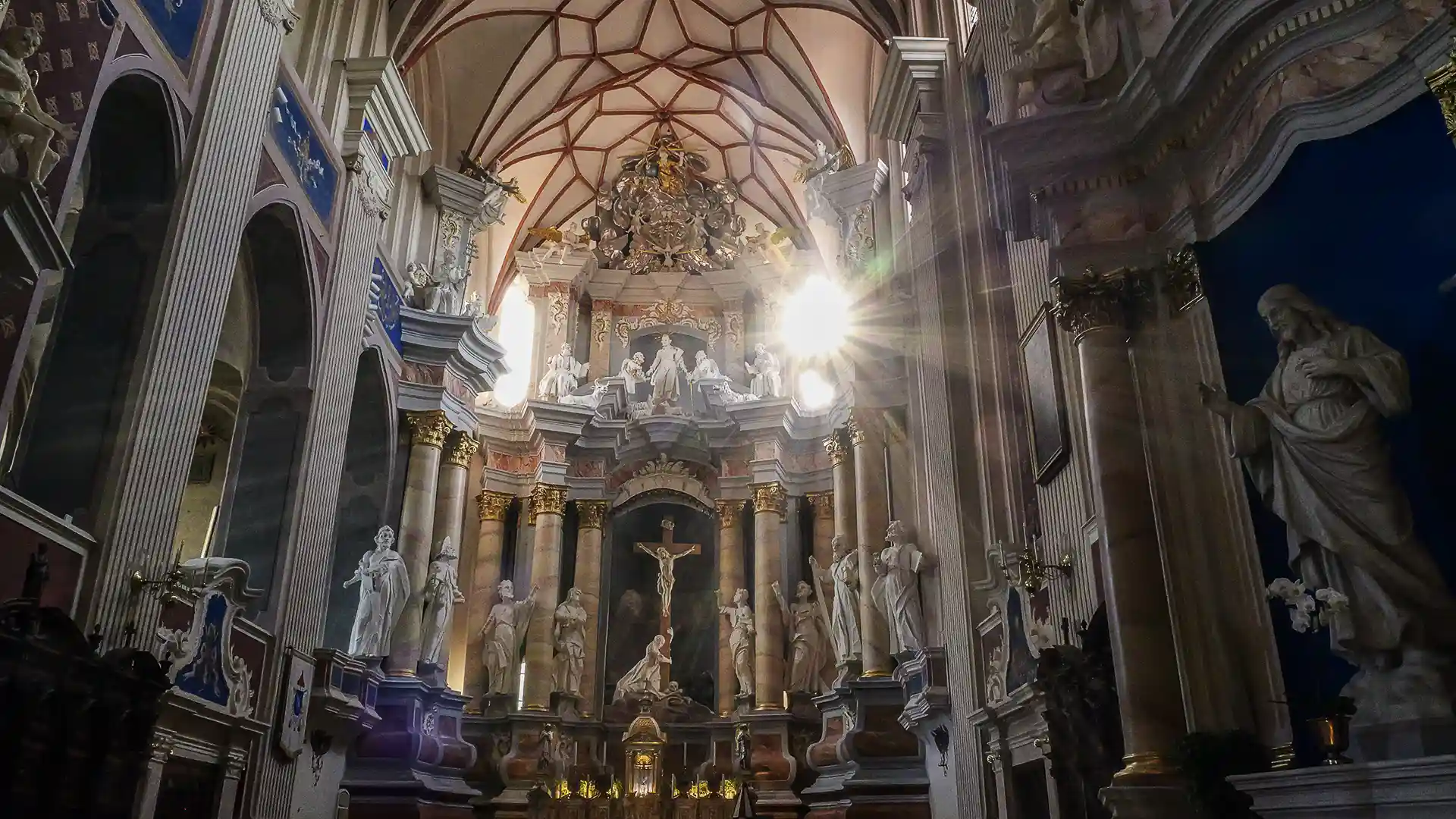
Eventually, we roll into Kaunas, the 2nd largest town of Lithuania, head straight to the campsite — and, even better, to the adjacent beach bar with Nikstukas beanbags.
The next day, it’s time to see a bit more of Lithuanian reality. So, we head into Kaunas.
We’re sitting in the trolleybus heading for Kaunas’ old town. Out the window, the houses of the suburbs are passing by. Mostly wooden houses in pretty bad shape. It reminds us of our visits to eastern Russia in 2017.
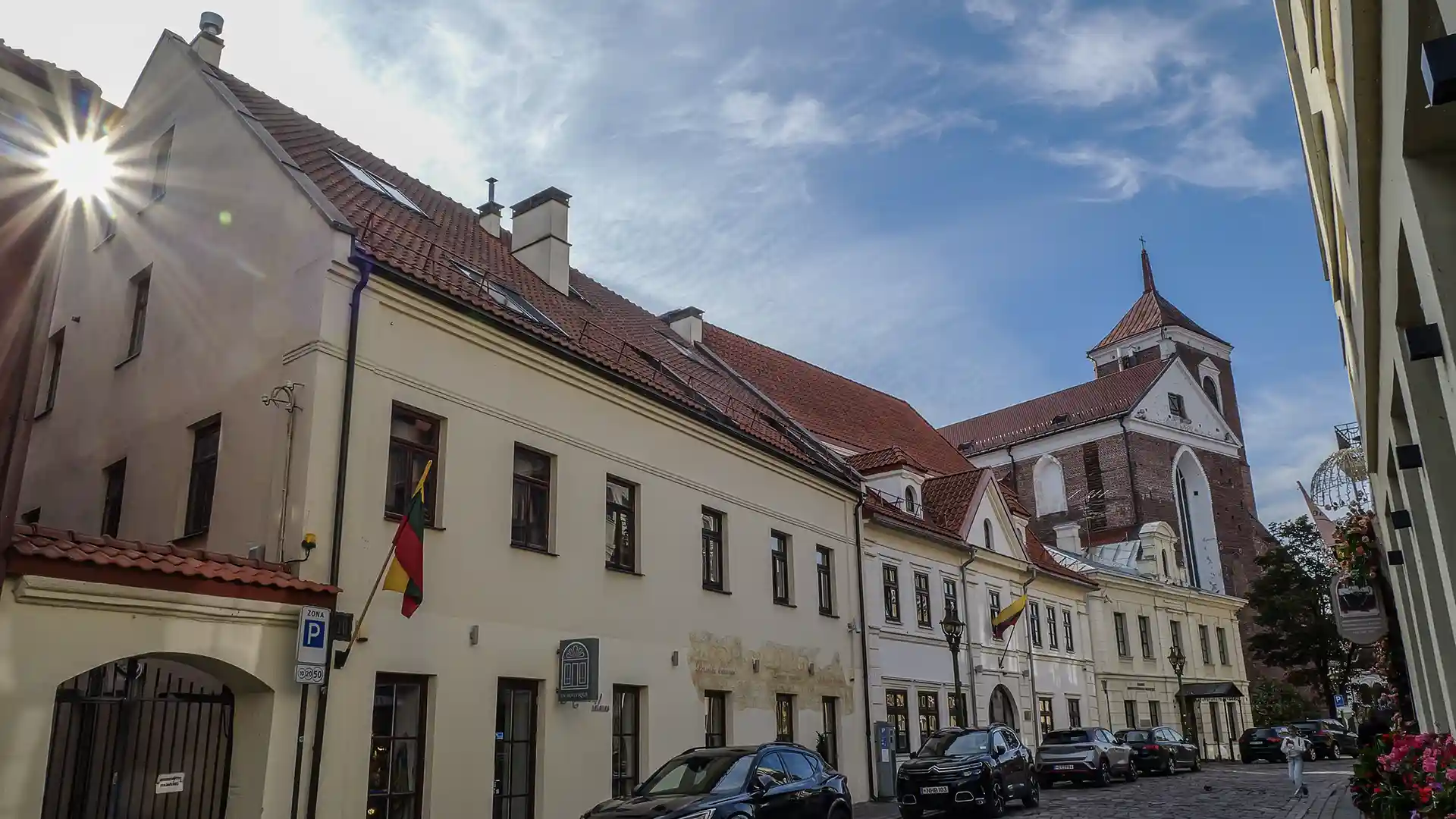
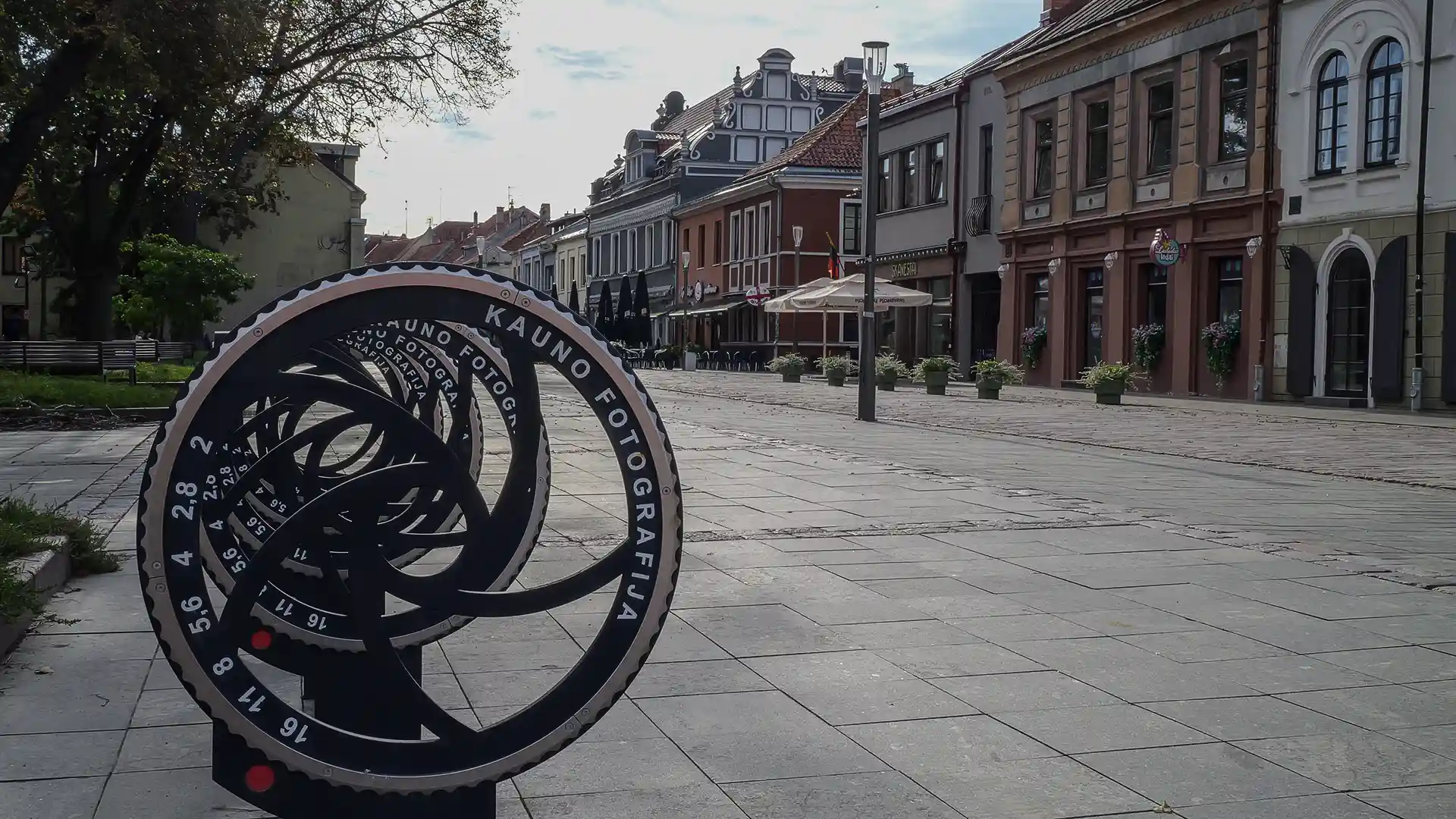
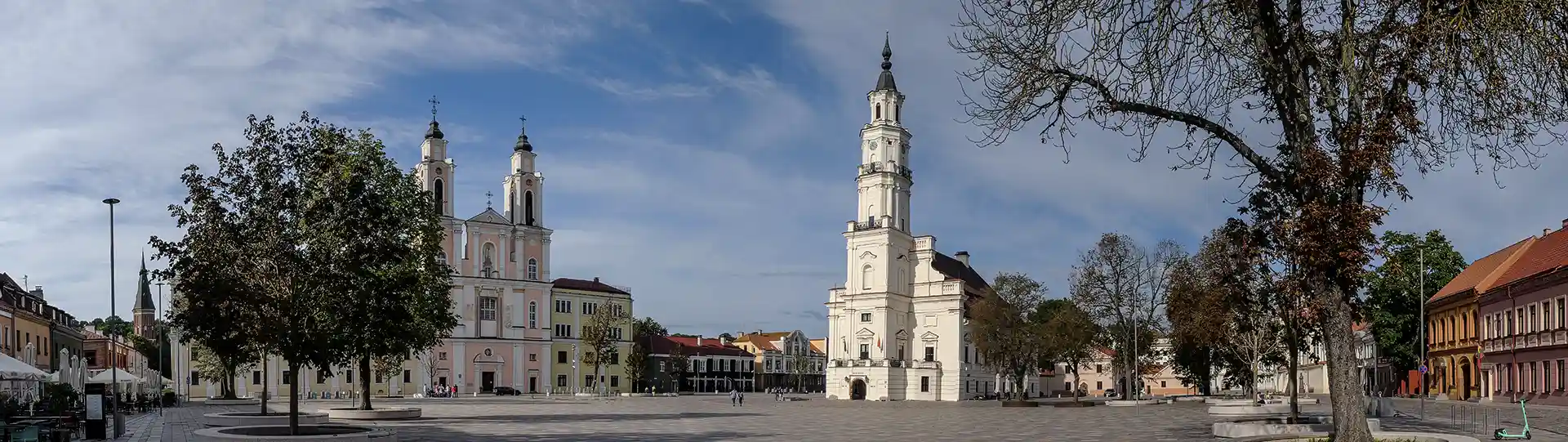
In the city center, it changes completely — carefully renovated houses, everything nice and tidy, and ready to reflect the picture of today’s Lithuania.
It’s true, we don’t spend much time visiting this area, as we’re convinced there’s better stuff to see.
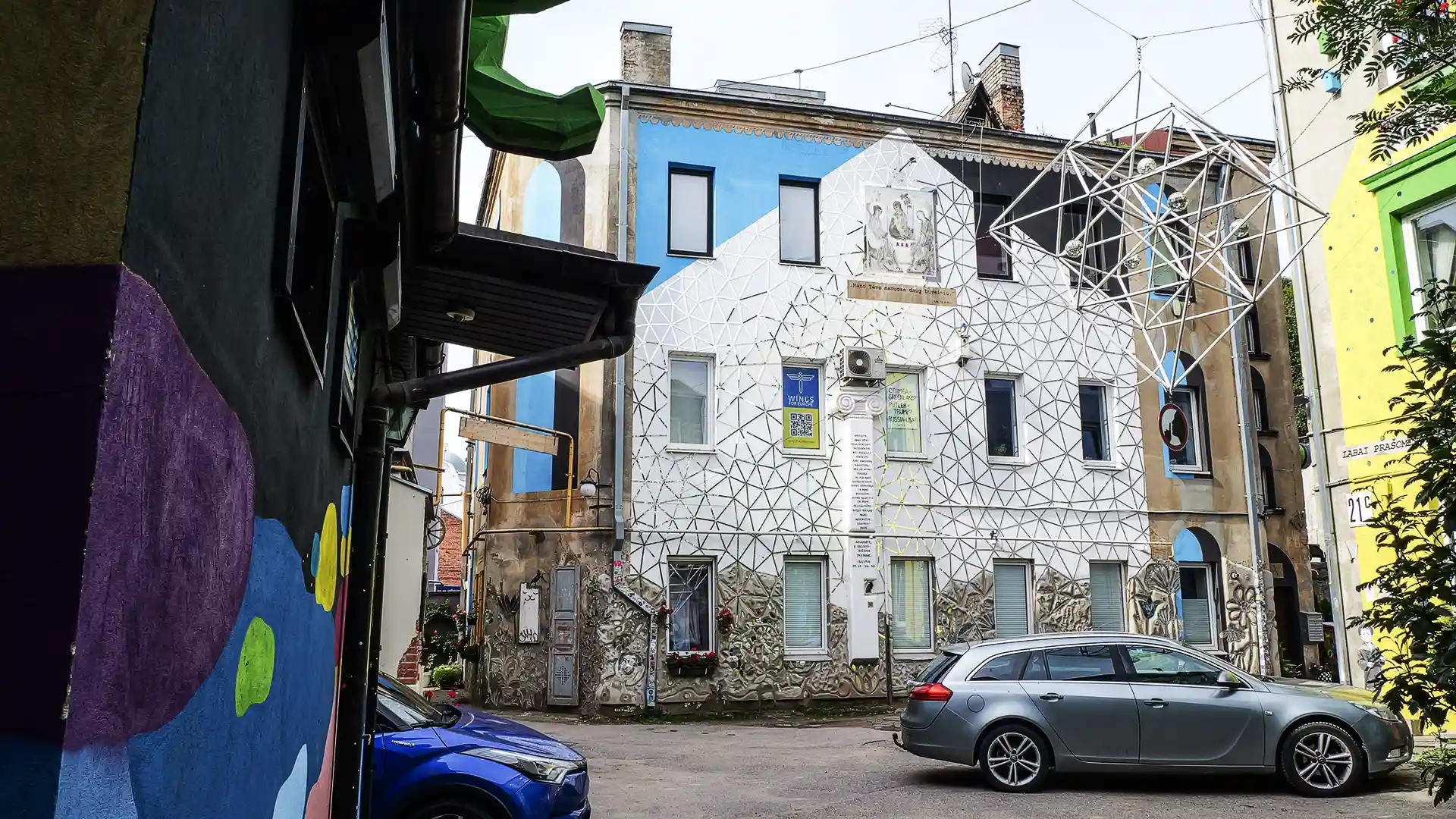
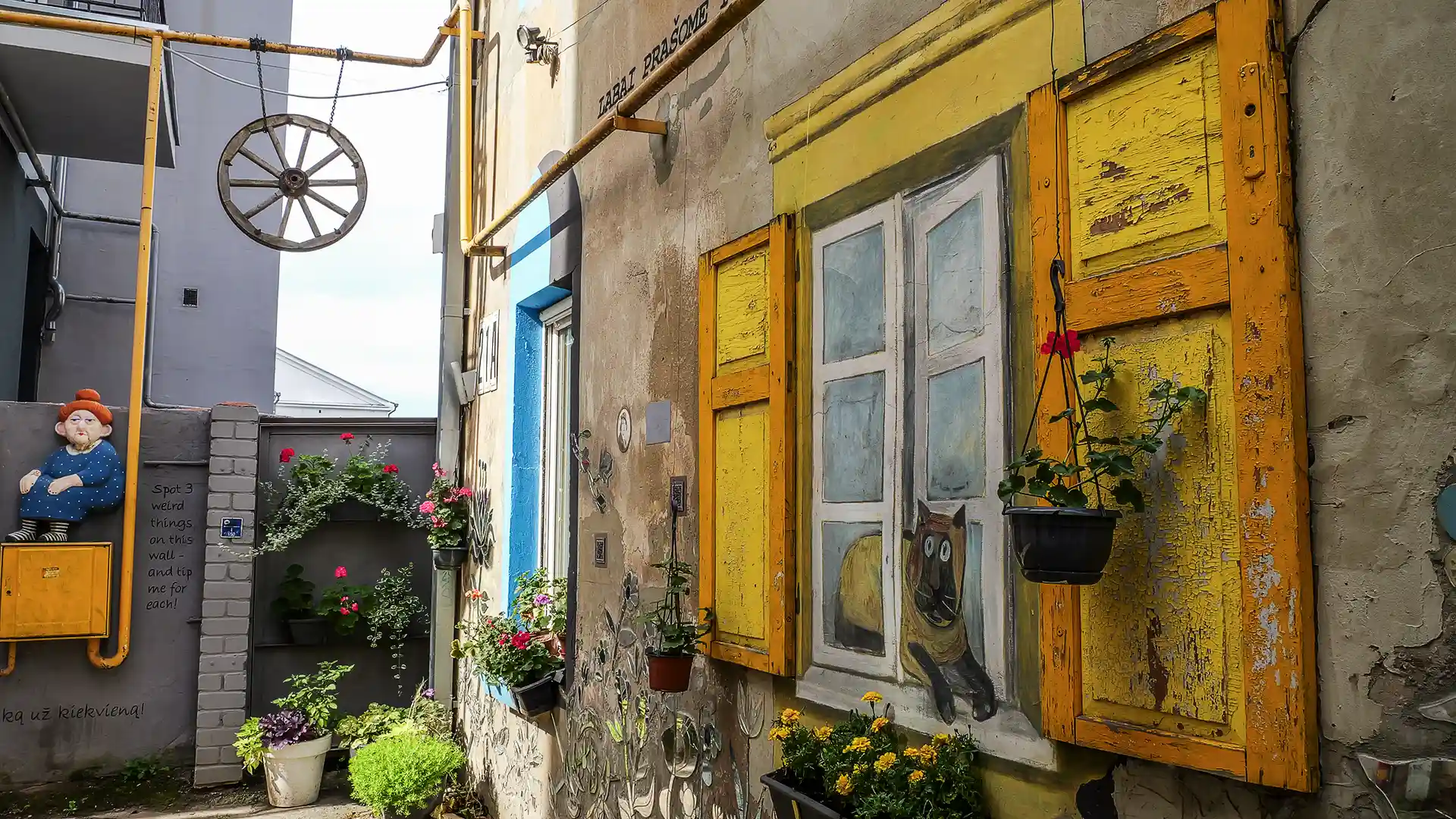
10 years ago, a Lithuanian artist and his neighbors decided to improve the environment of their old apartments and create a place for people to meet to improve social cohesion among them. The result is the Courtyard Gallery, visited today by people from all over the world, and a place the inhabitants are proud of. We’re just 2 more visitors who arrive at this beautiful, but slightly weird place after a short walk.
And since we’re in Kaunas, of course we can’t miss the city’s most famous mural: the Wise Old Man, fading on a wall next to the bus station.
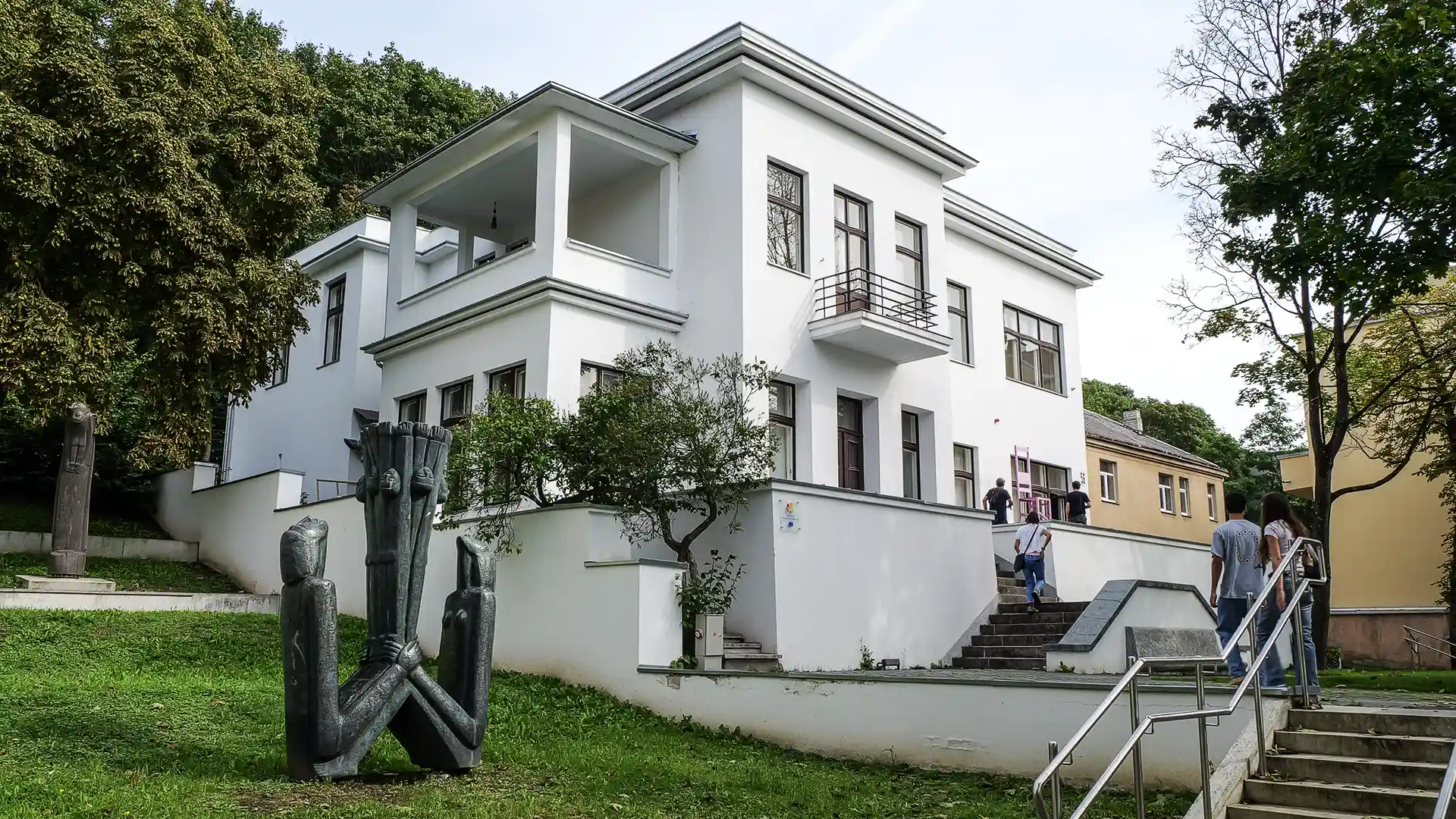
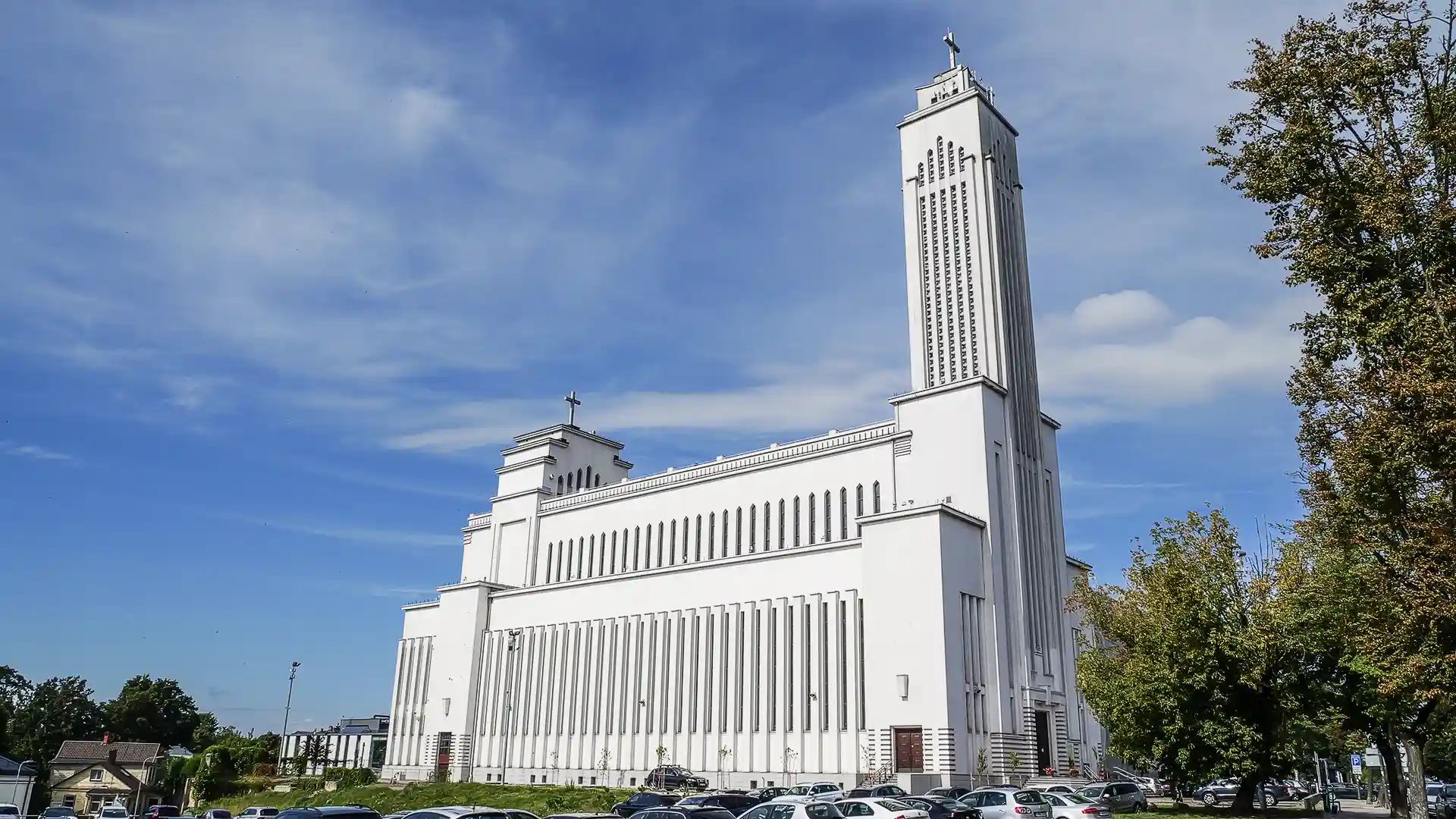
From there, we sneak along Savanoryu Street to see if it’s really true that Kaunas’ famous modernist houses were built some 100 years ago by some pretty famous architects. True, the street is lined with buildings in avant-garde Art Deco and Bauhaus styles – a UNESCO World Heritage Site. Mostly renovated, they shine in their former glory, while a few still wait for better times. A collection that’s hard to find anywhere else.
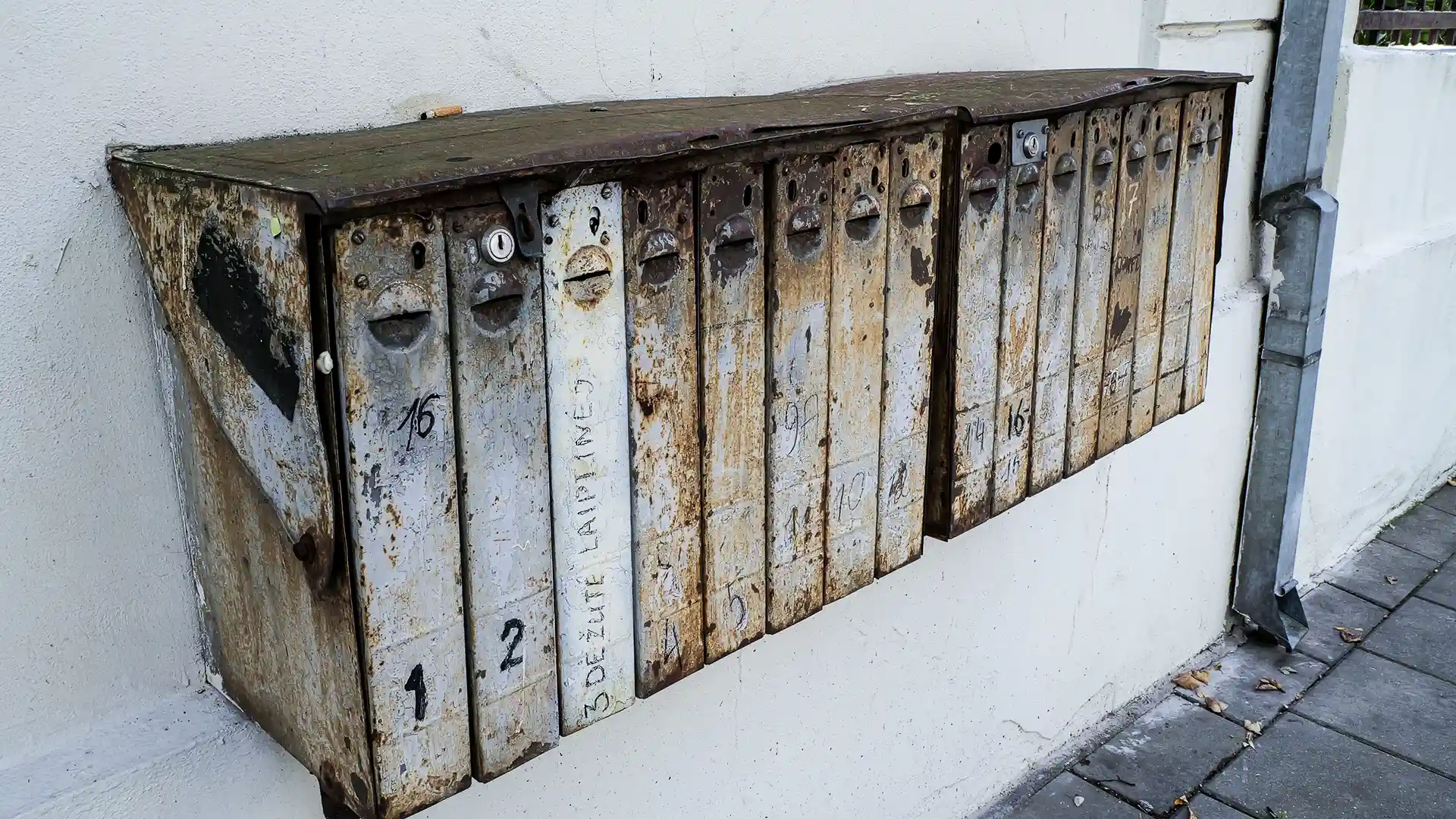
By the way, we’re convinced you always wanted to know everything about good old Soviet letter boxes. Kaunas is the place to see them.
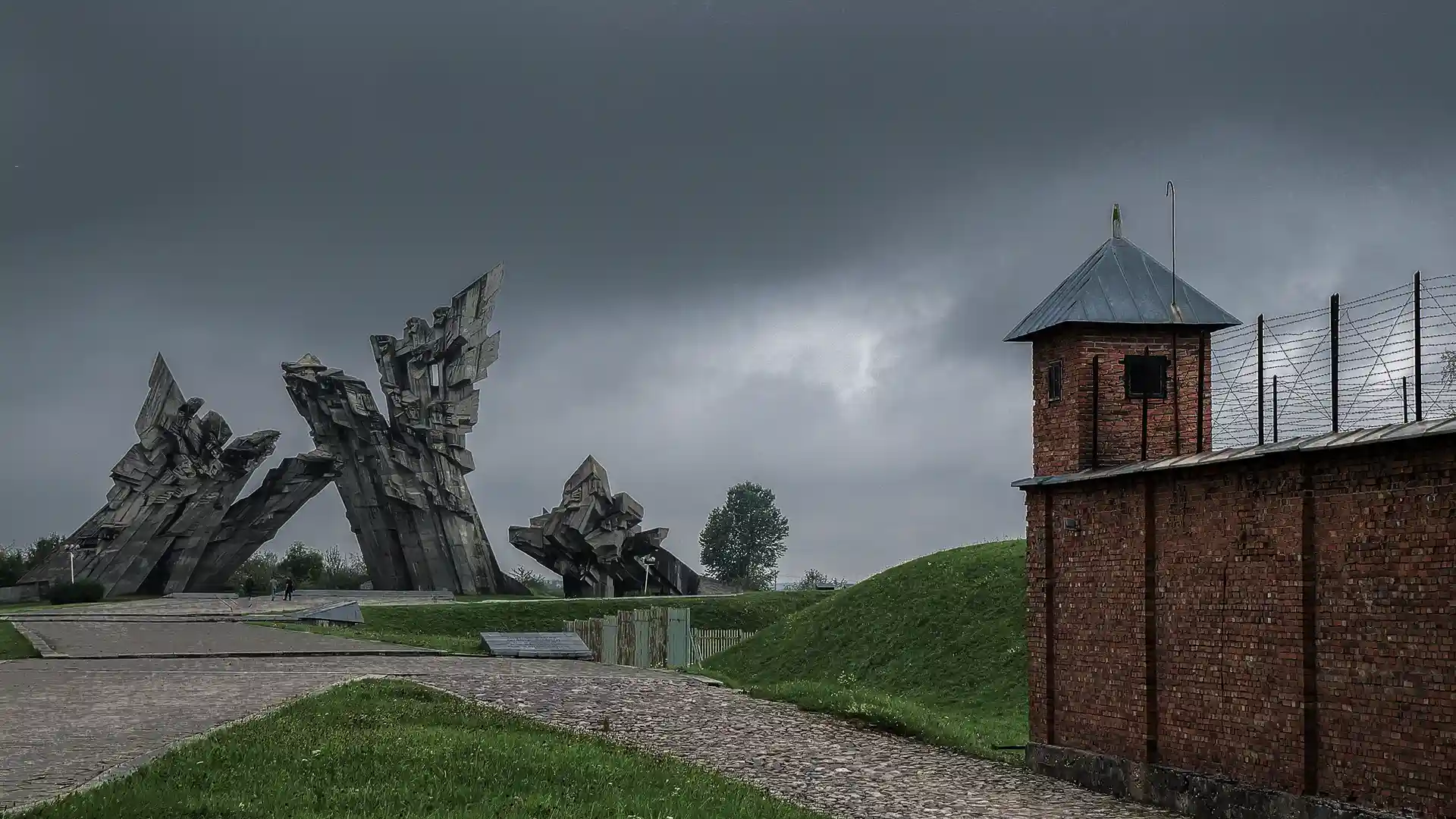
There’s one more place in Kaunas we want to visit – one that takes us into the horrifying history of the German occupation during WW II: the Ninth Fort.
The place where the Nazis murdered about 50,000 Jews. During the following Soviet occupation, a memorial to the victims was built – an example of Soviet brutalist architecture.
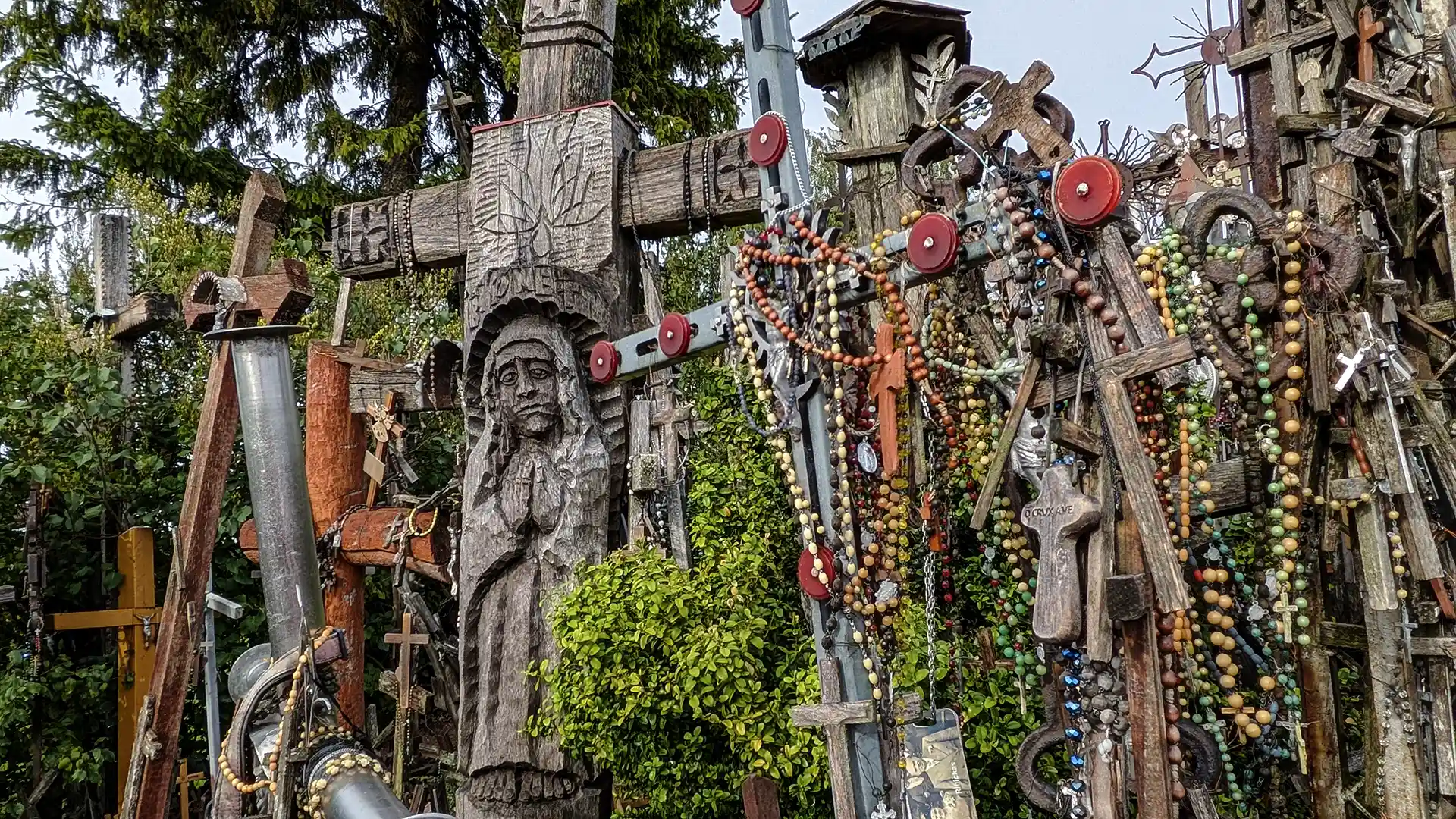
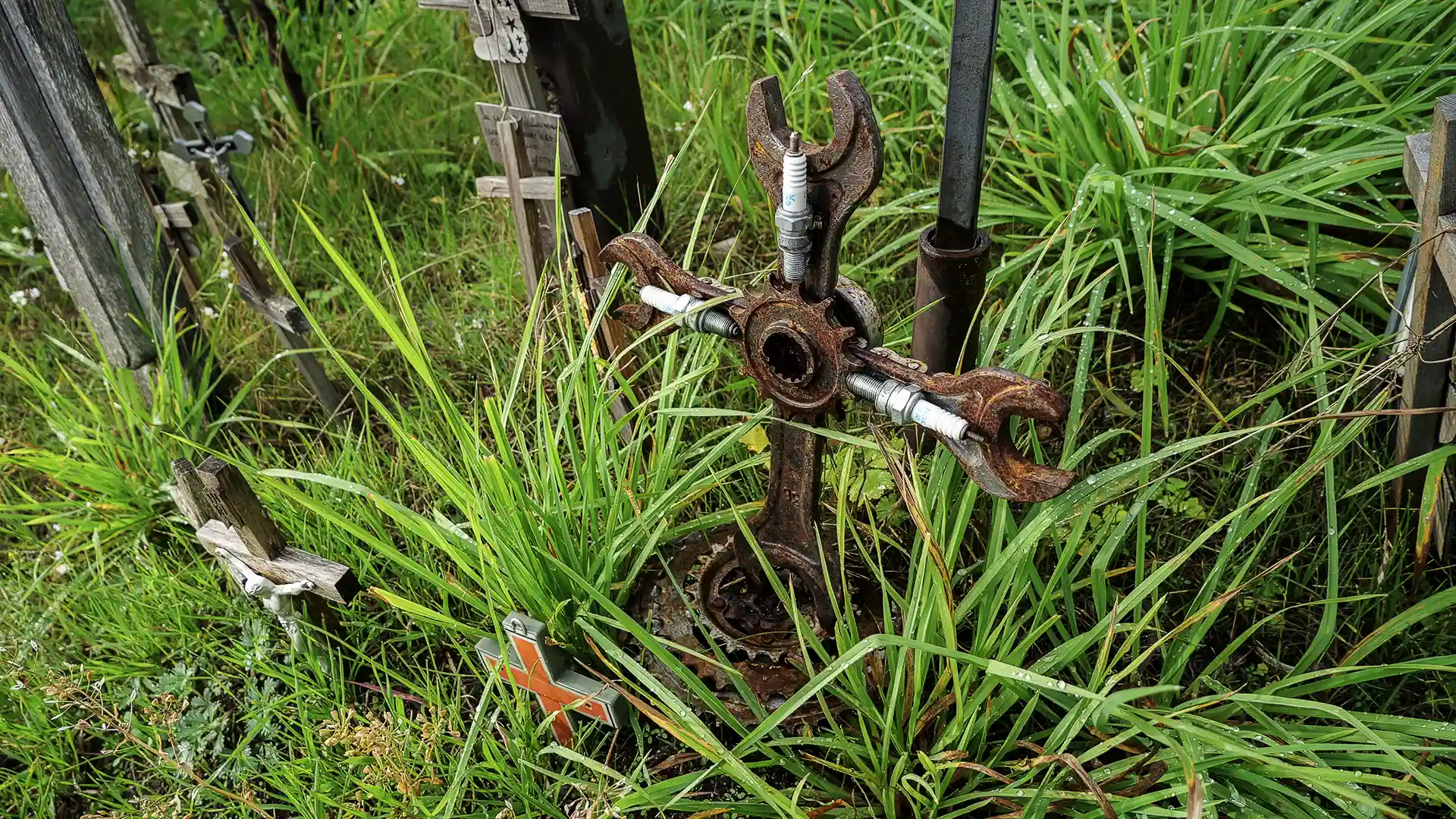
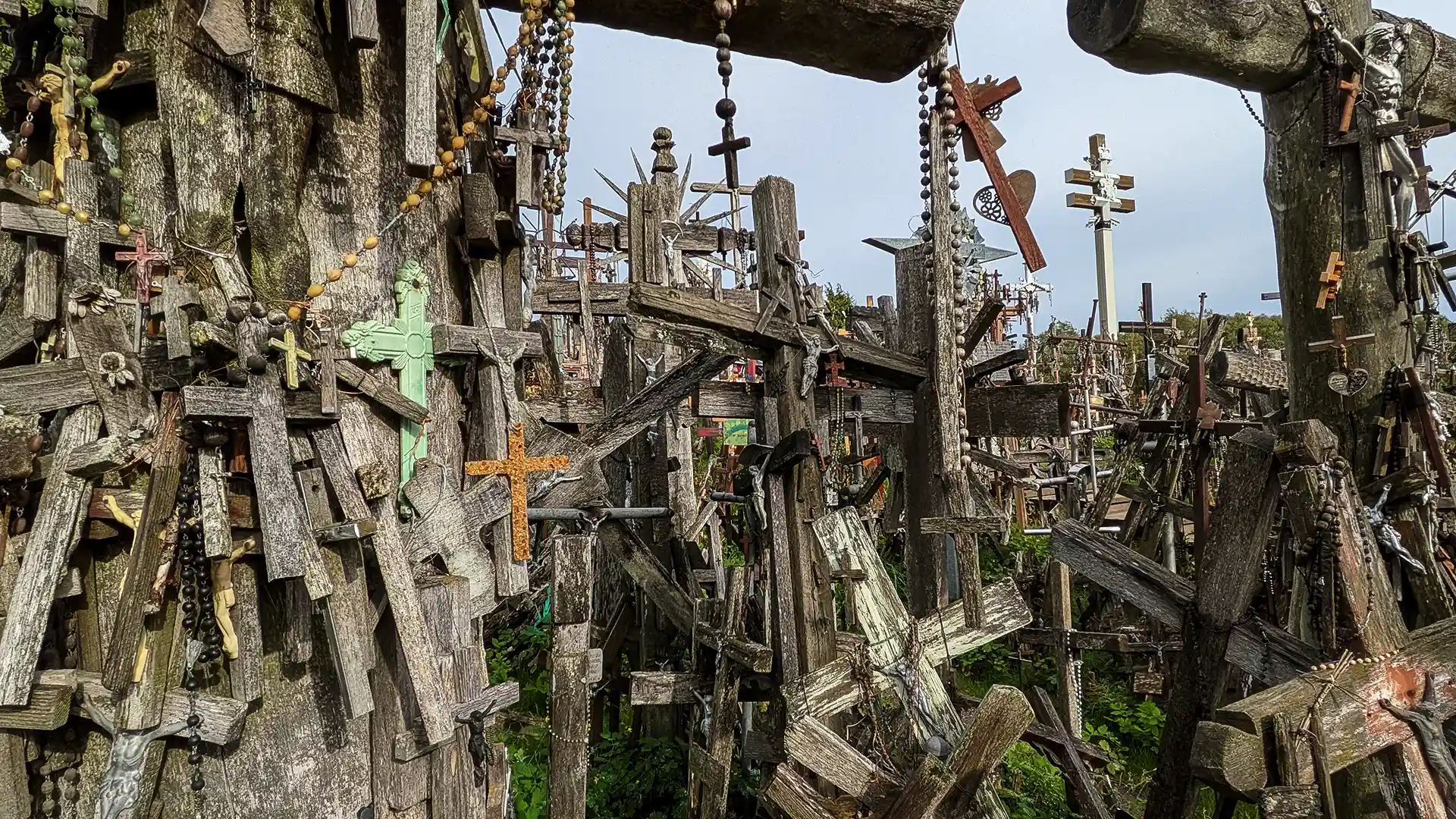
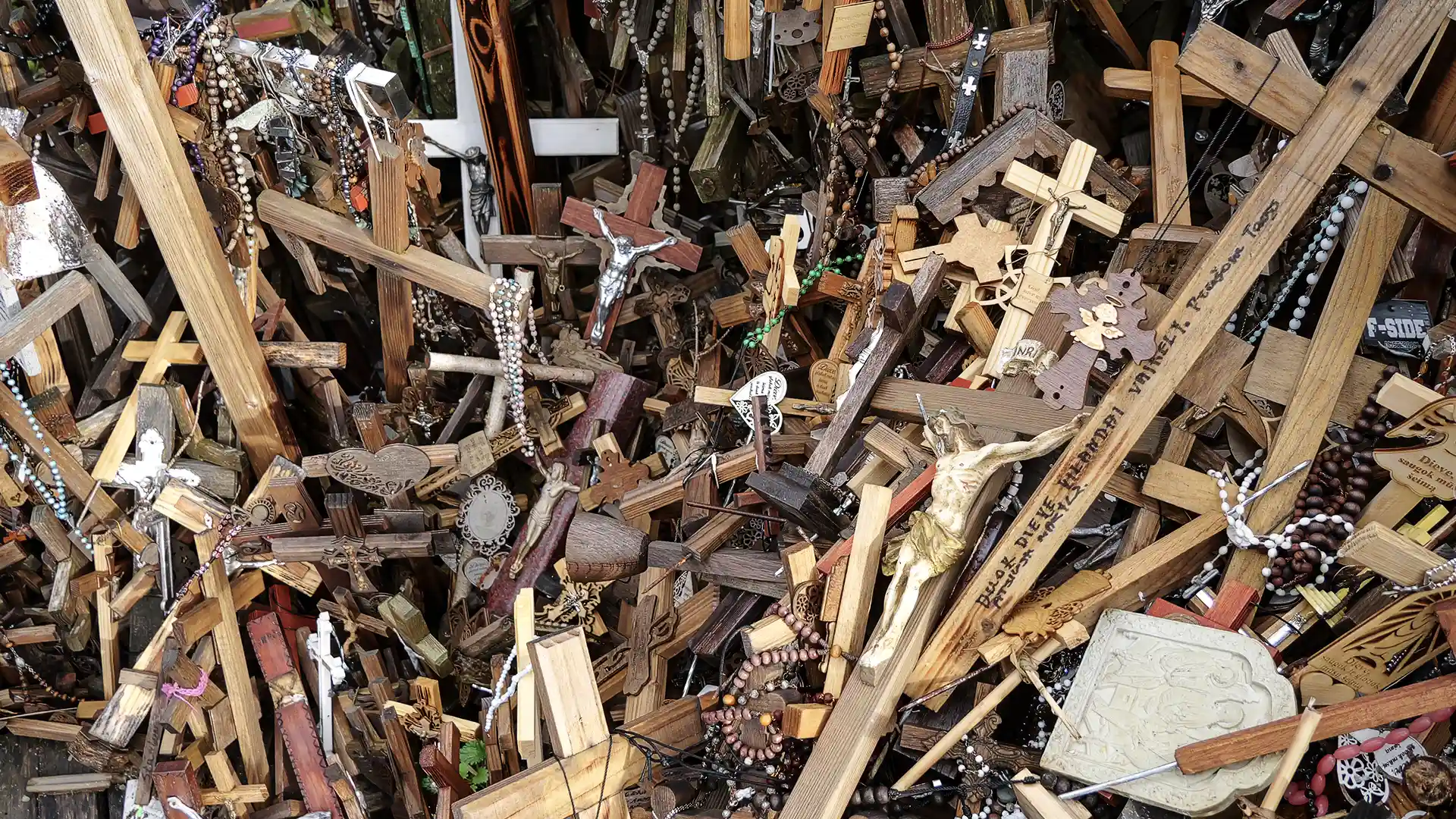
Nearly a quarter million of crosses – a hill covered with them, some huge ones, many small ones – often hanging on the bigger crosses. Some are built with steel for eternity, others made of wood are rotting on the soil.
We’re sneaking along the pathways of Lithuania’s Hill of Crosses. A place considered one of the most important sites in the country and a reflection of the resistance against the Soviet rulers after WW II, especially their religious persecution. As the KGB tried to destroy the hill several times and restrict access to it, the hill consequently became a symbol of resistance for Lithuanians.
For us it’s definitely a place to visit and to feel its atmosphere.
The next morning we leave our campsite near the town of Siauli for the Žagarės Regional Park.
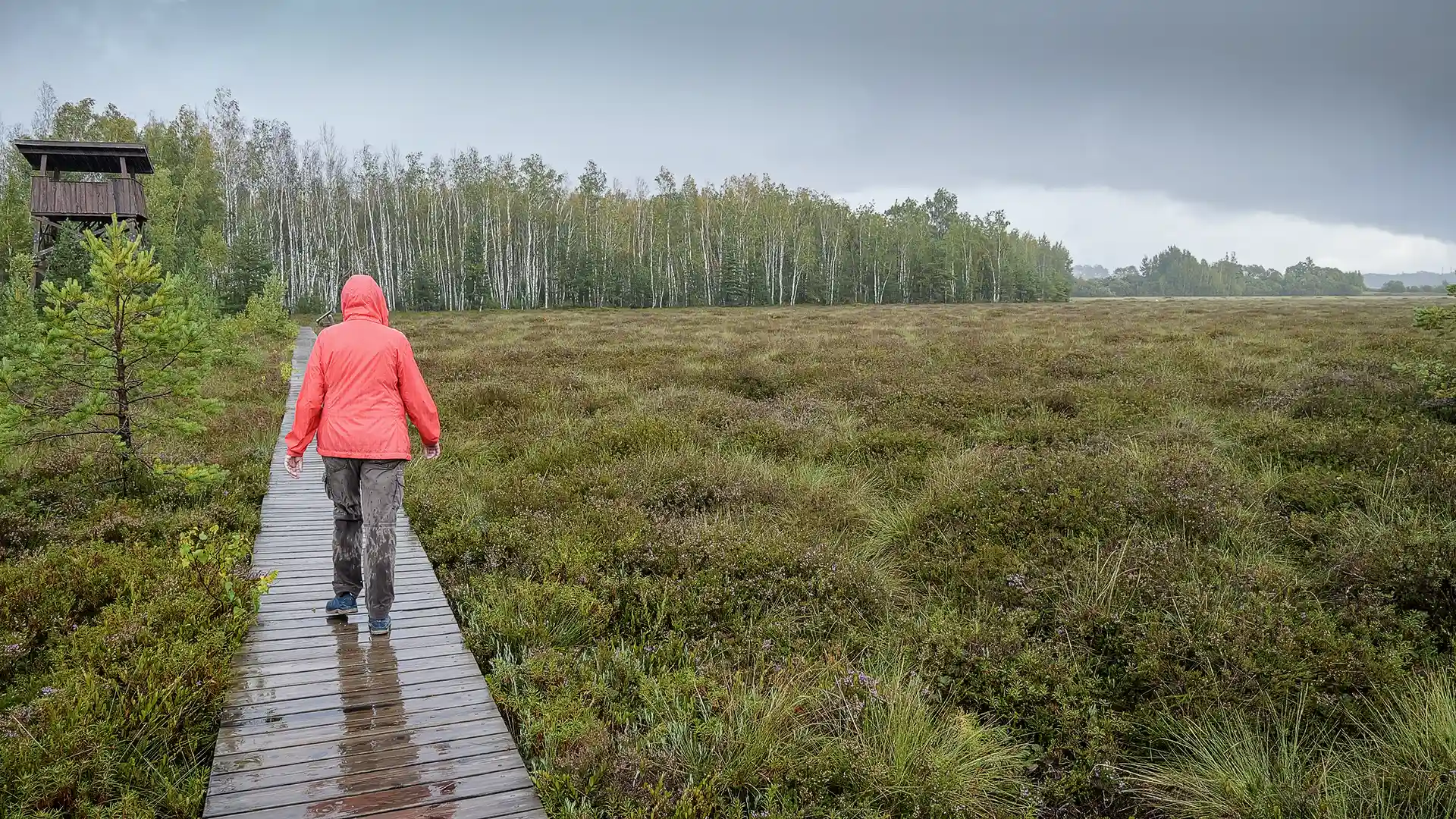
Apparently, there’s 1 of the greatest hikes thru a moorland waiting for us, the Mušos Tyrelis Wetland trail.
Despite the rainy weather, we trust the promising weather forecast for this morning.
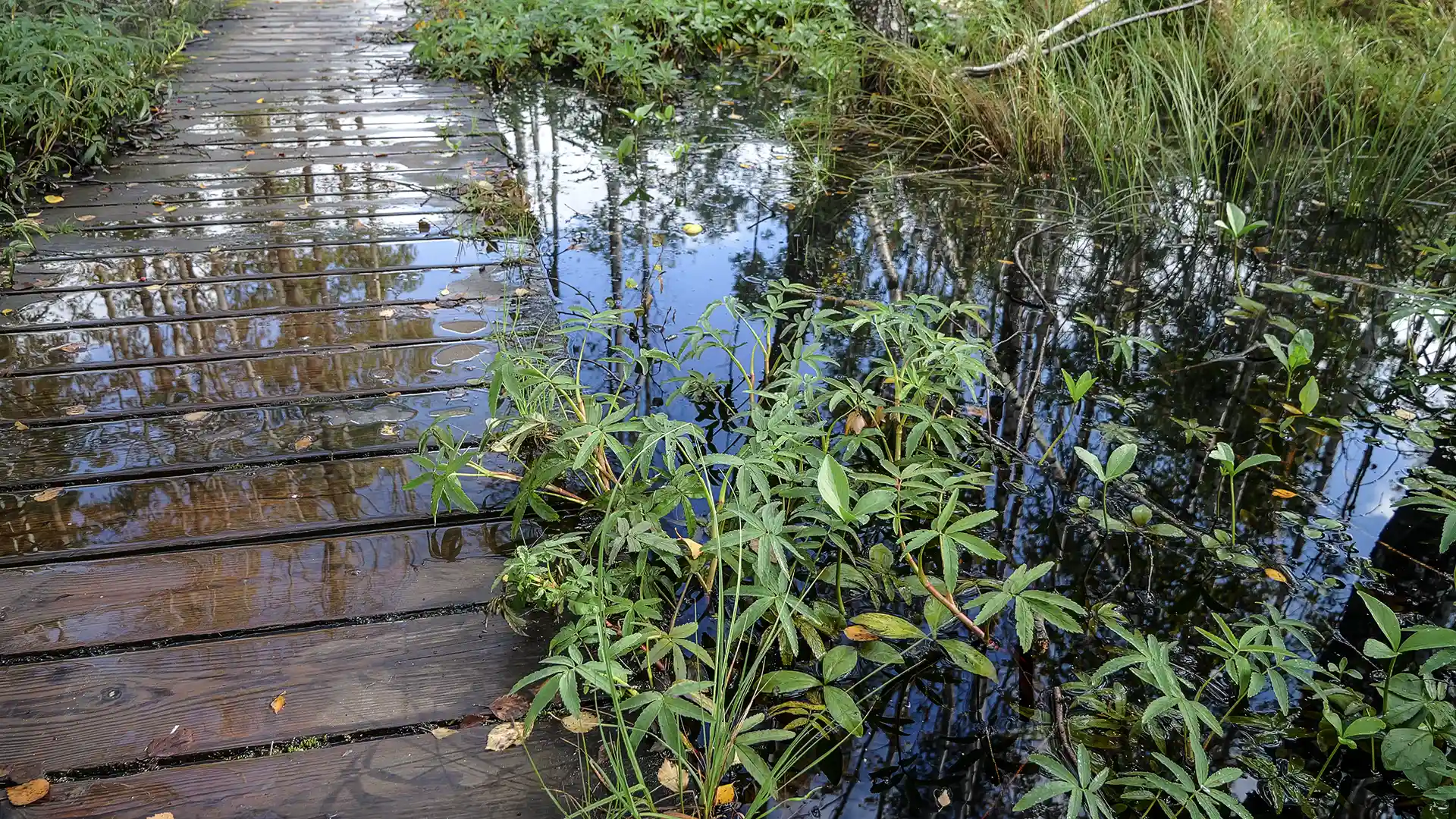
Now, we fight every step along the extremely slippery wooden boardwalk. The 1st 2 km are pretty OK, not too wet, a trail thru open land. But now we’re in the forest, water on both sides, the boardwalk covered with moss and algae, which makes it extremely slippery and hard to hike.
And the landscape gets rather boring, just trees for the next 4 km. And not to forget, the black clouds are gathering in the sky. Well, for the last km, we sneak thru the pouring rain.
Arriving at the van, we’re more than happy to have some dry clothes and to complain about the hype around this hike. We don’t think we’d do it again, but maybe the weather is just a bit too rainy for it.
Anyway, time to leave the wet wilderness behind. Our next stop takes us underground – to the Cold War Museum.
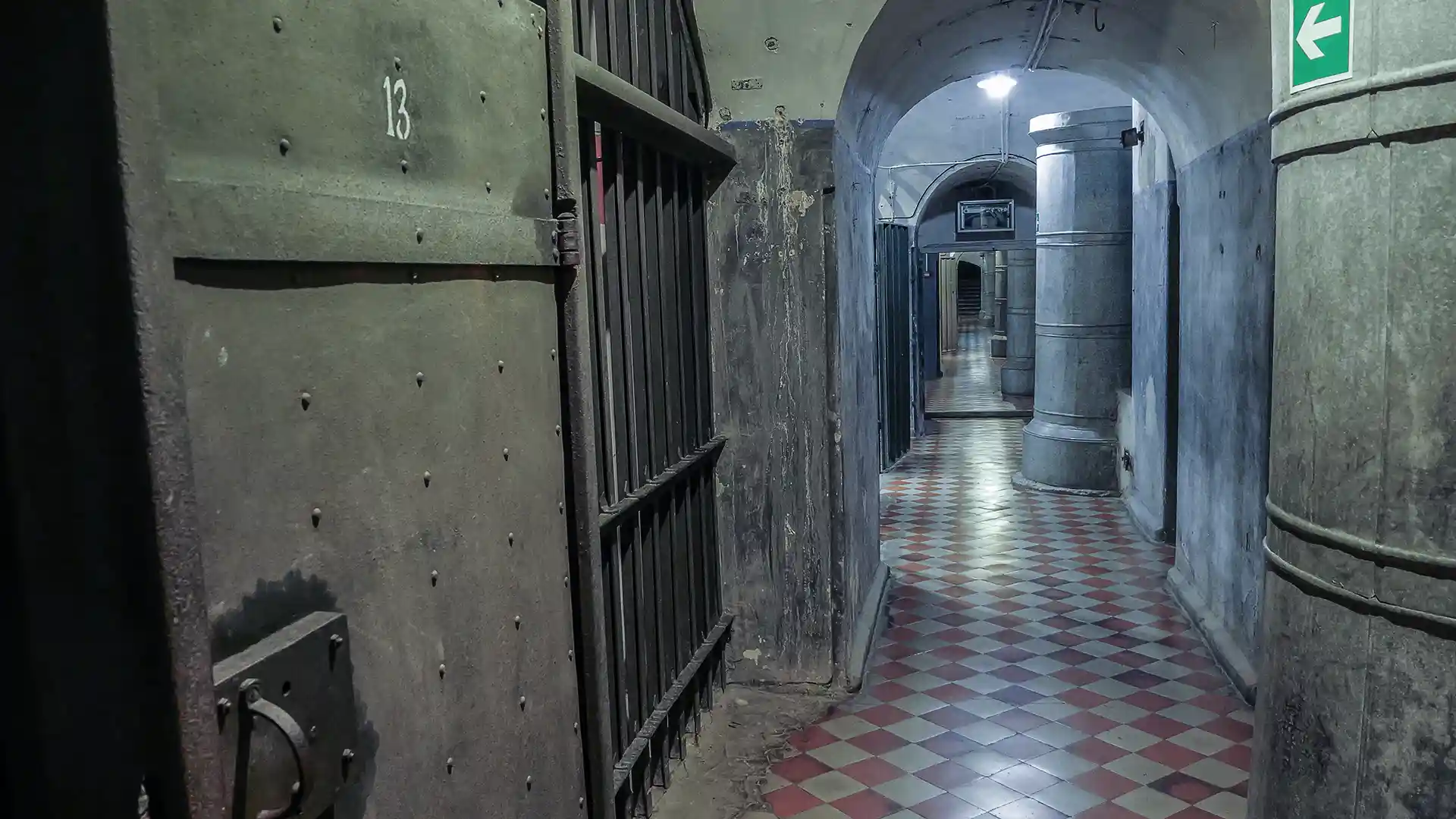
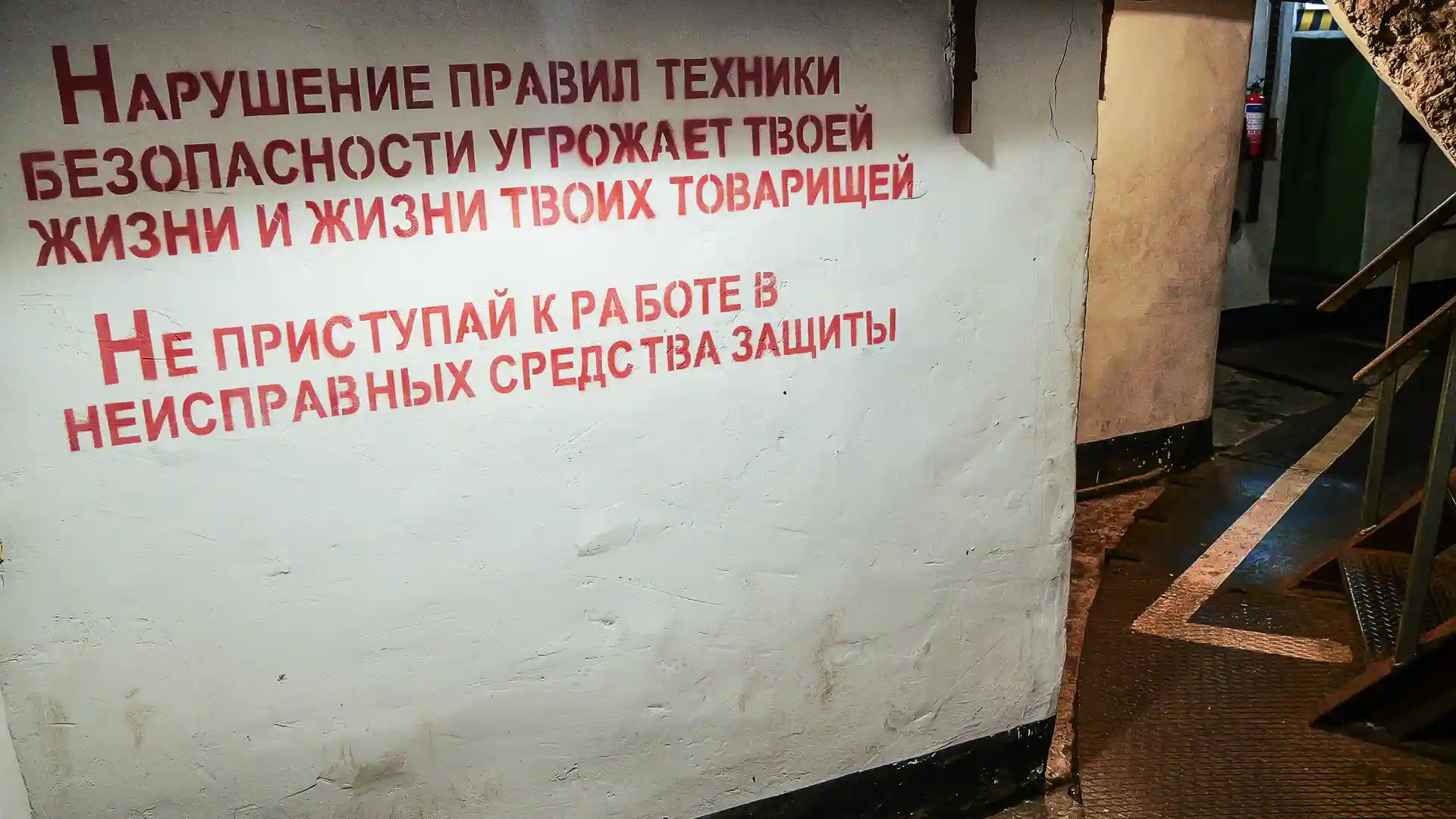
The narrow stairways lead down into the underground, into a completely different world below the massive concrete construction that could be moved away in case of war. We follow a winding, damp corridor until we reach the rusty steel platform above the silo.
7m in diameter. 30m deep. A massive concrete shaft built for Soviet R-12 Dvina nuclear missiles. At that time, their targets included Germany, Norway, France, and Spain. The missiles are long gone now, and the whole base has been converted into the Cold War Museum in Plokštinė: 4 silos, underground structures for the command center, and the facilities for the crew.
Everything looks old-fashioned, even by the standards of the time, and gives us a pretty good impression of the terrible conditions the crews stationed here had to endure.
A museum that makes us realize just how dangerous the world we were living in actually was. Even if we didn’t realize it back then.
We walk up the hill on a paved road. A big bus passes us. Then we arrive at the viewpoint. A parking area lined by souvenir stalls selling amber, or maybe just amber-colored plastic – who knows.
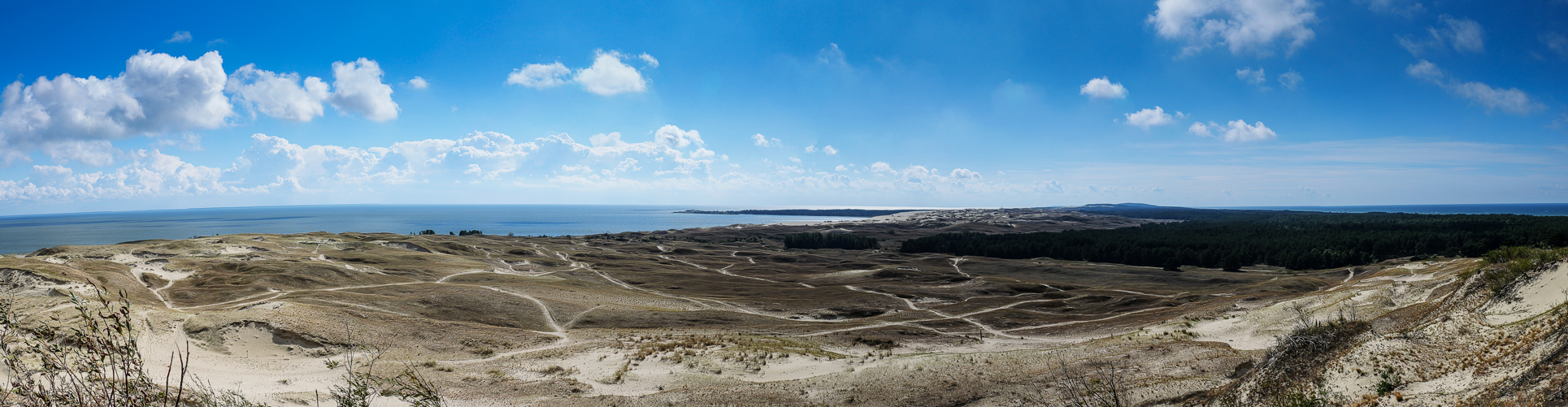
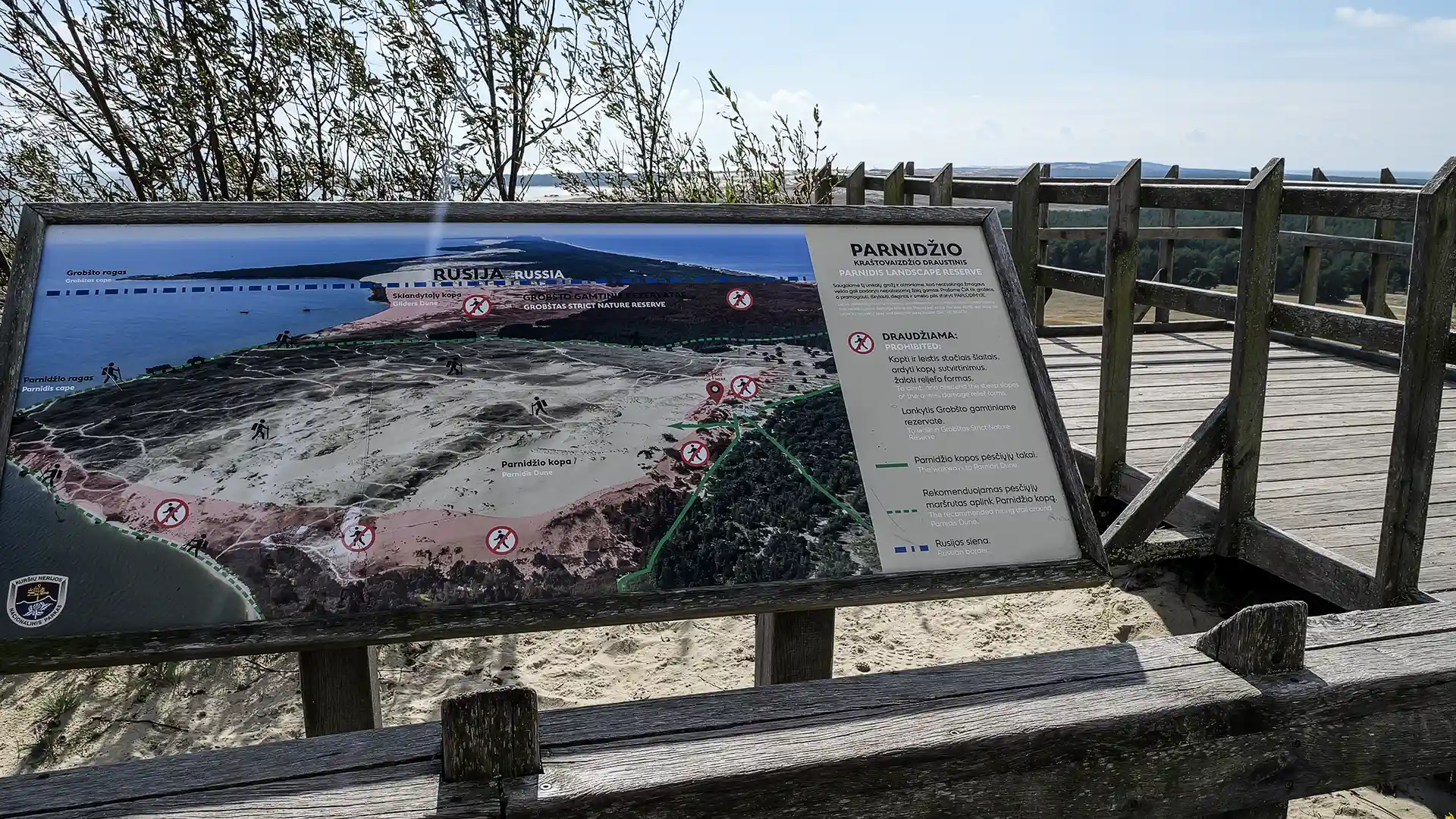
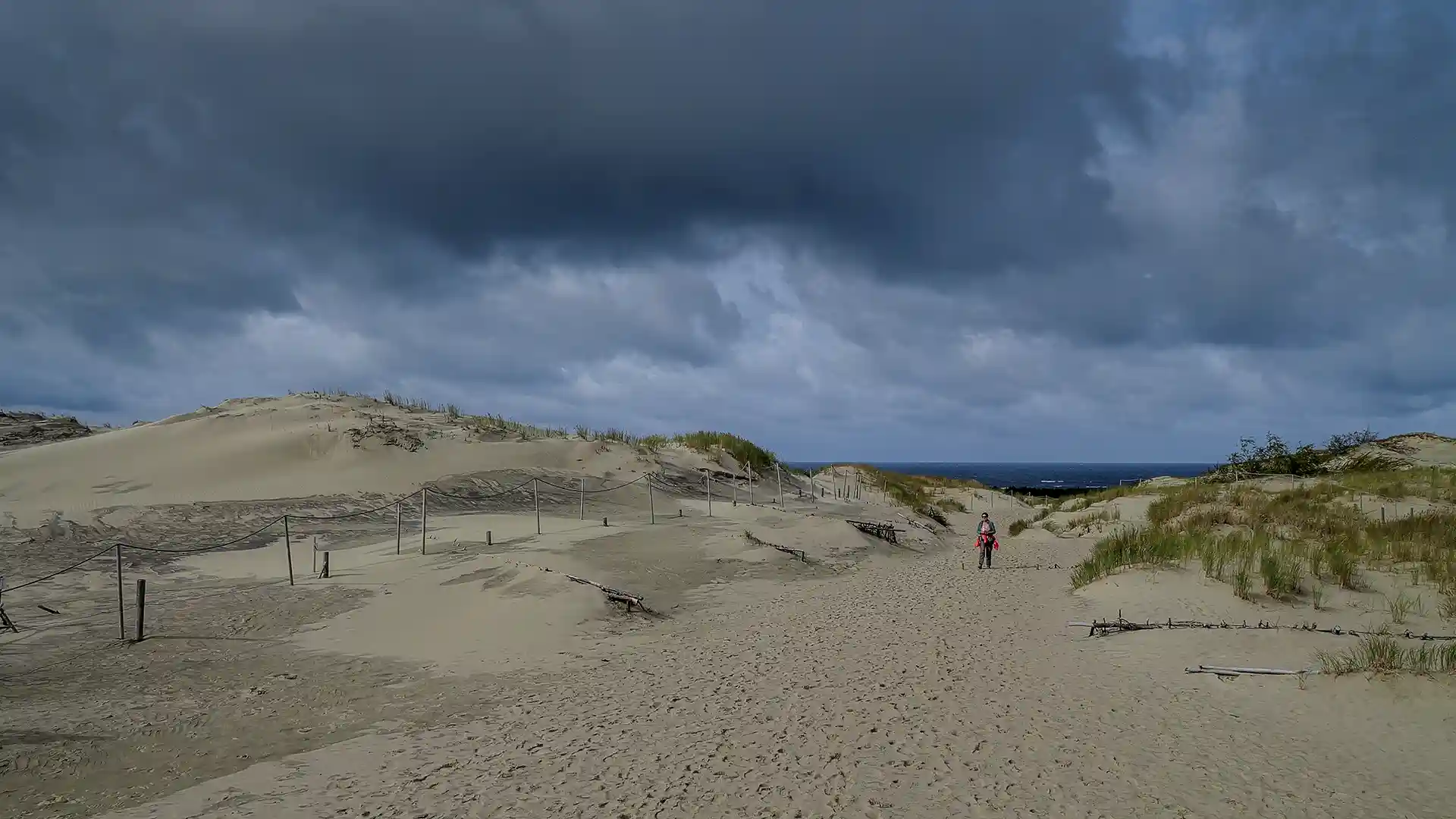
We’re at the top of the highest dune. In front of us, the lagoon, on the left, some houses of the village of Nida, and on the right, just a few km away, the guard towers at the Russian border.
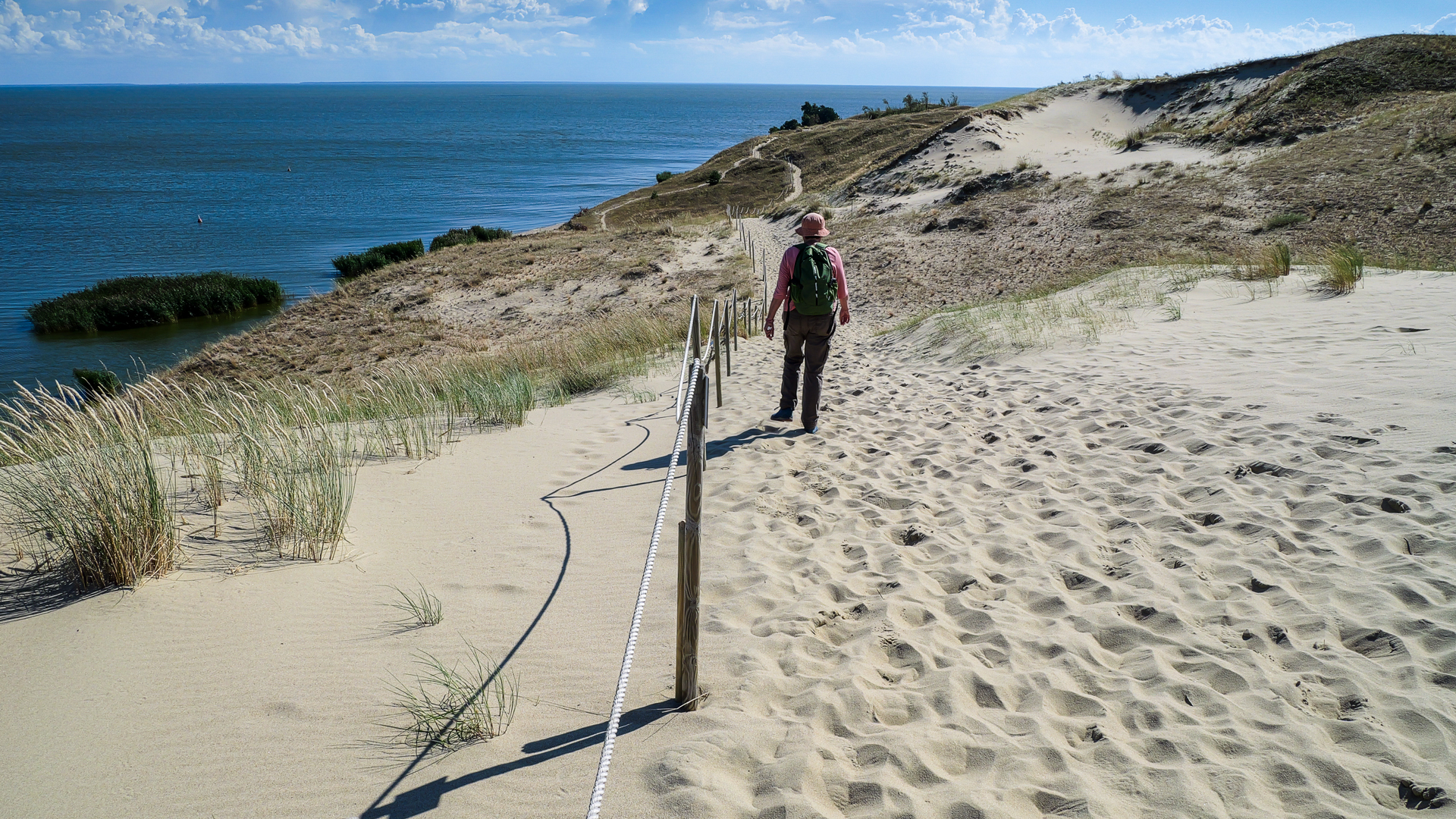
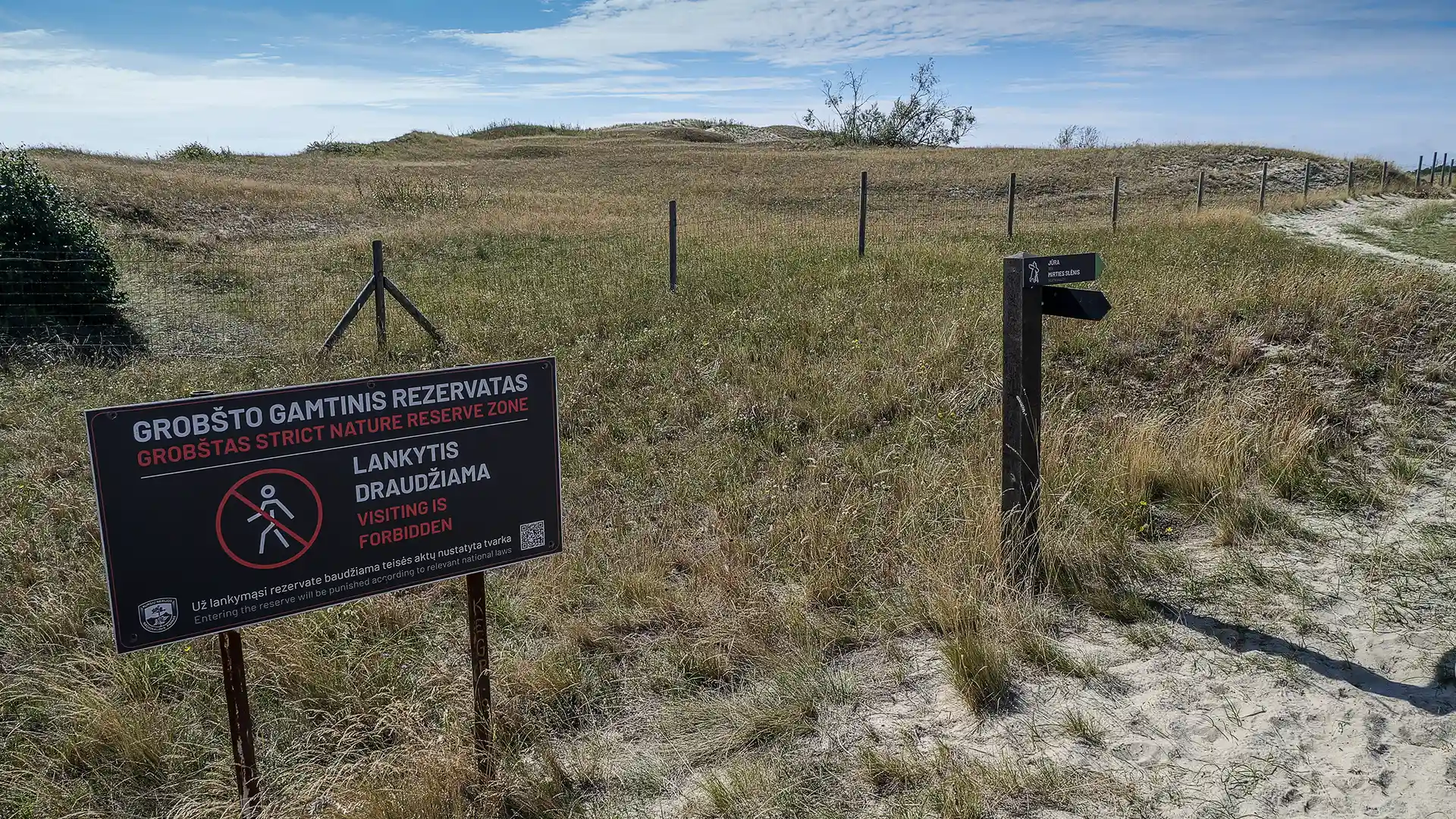
We follow the trail down to the sea, now thru fine sand, and head southwards to the border until we reach a fence. Big signboards inform us that this is a strict nature reserve; no visitor may enter. Anyway, we have no intention of sneaking nearer to Russian territory, even if it’s only the enclave of Kaliningrad. It’s a nice, lonely walk thru the sand. Next to nobody seems interested in anything but the parking lot with its souvenir stalls.
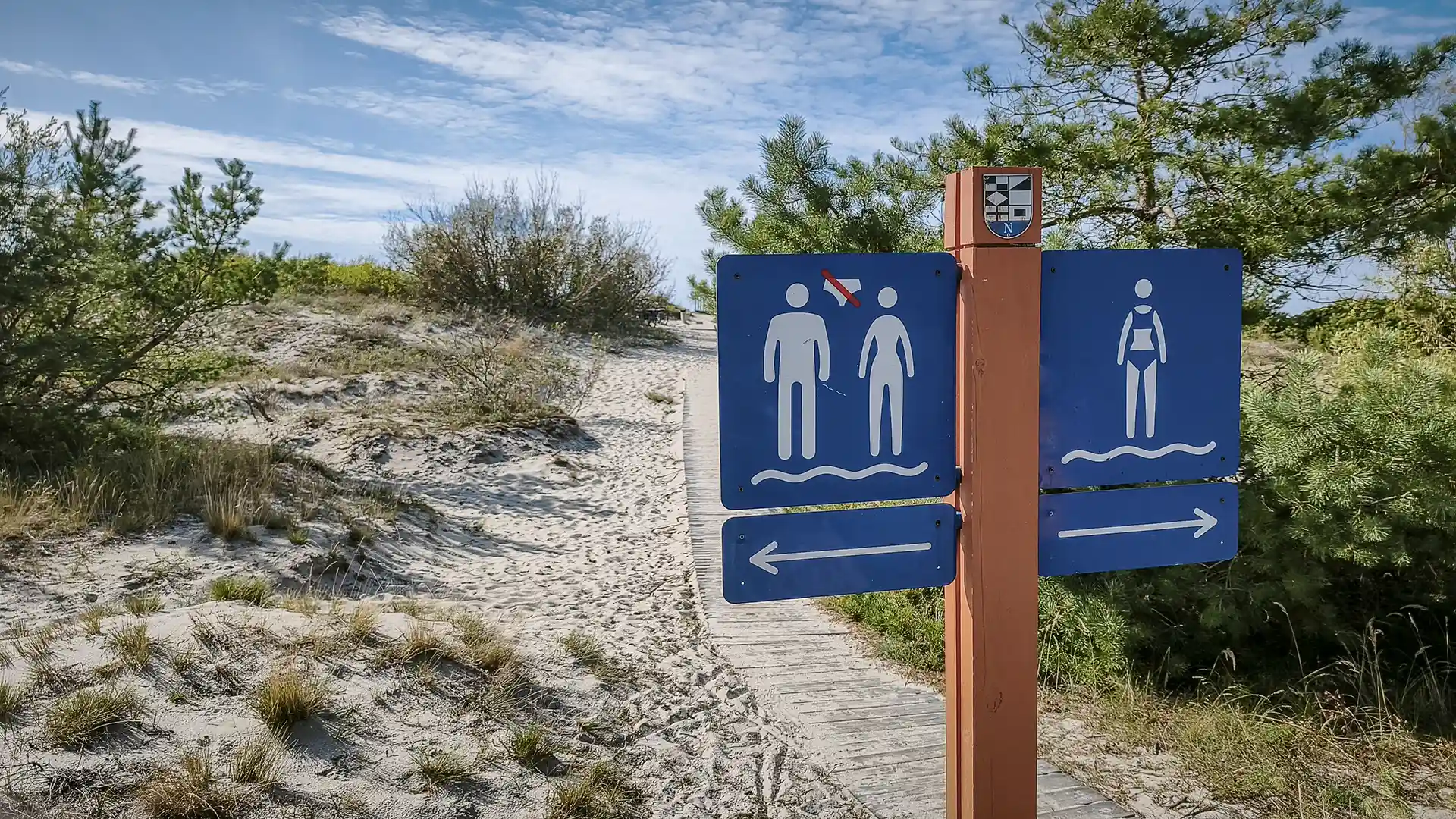
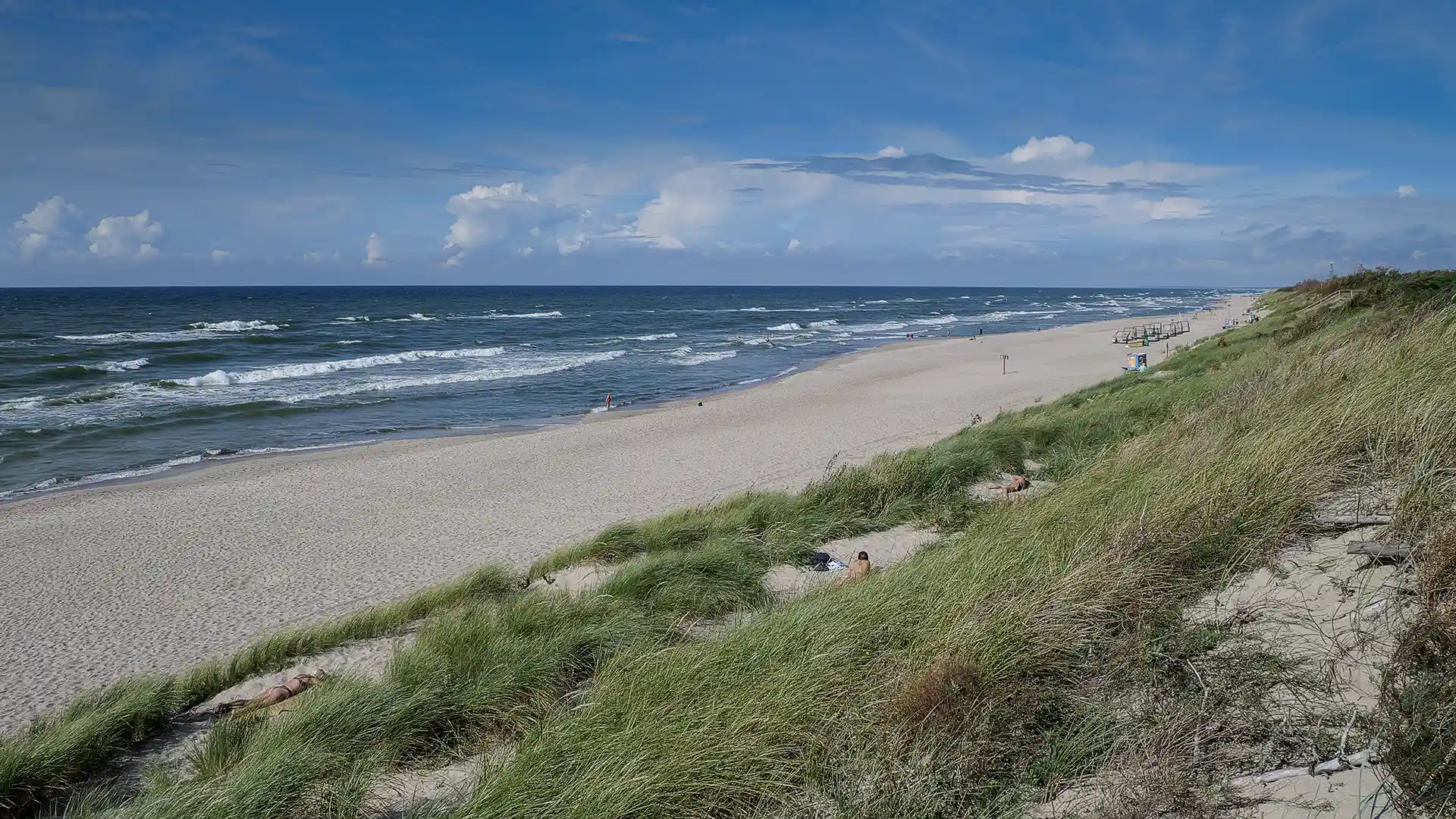
Then we head to the beach on the outer side of the spit. It’s really complicated here. There’s a well-defined nudist zone for girls and boys and another area for girls wearing suits, but nothing for boys.
For us, no problem — anyway, we don’t have swimsuits with us.
And at the beach? What a mess. They’re mixing it all up – with swimsuits, without swimsuits, no separation, even boys in the zone for girls with swimsuit, nobody cares …
Of course, the Curonian Spit is more than a beach and a strict nature reserve on the last km to the Russian border.
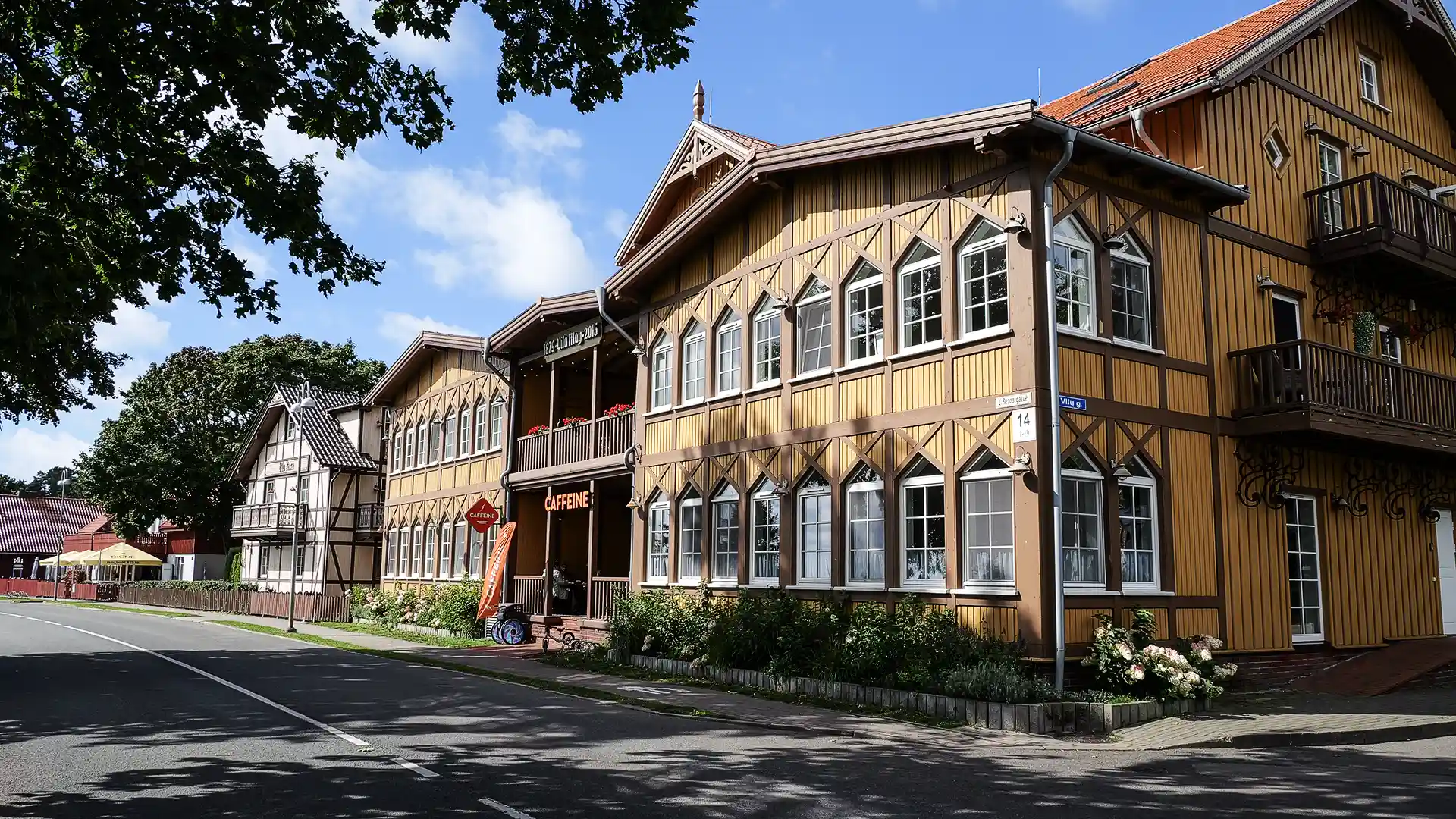
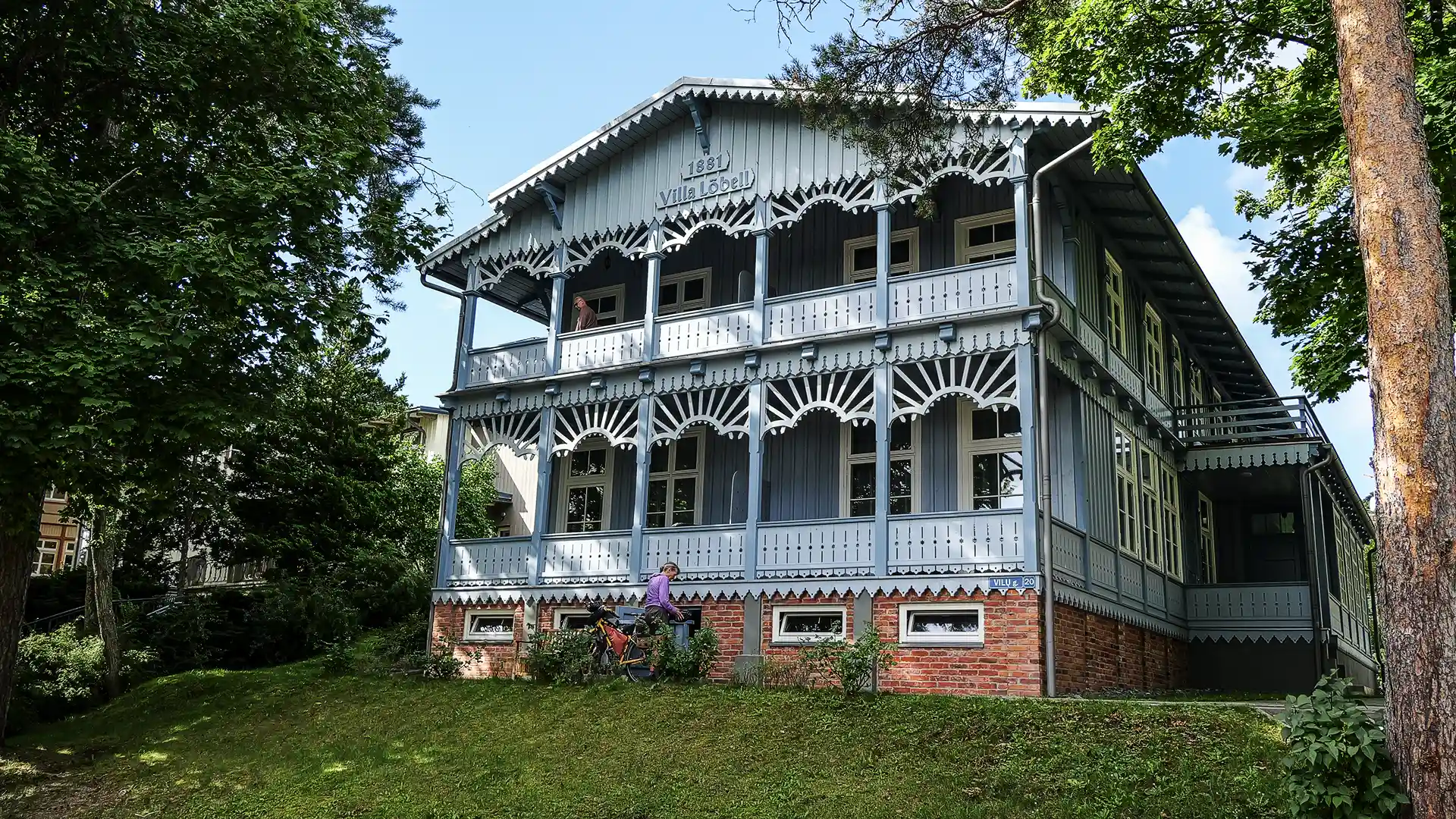
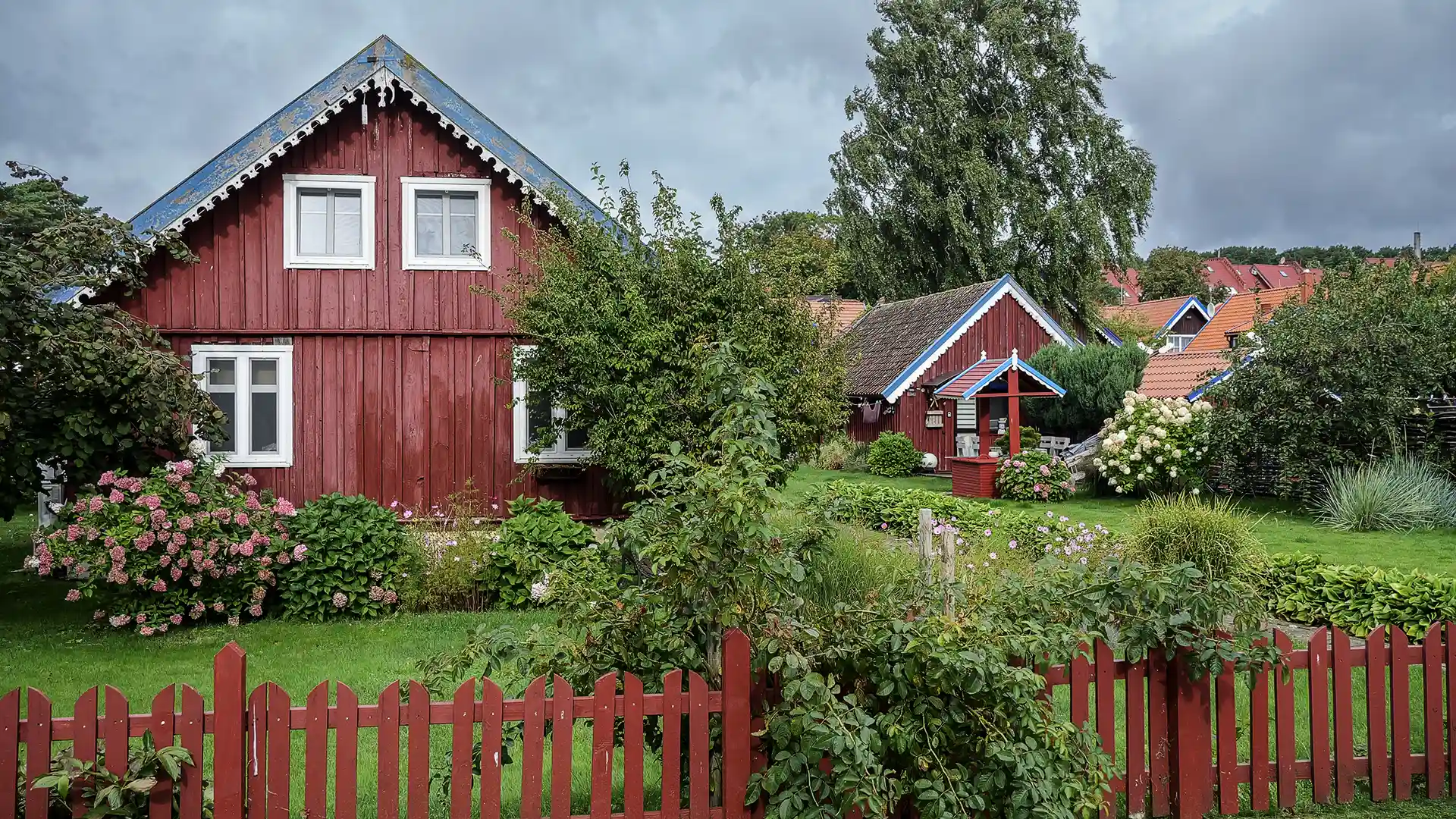
There’s the village of Juodkrantė, a former seaside resort with a number of traditional houses. Or Nida, the center of tourism with its colorful houses, all converted into apartments…
…and the Dead Dune. Called so because it doesn’t move anymore.
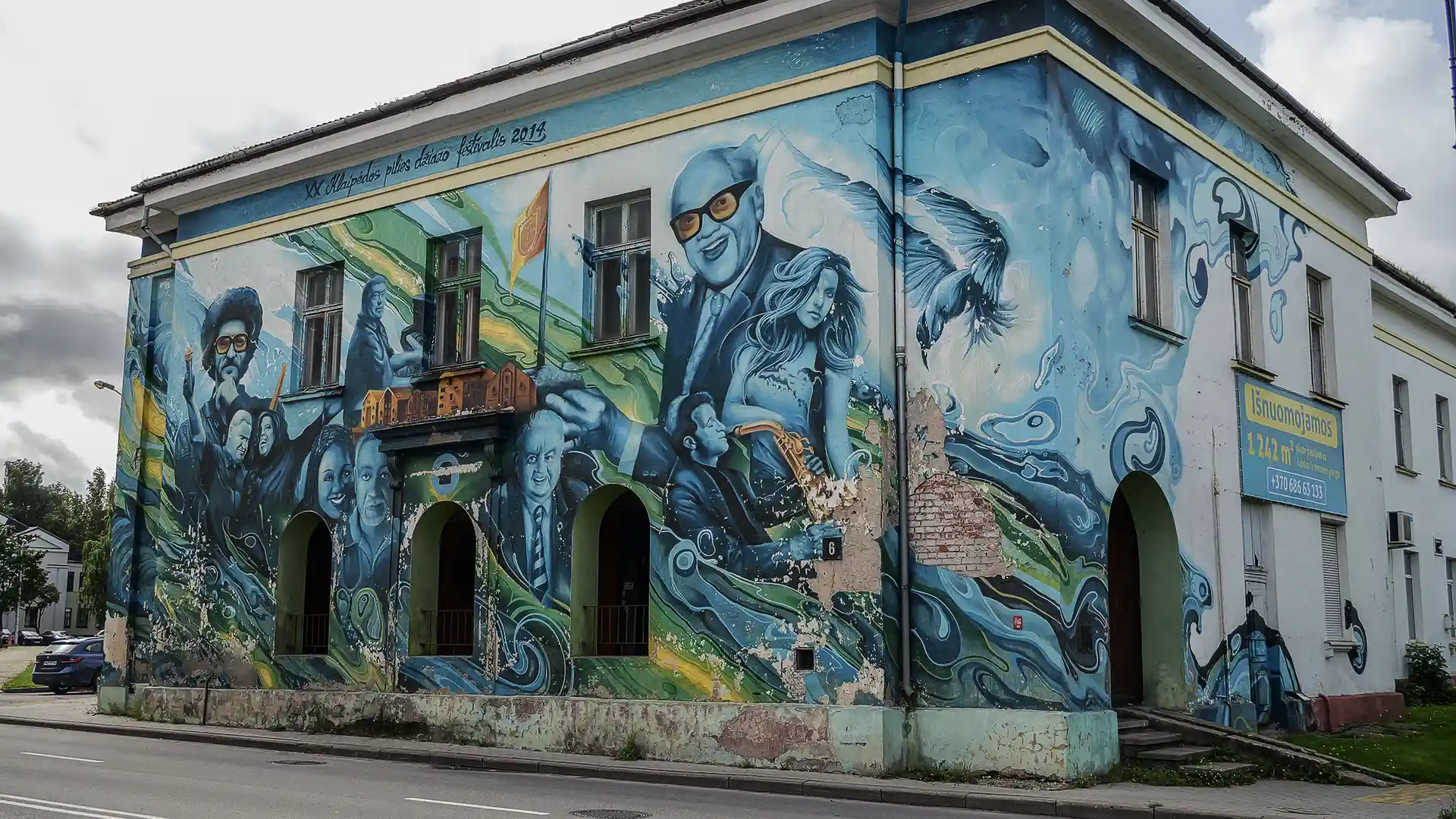
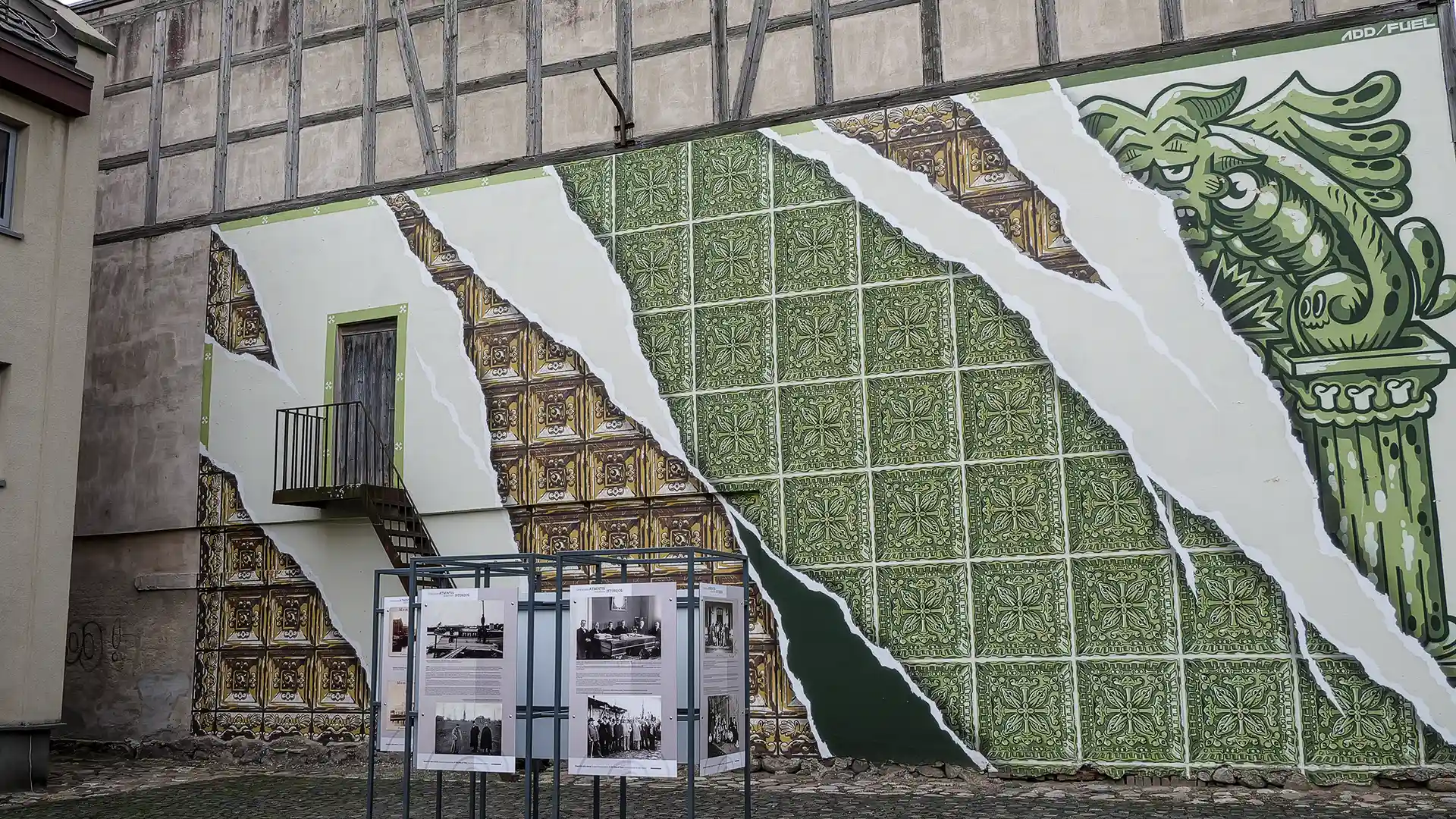
Entering the town, we discover a huge, amazing mural on the wall of a house. No doubt the cars behind us have to be a bit patient while we take in this masterpiece of street art.
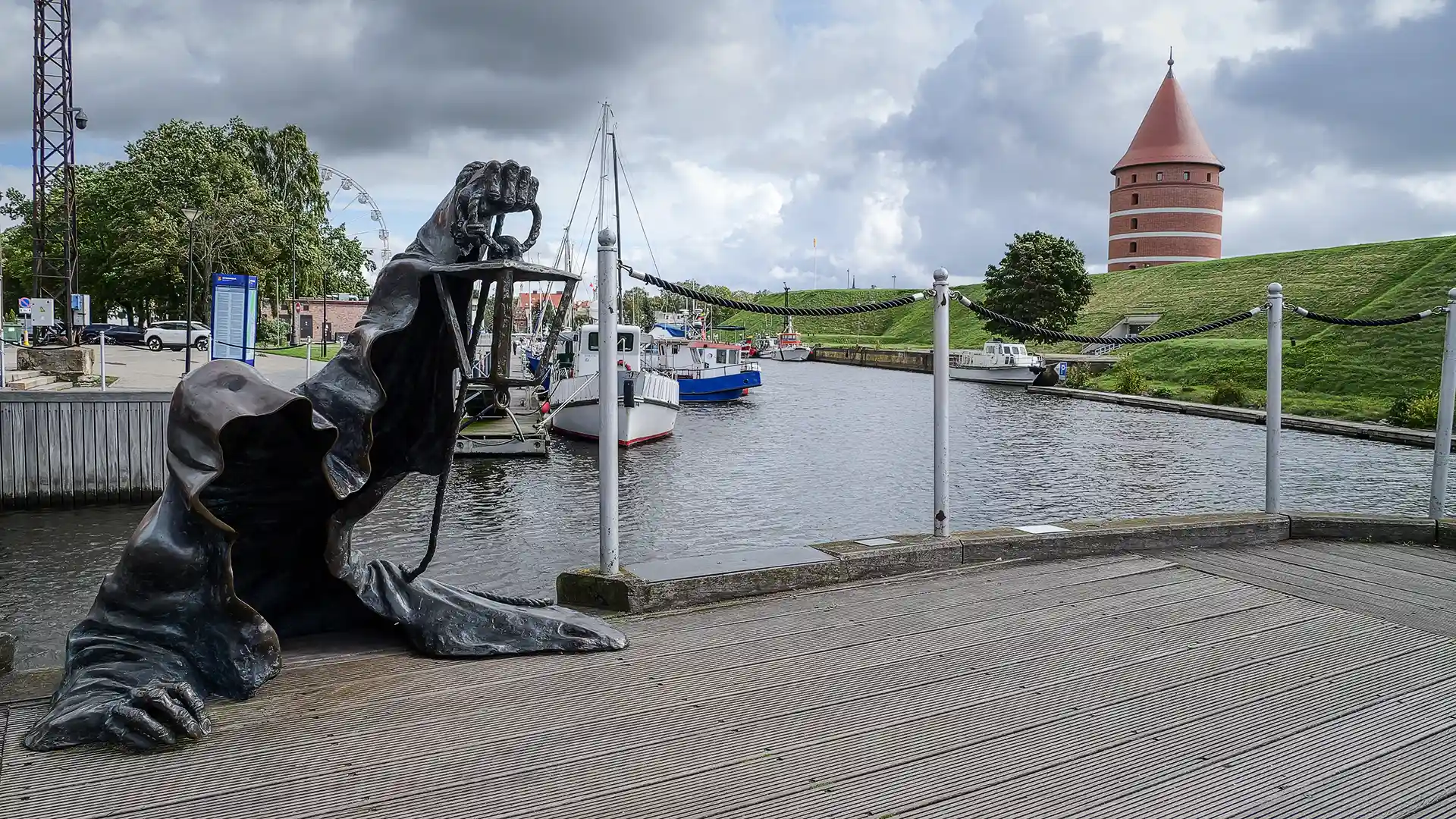
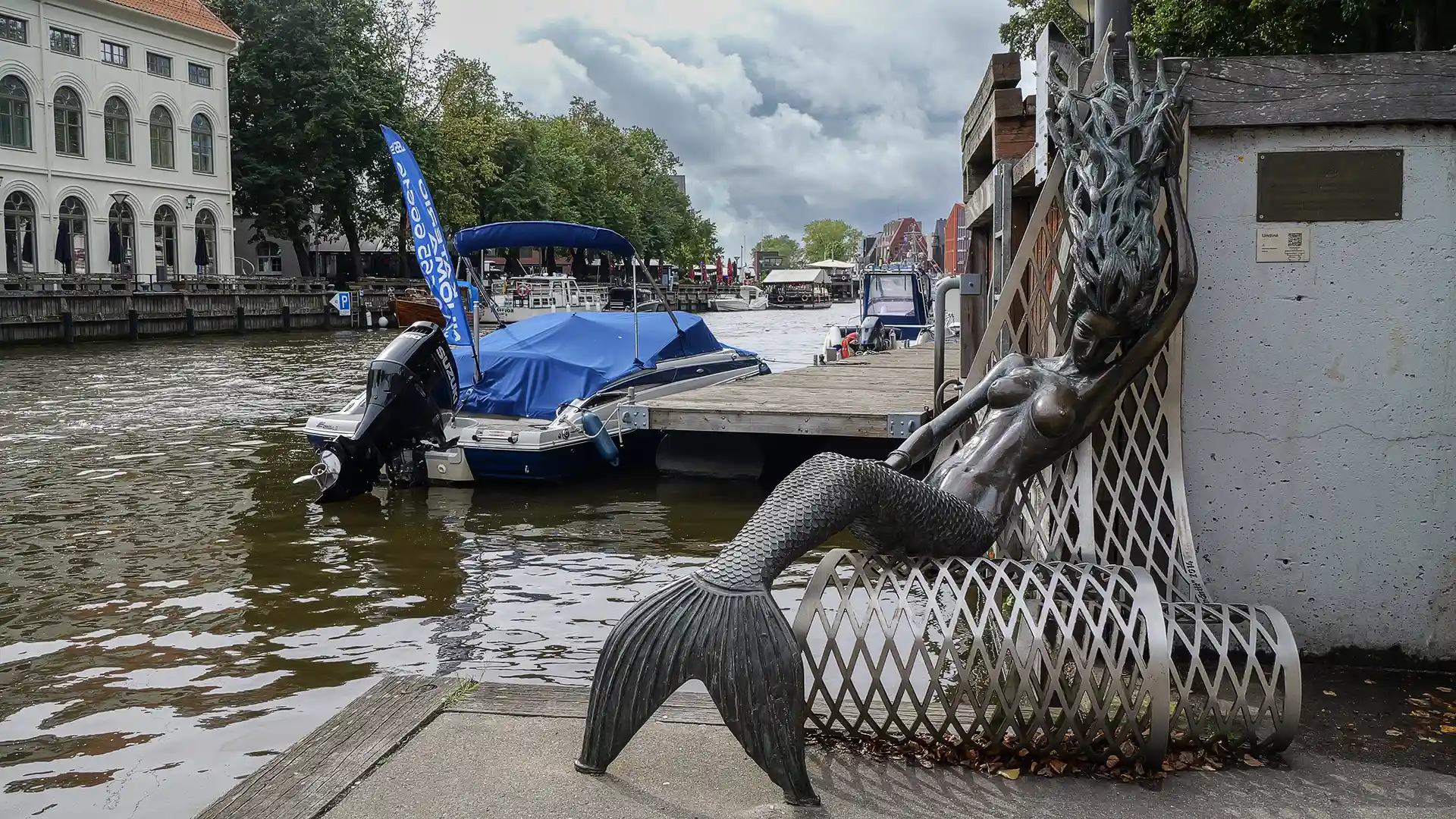
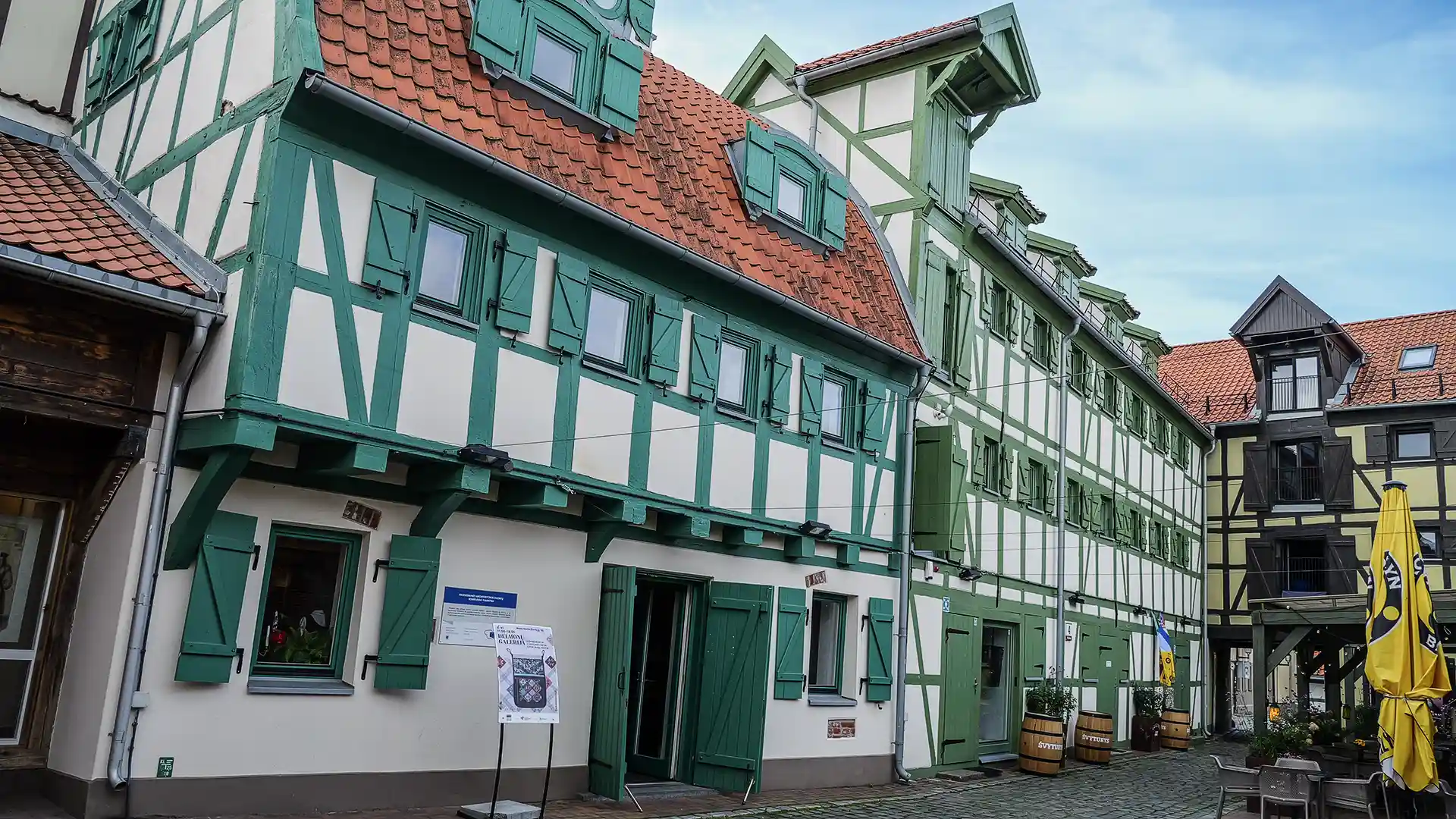
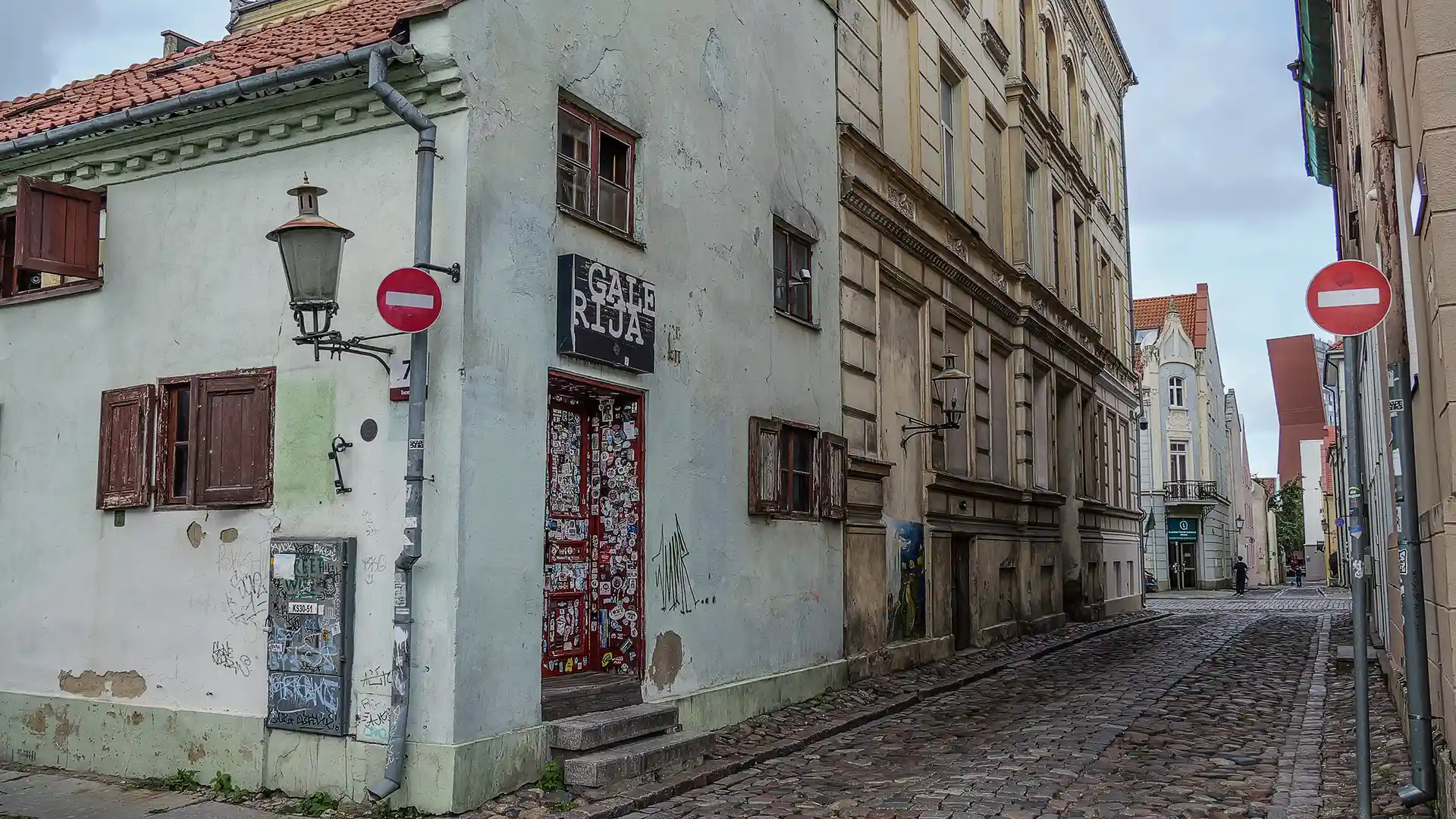
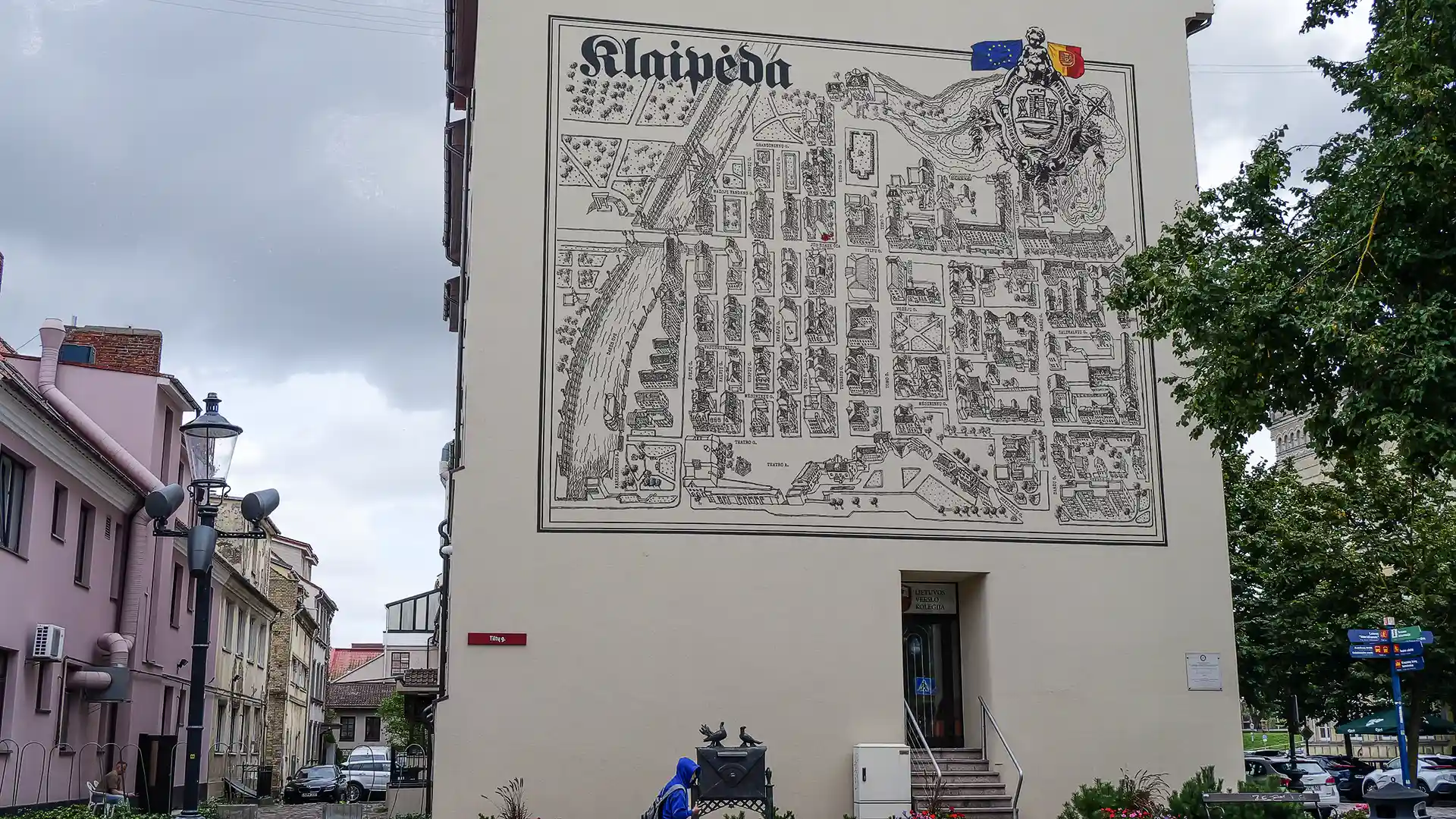
A little later, we sneak thru the cobblestone alleys of Klaipėda. We discover a few funny sculptures, like the Black Ghost and the Mermaid (the latter contains adult content, so it’s not suitable for US readers).
We check out the old town, but somehow, the houses aren’t really worth the visit.
We find a few more examples of street art, but nothing comes close to the 1 at the city entrance.
Definitely, we’re a bit disappointed. After our 1st impression and what we read about this town, it was difficult to match our expectations with reality. Whatever, after an hour or so, we say goodbye to Klaipėda and drive on to a small campsite at the seaside.
Esteemed readers, Ladies’n’Gentlemen, all others,
that’s it. We think the post is long enough.
Tomorrow, we head for the next country: Latvia.
Those adventures, you’ll get them soon. Promised.
Cheeeers
Monika’n’Martin