























Polished facades. Soviet decay. Secret bunkers. Abandoned military towns. Welcome to Latvia — beyond the postcard.
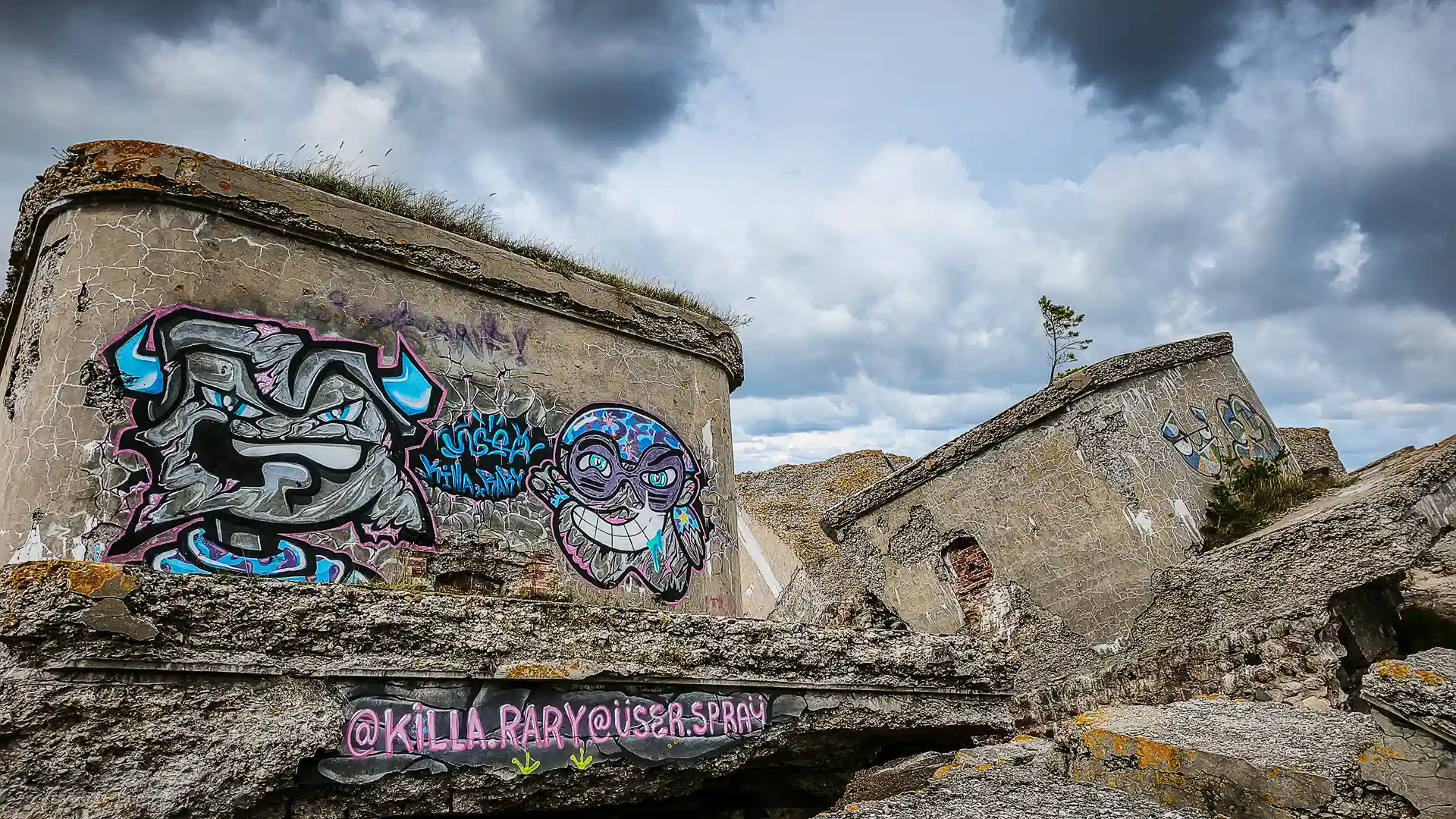
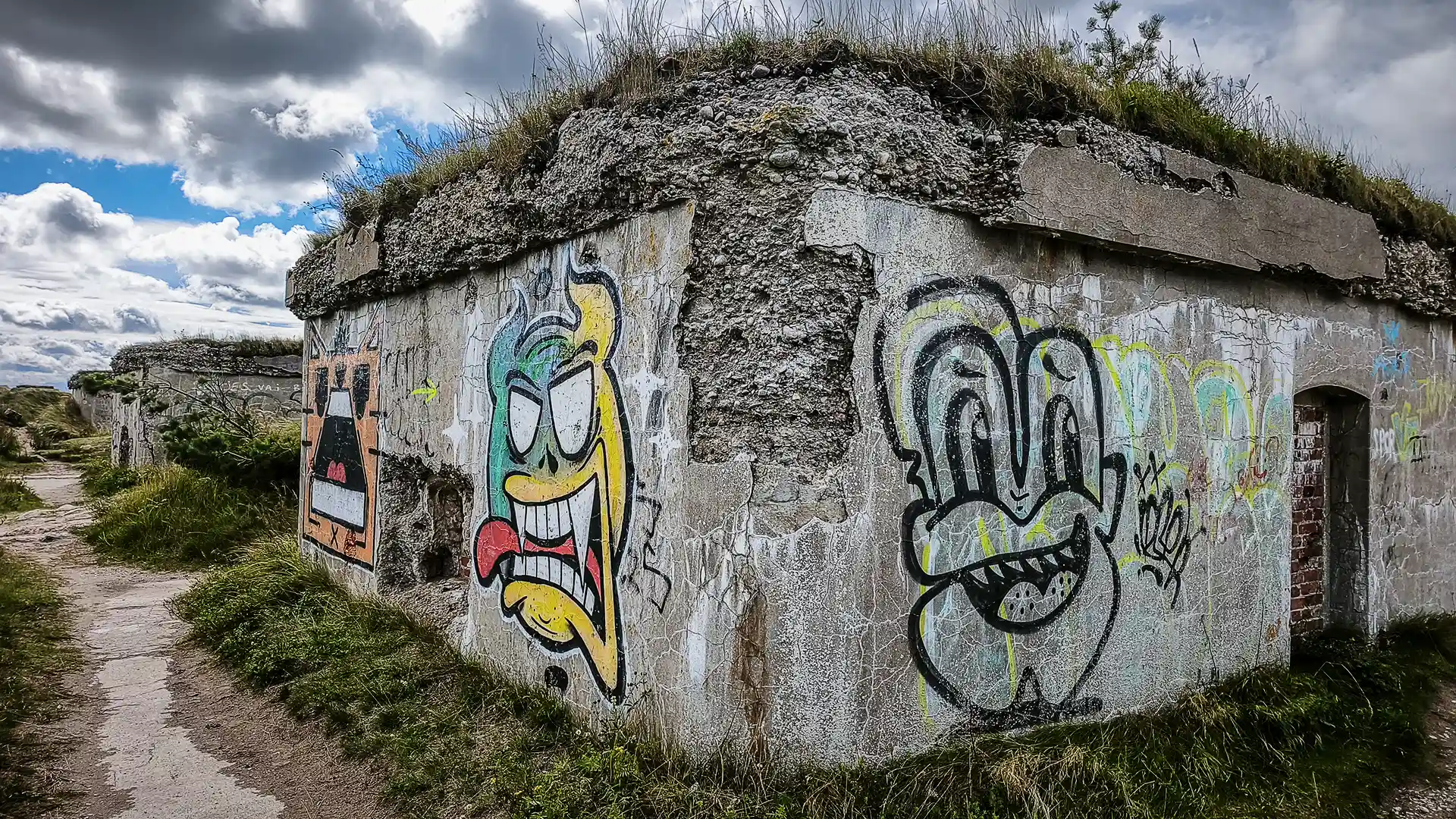
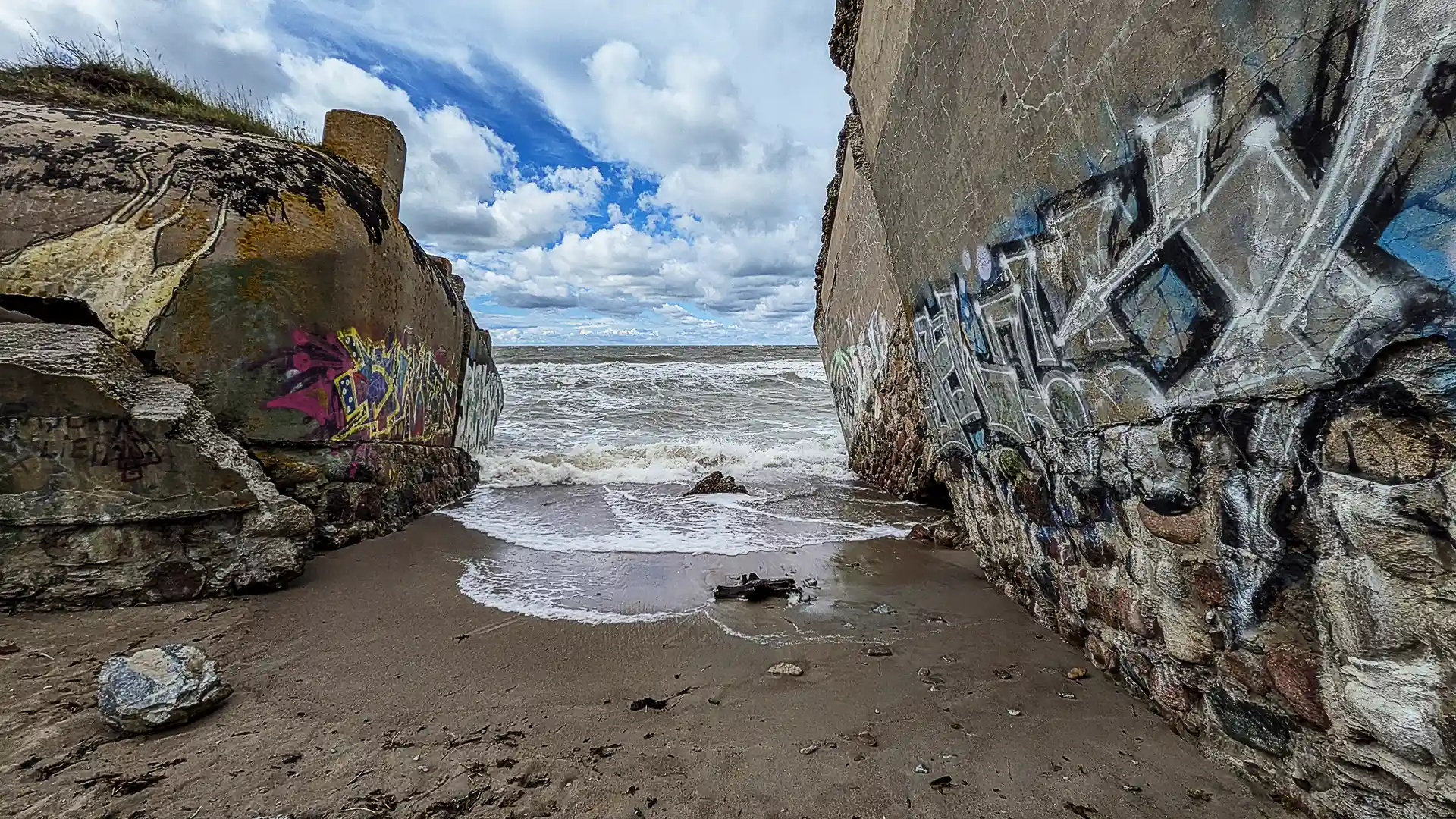
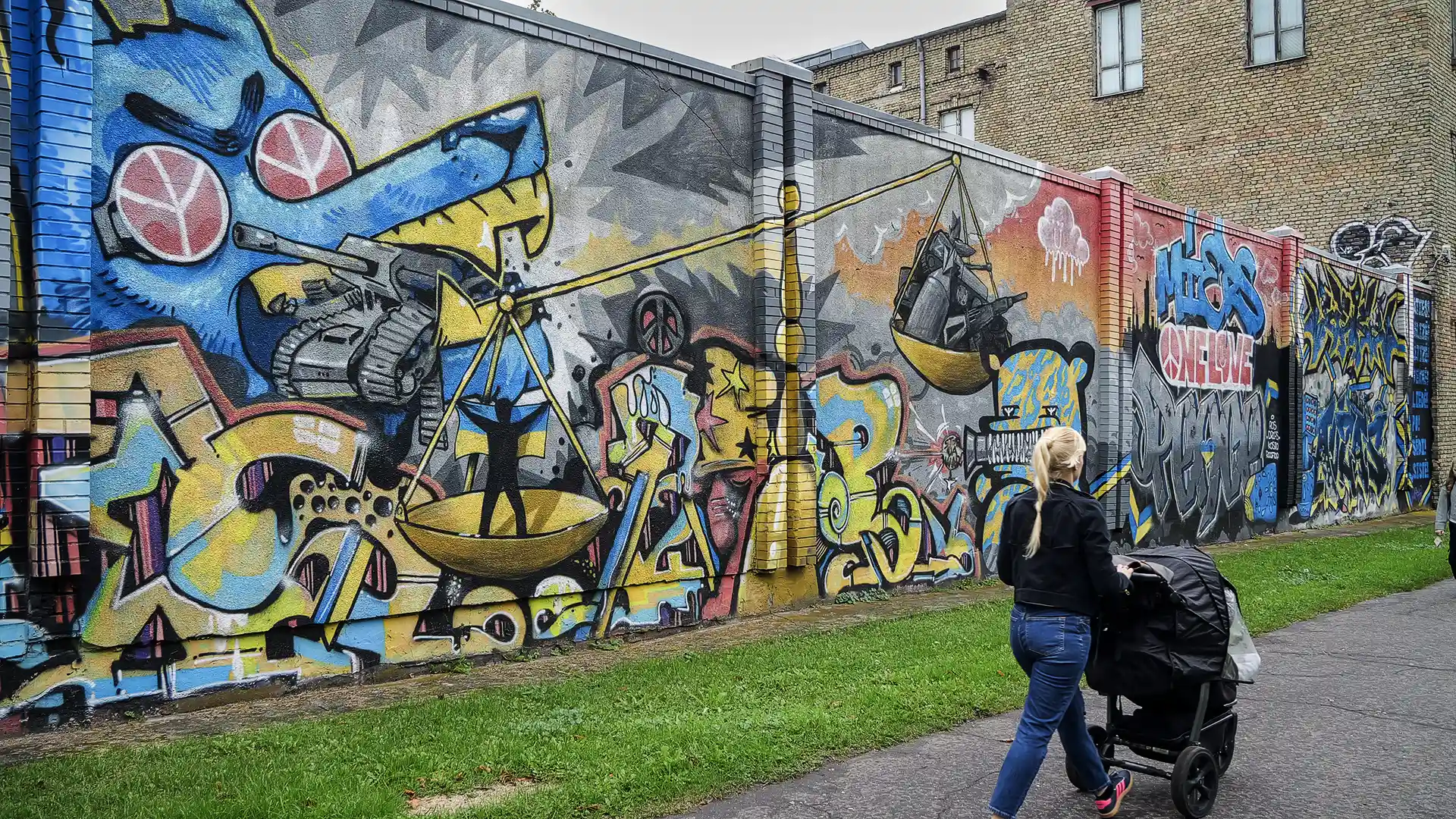
We definitely don’t know what we should admire more closely: the crazy street art sprayed all over the crumbling concrete walls, or the even crazier bunkers built more than 100 years ago into the reef and now slowly collapsing into the sea.
These massive concrete constructions, with ceilings several meters thick, look completely surreal. Some are still sitting on top of the reef, many are slowly sliding into the sea, while others are already splashing around in the water. Some are still pretty much intact, while others show clear signs of attempted demolition decades ago.
And they’re all covered with dozens of murals and graffiti.
We’re climbing up and down, over the top of the bunkers and inside them. We’re definitely more interested in the street art than in the architecture of this fortress, built in the late 19th century by the Russian tsarist army to protect the port of Karosta – but apparently the Northern Fort was never used.
That’s our 1st experience in Latvia. This morning, we’ve crossed the border and headed for Liepaja’s city campsite. From there, we go straight to the famous Northern Fort.
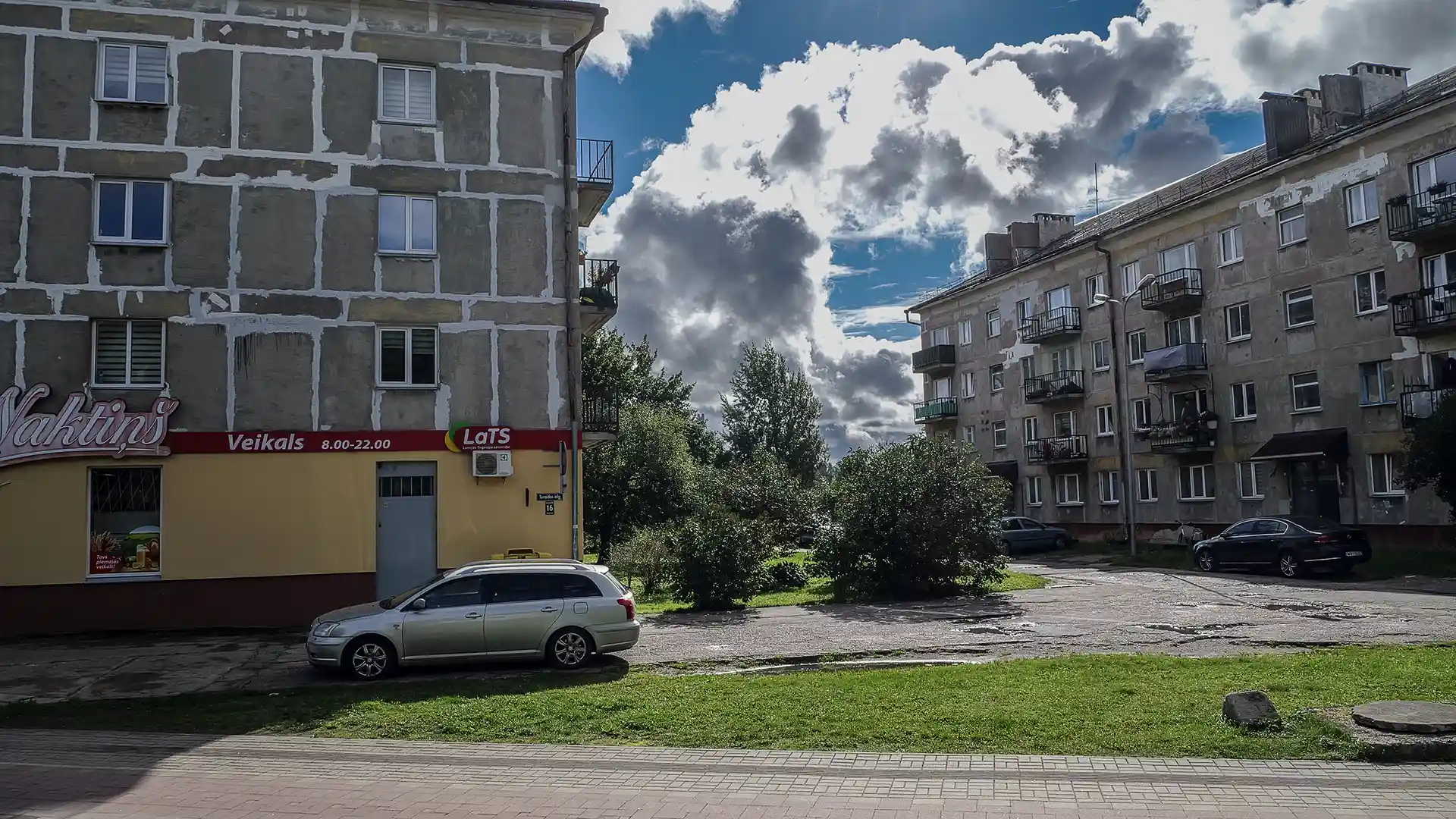
We quickly realize that Latvia isn’t going to be about romantic old towns, beautiful beaches, or cool urban life. Immediately after the border, we notice that the country feels less influenced by the West and its standards than Lithuania. Many places still remind us of its past as part of the Soviet Union. Streets are often in a deplorable state of repair, houses remind us of what we’ve seen in Russia, and even the supermarket selection is much more limited than in its neighbor.
But that’s exactly what makes Latvia interesting. It’s an immense source of Soviet heritage and the paranoia of the Soviet Union – and even offers a glimpse into the survival tactics of the Latvian elite back then. So, there’s plenty to see and do here.
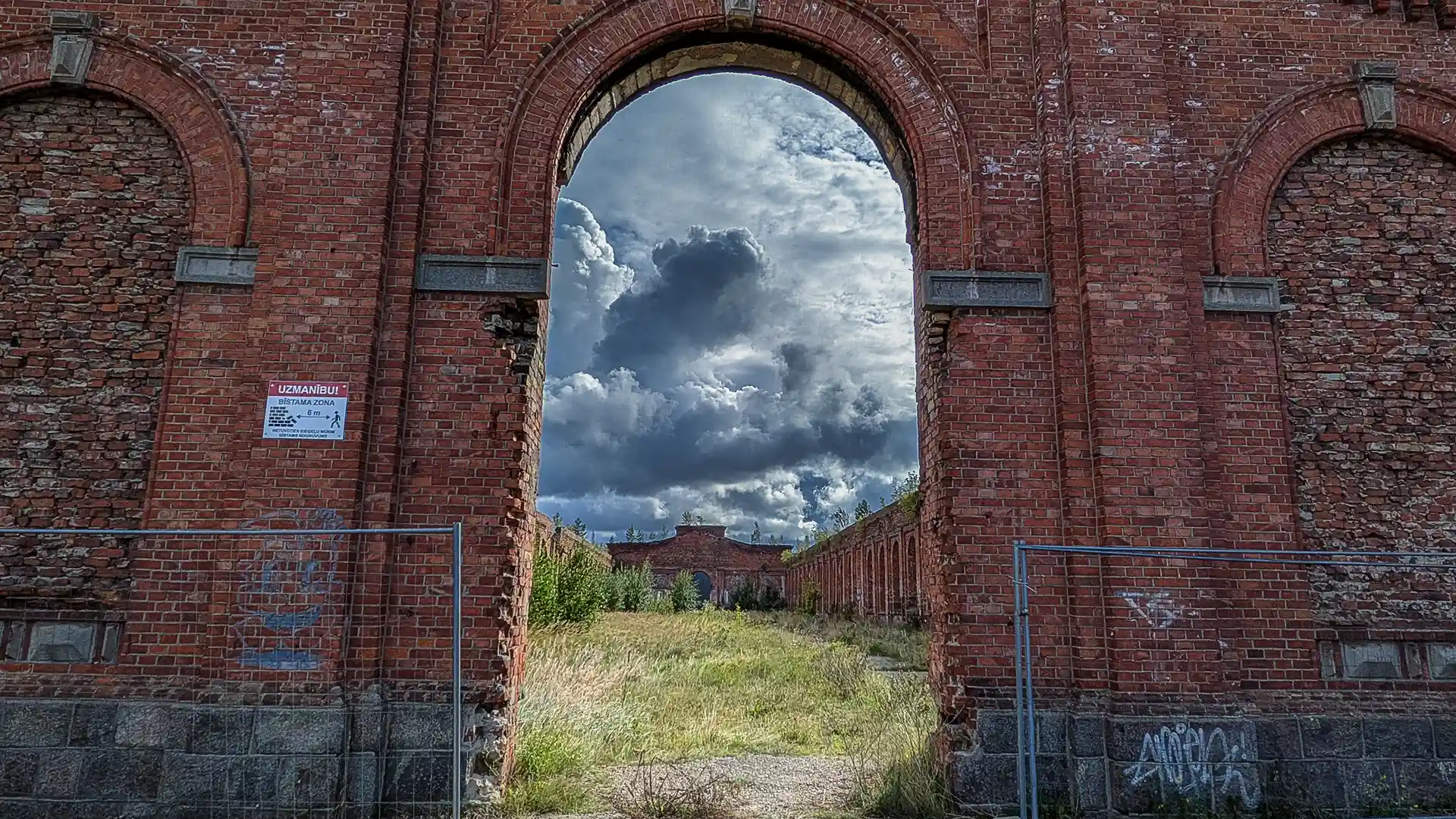
North of Liepaja lies the former Soviet naval base of Karosta, a completely closed-off area once built with enough infrastructure for 1000s of people. After Latvia regained independence, the base was abandoned, slowly decaying into a crime- and drug-ridden area. In recent years, things have improved a bit. A few of the prefabricated apartment blocks have been renovated, but most of the buildings remain uninhabited and are in a severe state of decay.
One place, however, has turned into a well-known tourist sight: Karosta Prison, with its very special tours.
We all stand in a row. Right leg raised, left arm on the right shoulder. Nobody dares to move. Or speak. It’s pretty uncomfortable to stand like this and follow the instructions of the uniformed prison guard. Who knows what awaits us if we make a mistake? And we don’t want to find out.
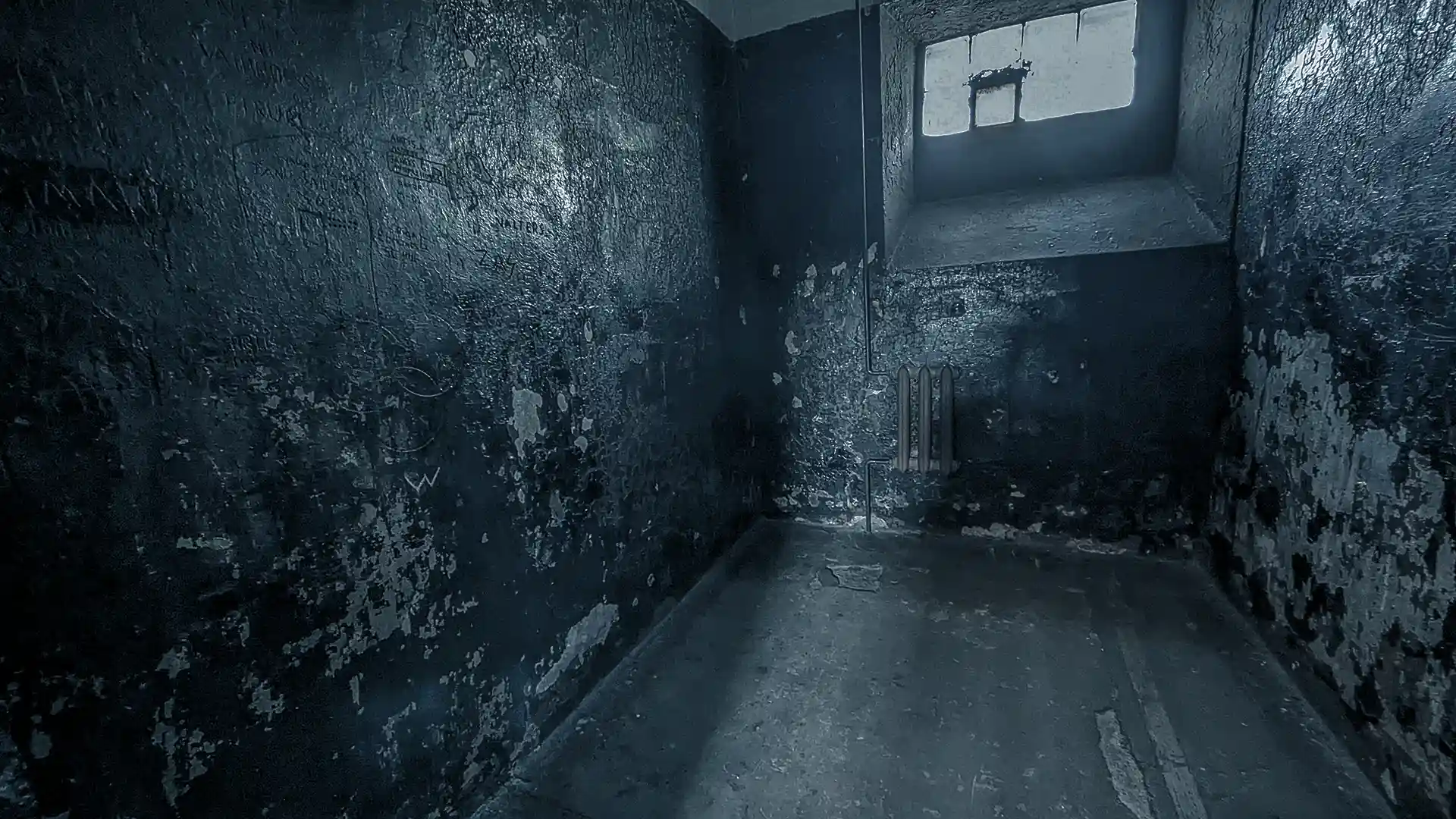
A few minutes earlier, he explained exactly what to expect in case of the slightest mishap. He showed us the prison’s dark room, where defiant prisoners are locked up and forced to stand at attention behind the door for nearly 24h.
Yeah, we’re aware of the risks.
During our tour of Karosta Prison, we quickly learn that these guys aren’t here to tell us nicely about the terrible things the Soviets did to their victims during the occupation. They don’t show us the ultimate Insta spot or do anything to make our visit as pleasant as possible.
No. They give their level best to make us feel like Soviet traitors waiting a few minutes before execution. They’re extremely unfriendly, make us march in a single line, bark orders at us, and lock us in a cell – at least we’re only about 10 people, not 50 like in Soviet times.
Well, it’s a reality tour. At least we know that after an hour, we’re out again. Which takes a bit of the realism away.
Unless you want more.
For those who do, there’s a hostel inside the prison. Of course, it’s slightly upgraded.
If you’re interested, check it out on Booking.com.
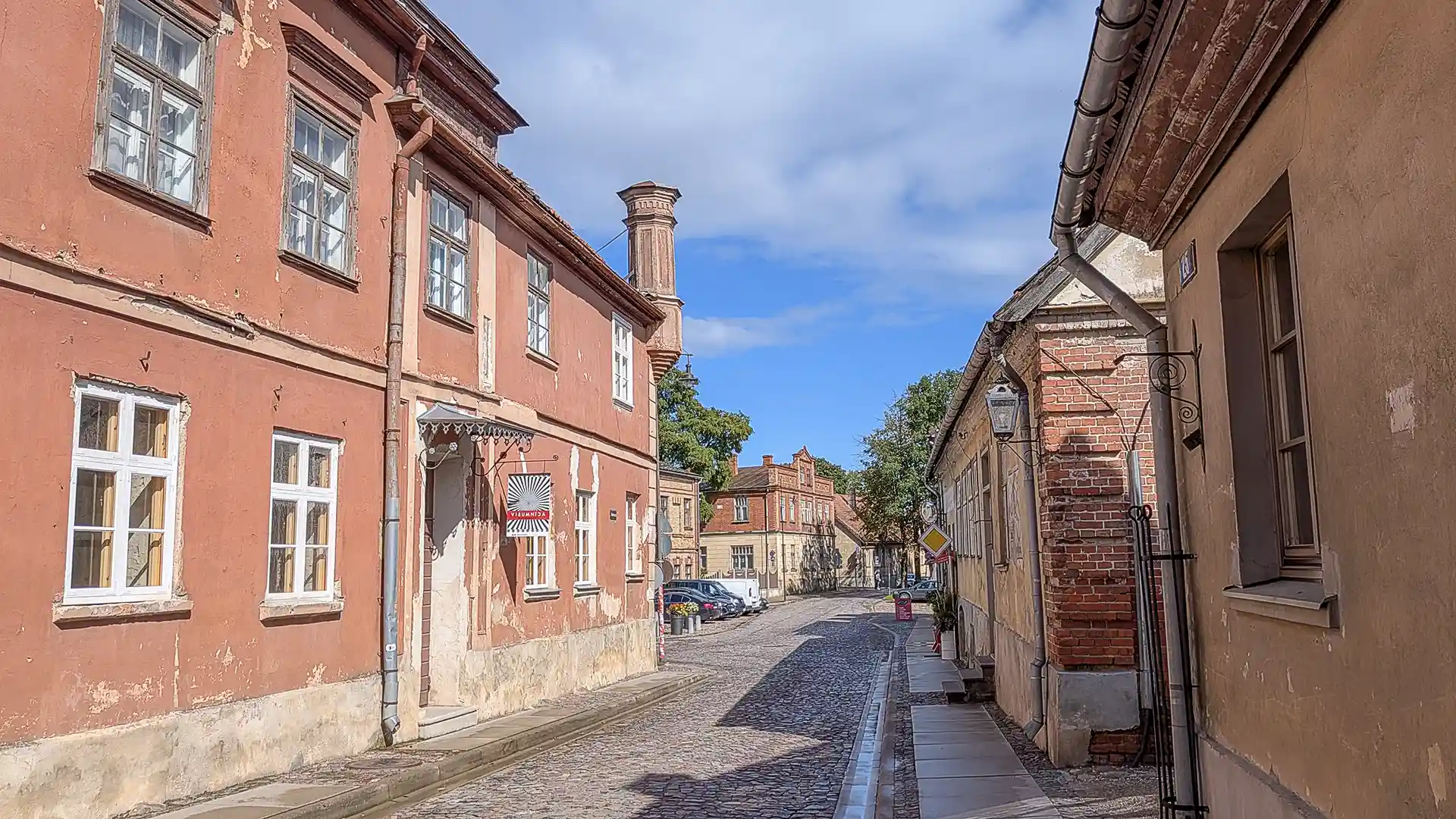
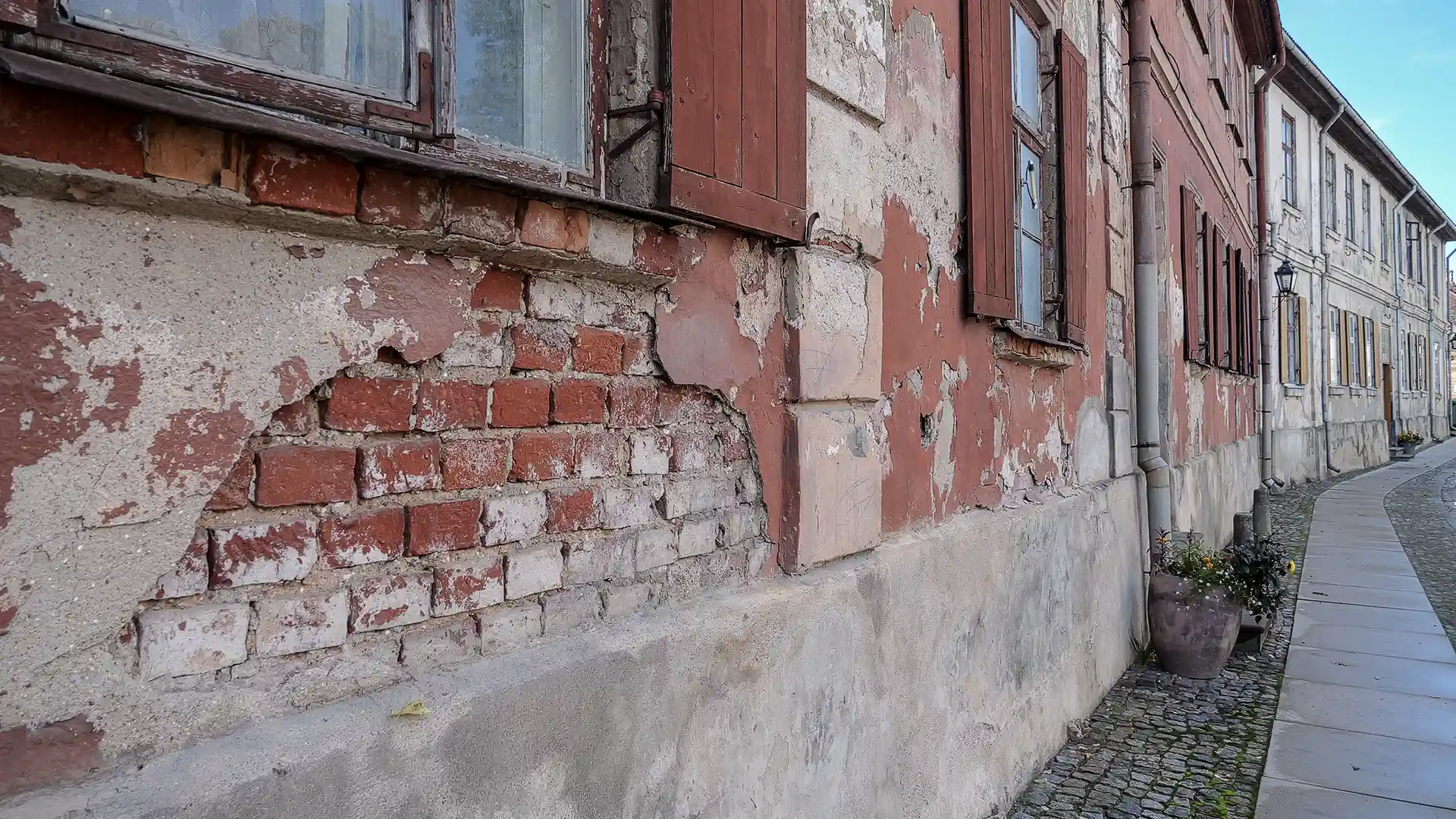
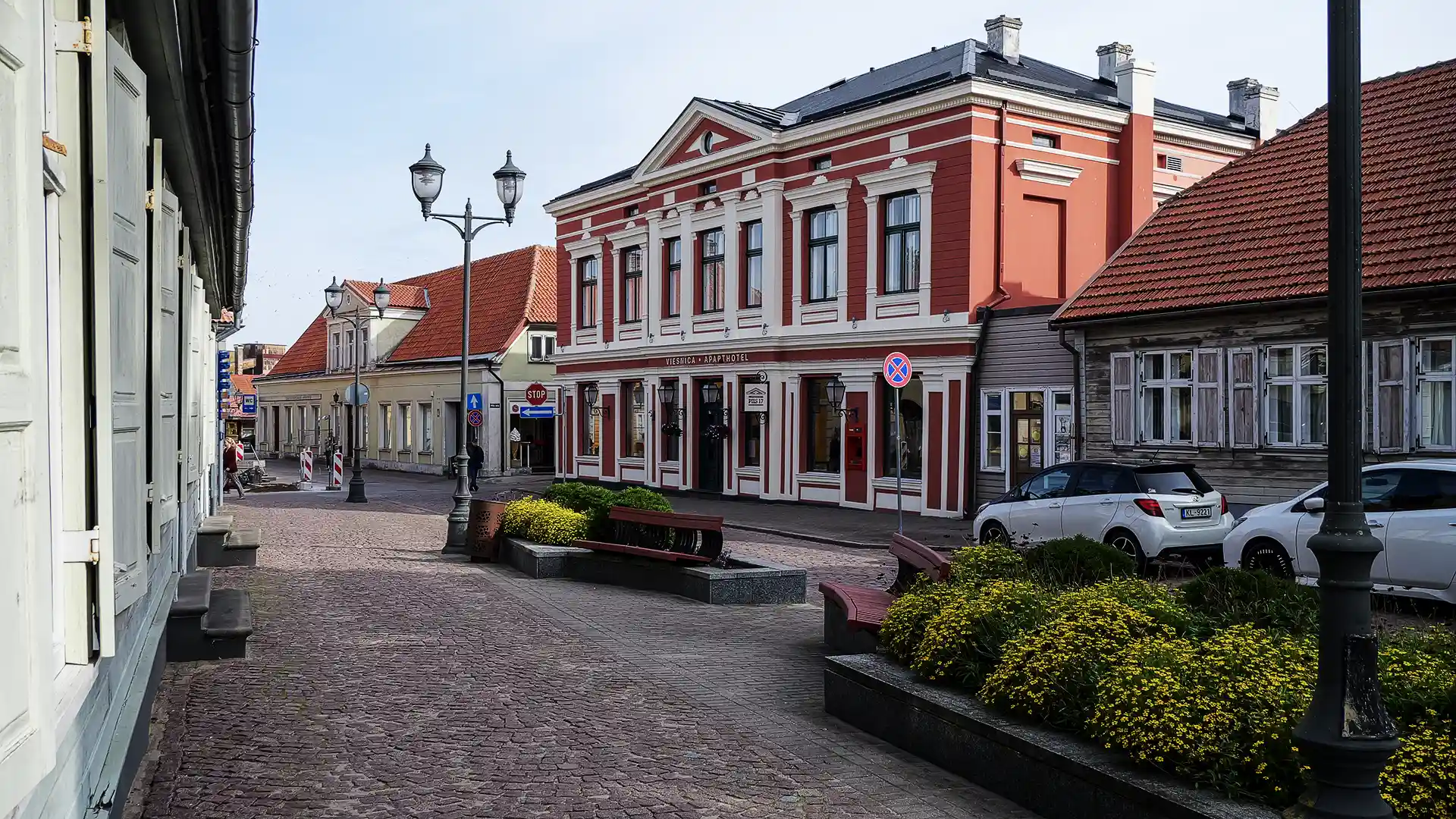
We stroll thru the cobblestone alleys, lined with wooden houses. Most of them are in slightly bad shape – faded, peeling paint, rotting wood and crooked shutters. Something feels frozen in time. It looks like what we’ve seen in the early 90s in the eastern part of Germany, or on faded pictures of the good old Soviet Union.
Until we notice what’s actually happening here.
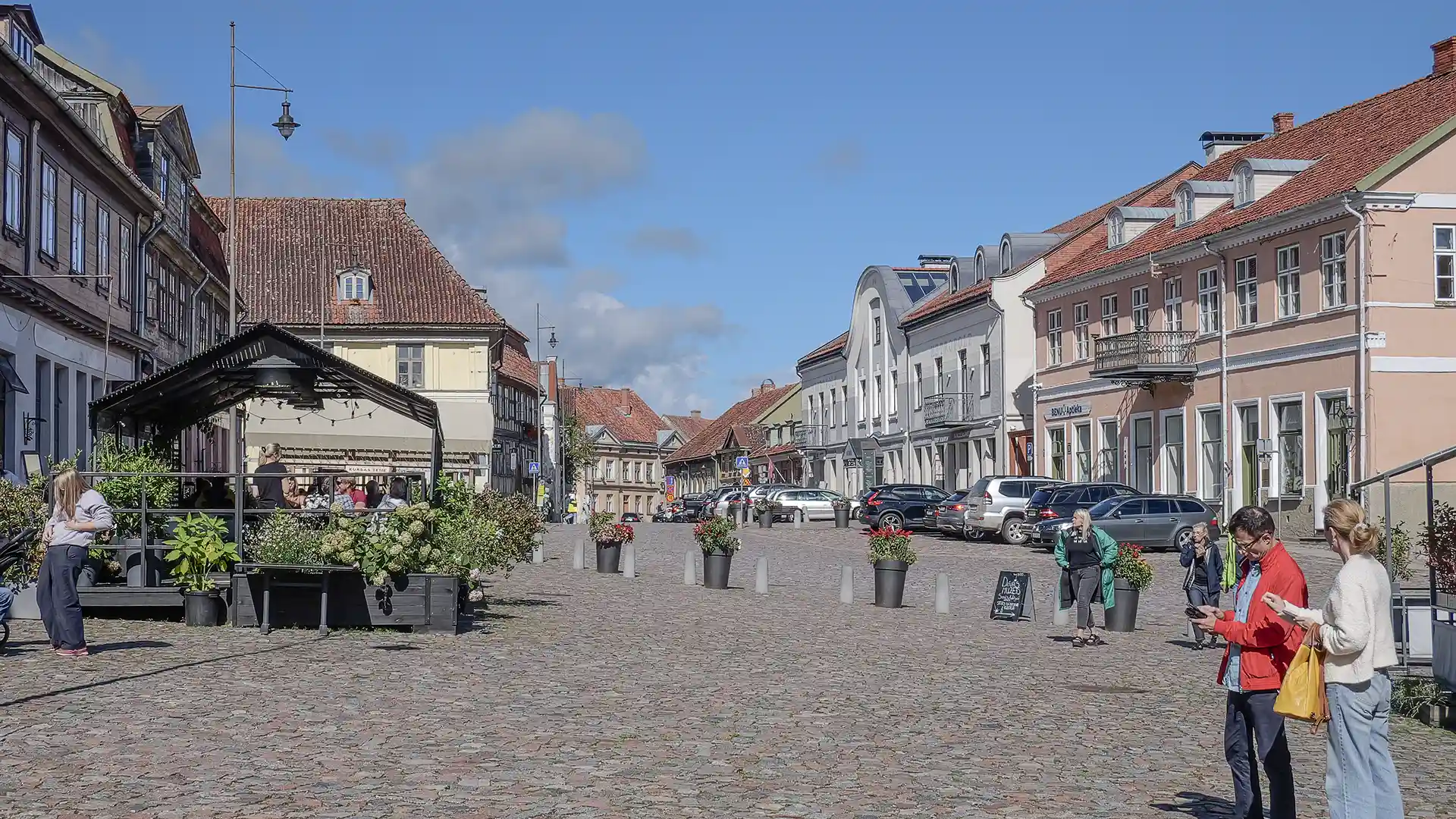
There’s just one important difference: the buildings are now home to modern-looking shops, quaint restaurants and bars. And 100s of local tourists are flocking around, sipping a beer, taking the selfie of their life, or simply pushing their stroller thru the bumpy alleys.
Yes, that’s Kuldiga. A small town in the middle of Latvia and a UNESCO World Heritage Site. Not because of famous buildings or outstanding architecture – it’s more about carefully maintaining things as they are. And apparently, that’s exactly what attracts so many visitors.
Later we drive on to Ventspiels at the coast.
It’s true, nobody thinks about that. As a youngster, you call your girlfriend, tell her how much you love her, how much you miss her, and what you’d like most to do with her – completely unaware that some curious Russian guy is listening in and recording it all.
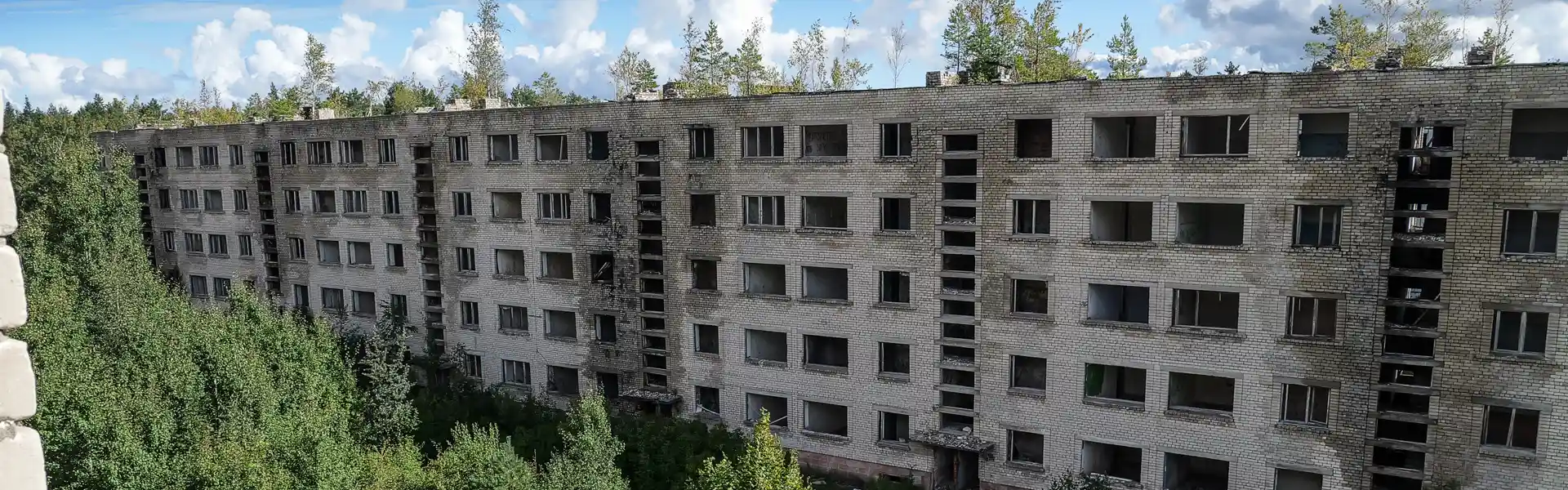
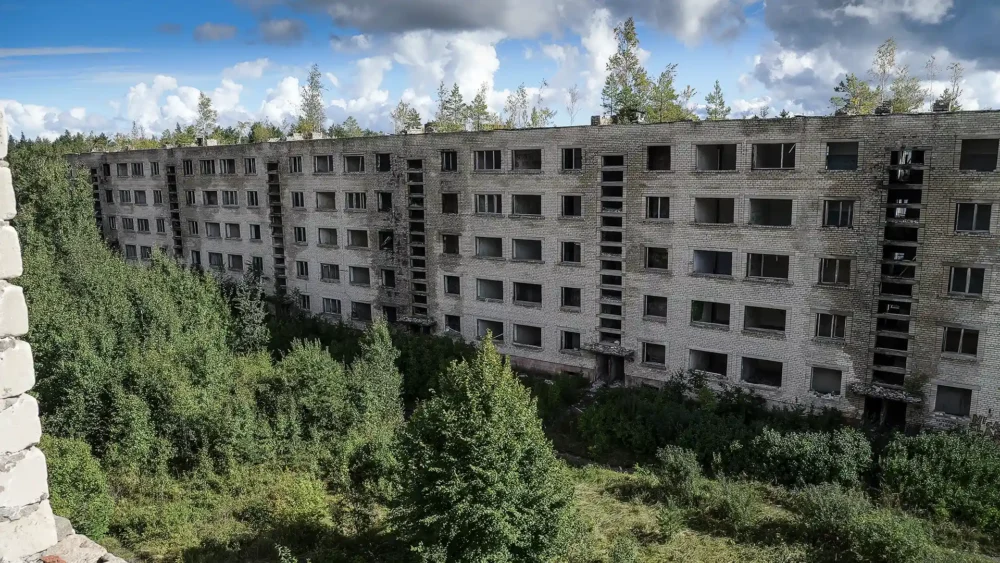
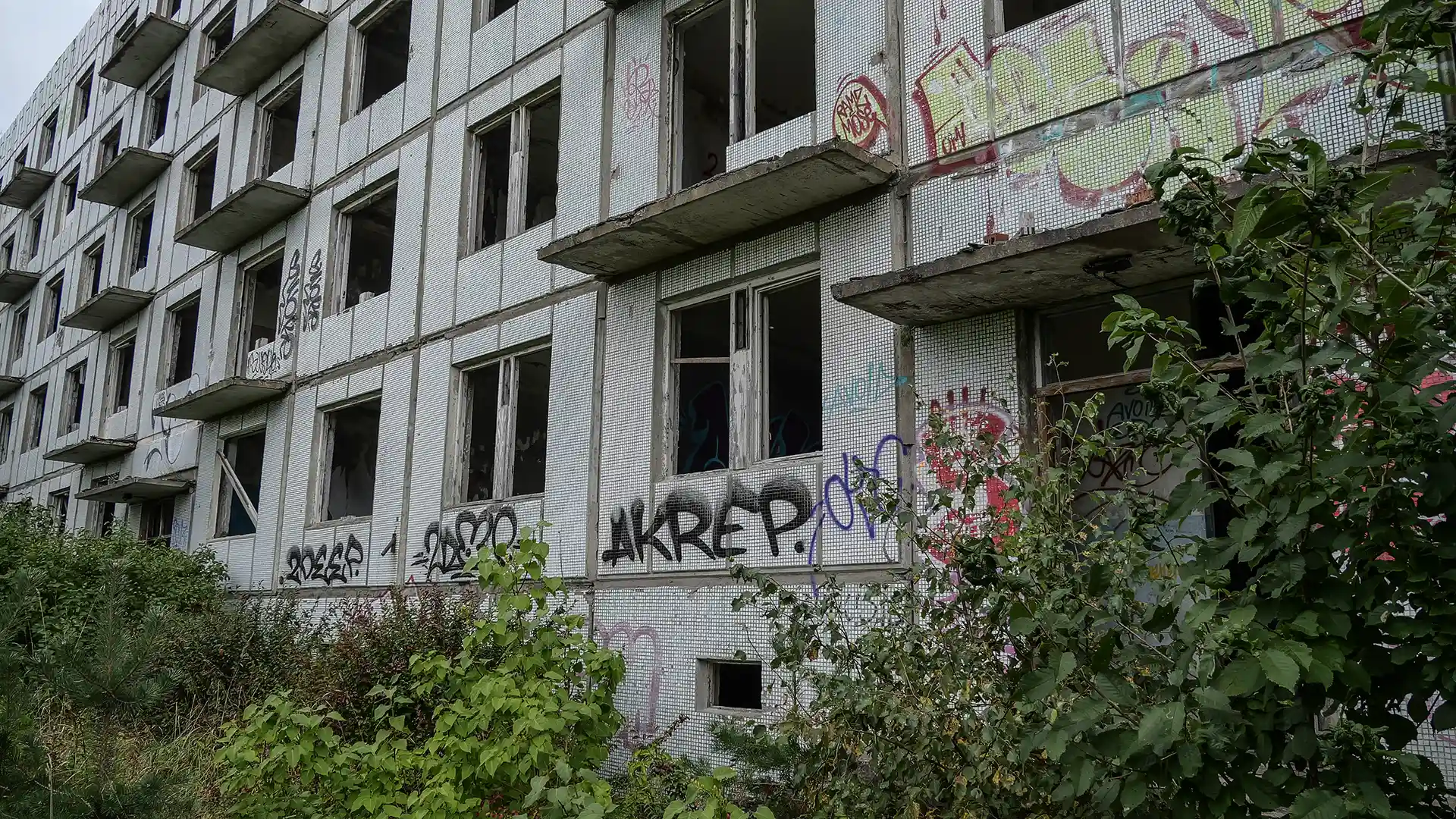
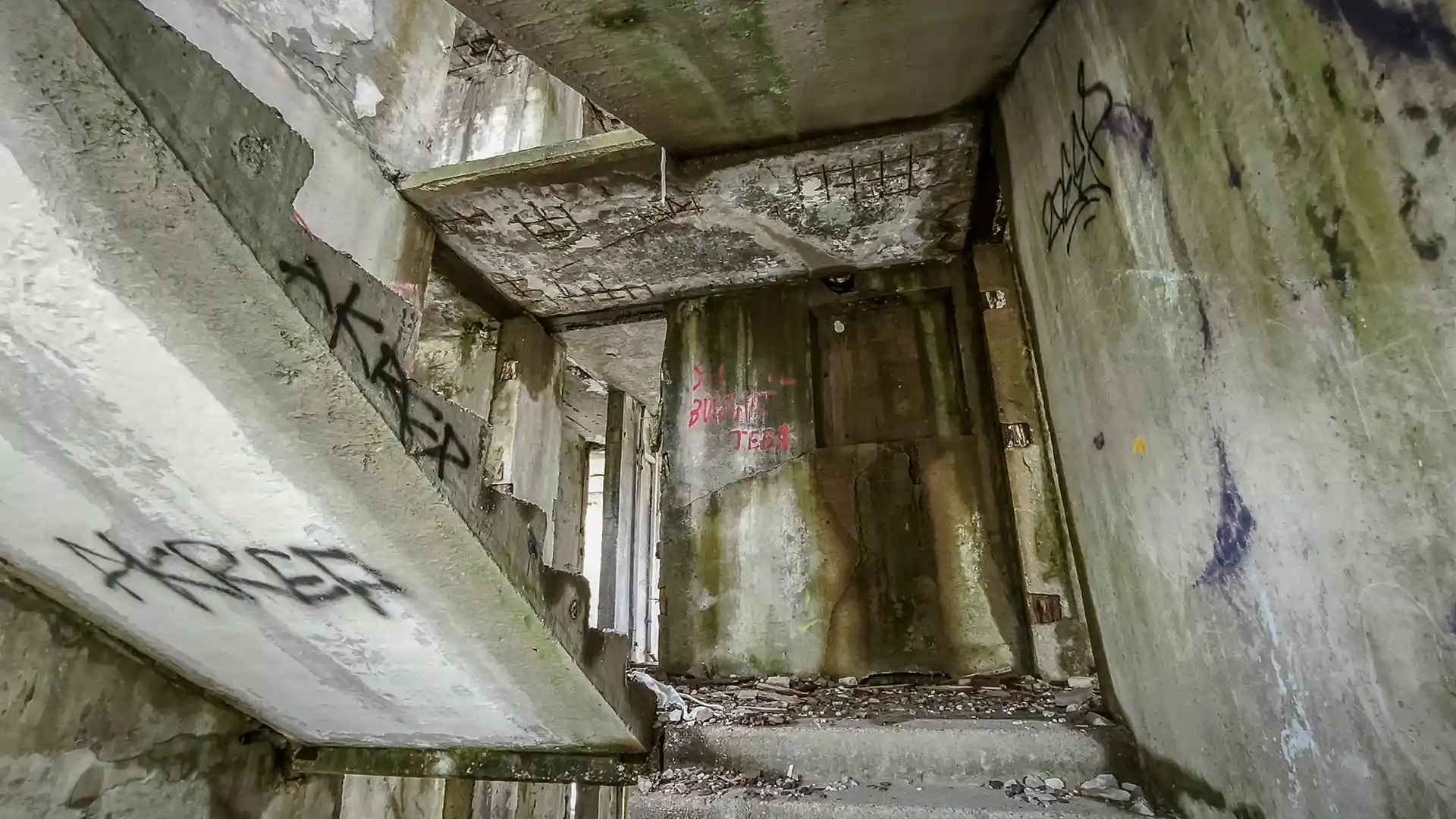
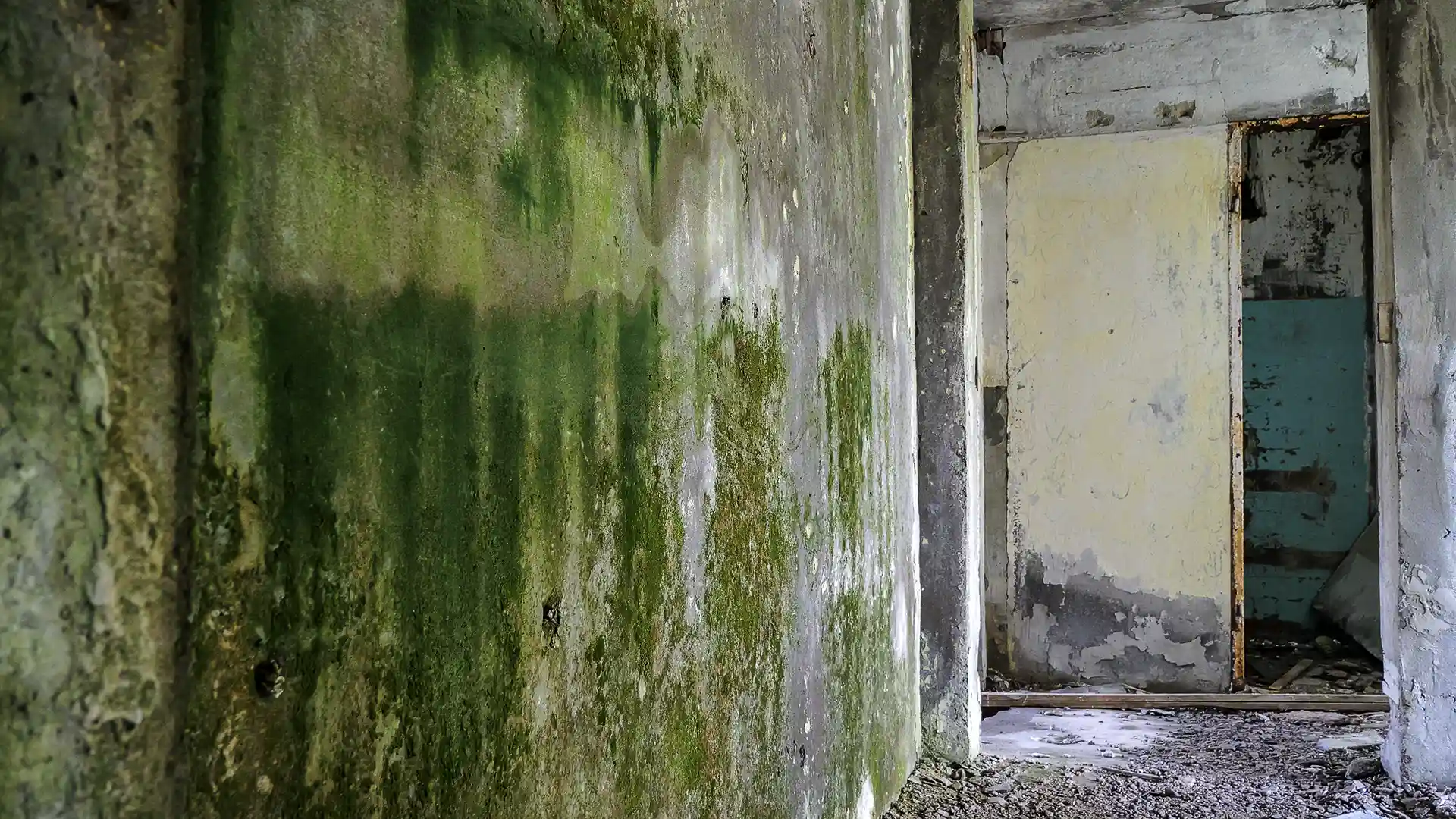
We sneak along the overgrown access road to a bunch of abandoned, stripped-out apartment blocks. All built in standard Soviet style and quality – cheap prefab buildings for privileged Soviet personnel far from home. The walls are covered with graffiti, anything valuable was looted decades ago, and water is seeping in everywhere.
Carefully, we climb the stairs, passing broken windows, smashed walls and the remains of parquet floors. There are holes everywhere in the concrete floors, torn wallpaper hangs from the walls, and in many places moss and small plants are taking over. 35 years after independence, nature is slowly reclaiming the place.
But what were all these Russians doing here during the Cold War?
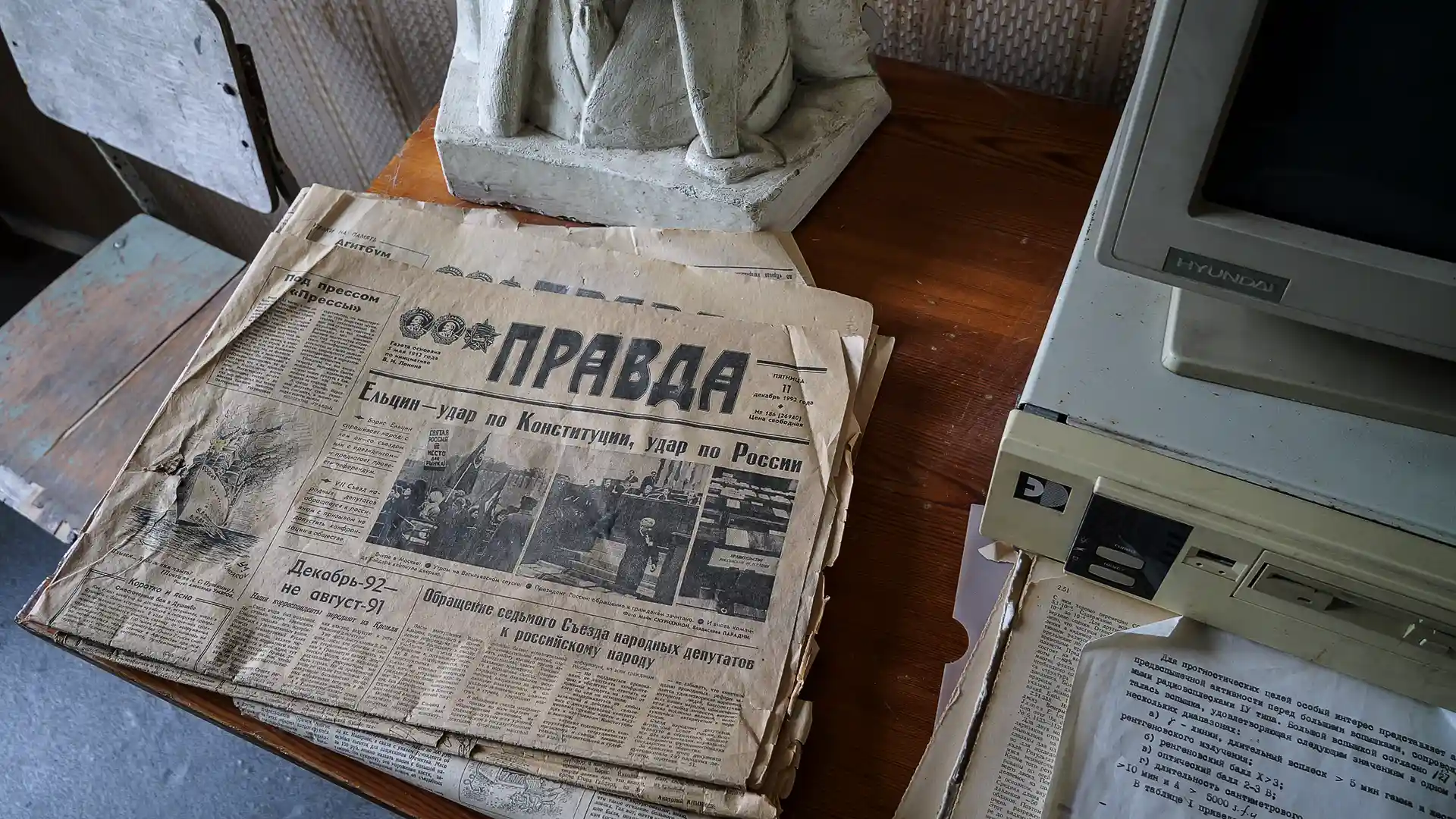
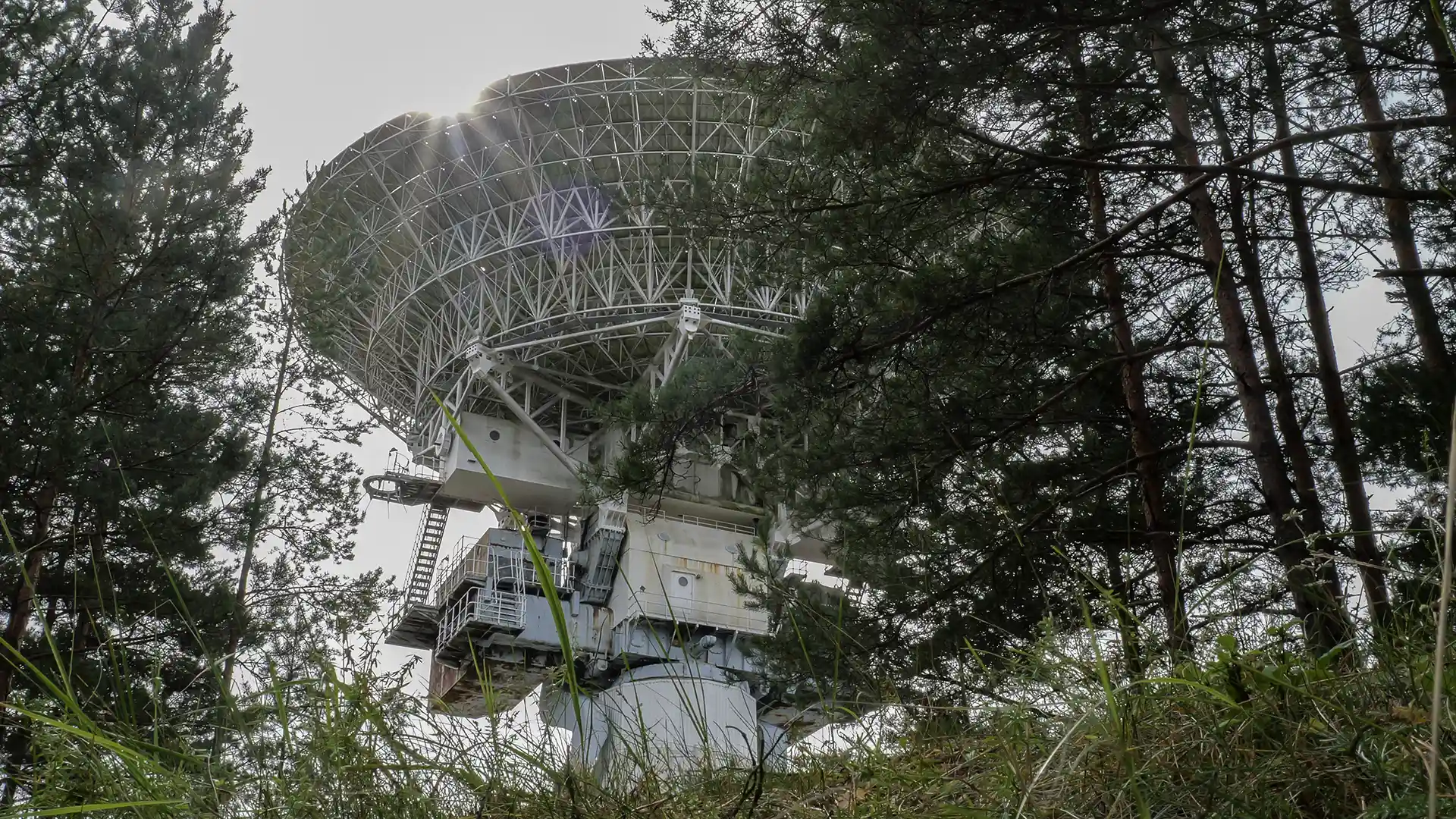
The answer lies in the nearby radio telescopes. Back then, they had nothing to do with astronomy. They allowed the Soviets to listen in on huge amounts of communication from the decadent West. Not just love whispers, but passenger flights crossing the area, radio signals from their American and NATO enemies – maybe even the click of the red button, should some crazy guy decide to press it somewhere in the plains of Mississippi.
That’s Irbene, one of the most secret towns in the USSR. No Latvian bro was supposed to know about it, and no foreigner should even have imagined it existed.
Well, that was the illusion. The US regularly sent New Year’s greetings and even let the Soviets record Western music – long before the internet was born. They played it on their secret phone lines carefully listened by the Soviets.
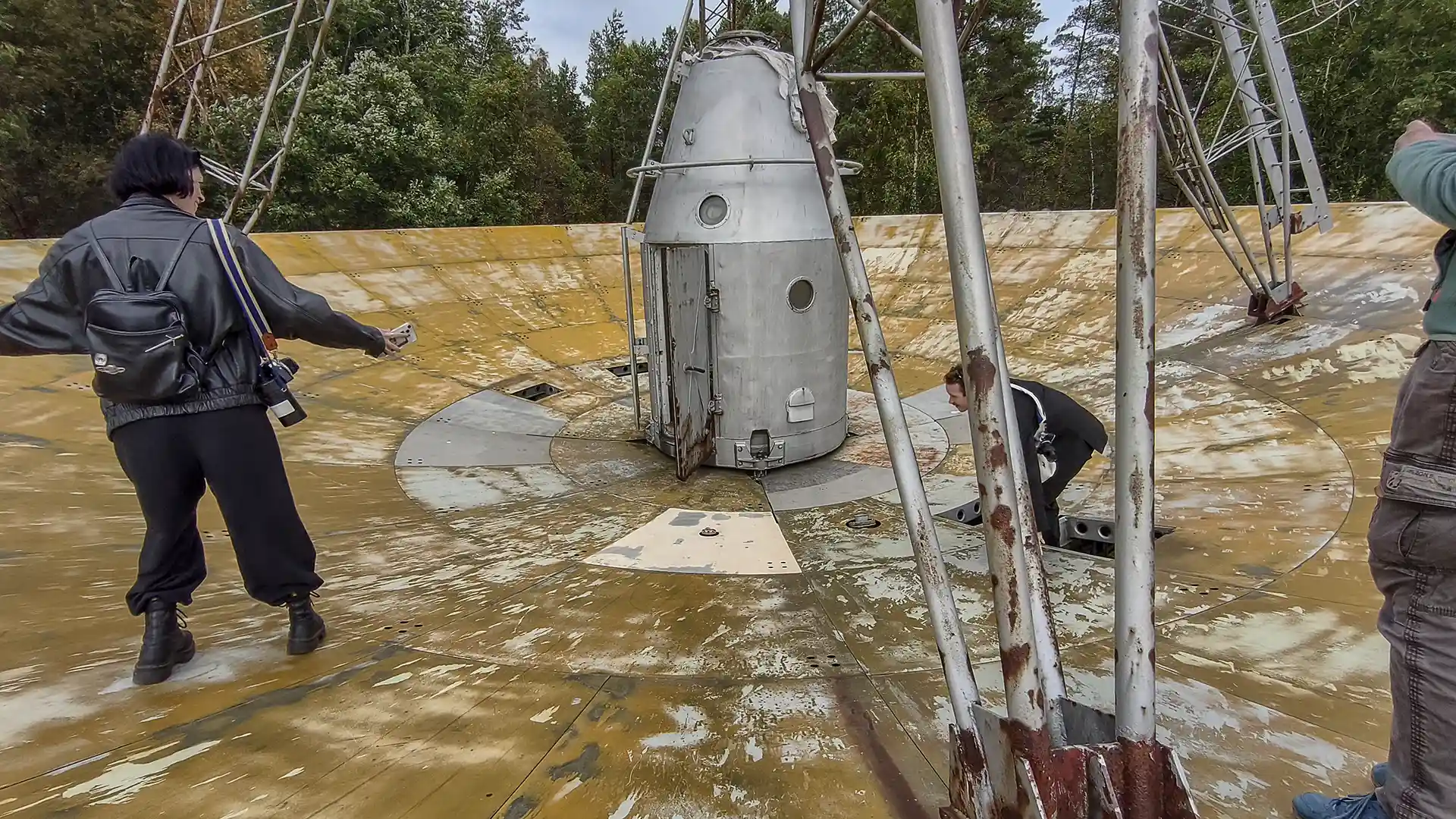
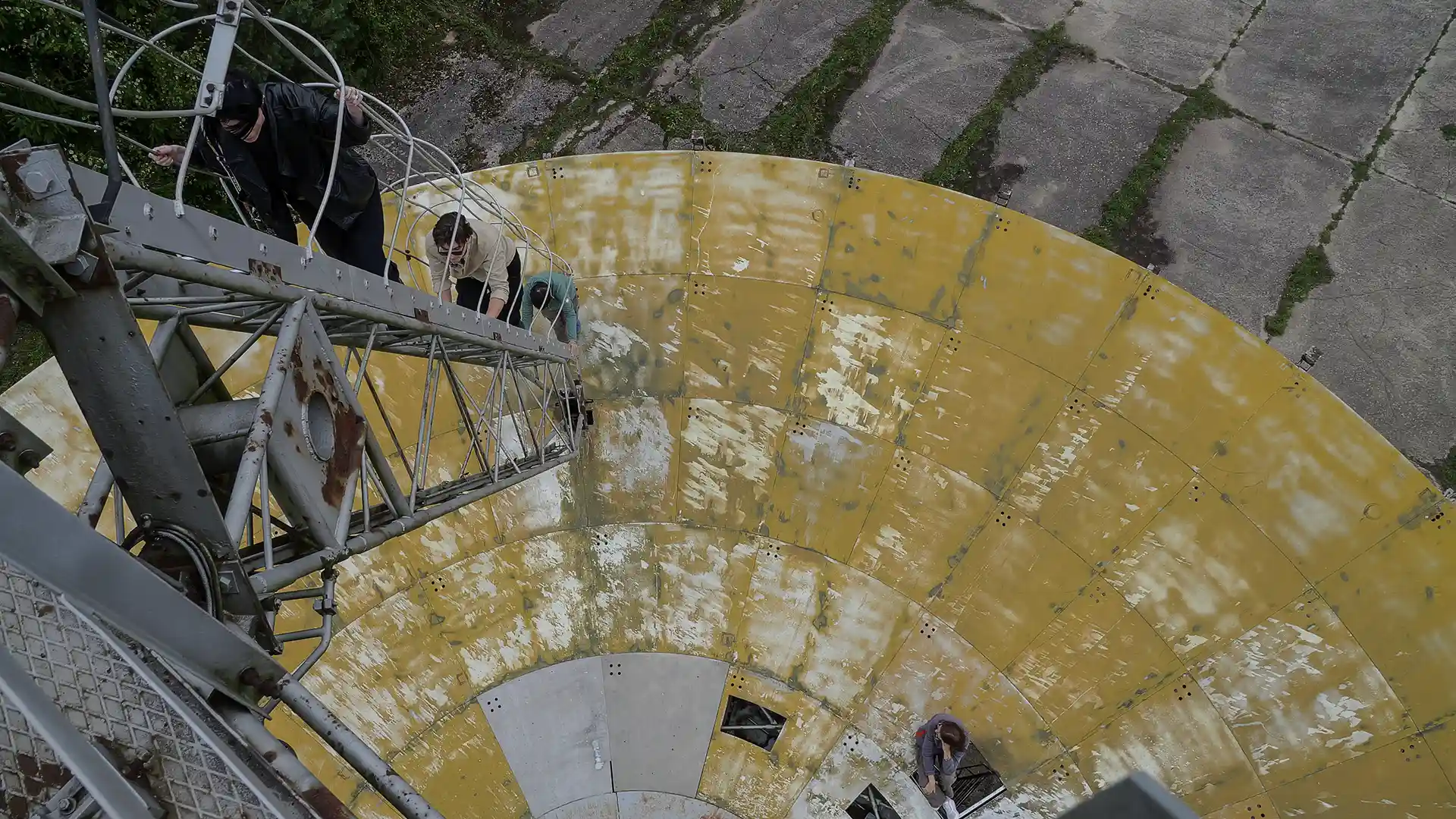
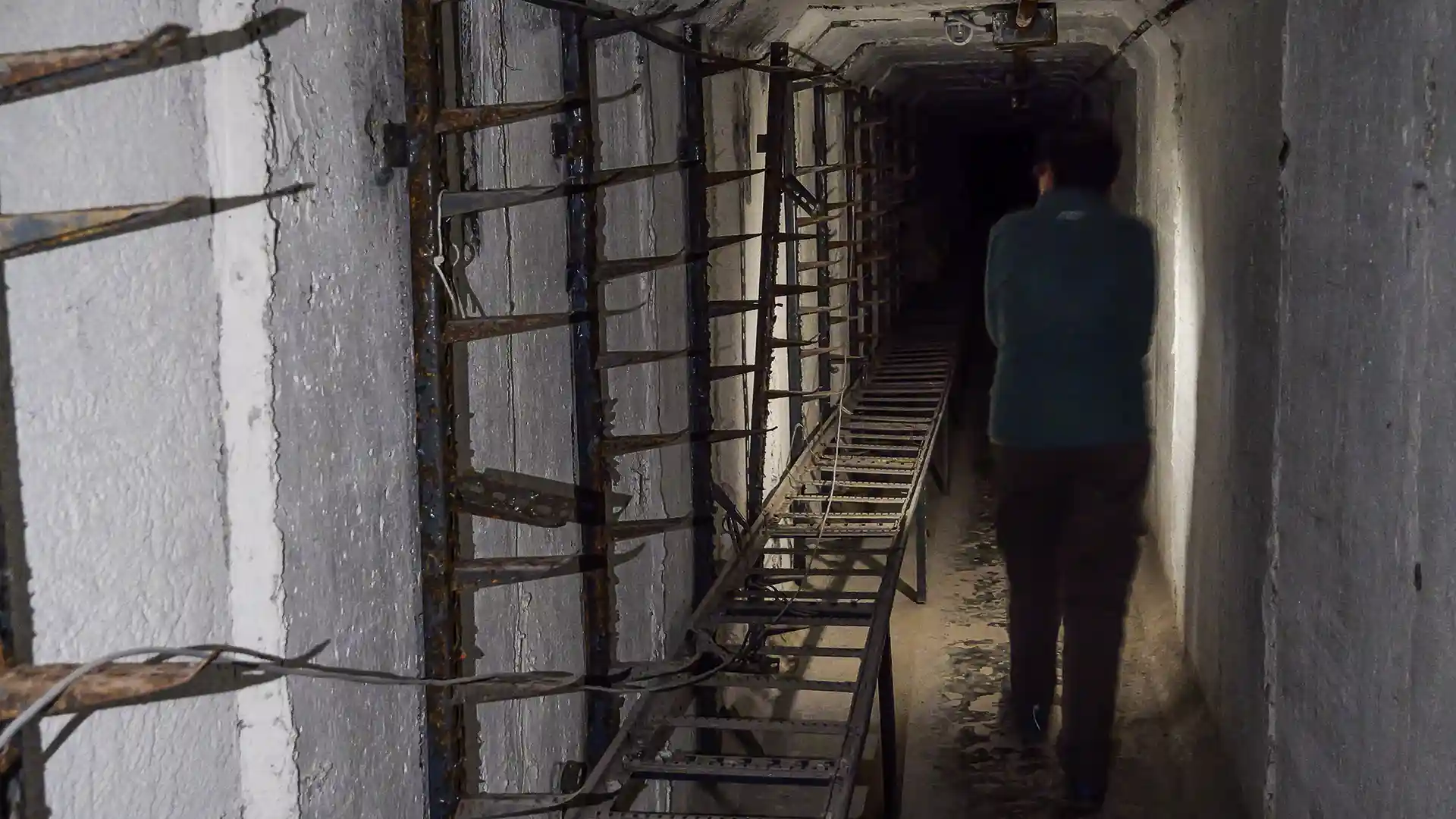
The apartment blocks are freely accessible, but the radio telescopes require a tour. We get to climb on the remains of some of the most advanced spy technology ever developed by the USSR, walk thru a 1-km-long tunnel connecting the different telescopes, and even try to slide down the slope of 1 of the parabolic antennas.
Unfortunately, the largest telescope is no longer accessible. It’s now being used for astronomical research. Still, there’s plenty to explore – from electronic devices that remind us of our 1st stereo set to satellite images taken by the US back in the 60s.
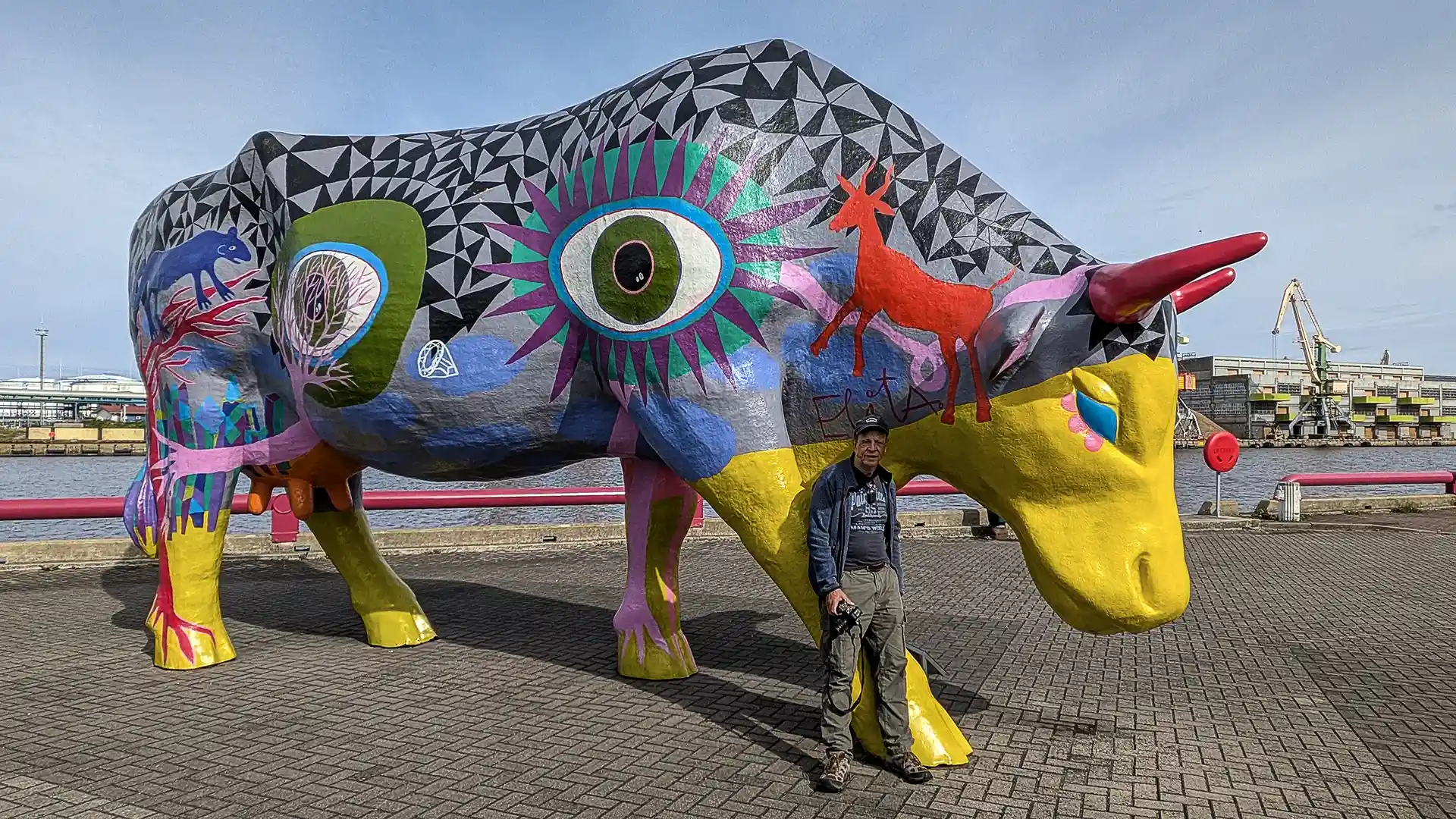
As we’re already here, we take a quick stroll thru Ventspils’ old town and along the riverfront, with the harbor just across the water. It’s pleasant enough, but honestly, there’s not that much to see. Ventspils seems to have decided that its artistic cows are the main attraction – and judging by how many of them are scattered around town, they might actually be right.
That’s about enough Ventspils for us.
The next day, we point the camper east and head for Riga, Latvia’s proud capital.
On the way, we’ve planned a short hike thru a famous moor. Sounds easy enough. Until we reach the trailhead and discover that parking can only be paid for with an app – Mobilly, which is impossible to register for as a foreigner. So, be warned.
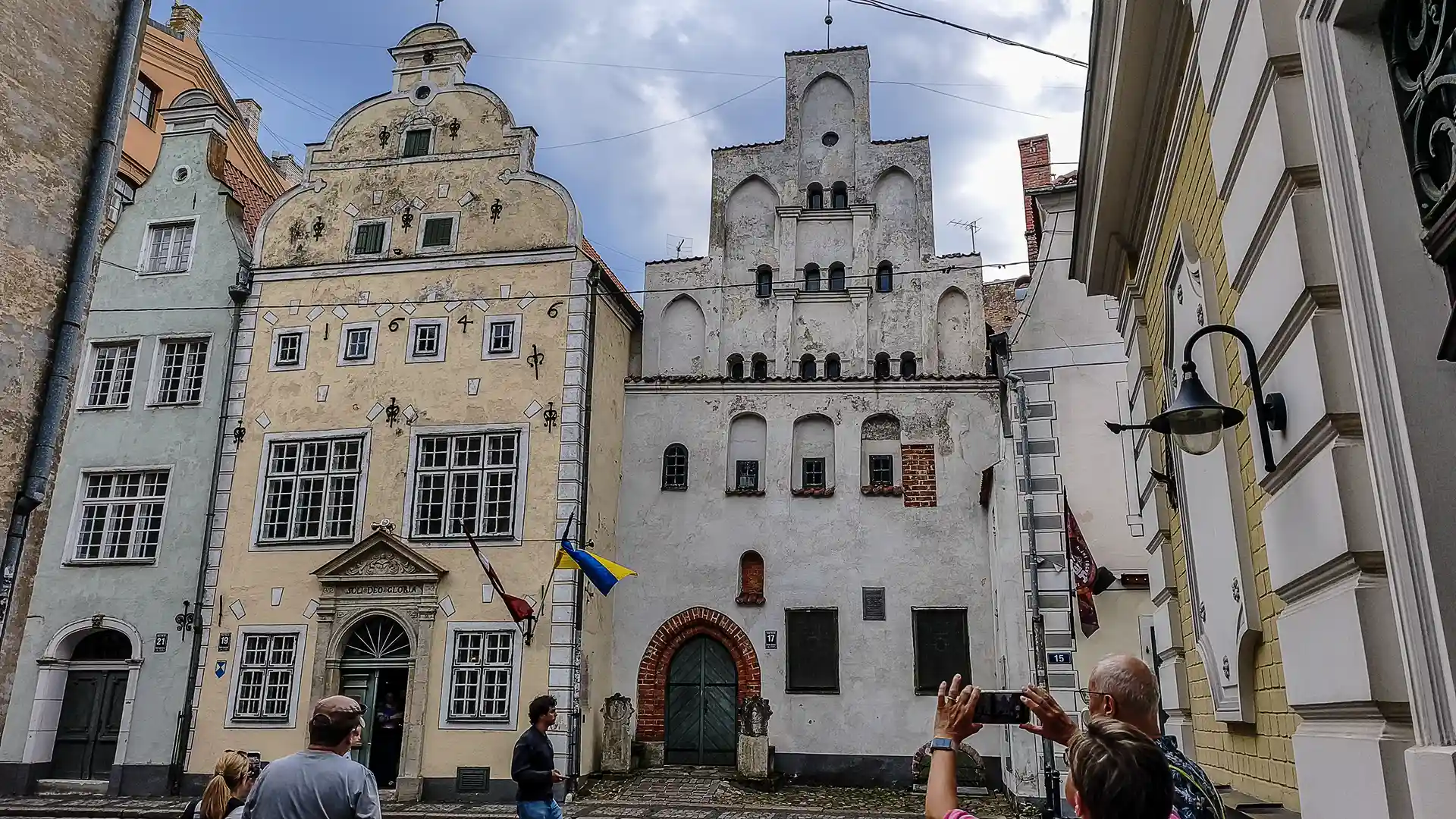
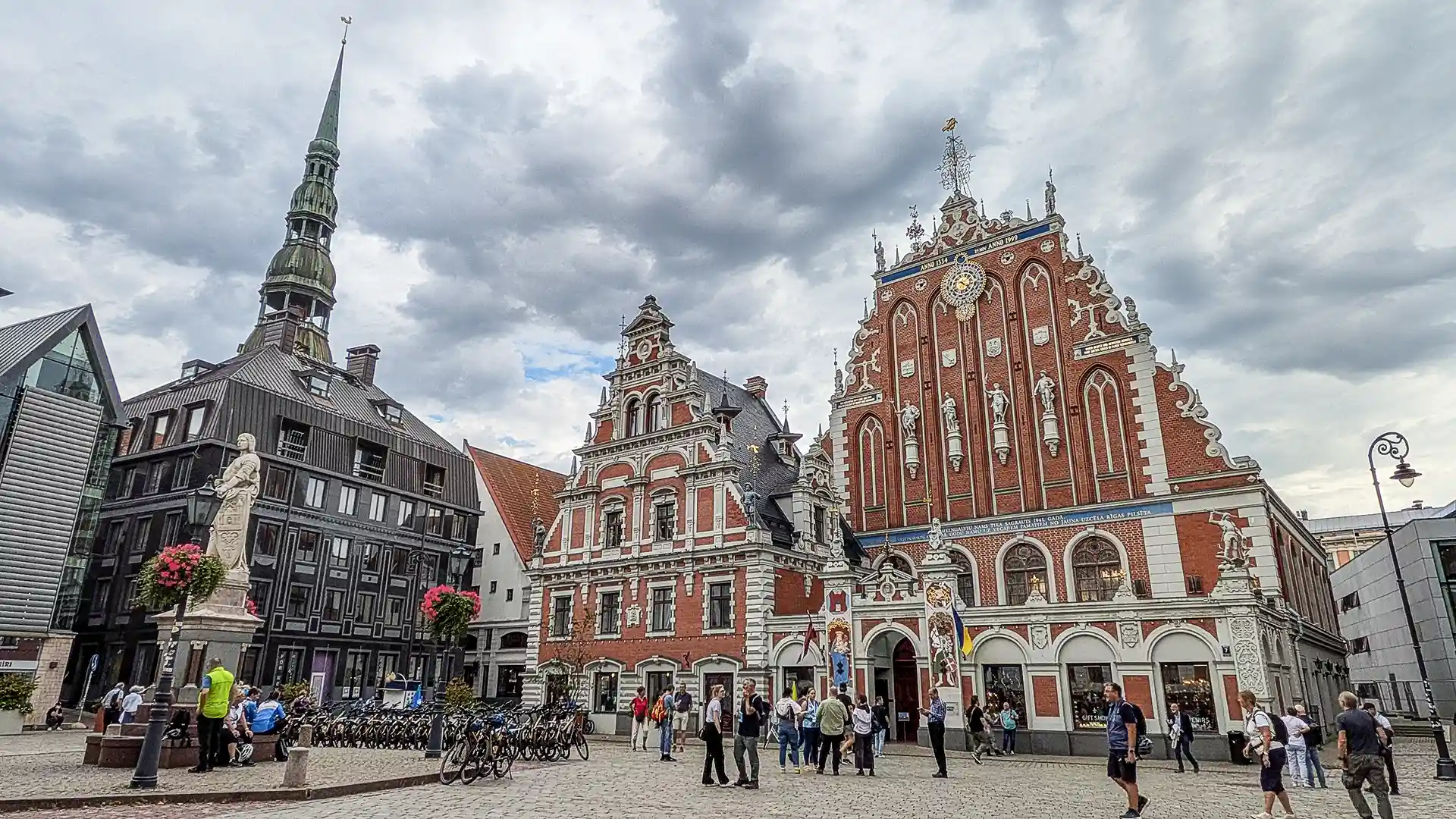
We pass the modernistic National Library, cross the Old Bridge over the Daugava River, and suddenly we’re in Riga’s old town. A UNESCO World Heritage Site. Carefully renovated houses, posh shops, watering holes and eateries everywhere, with tourists sneaking around between them. The whole area is closed to traffic – made for strolling, sipping cappuccinos or latte macchiatos, and soaking up the self-confidence Latvia wants to project.
It could be almost any polished Western European city center. Everything looks possible here, only the best of the best seems good enough. And everywhere, there’s this unmistakable feeling of progress – a showcase of what Latvia has achieved since independence.
We’re among all these tourists, wondering just how much effort has gone into polishing up this historic quarter – and how different it feels from so many of the places we’ve seen elsewhere in the Baltics.
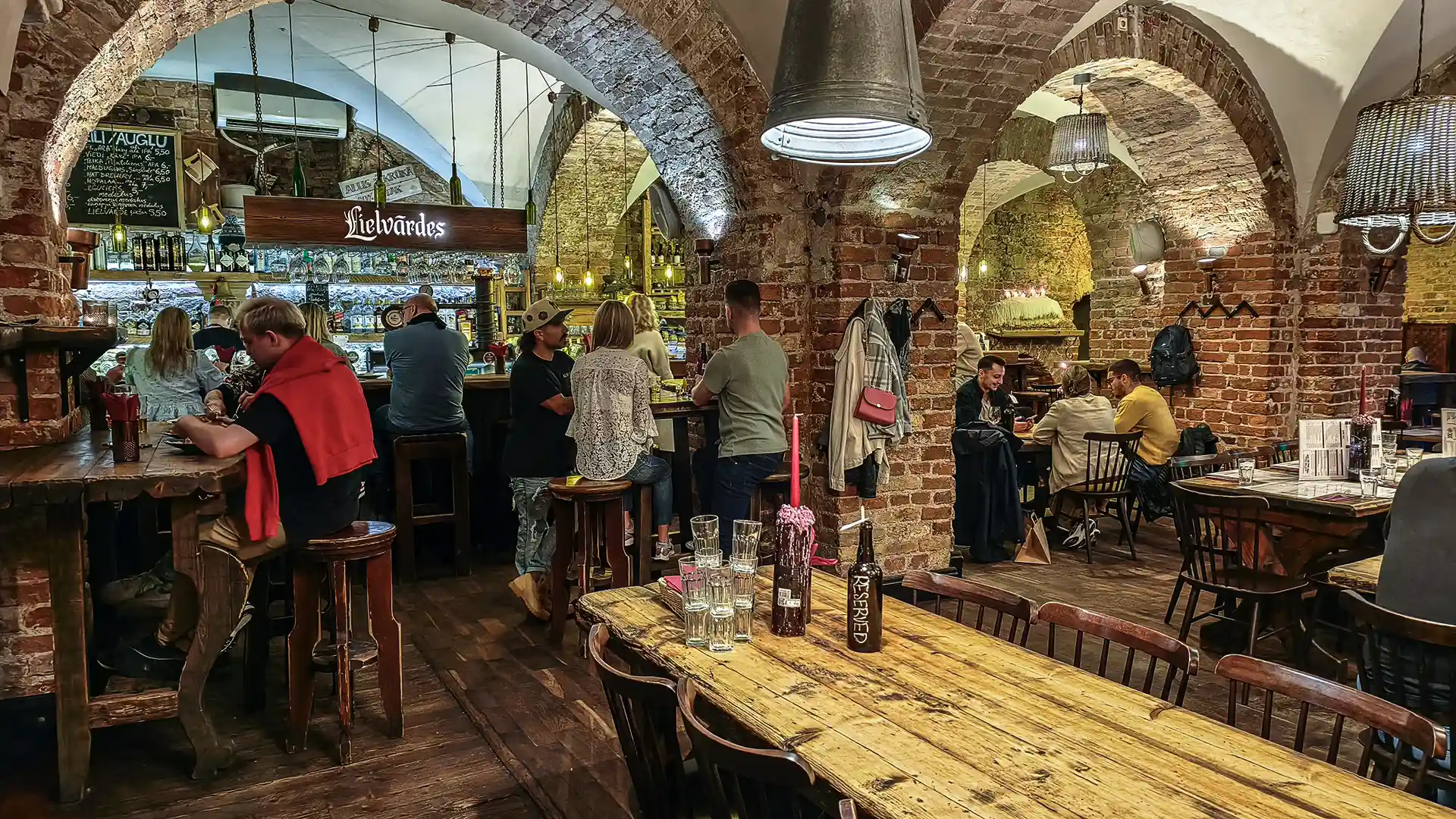
Finally, we head to Ala Pagrabs to finish off our visit – the folklub to be, provided you can actually find a seat.
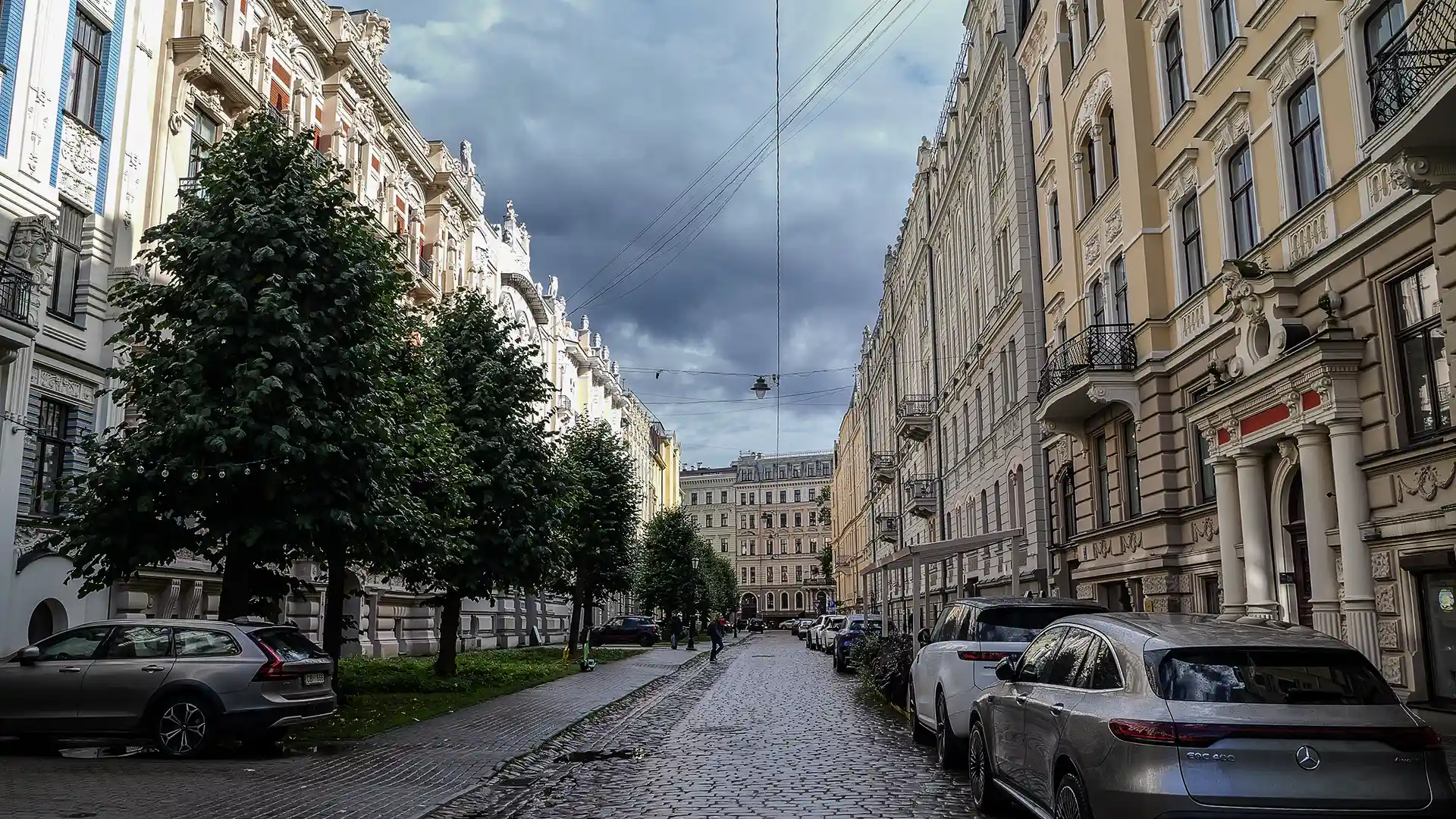
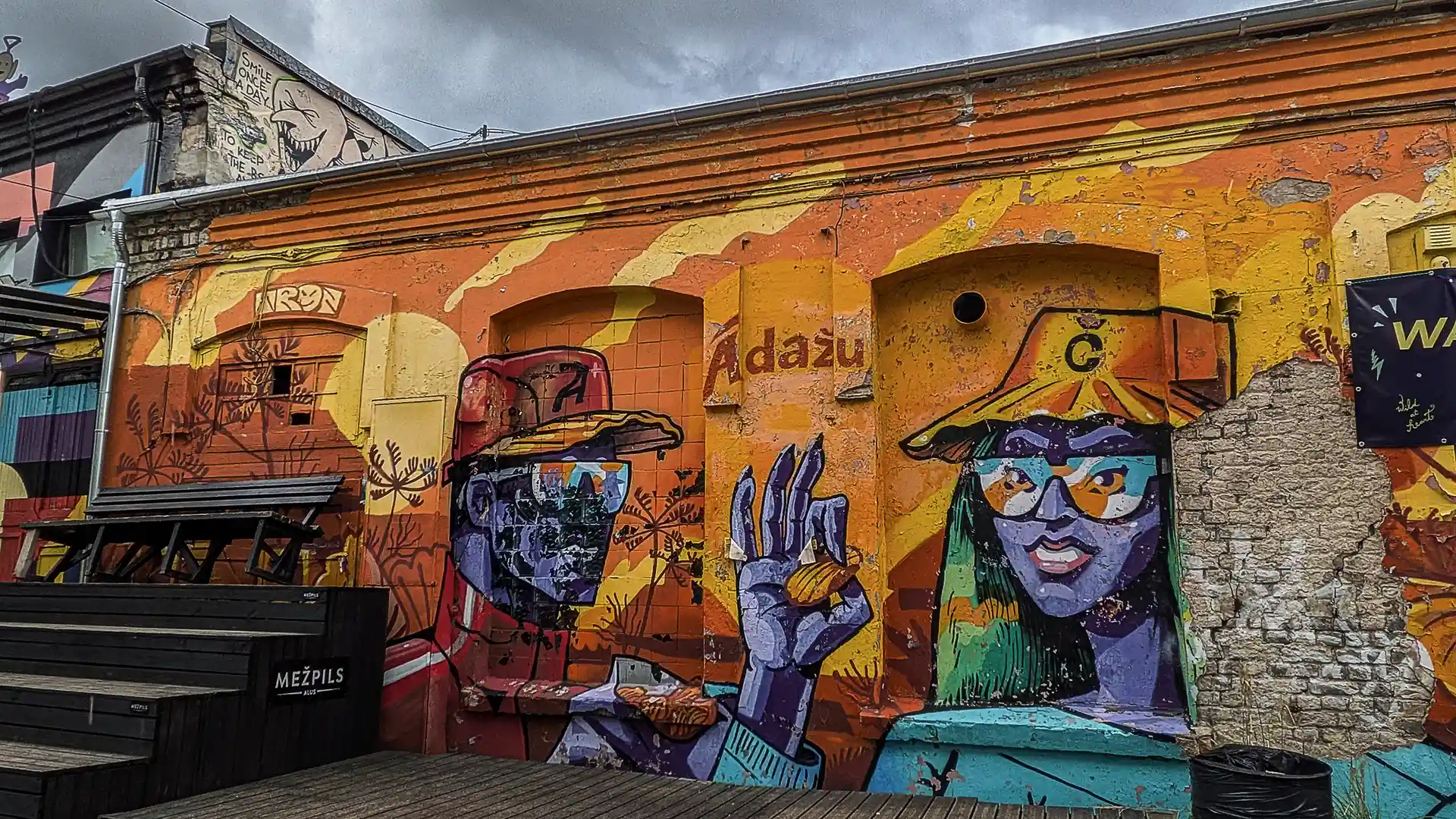
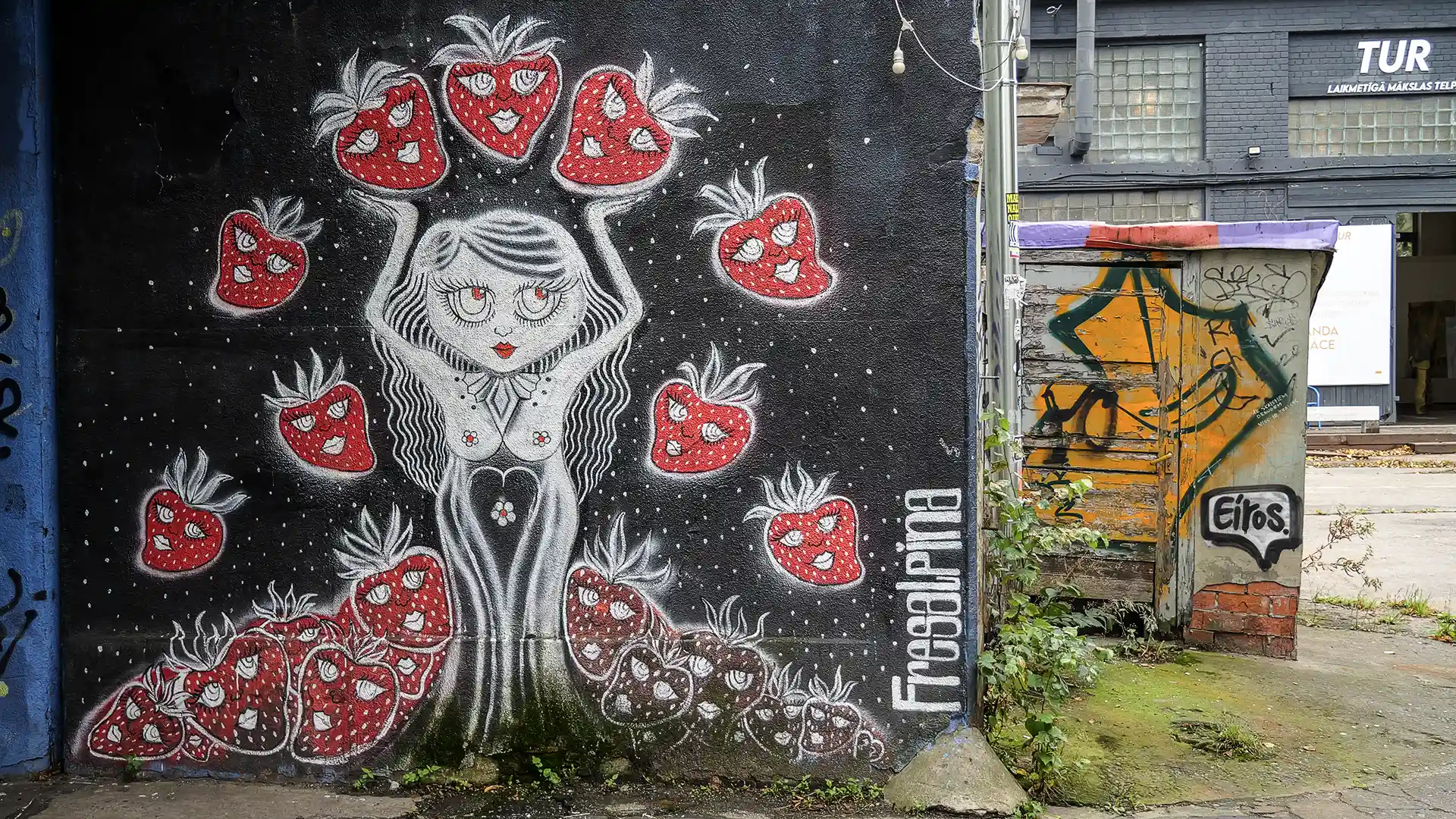
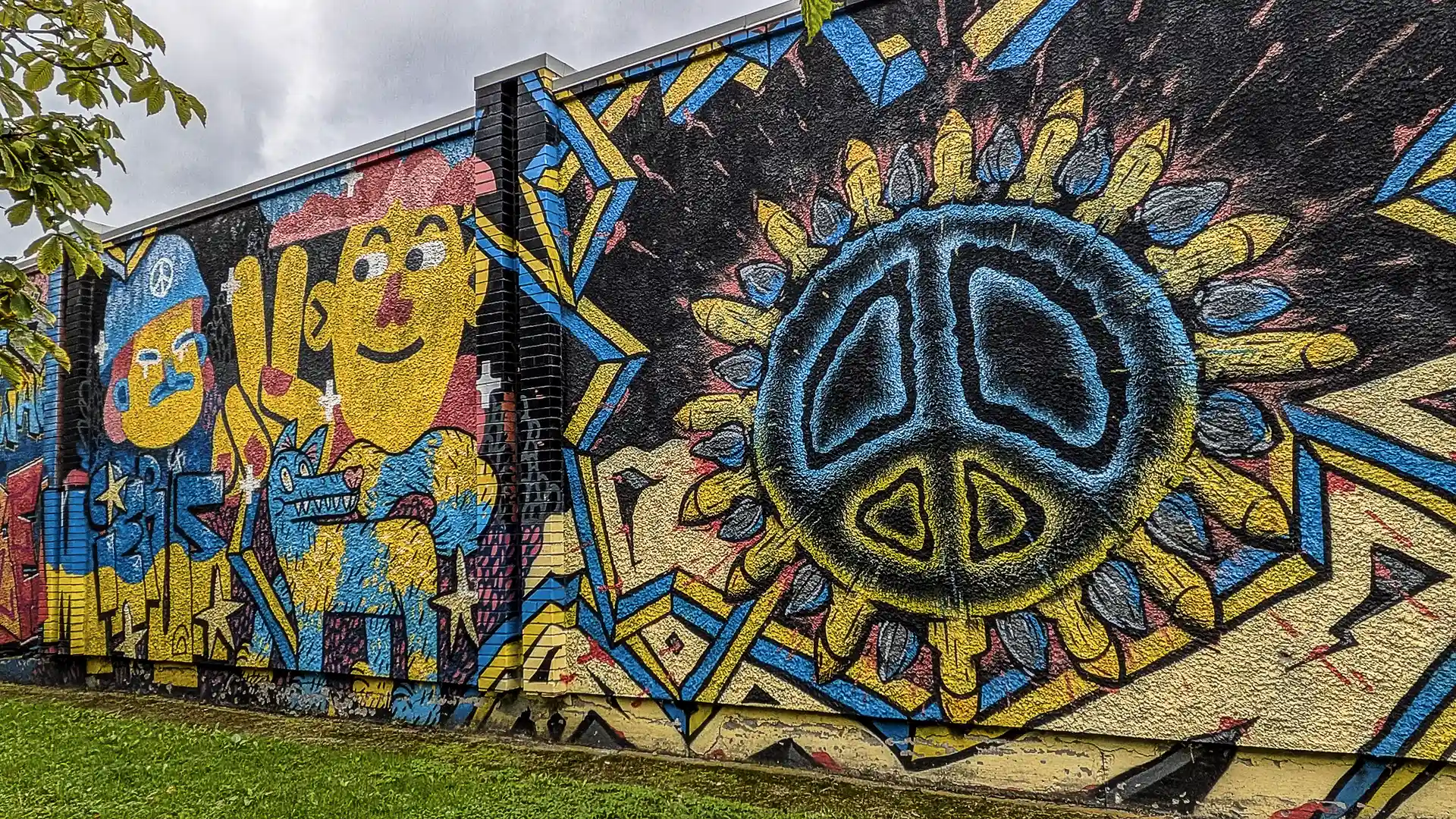
Now we’re keen to see a bit of the other side of Latvia’s great capital. Riga has a small but pretty cool and creative street art scene, with some good stuff scattered around the city – mostly outside the polished center. So we head into the nearby neighborhoods, where Soviet-style apartment blocks replace the renovated facades, and check out a few spots like the Tallinas Iela courtyard and the Ukraine Graffiti Wall. Not exactly postcard Riga – and that’s precisely why we like it.
Walking along these long streets outside the center definitely shows a pretty different picture of Latvia’s progress – people still living in these buildings, where decades of age and neglect dating back to the Soviet occupation are impossible to hide.
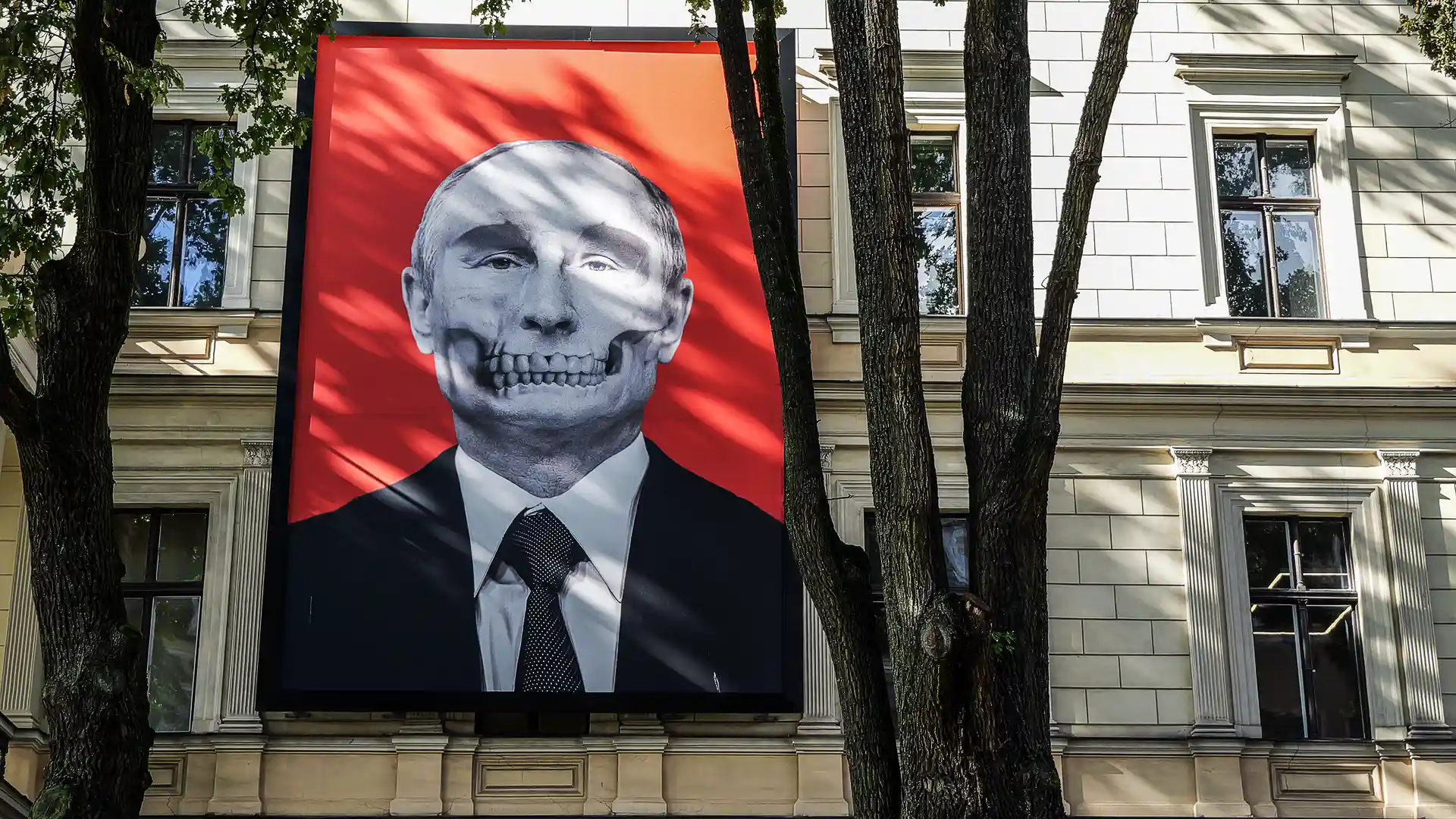
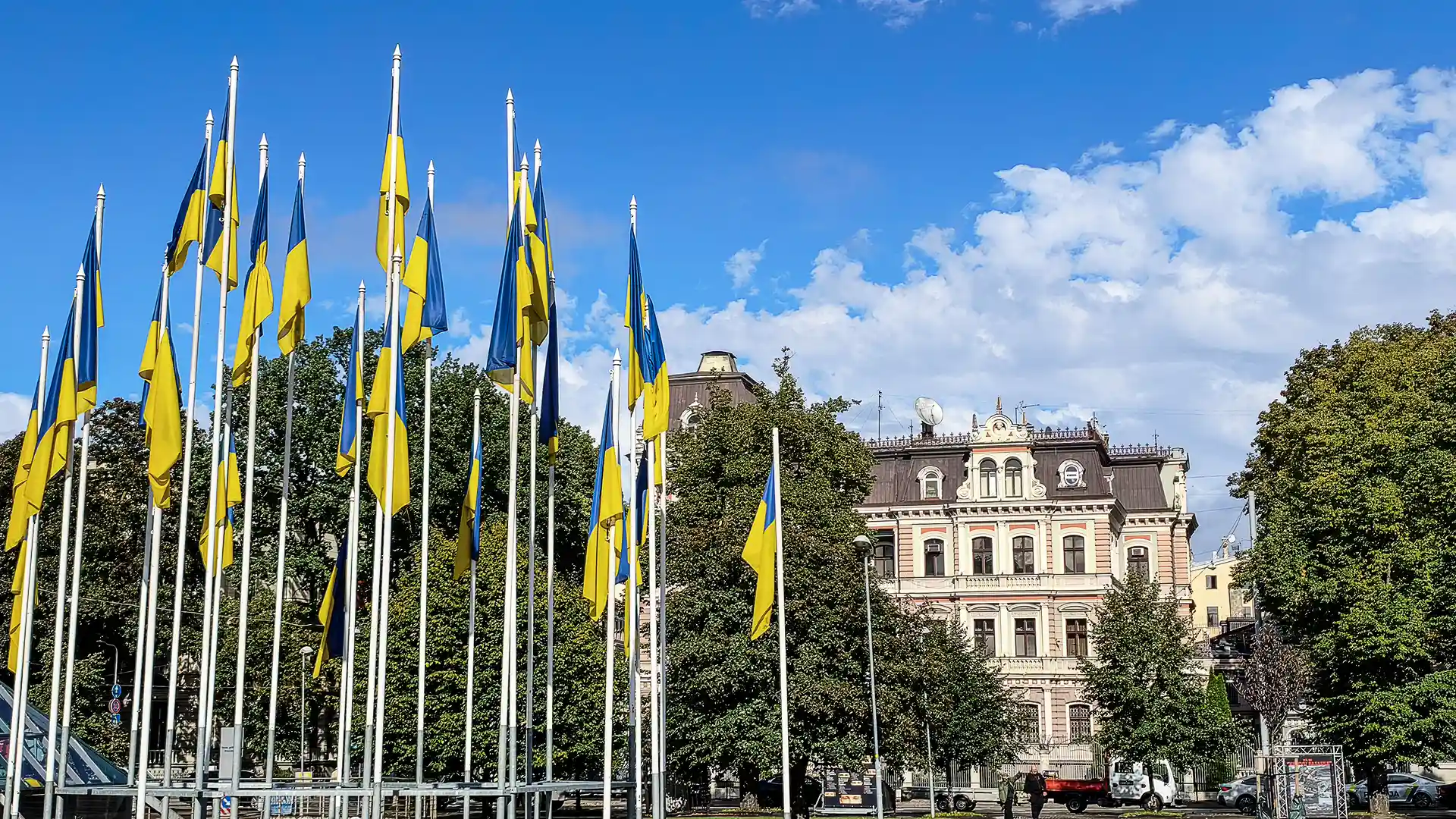
As we’re in Riga, there are 2 points we should absolutely not miss: the Russian Embassy – not inside the building, but its surrounding.
And Stalin’s wedding cake architecture, the Academy of Sciences. Only by taking the elevator up to the 15th floor and climbing another few steps we have the view.
We enter the sanatorium, pay a pretty steep fee, and a few moments later, we’re making our way down the stairs together with a handful of others on the tour.
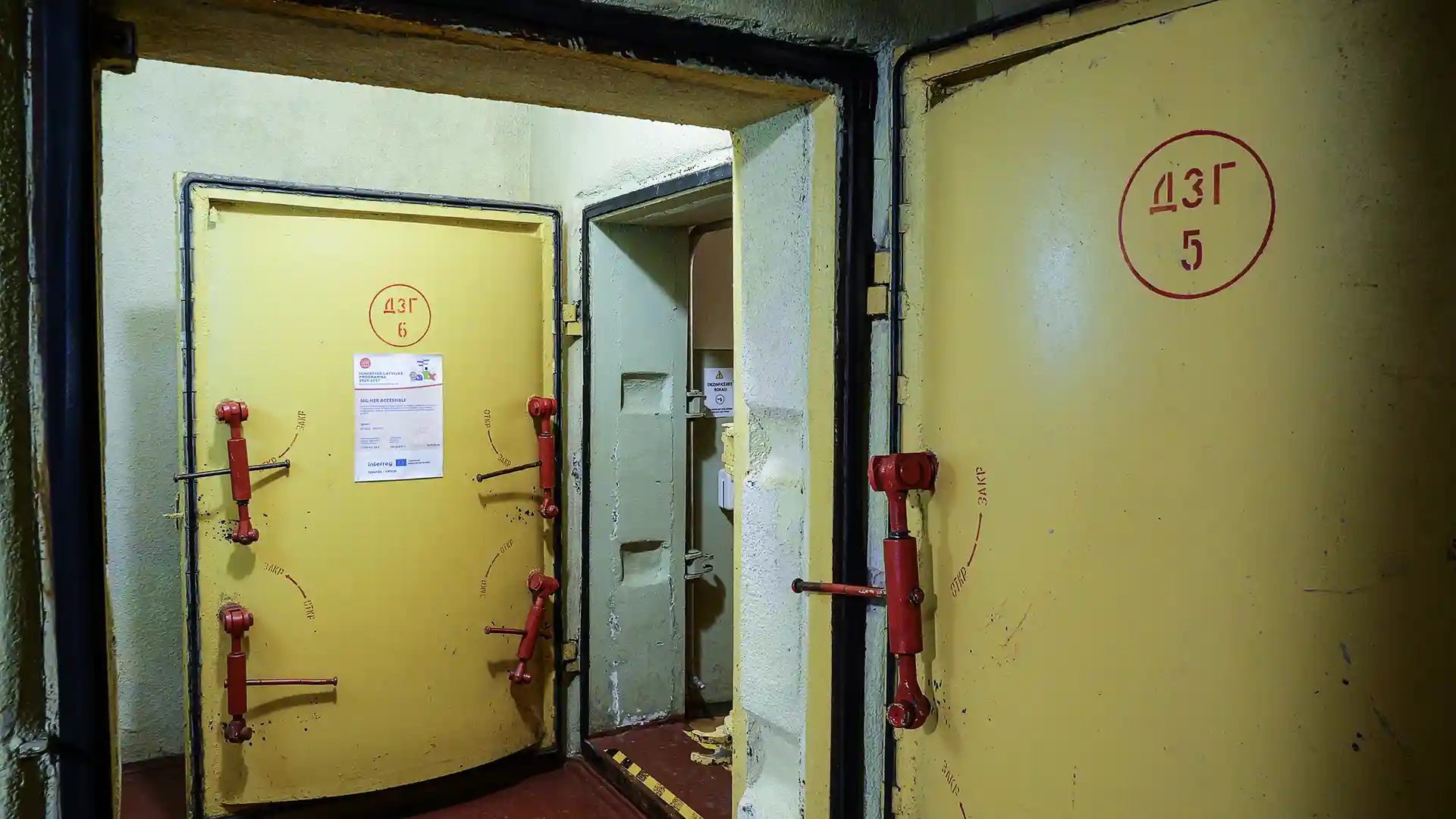
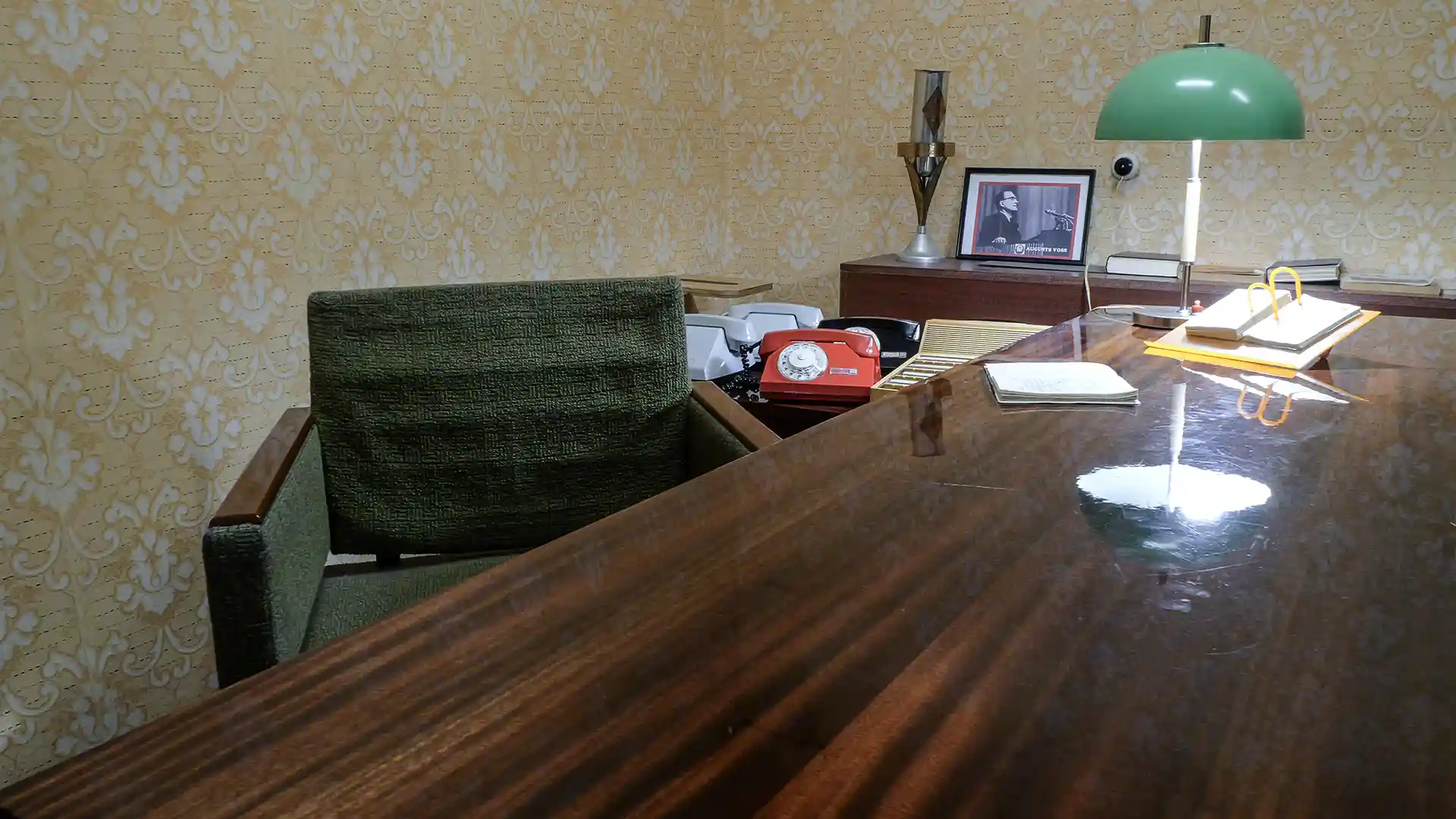
We enter 1 of the best-kept secrets of Latvia — the Padomju Slepenais Bunker. 9 m beneath the ground, the top elite of Soviet Latvia constructed this bunker to survive a nuclear strike by their enemies and to remain functional for 3 months. Well, the bunker is meant to accommodate only the 3 top shots of the government with their families, and some staff to make their lives in the post-nuclear world as comfortable as possible. Thus, they emphasized on high-quality construction with posh equipment for themselves, not that much for their staff, and not at all for the rest of the Latvian population. So far, this was probably their understanding of Lenin’s idea that all people are equal, regardless of their origin or social status.
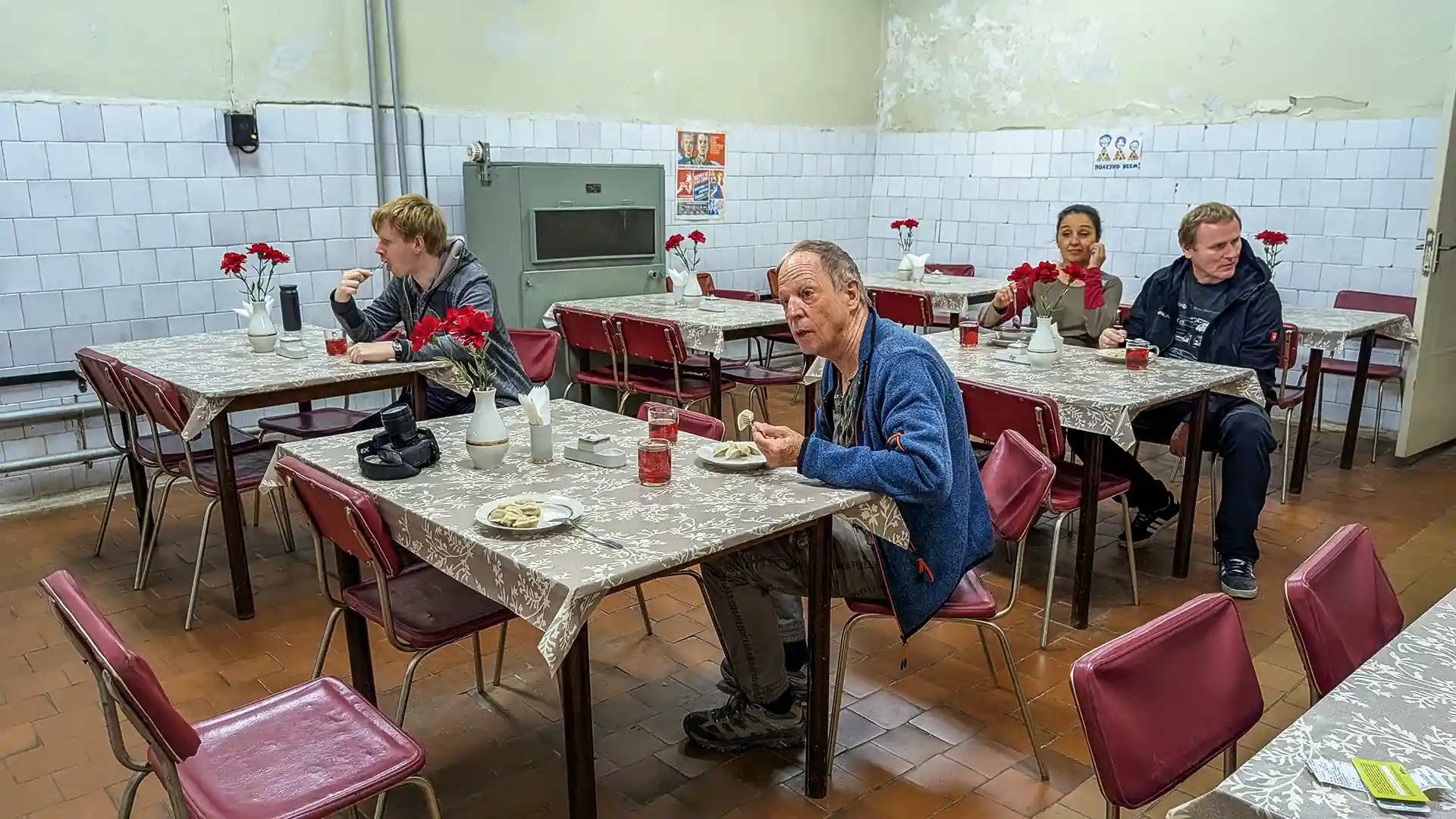
We pass the massive steel doors and follow the large corridors. On the side, the rooms for the staff. Some tables, phones on them, no beds. then we’re in the staff canteen, munch on some Pelmenis with Smetana and slurp tea. No frills, just basic staff food.
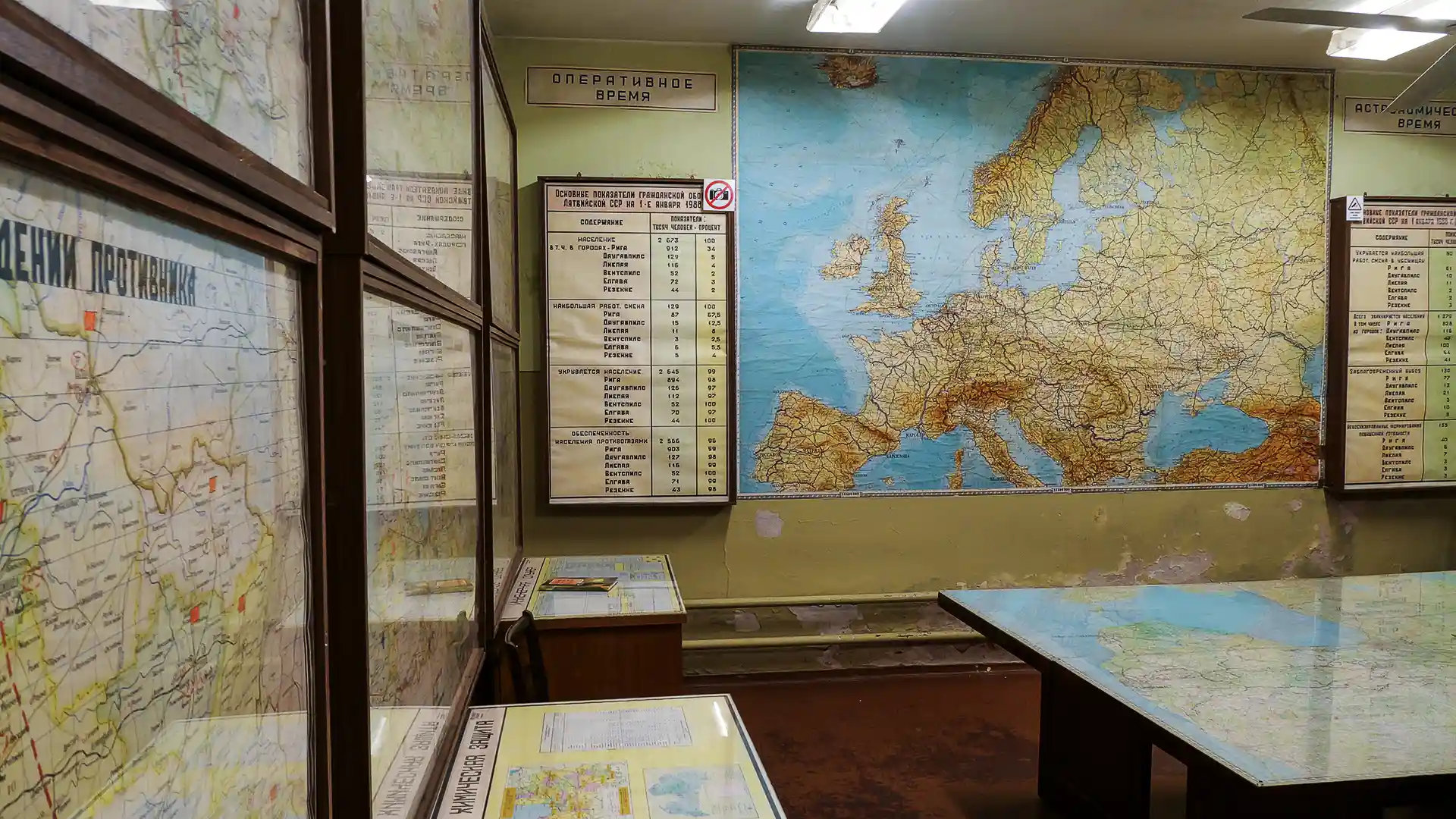
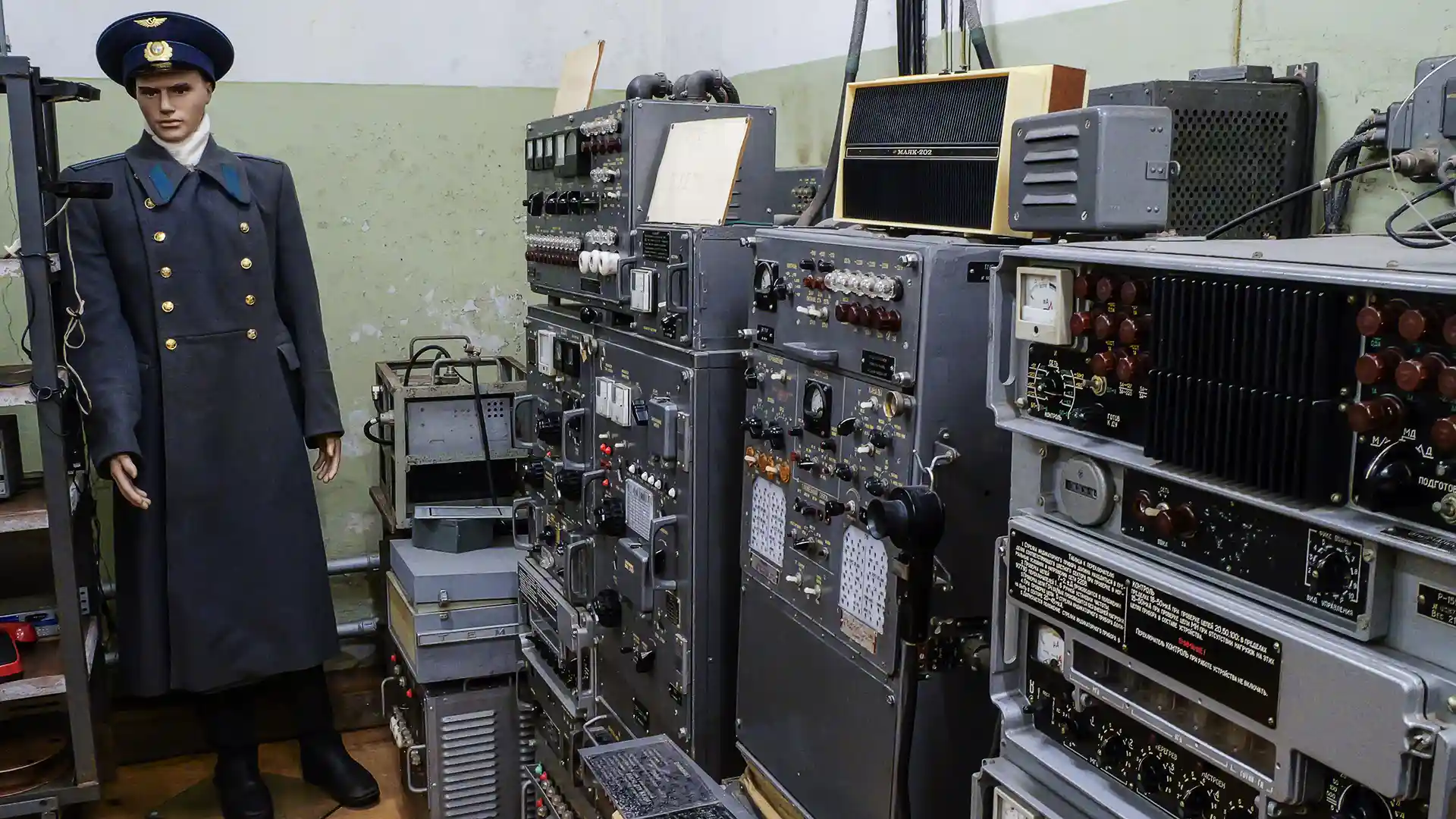
Next their communication center, providing communication with all of Latvia and Moscow. Meeting rooms, maps on the walls indicating potential targets, and finally rooms with generators, air filters, all the mod cons they needed to survive in style.
Even in post-Soviet Latvia, the secret of this bunker was kept for quite a few years, until it was discovered by chance in the early 2000s.
True, we had to see that to believe it. And Lenin? He’d probably be turning in his grave if he could see this.
Dear all,
that’s all about Latvia. And that’s it for this post.
No Worries, there will be another one – soon.
Cheeeers
Monika’n’Martin