








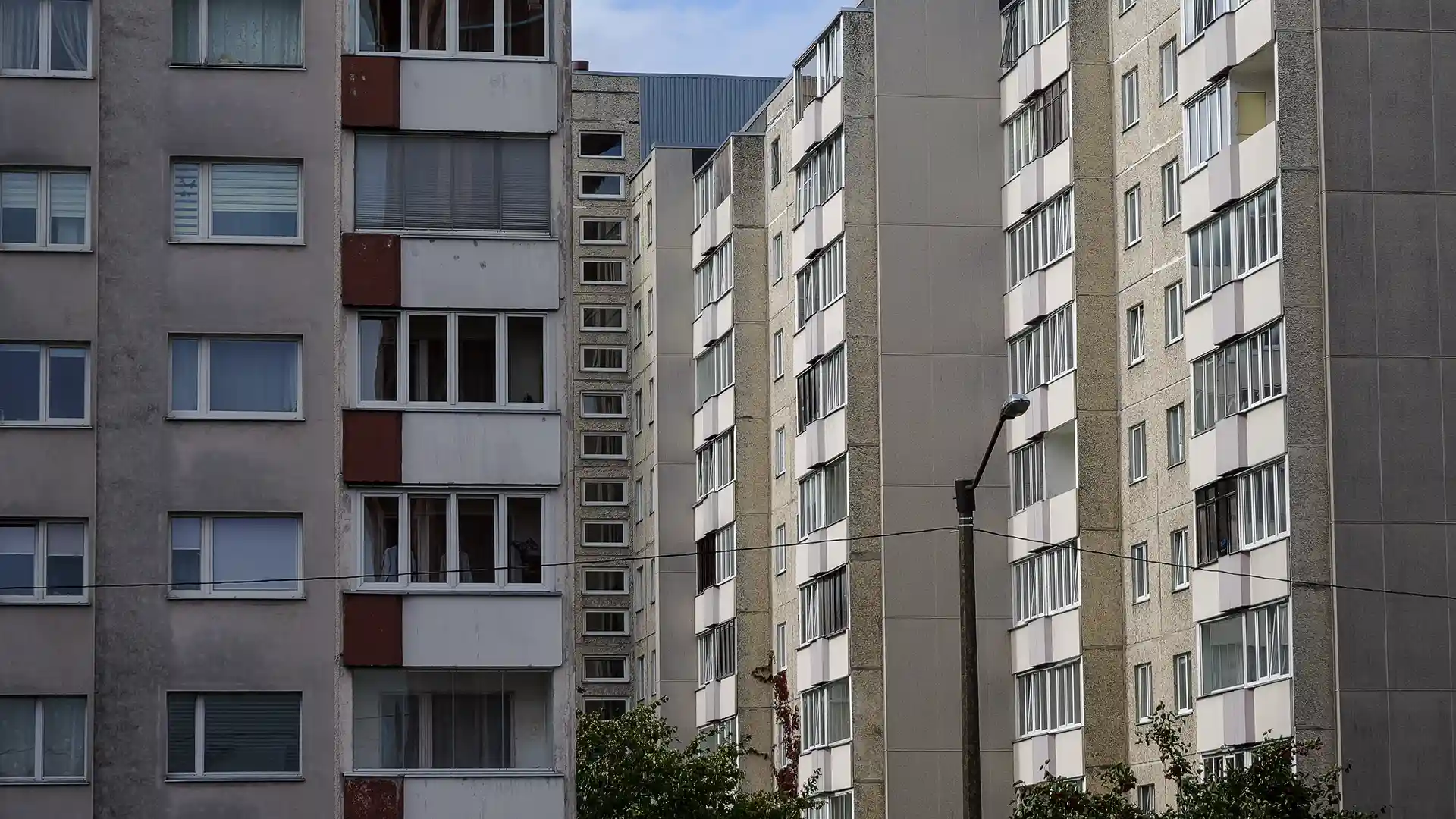
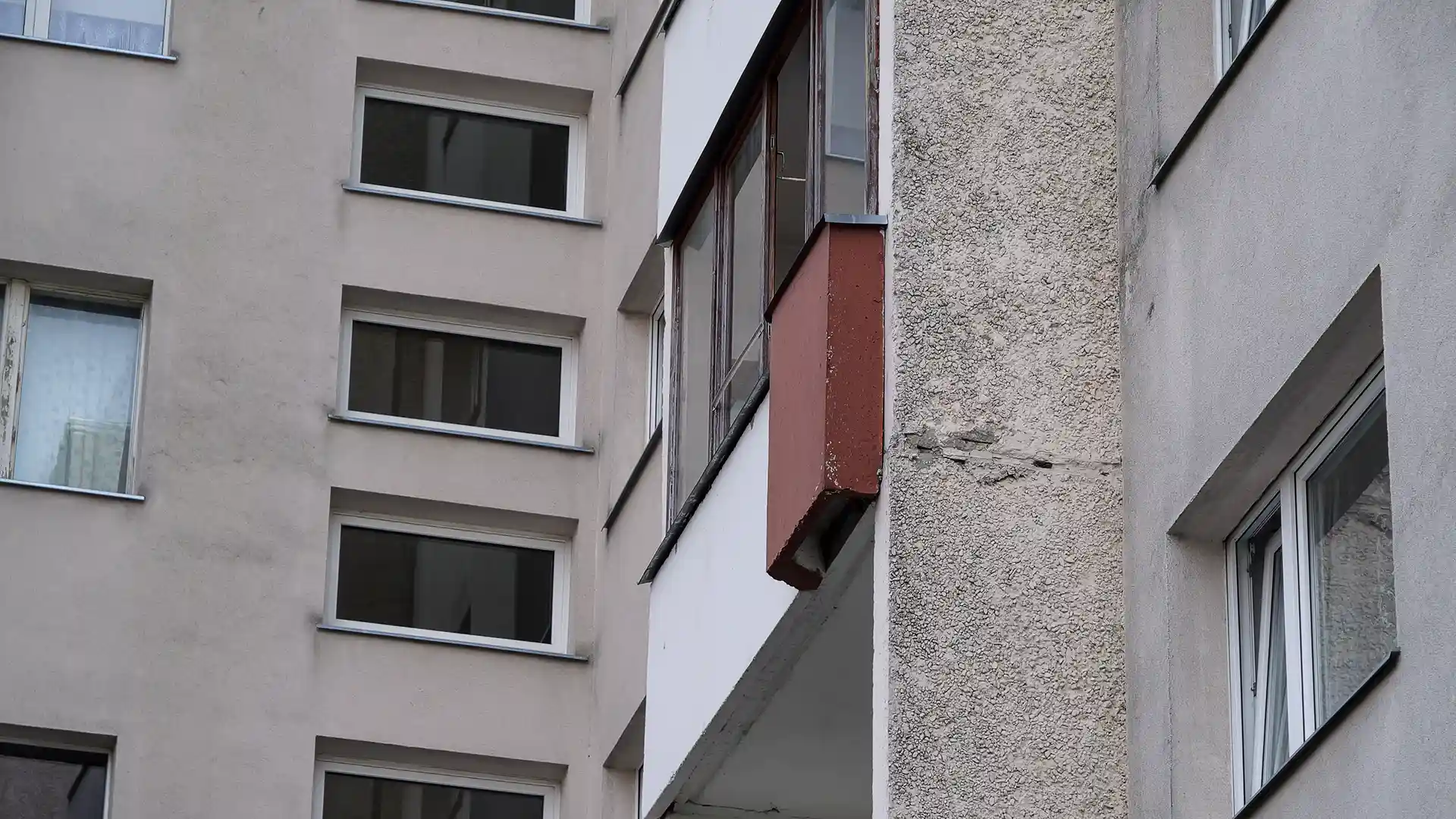

At first glance, Estonia looks modern and polished. Look closer: Soviet blocks, abandoned ruins, shiny new developments – a country of contrasts where the Soviet past is still hard to miss.
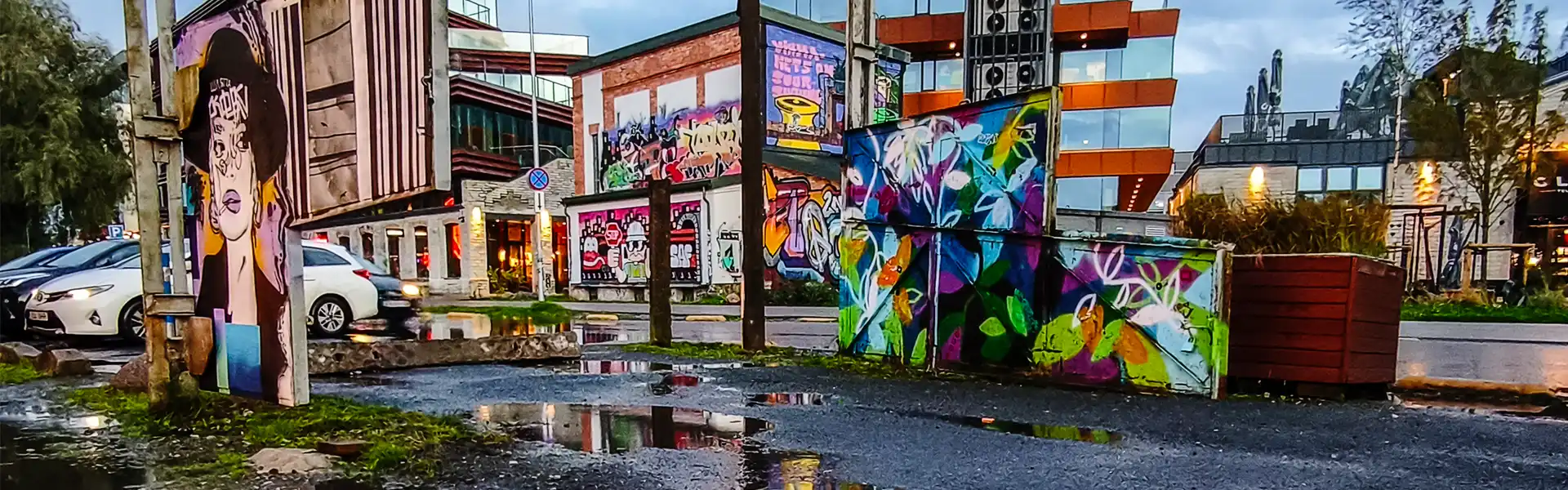
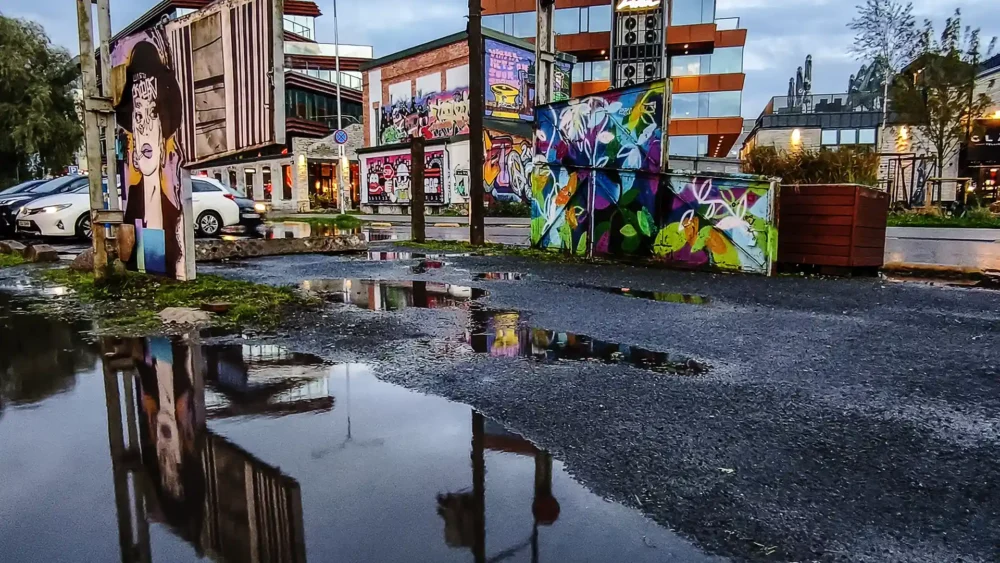
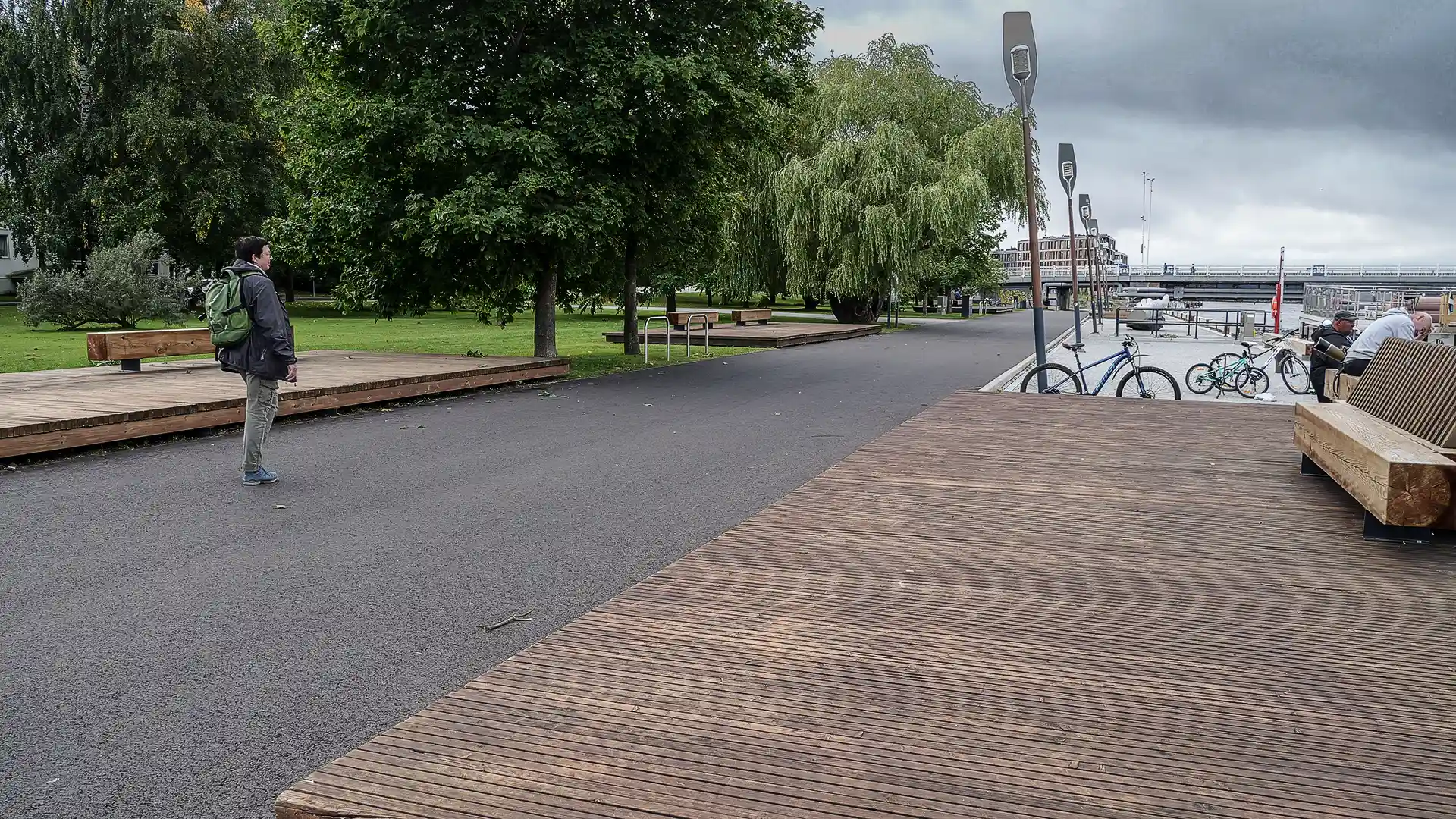
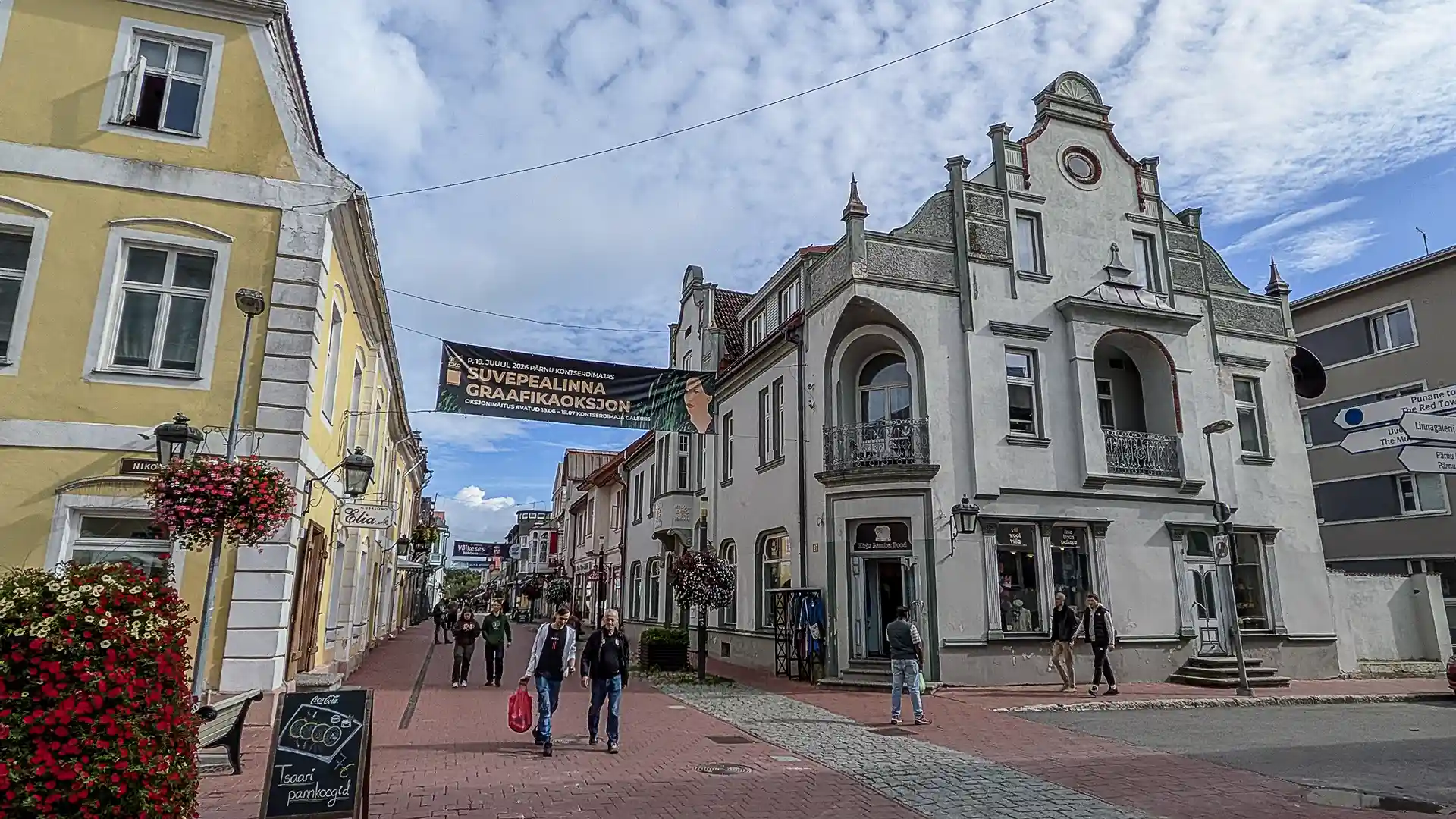
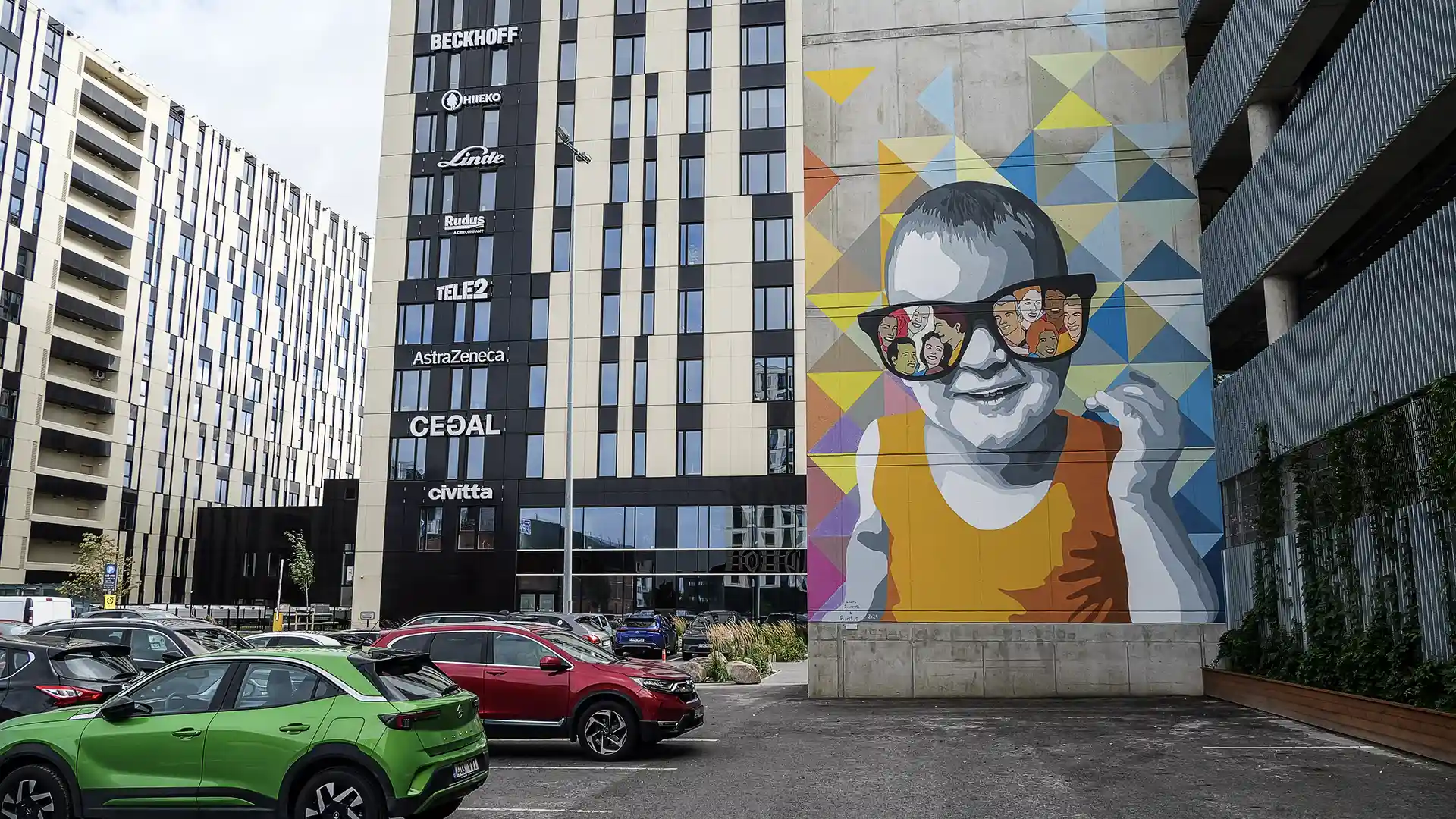
We stroll along the well-developed walkway to the small town of Pärnu. It’s just 1,5 km, along brand-new, post- Soviet apartment buildings. In between a few old houses, quite neglected, obviously left to get replaced by something better. Their walls are sprayed with bigger or smaller murals.
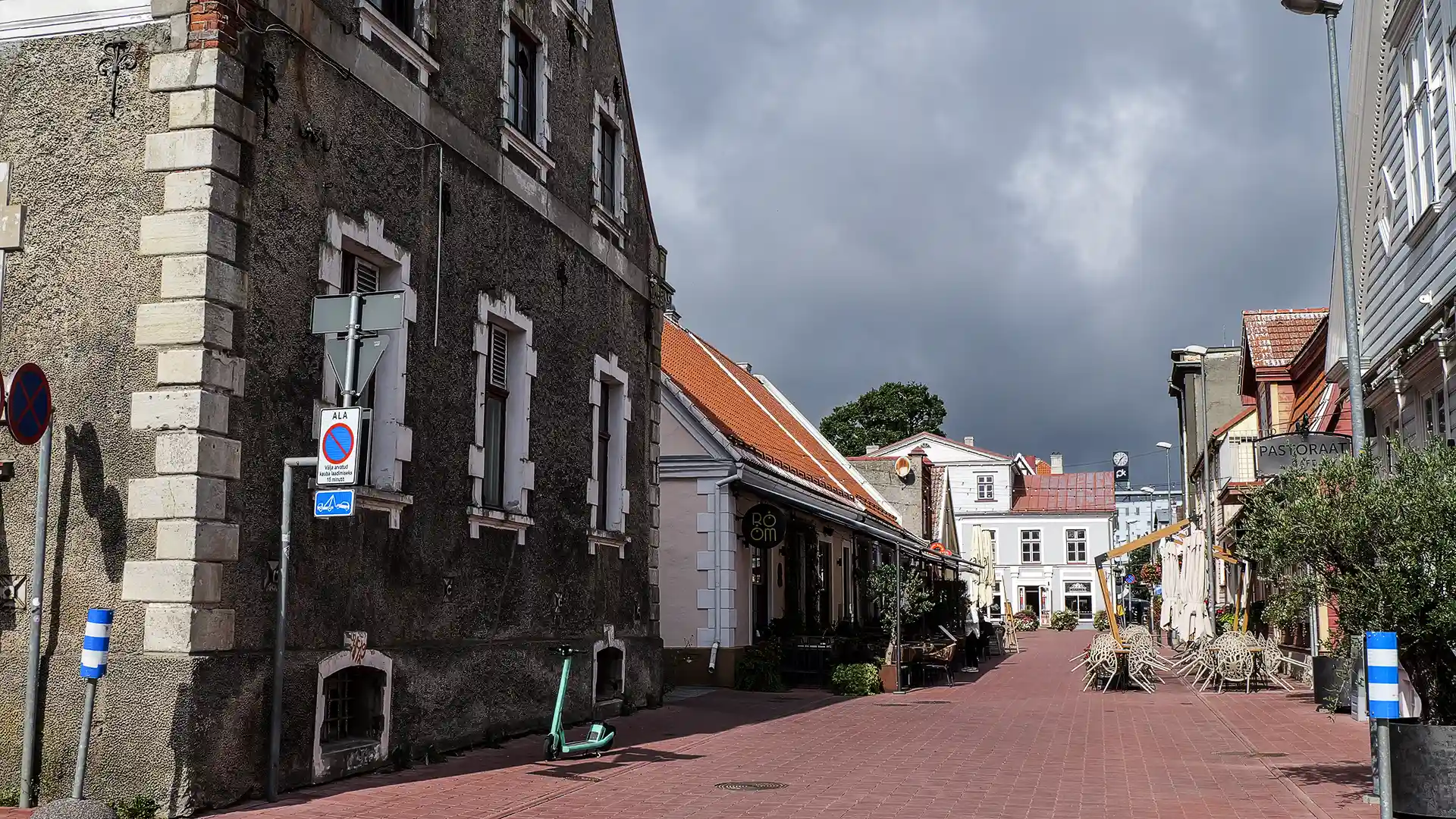
In town, mostly carefully renovated houses. We’re pretty astonished by how nice and tidy everything looks.
An impression we immediately get this morning when we cross the border into Estonia. Roads are excellent, even small ones are rarely bumpy. Houses look much more cared for, the supermarket we visit has a much better selection, and when we arrive at our campsite, we even have high-speed internet.
What a change. But is Estonia really as polished as it looks at 1st glance? Let’s see.
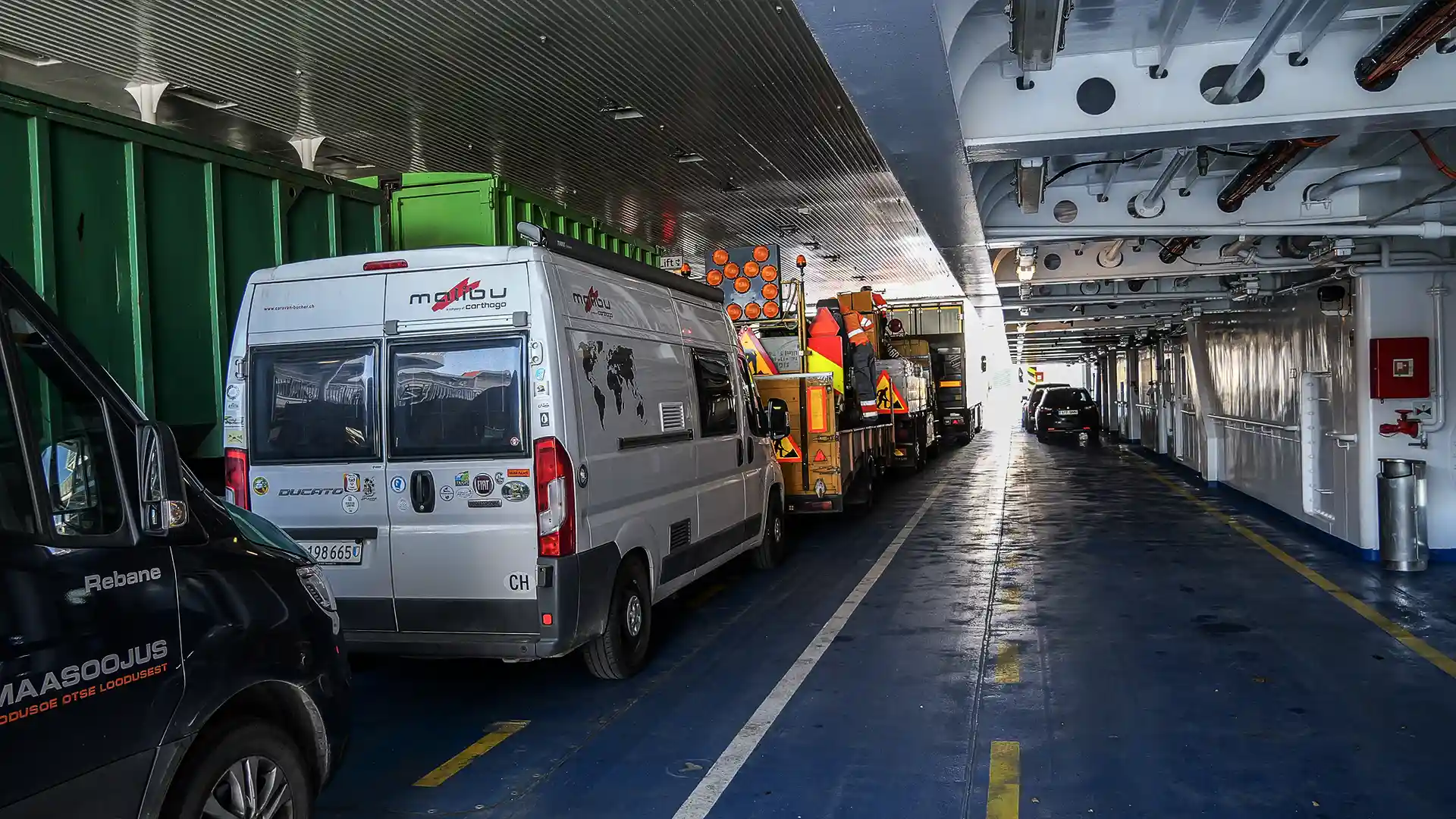
The ferry leaves in 15 minutes, we quickly get the ticket and drive onto it. We’re in the middle of trucks and commercial vans. Not a single other campervan, nobody looking like a tourist.
We climb up the stairs and have a look at the canteen. The strong smell of Sauerkraut is in the air, many passengers having their meal before continuing their work on the Island of Saaremaa.
Then we drive on empty roads to the campsite in the south of the island. Arriving there, we quickly realize it’s closed for the season. 15km further is another site. It’s open, and even has 2 or 3 other people staying there. The friendly owner explains to us that since the end of school holidays, it’s absolutely off-season. A situation we’ve lived through several times in the Baltics. It seems everybody takes their vacation at the same time, even those who don’t need to care about school holidays – a situation pretty different from other European countries. Somehow understandable. In September, it’s already too cold for sweet beach life.
And what do we do without sun, sea, and …?
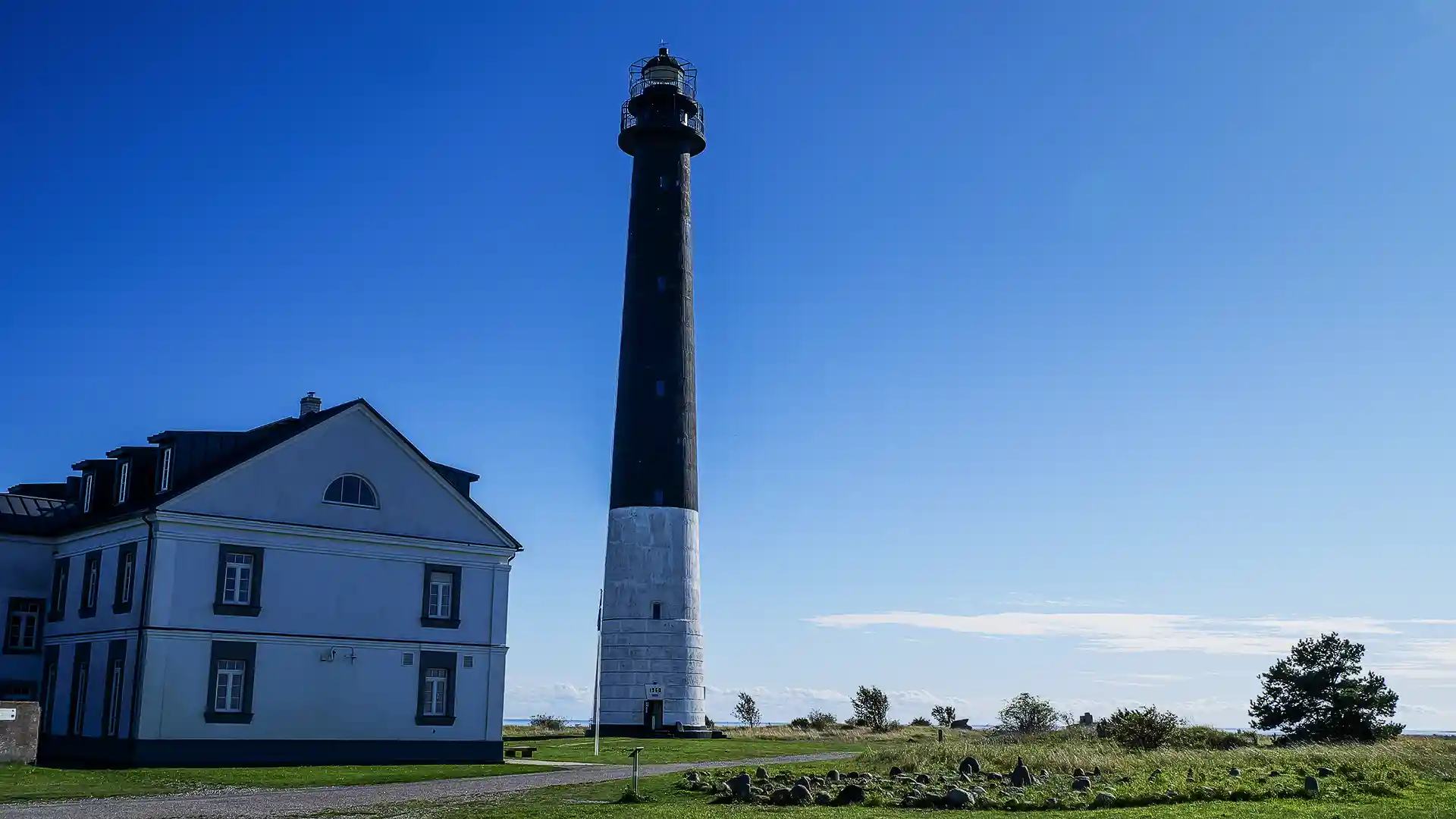
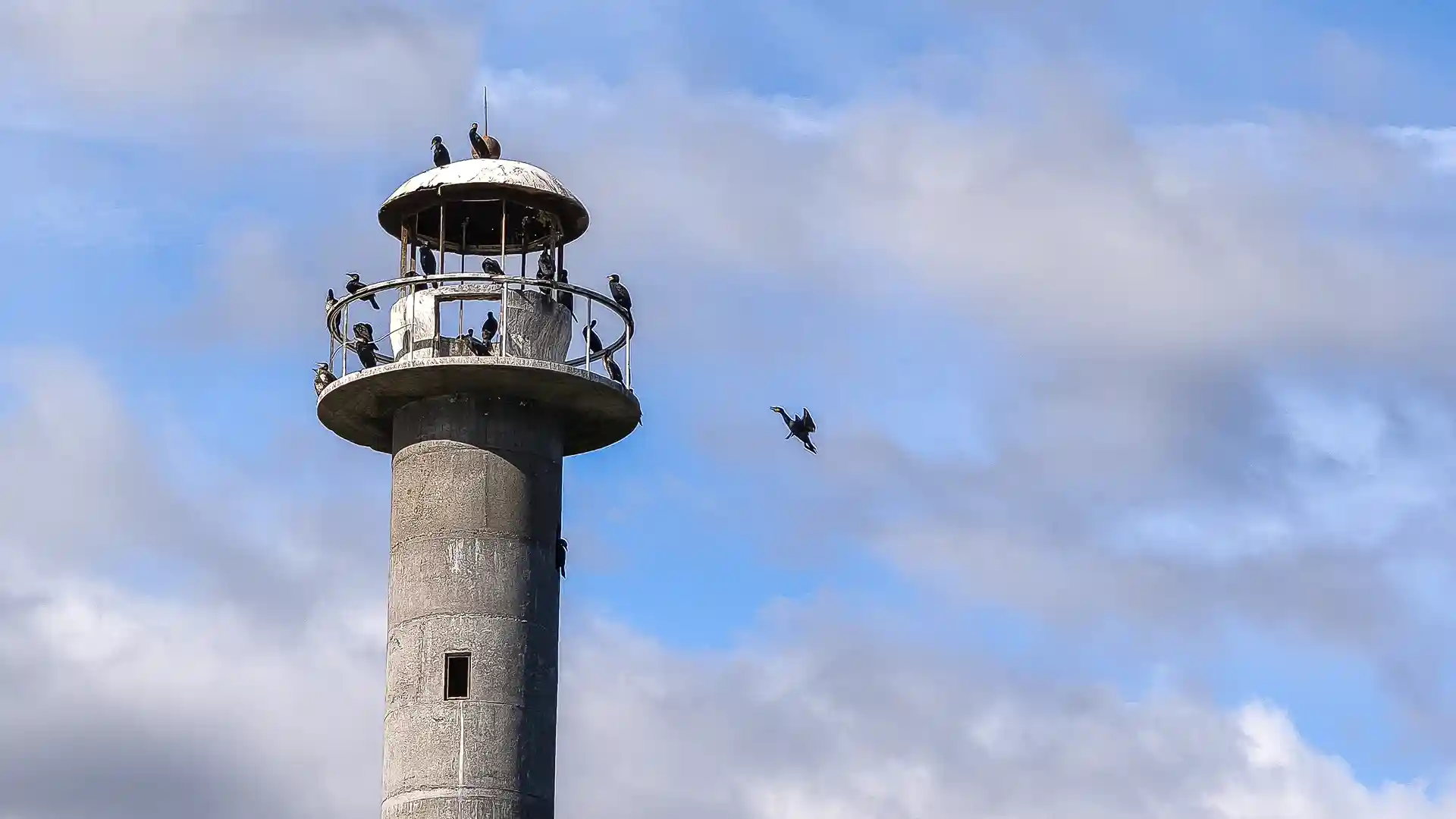
Lighthouses. A short drive to the Sõrve Lighthouse – one of the most photogenic spots on the island – and we can even climb it for a hefty fee.
Then a hike to the leaning Kiipsaare Lighthouse in Vilsandi NP. Surely, about 100 years ago, it was properly built. Straight up in the sky and about 150m from the shoreline. Today, it’s in constant risk of falling into the sea, and the shoreline is pretty different, so the lighthouse is no longer accessible on foot.
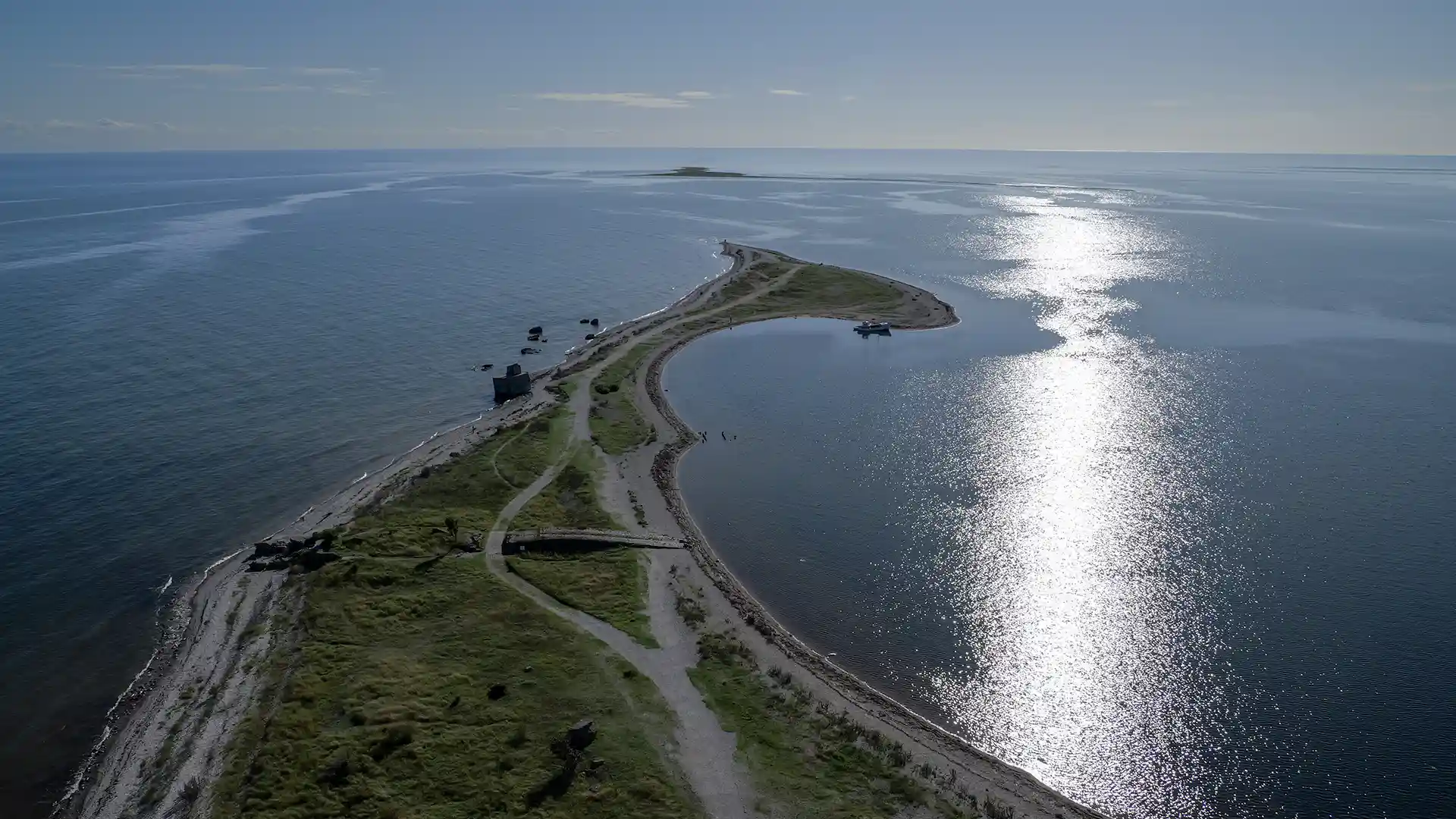
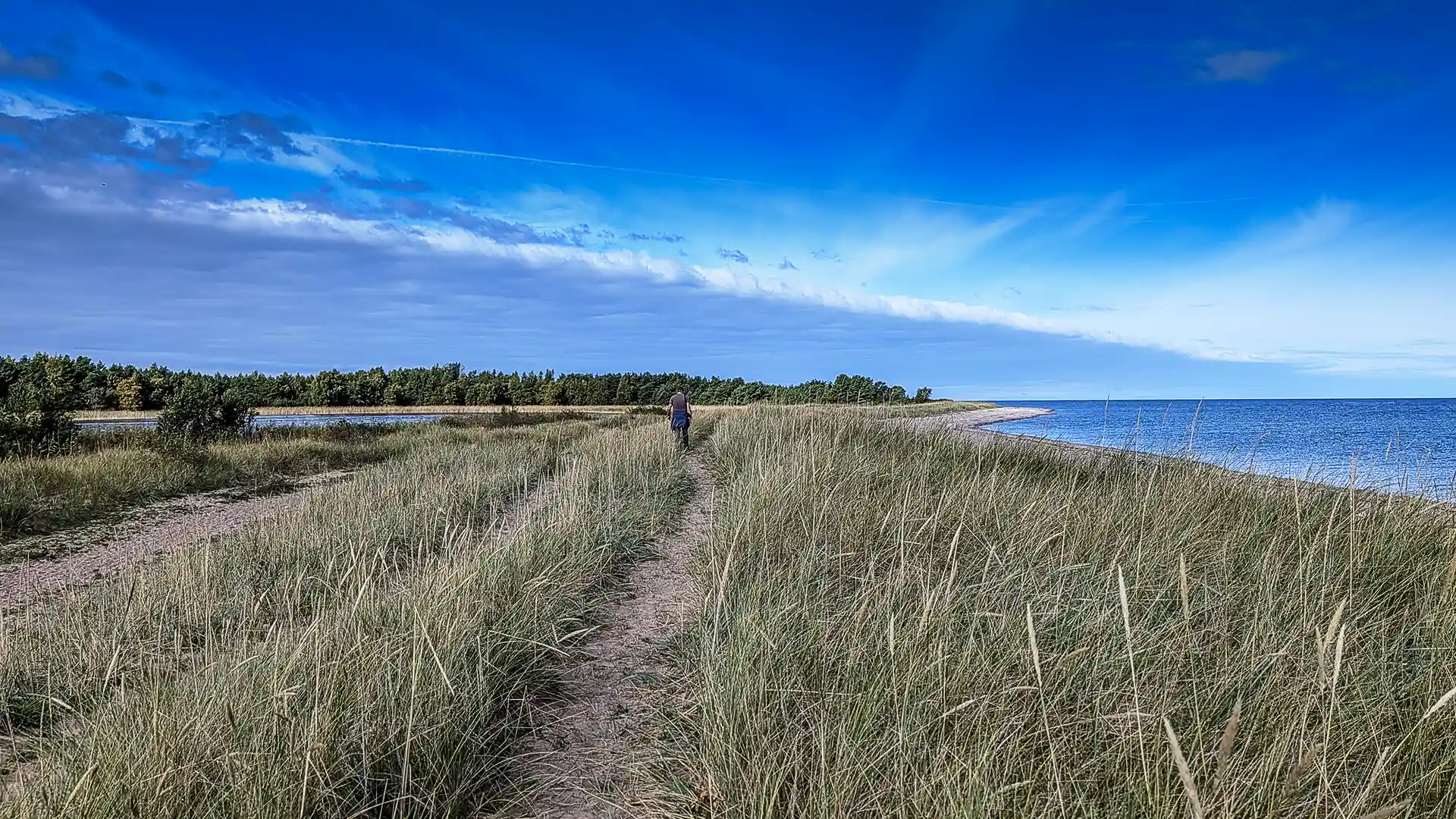
A nice, lonely walk thru forest and along the coast. We only meet 2 visitors and a few locals collecting mushrooms. During high season, it’s the place where 1000s flock to to see the white beaches and clear water of the peninsula. No wonder it’s considered the most beautiful hike on Saaremaa.
After 2 days, we’re on our way back to the mainland. Somehow, we’ve probably had a pretty special experience in such a tourist region – with almost none of the tourists around.
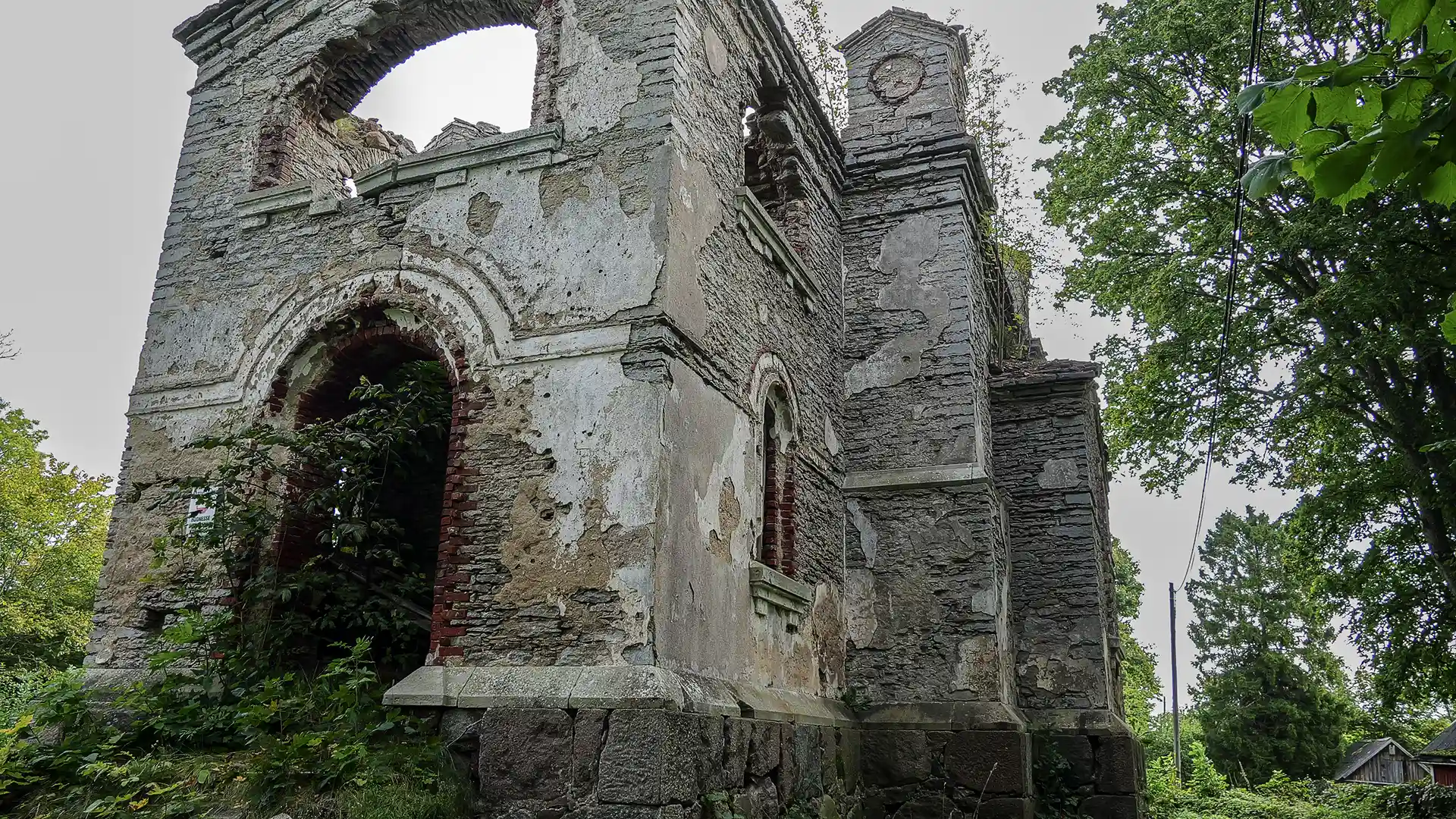
On the way back, a quick look at a lost Orthodox church at the roadside and one of the island’s famous windmills – well, a reconstruction of it. Then we head for Rummu, to experience a completely different world.
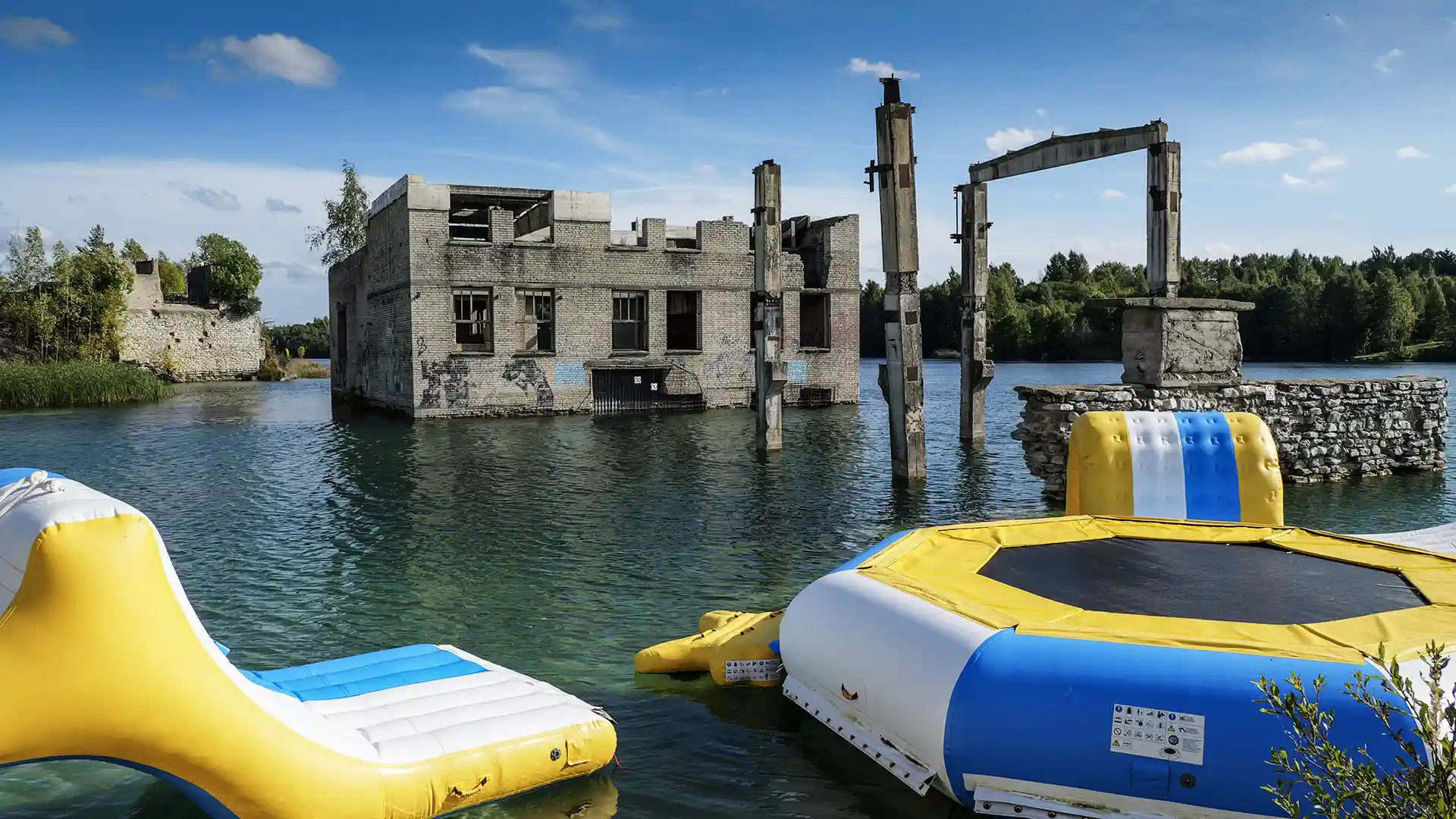
When we check Google, it seems to be Estonia’s best-rated photo spot – the ruins of a lost place surrounded by the crystal-clear, turquoise water in a former quarry. If we search a bit deeper, there’s another picture: a Soviet gulag where inmates had to excavate limestone as hard labor. Only in 2012, more than 20 years after independence, the prison was finally closed and everything simply abandoned. The quarry quickly filled with water – it became the perfect setup for a private company to turn it into a fun park, complete with a museum about its gulag past.
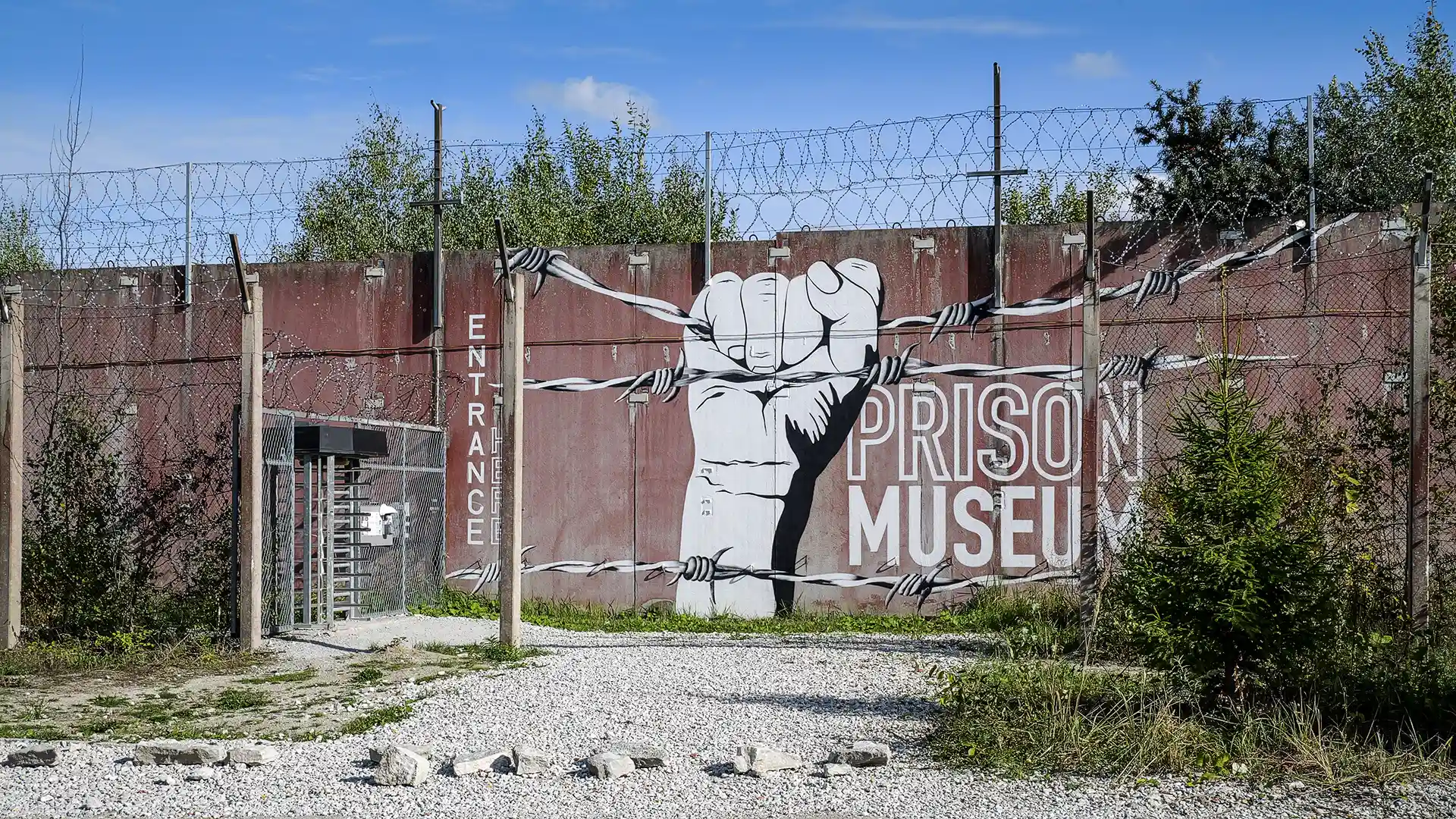
We’re wondering how it works. It’s off-season, so nobody waits at the entrance gate. Just a terminal to shift some money to them. No price, no explanation of what you get for your money. We take the risk, pay 10 euros each and enter.
A short stroll to the lake – the former quarry. A closed restaurant on its shore, inflatable plastic animals bobbing around in the water, and a few visitors hanging around. And this is supposed to be Estonia’s ultimate photo spot, its nicest view?
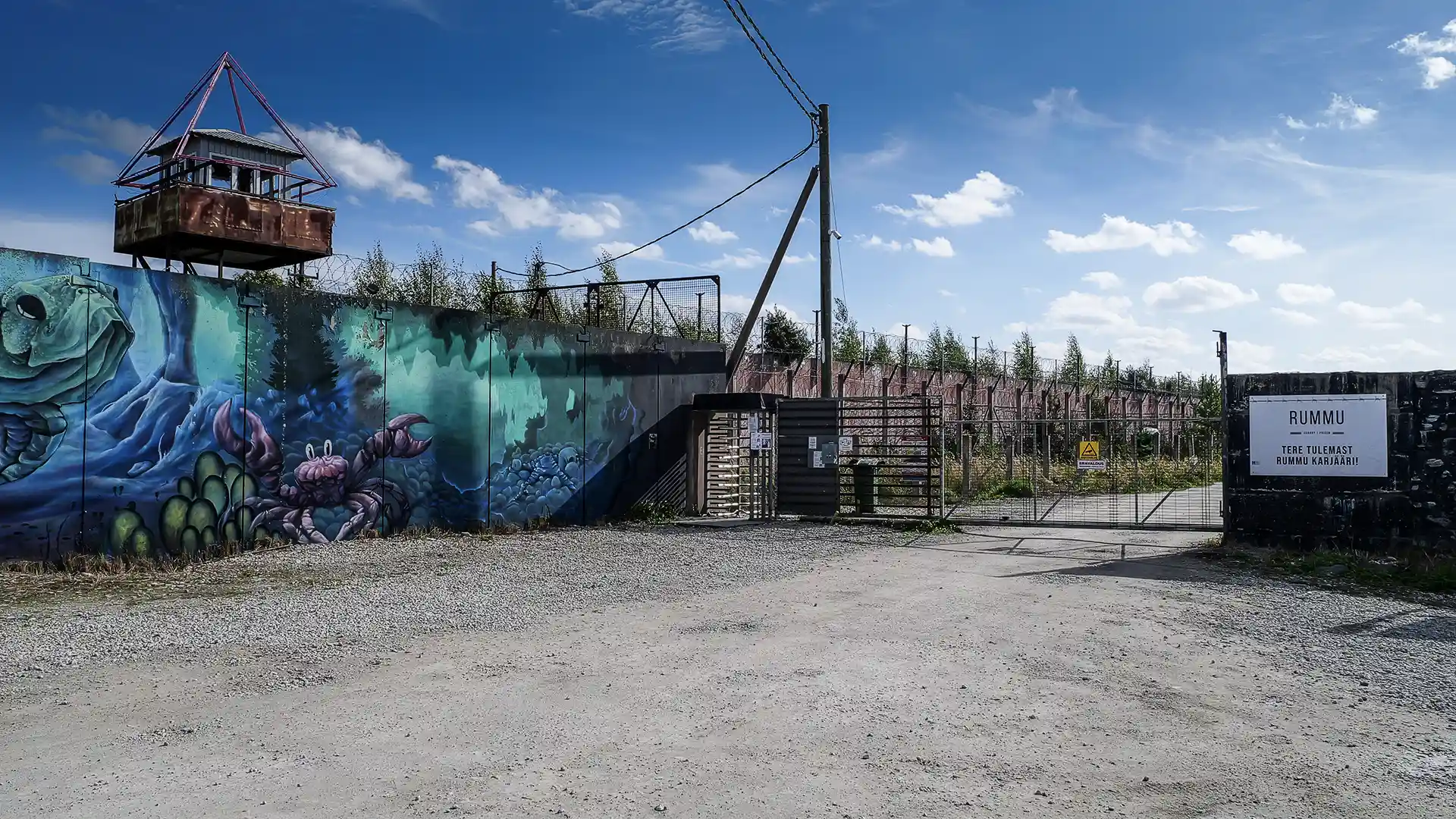
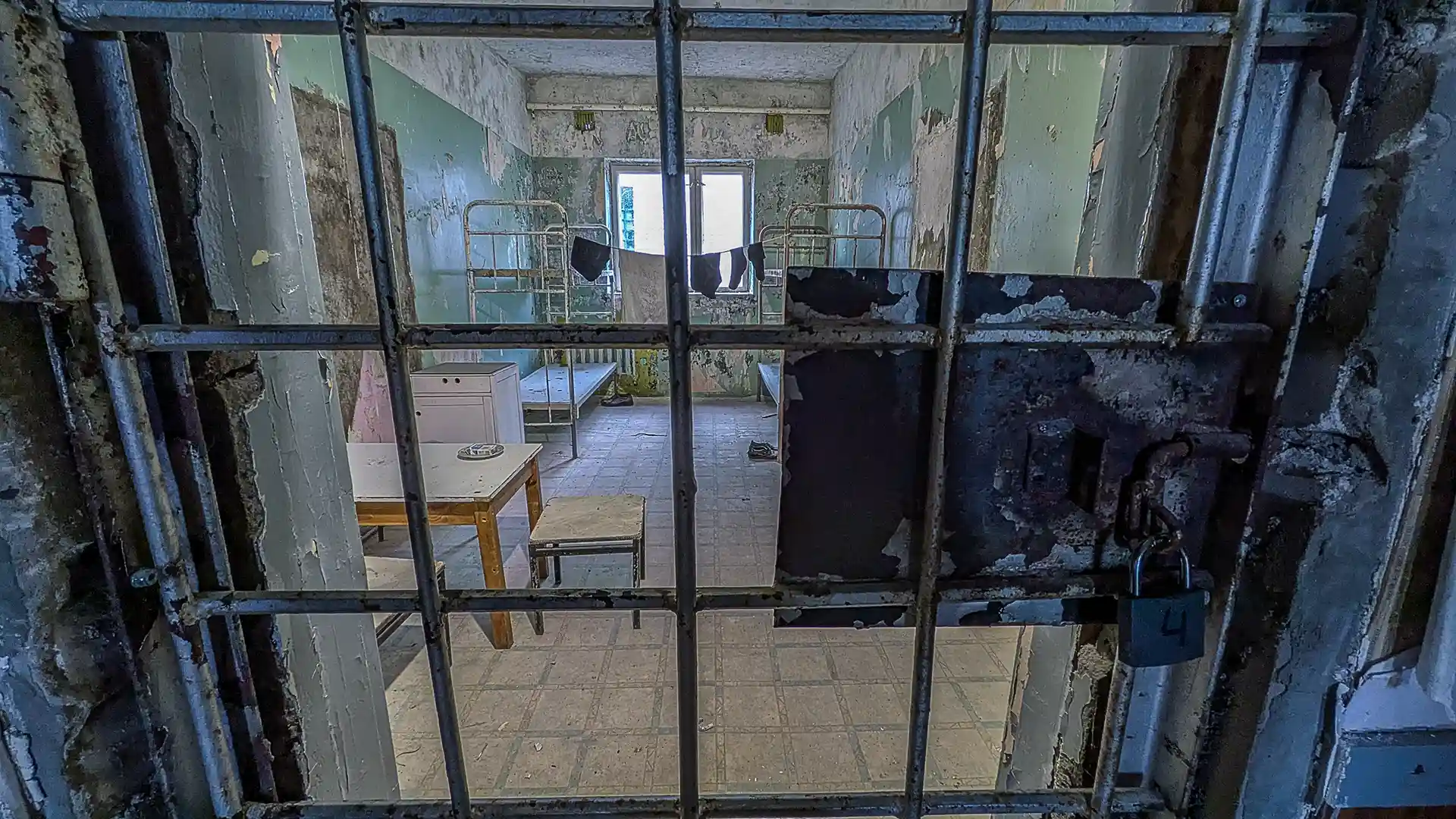
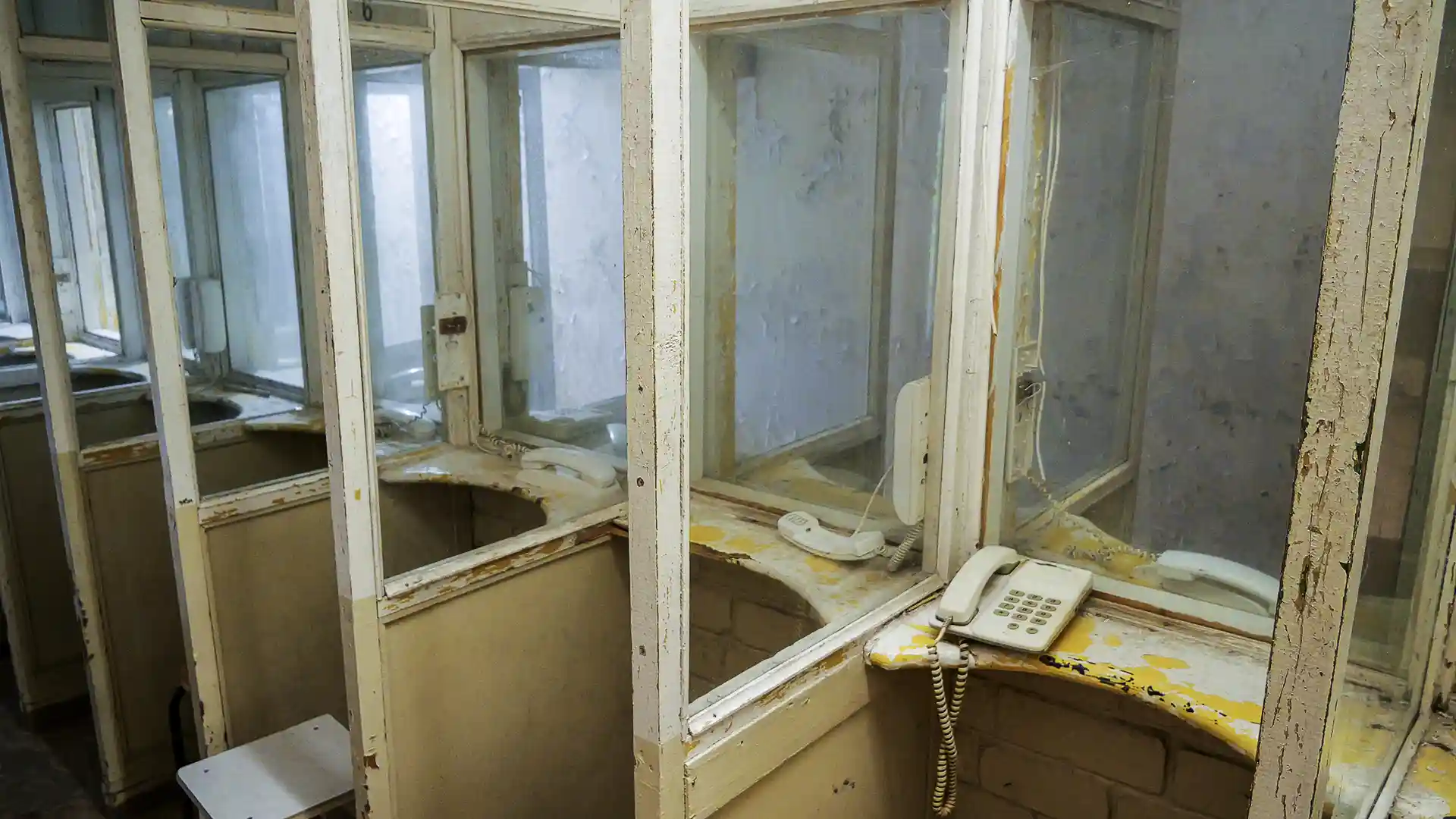
We leave the photospot, a bit disillusioned. Finally, we find a small door leading to the Prison Museum. Even if most of the prison is submerged today, you can still see the outer walls of the gulag, barbed wire everywhere, and the guard towers. Inside, many buildings are now occupied by companies, with trucks driving around. A few administrative buildings are open to visitors – those they call a museum. But don’t expect an exhibition, there’s just everything as they left it behind years ago.
Maybe not really a museum, more a glimpse into how the prison elite lived. Interesting as a lost place, but that’s about it.
And the famous Rummu quarry? A former gulag, a turquoise lake, and inflatable flamingos – somehow, Rummu has turned history into a fun park.
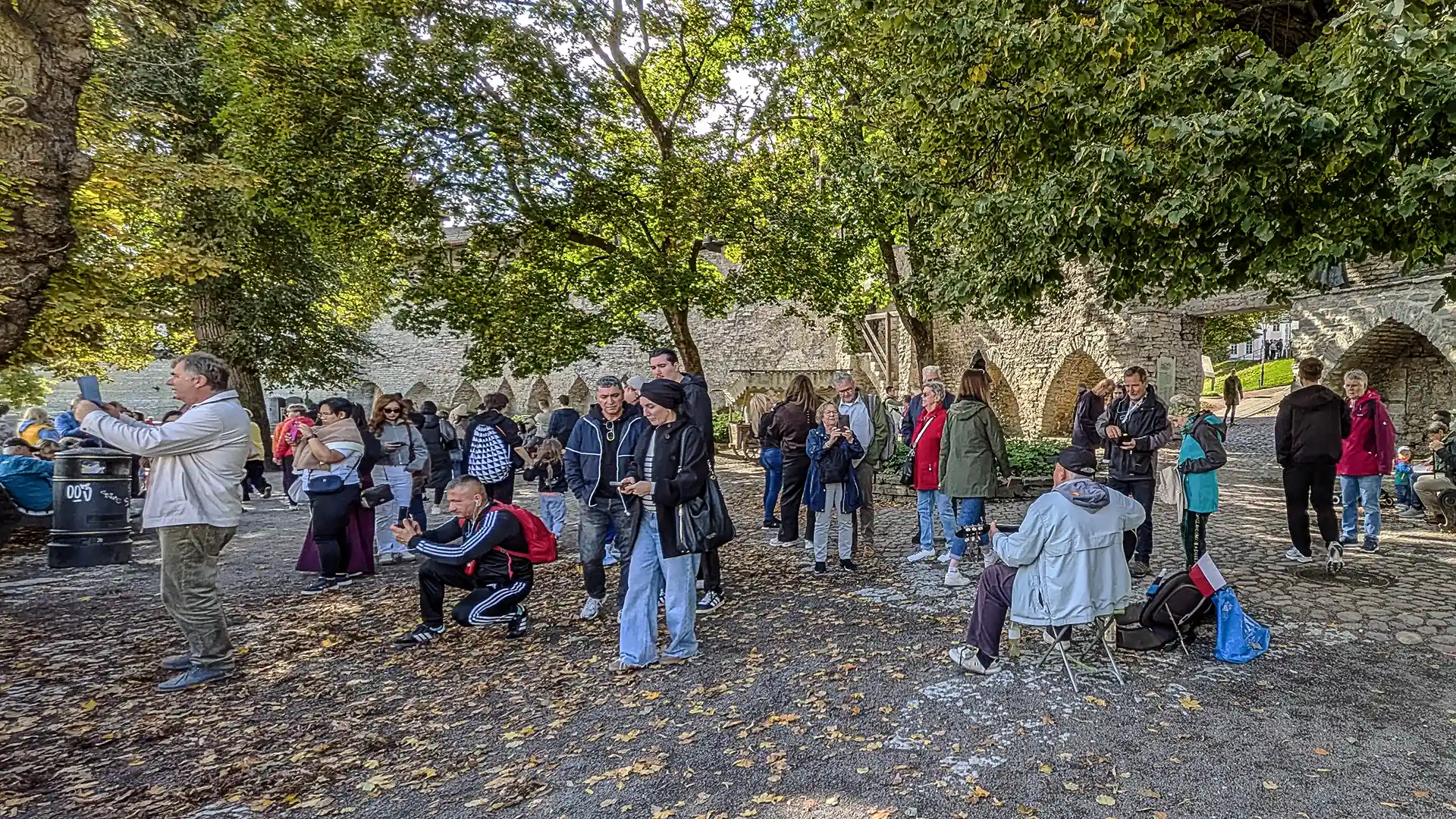
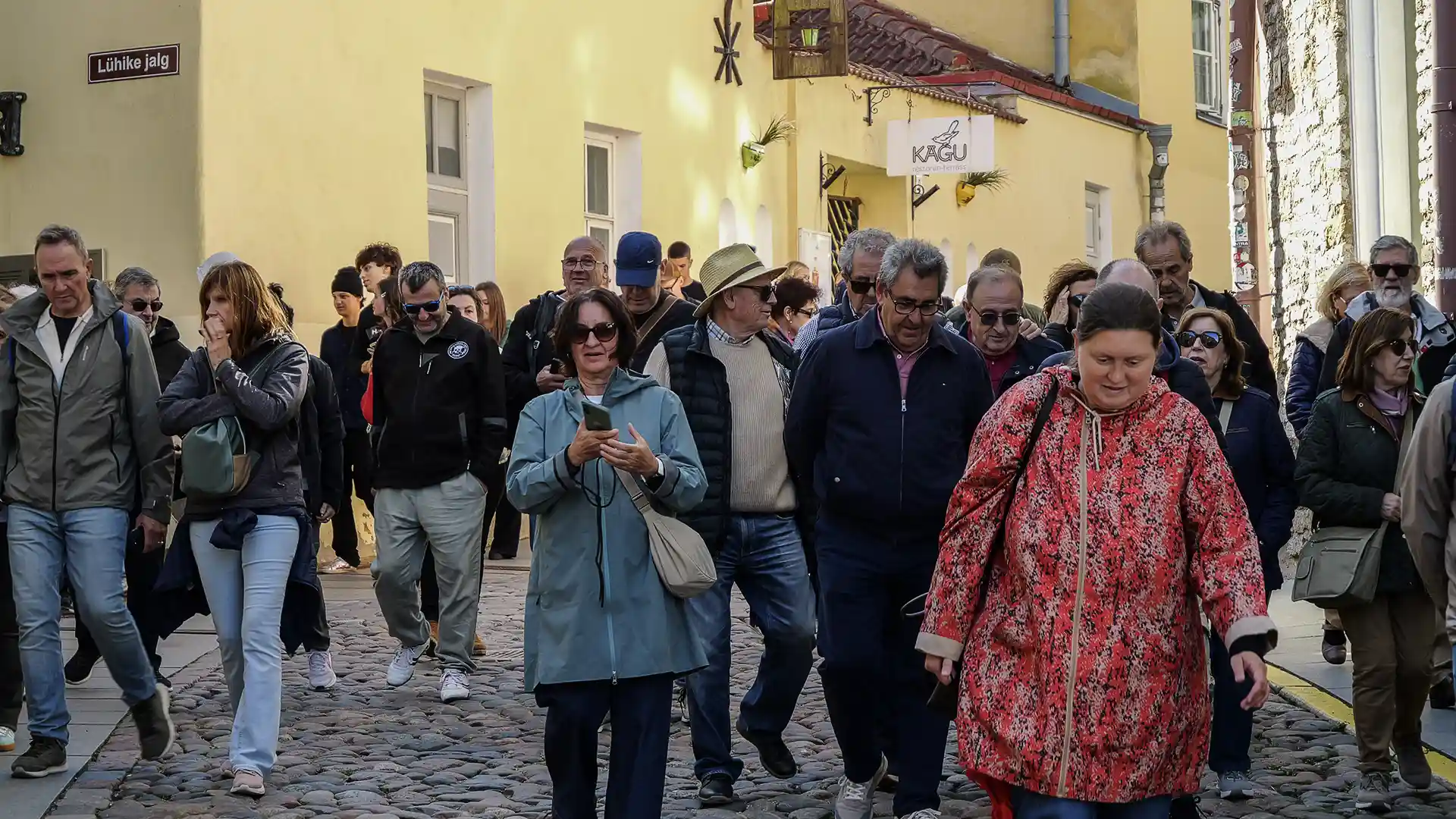
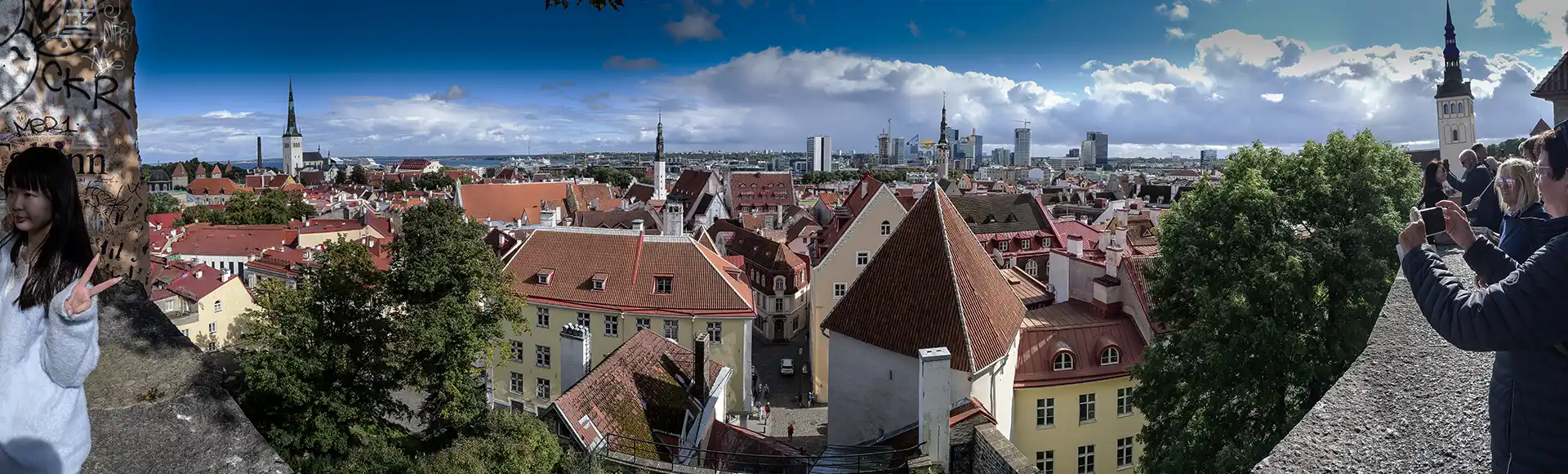
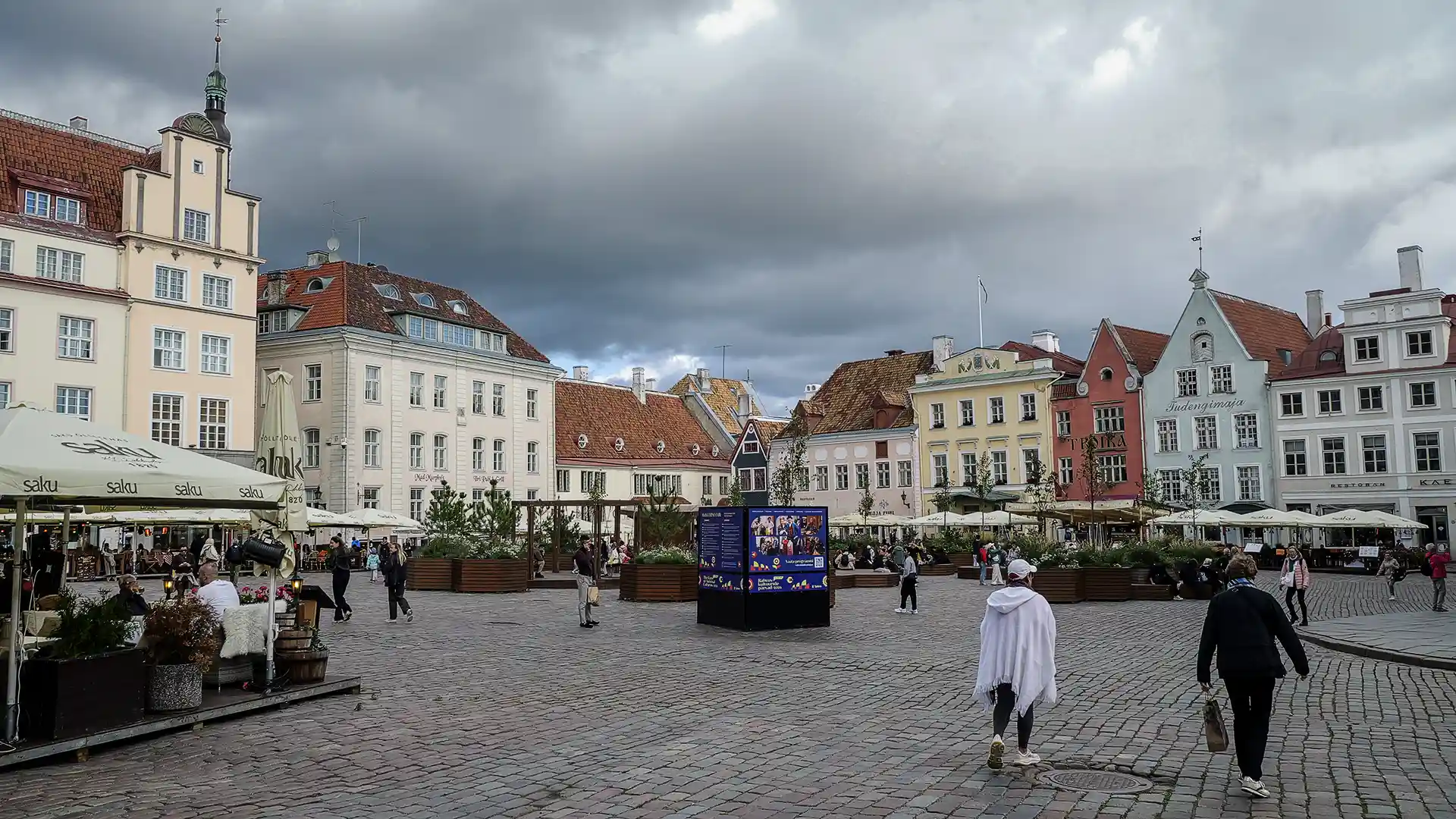
Around us, 100s of visitors. About half of them in strange poses, the other half taking pictures of those posing. In the background, some churches, tile roofs, and a few clouds. We’re in Tallinn, Estonia’s incredible capital. We didn’t know it was such a major tourist hotspot, especially for Chinese tour groups. We’ve just climbed Domberg in the world-famous old town, probably no wonder we’re not alone.
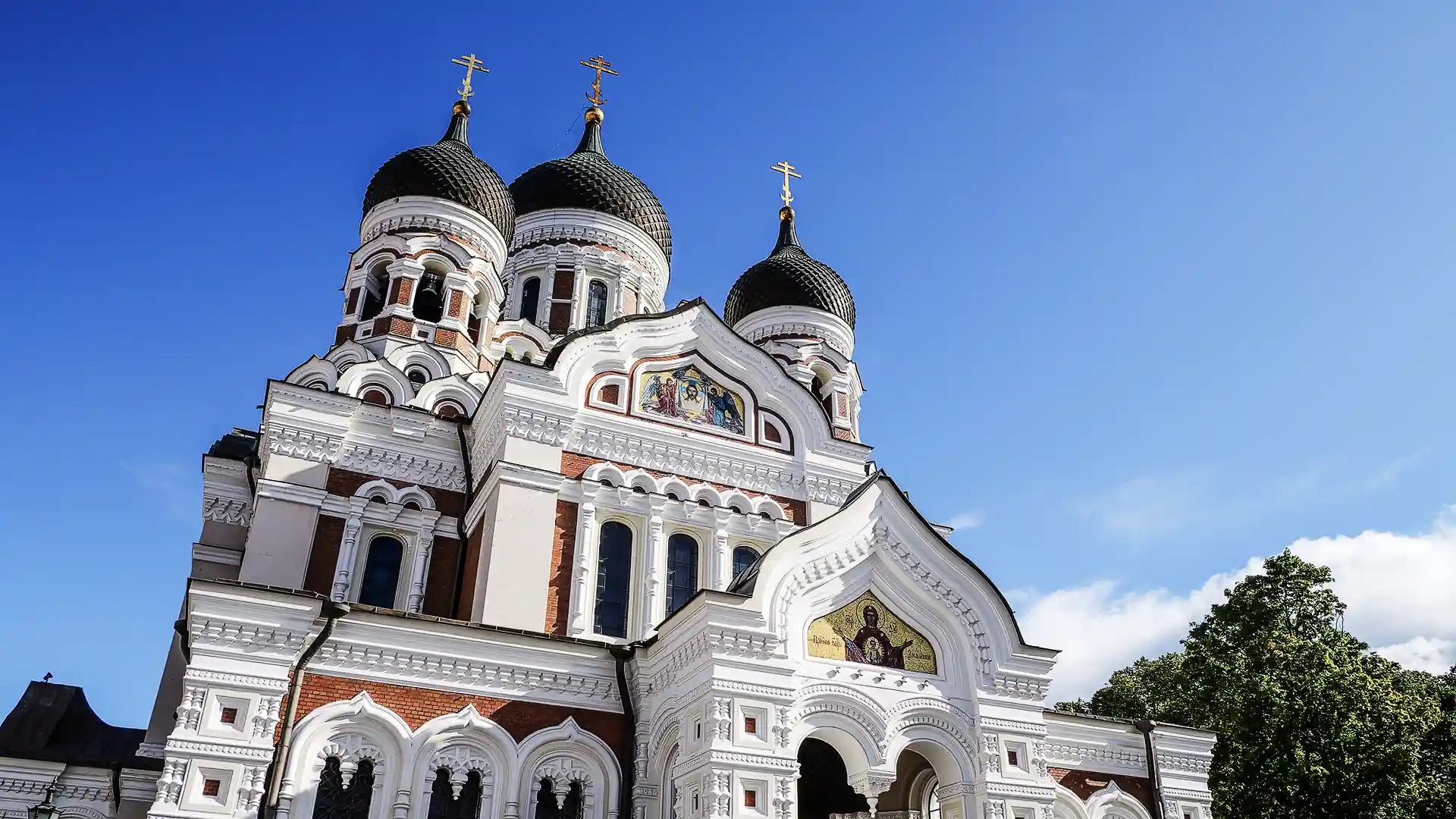
A visit to the Alexander Nevsky Cathedral, an Orthodox church, then on to 2 the really famous viewpoints. Definitely, we have to queue up a bit. And the view? Maybe it’s better in the evening sun.
Downtown, the lower part of the historic center. On the way down, we see the reason for all these tourists flocking around – a huge cruise ship.
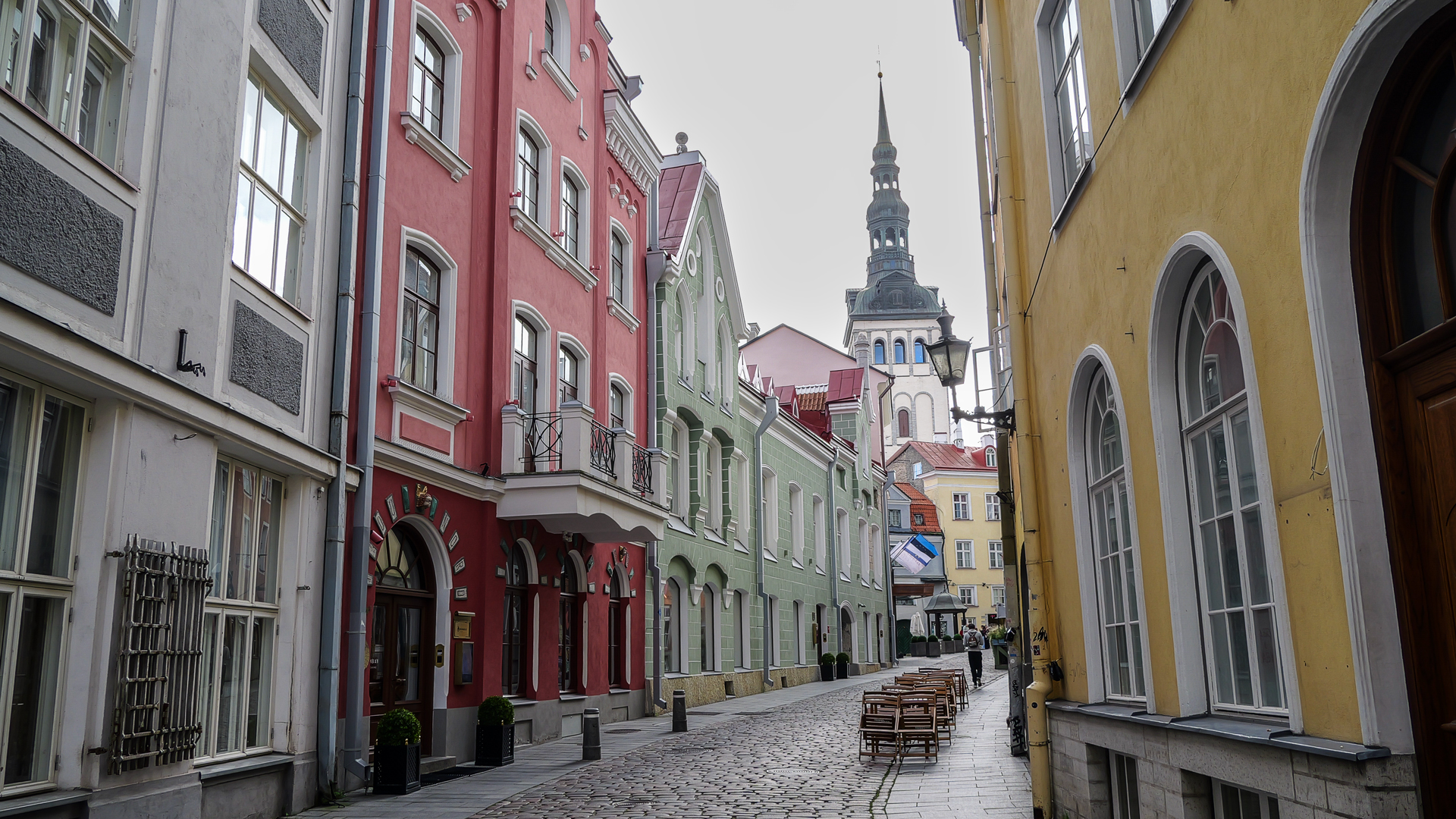
We stroll thru the streets, try not to bump into the crowds, and discover a few quite picturesque corners. Taking a picture means working hard not to have the beautiful sight hidden behind other people or the adverts of the numerous eateries. Sometimes we succeed, often not.
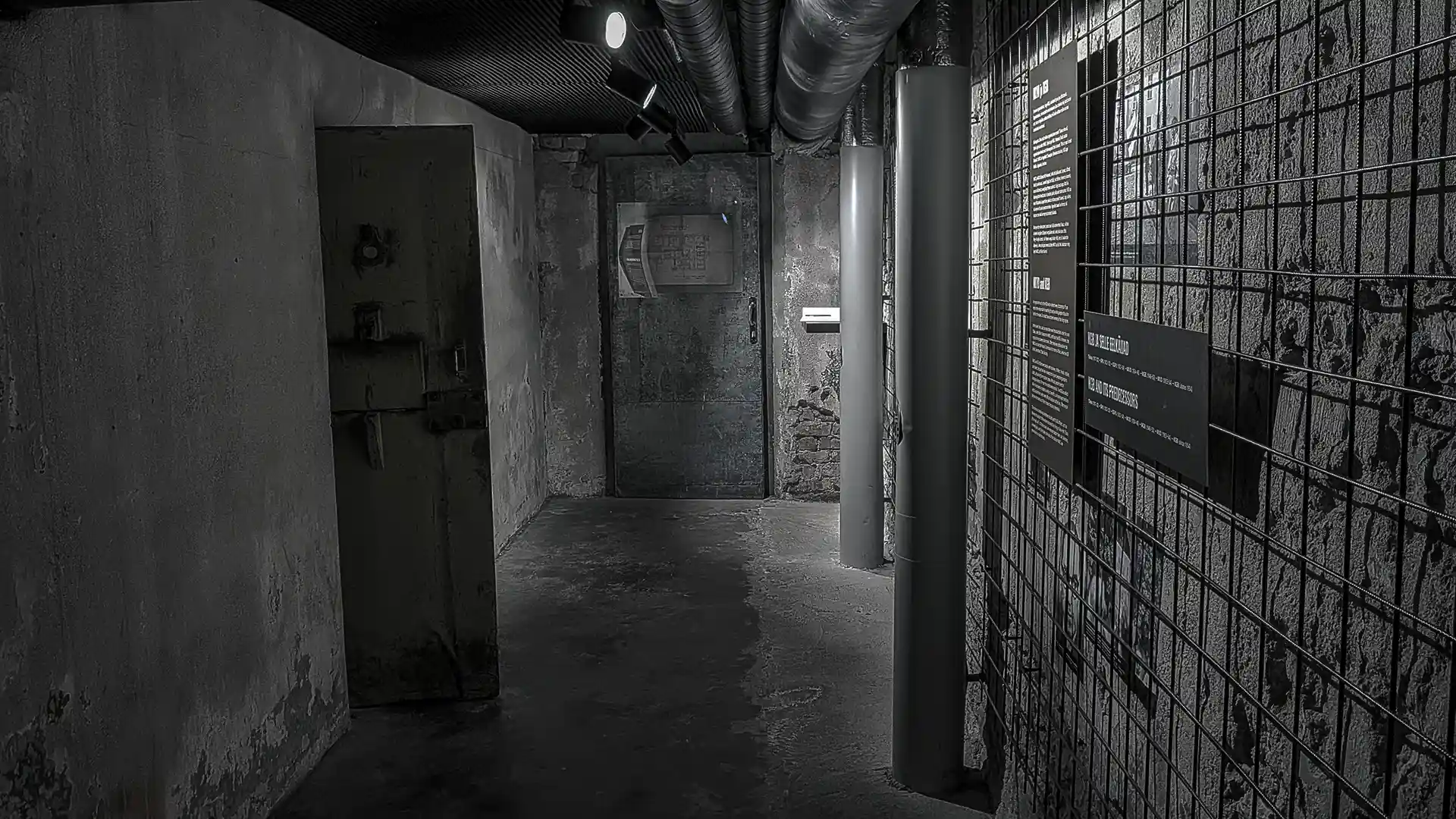
Finally, we stand in front of the town’s KGB prison. Of course, we’re the only visitors here. Should we have a look? We’ve seen a prison yesterday, so maybe 1 is enough. Anyway, we go in. An impressive reminder of the KGB’s brutality – you have to see it to believe it.
OK, that’s touristy Tallinn. Despite its fame, we think it’s not that great. Too many overpriced eateries, too many souvenir shops, and too many tour guides explaining whatever tourists may want to hear.
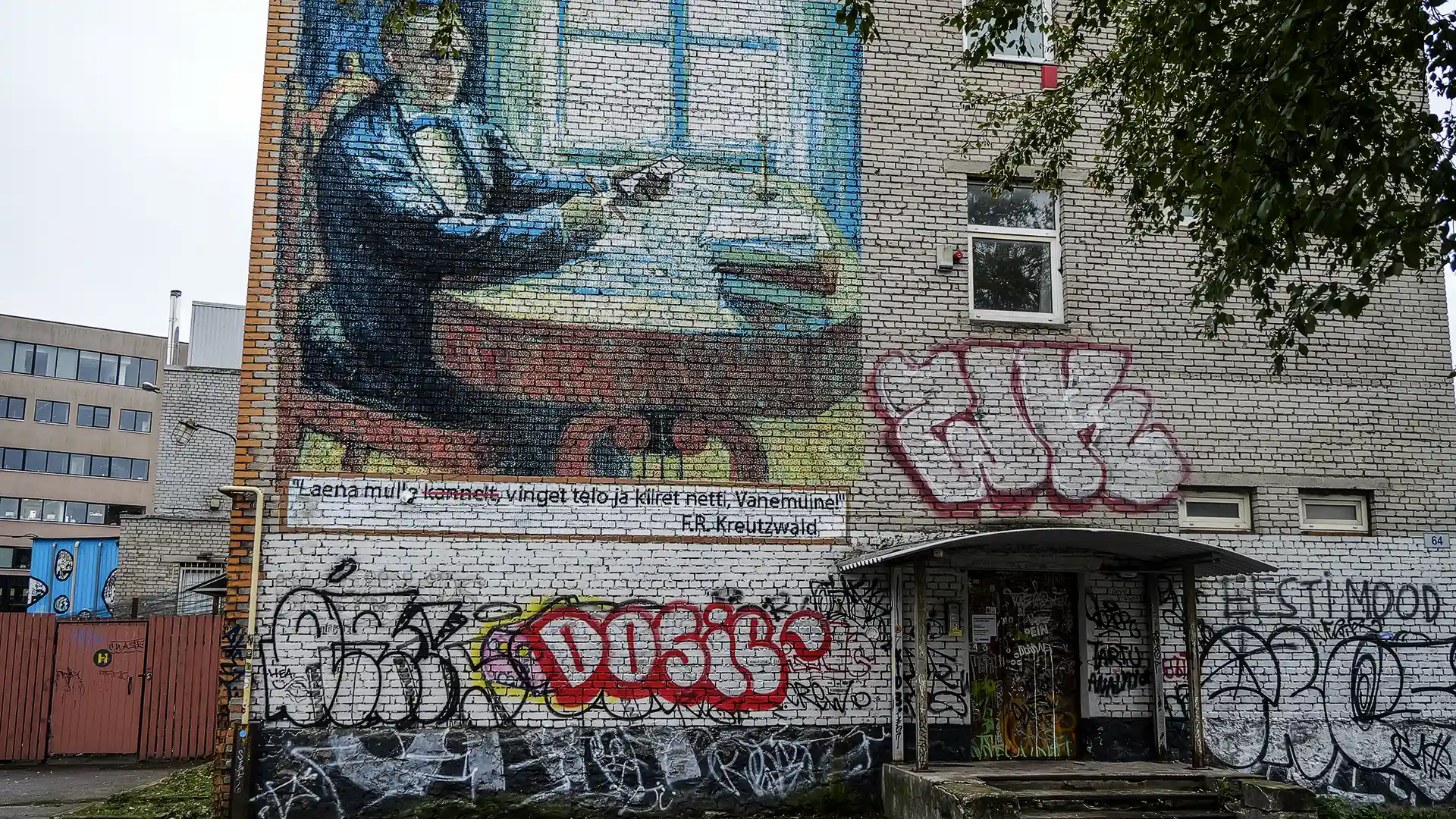
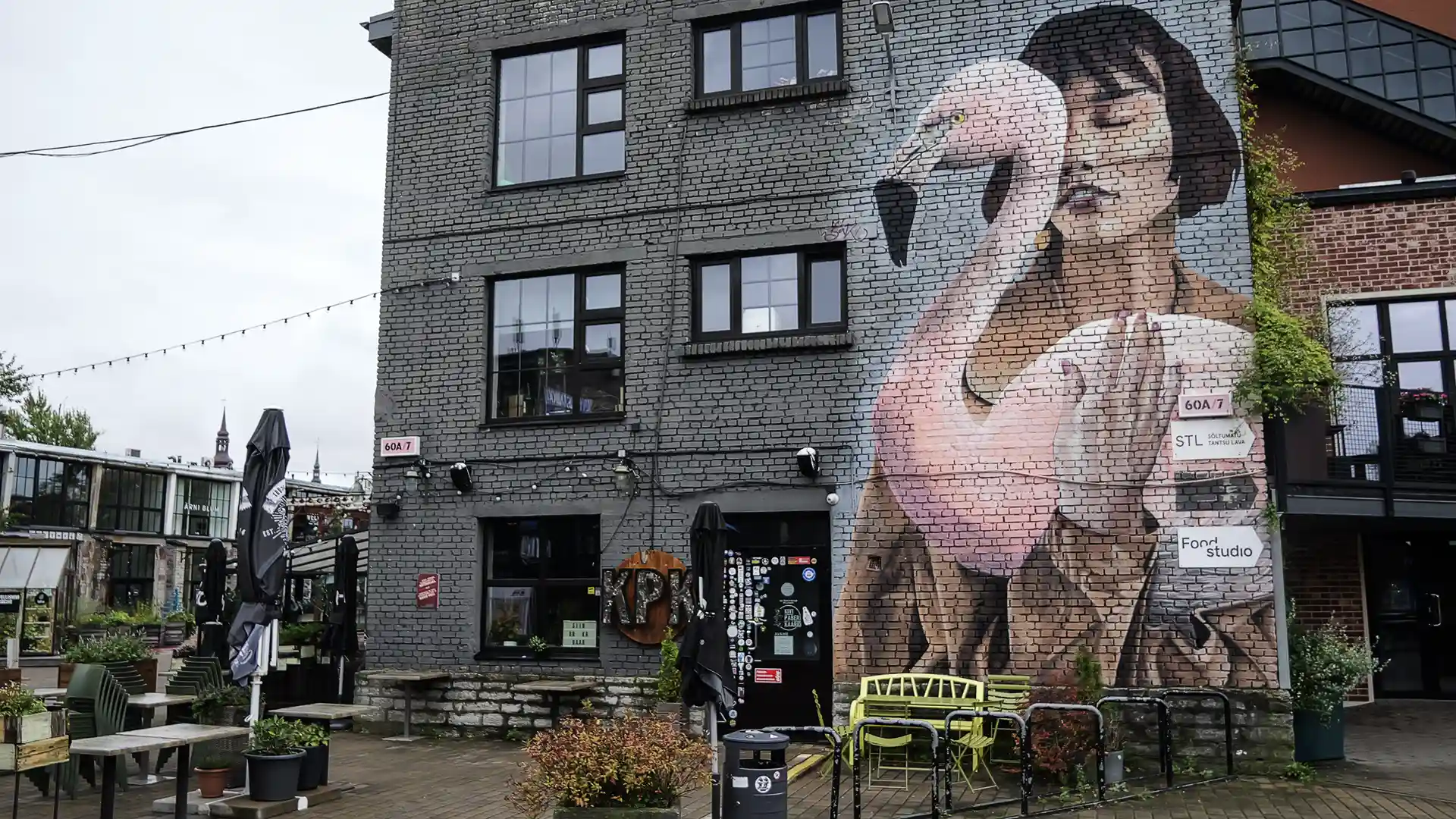
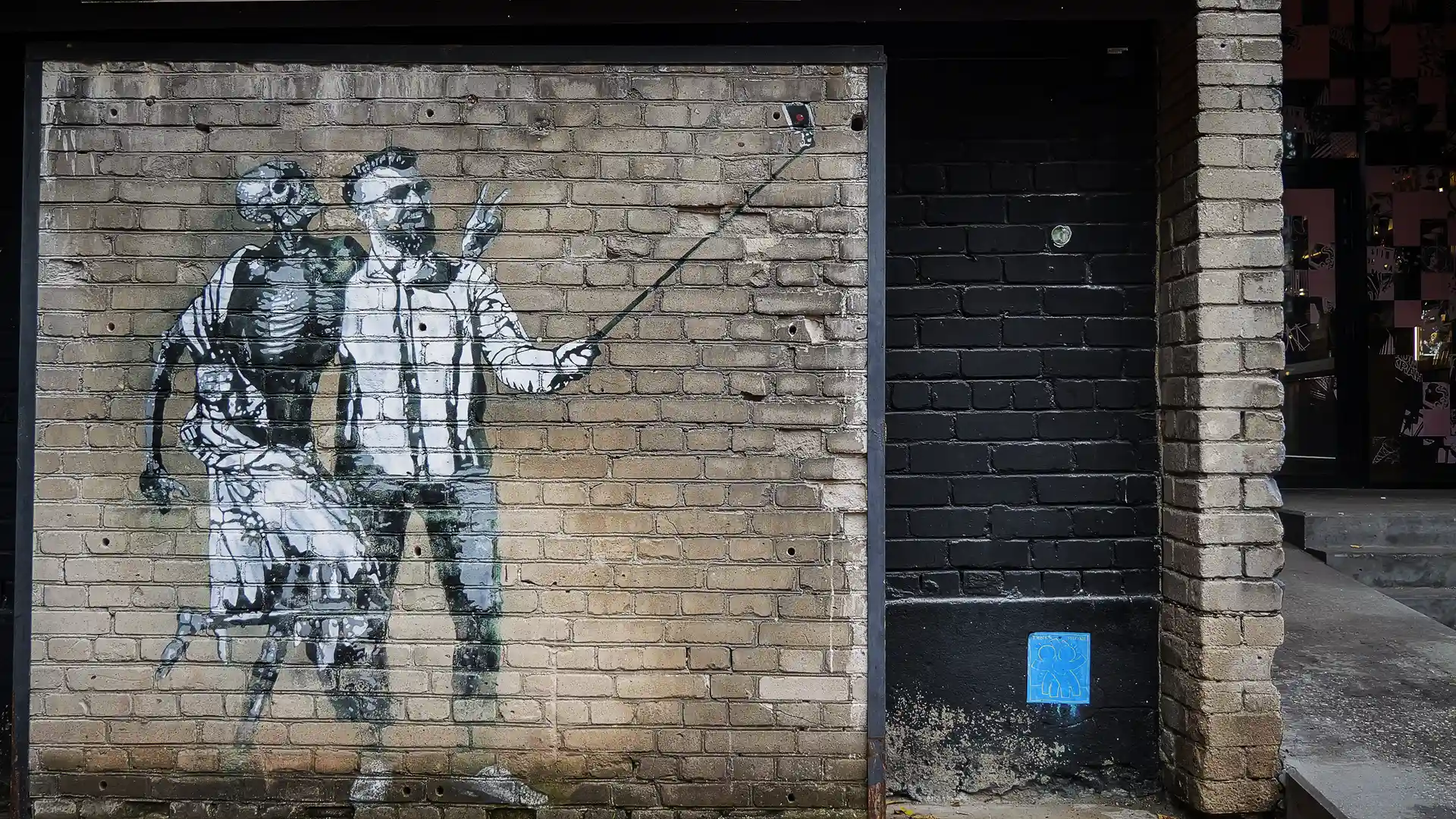
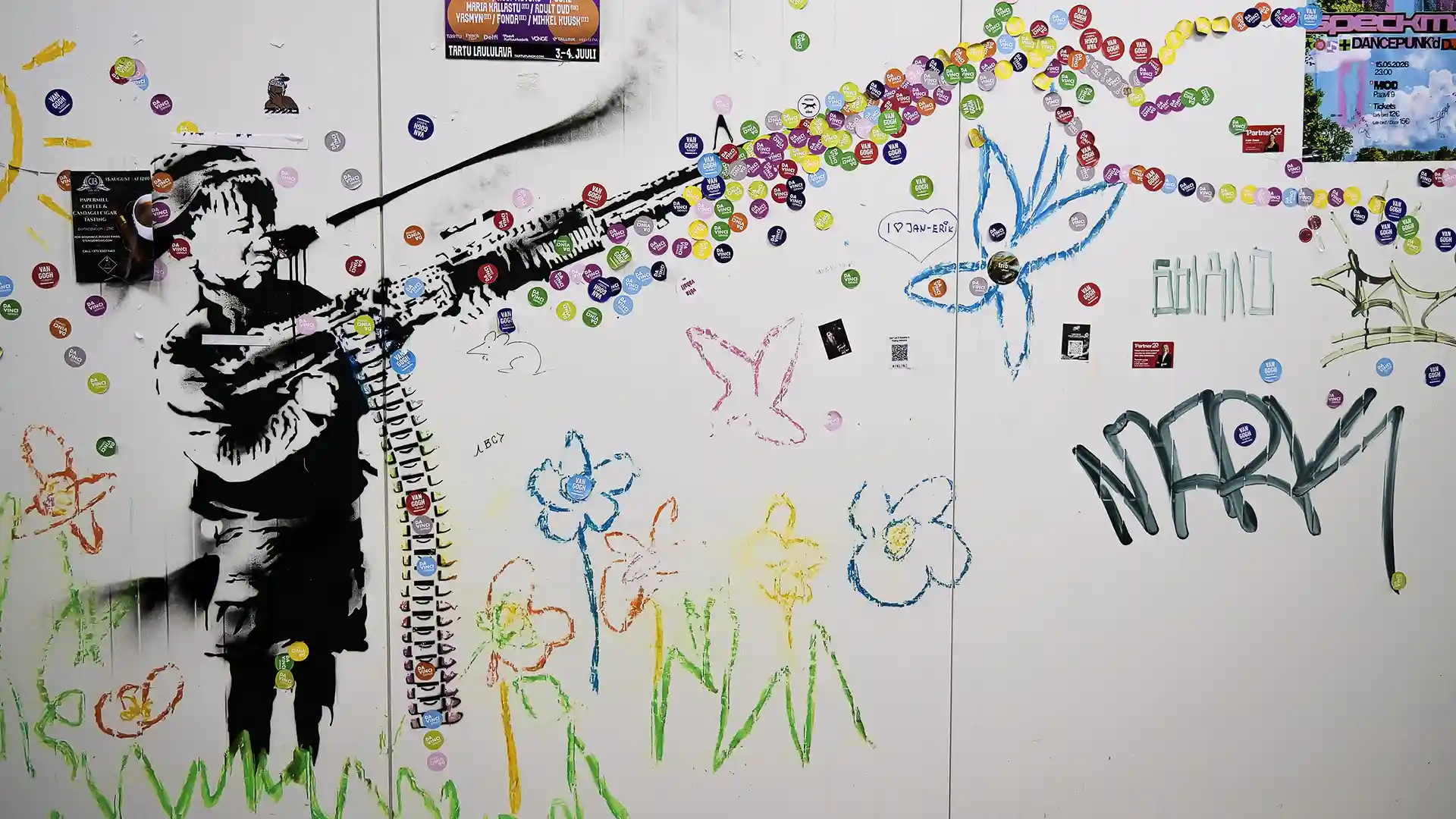
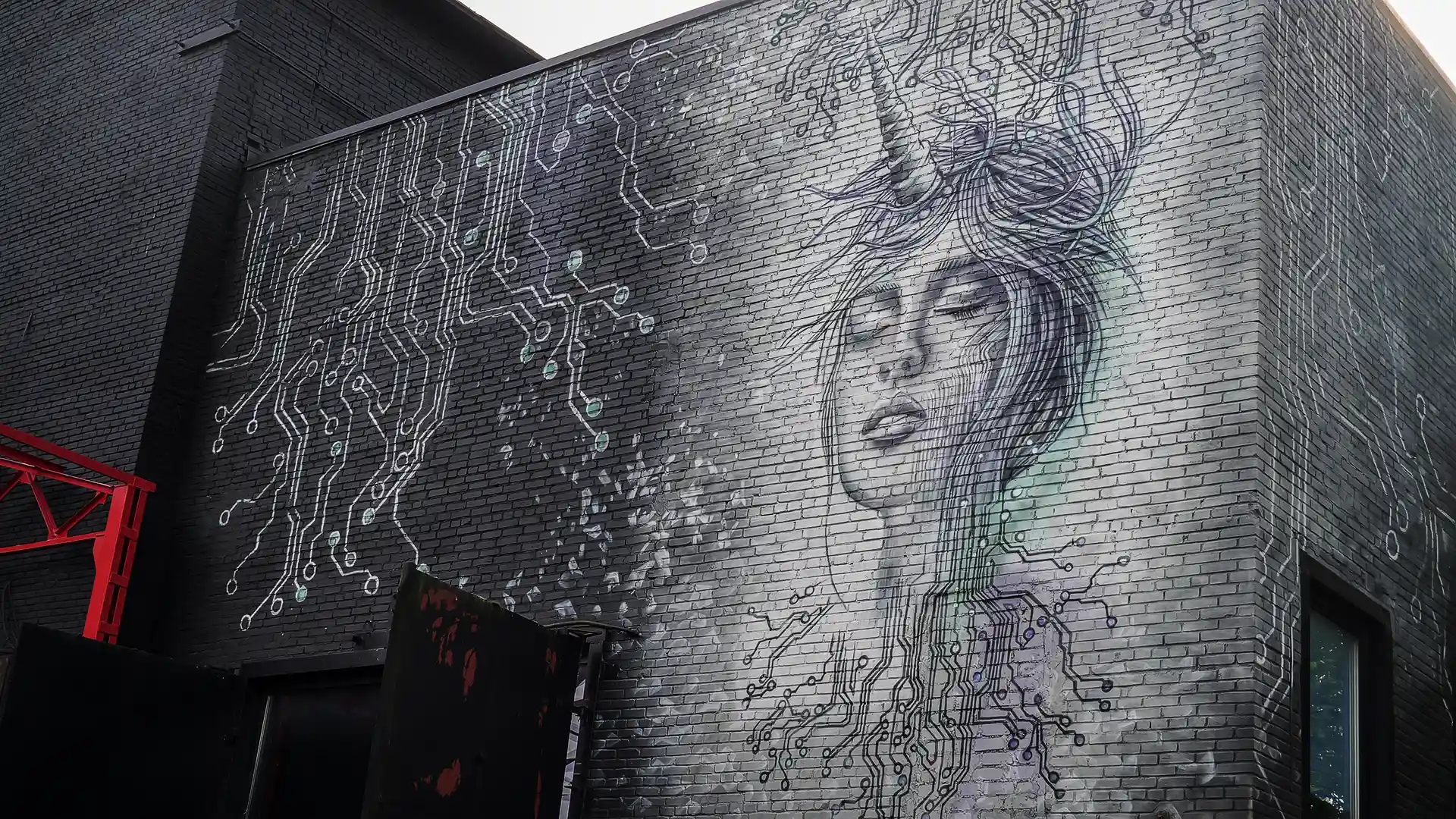
But there’s more. A short ride with Bolt takes us to the Telliskivi area. A few years ago, a neglected, rundown industrial wasteland, full of closed factories with little future after independence. Today, it’s a great nightlife district, packed with watering holes, restaurants, and cultural venues in these buildings. Everything carefully restored, the industrial look preserved, and the whole place dressed up with world-famous murals and graffiti.
A place other towns could take as an example – if only it fitted the conservative narrow-mindedness of their politicians.
The next morning we’re wearing our thick jackets and raincoats. Still, we feel the cold. A strong, cold wind drives the rain straight into our faces. Ignoring all that, we suffer a little and sneak thru the converted industrial area to see all these famous, fantastic murals, trying hard to imagine what the place feels like on a warm summer night on a summer weekend.
Of course, almost nobody else is crazy enough to go sightseeing in this weather.
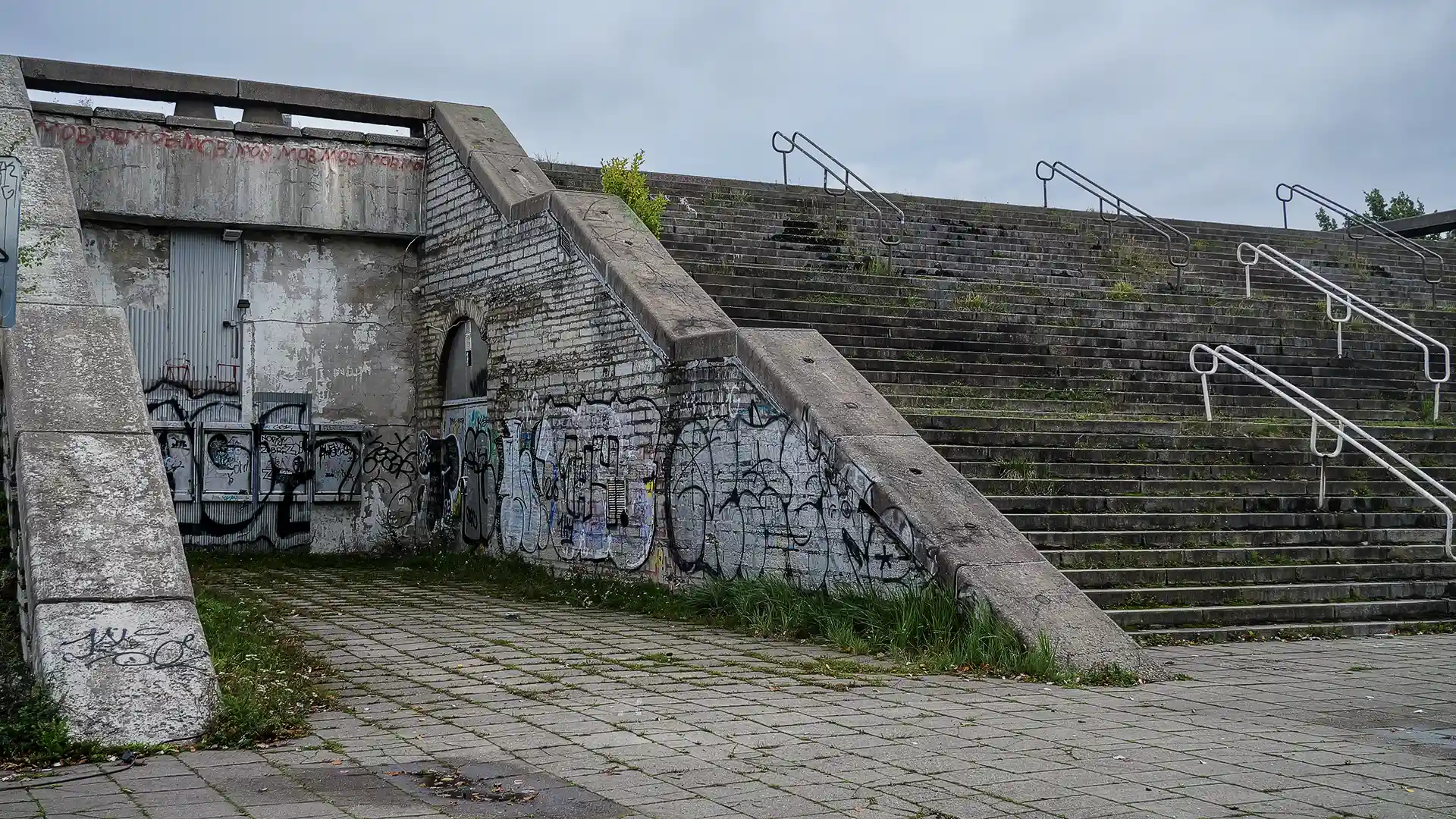
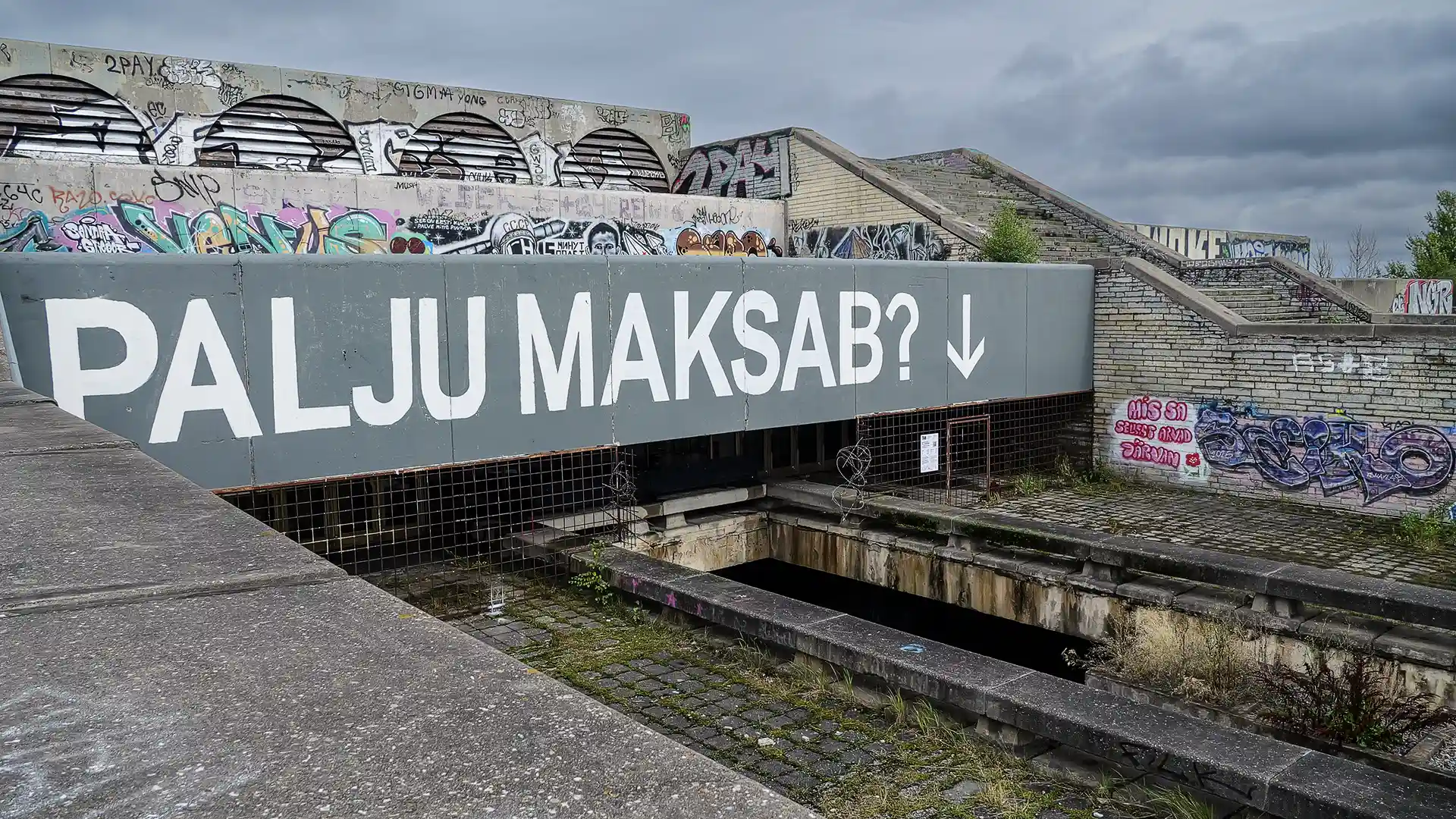
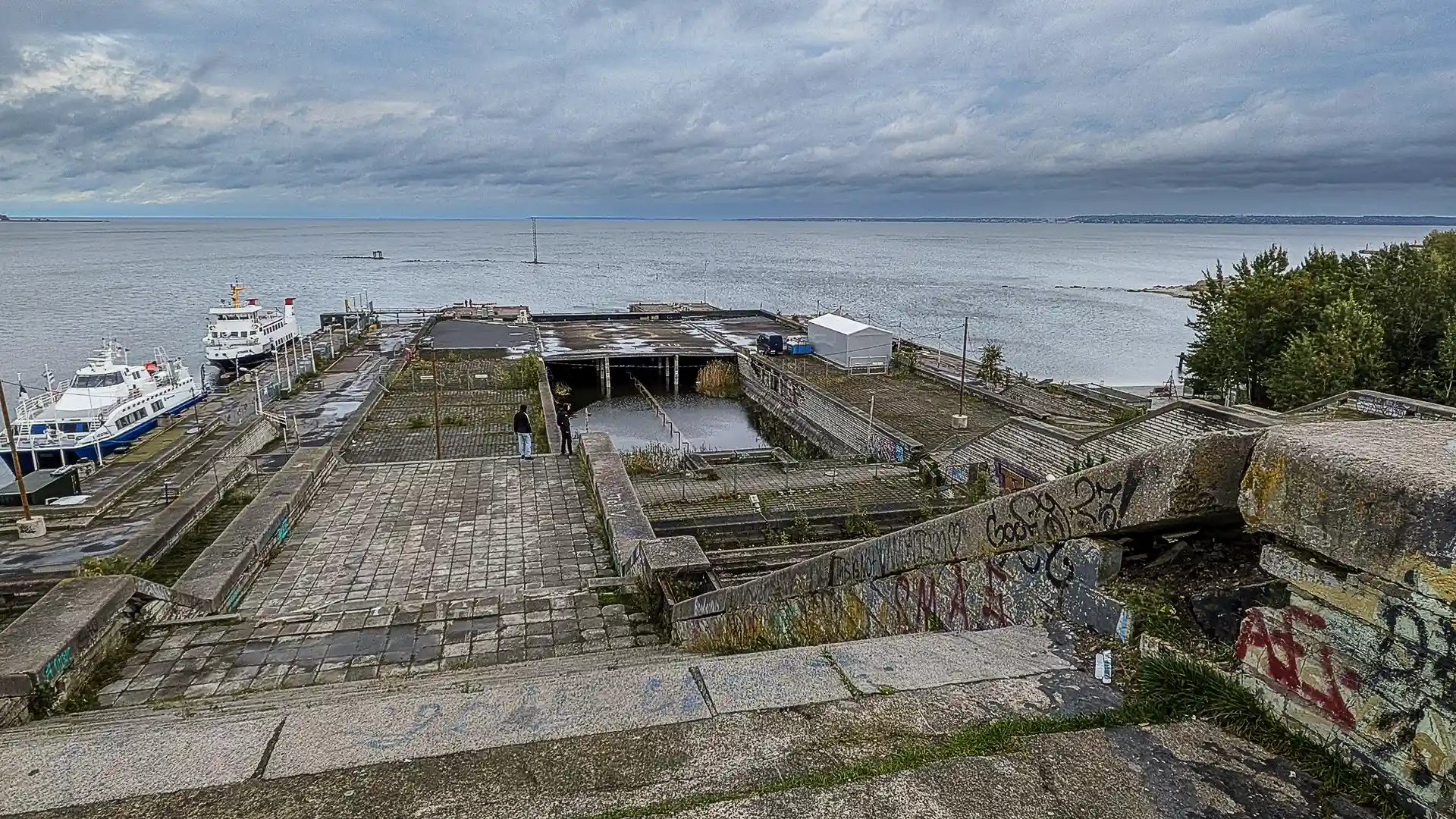
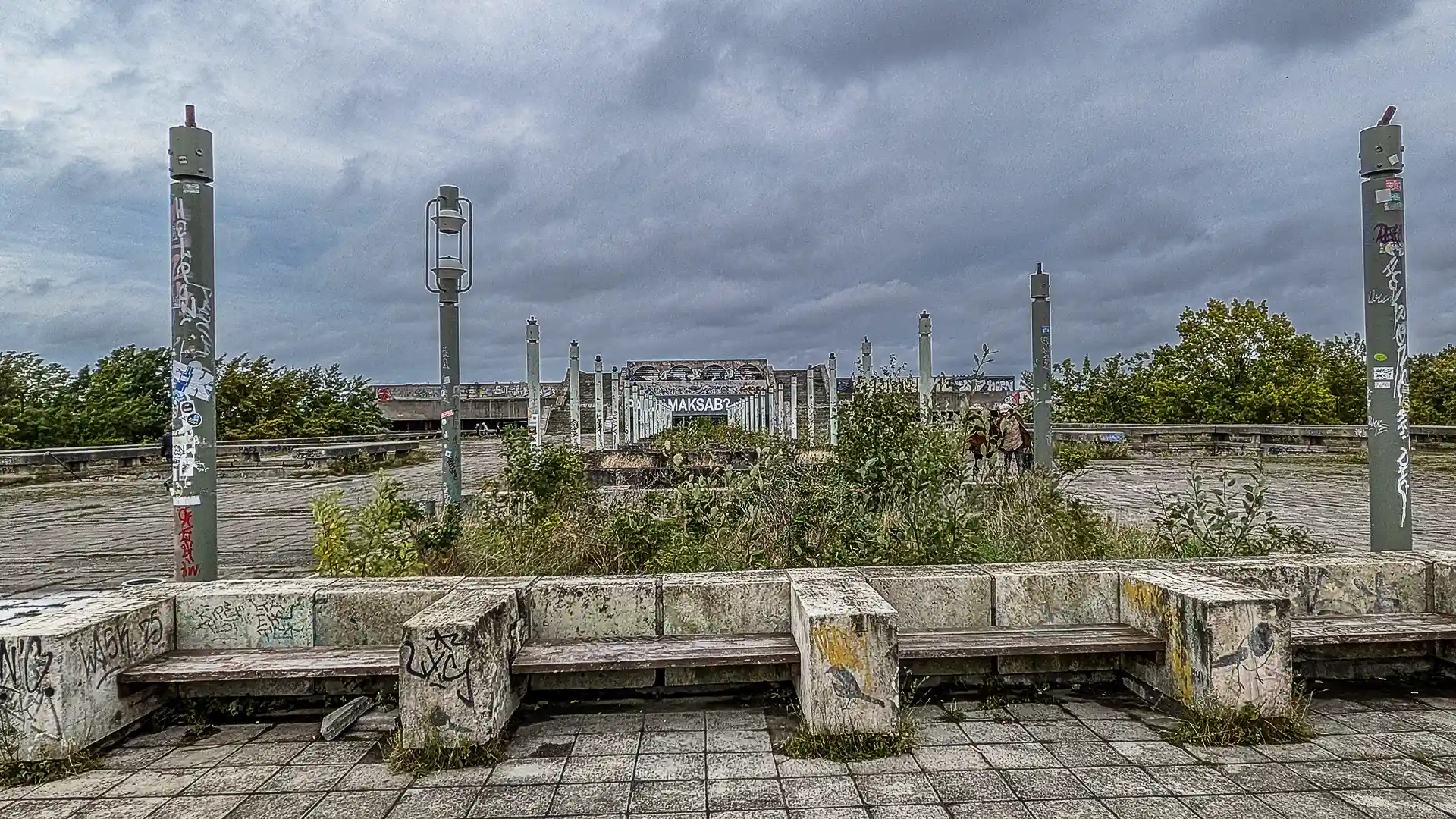
Later, the weather improves a bit. We head to the famous Linnahall, originally called the Lenin Palace of Culture and Sports. A brutalist structure the Soviets built for the Olympics in 1980. It was used for cultural events until 2017, when it became clear that the building was in too poor condition to continue operating.
From the outside, it’s still mostly accessible. We just have to be careful because of the advanced state of decay. A pretty spooky place, now mostly abandoned.
Having seen all this, we’d still like to know how a big part of Tallinn’s population lives. So, we drive to some of the suburbs famous for their prefab apartments.
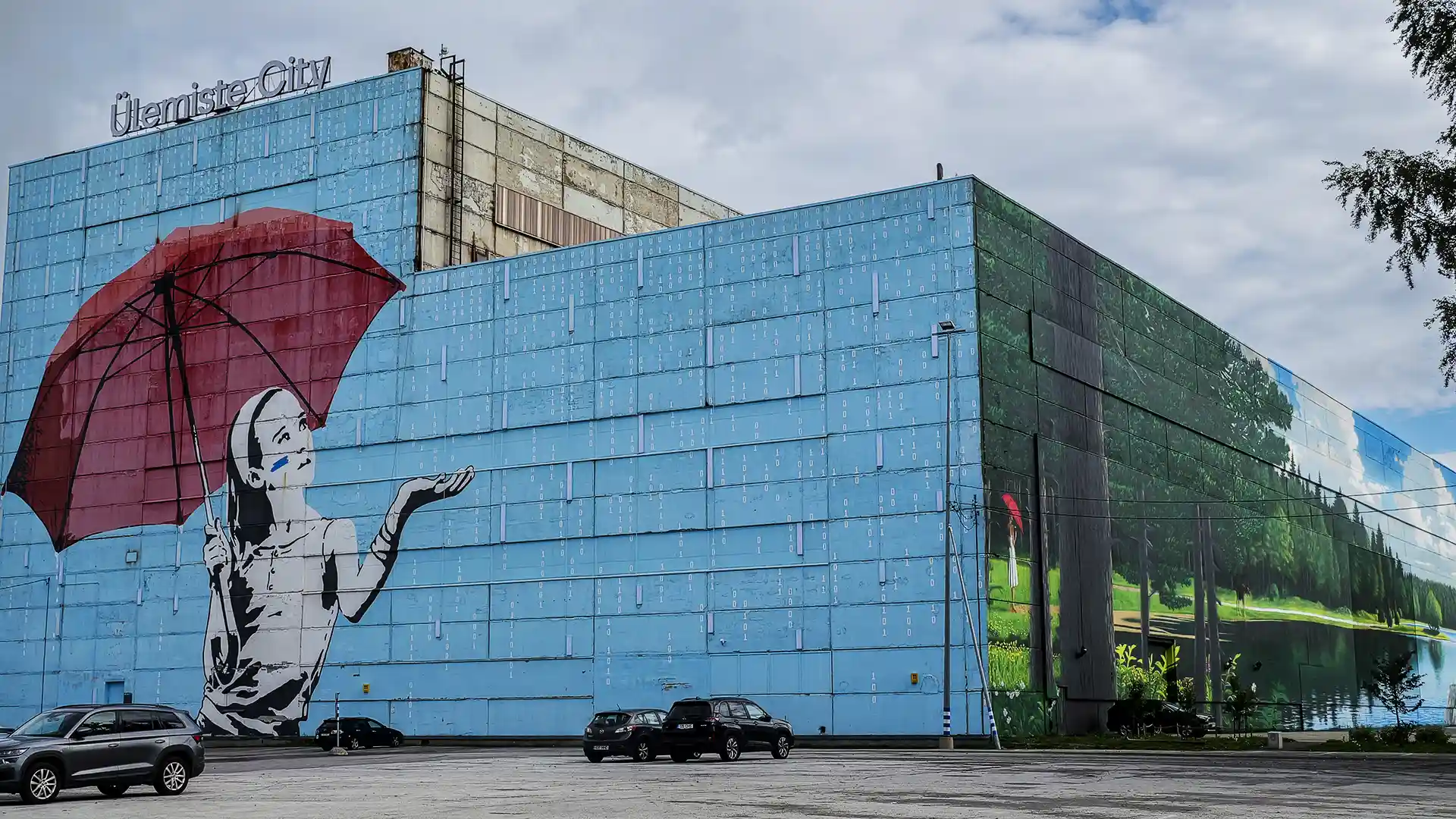
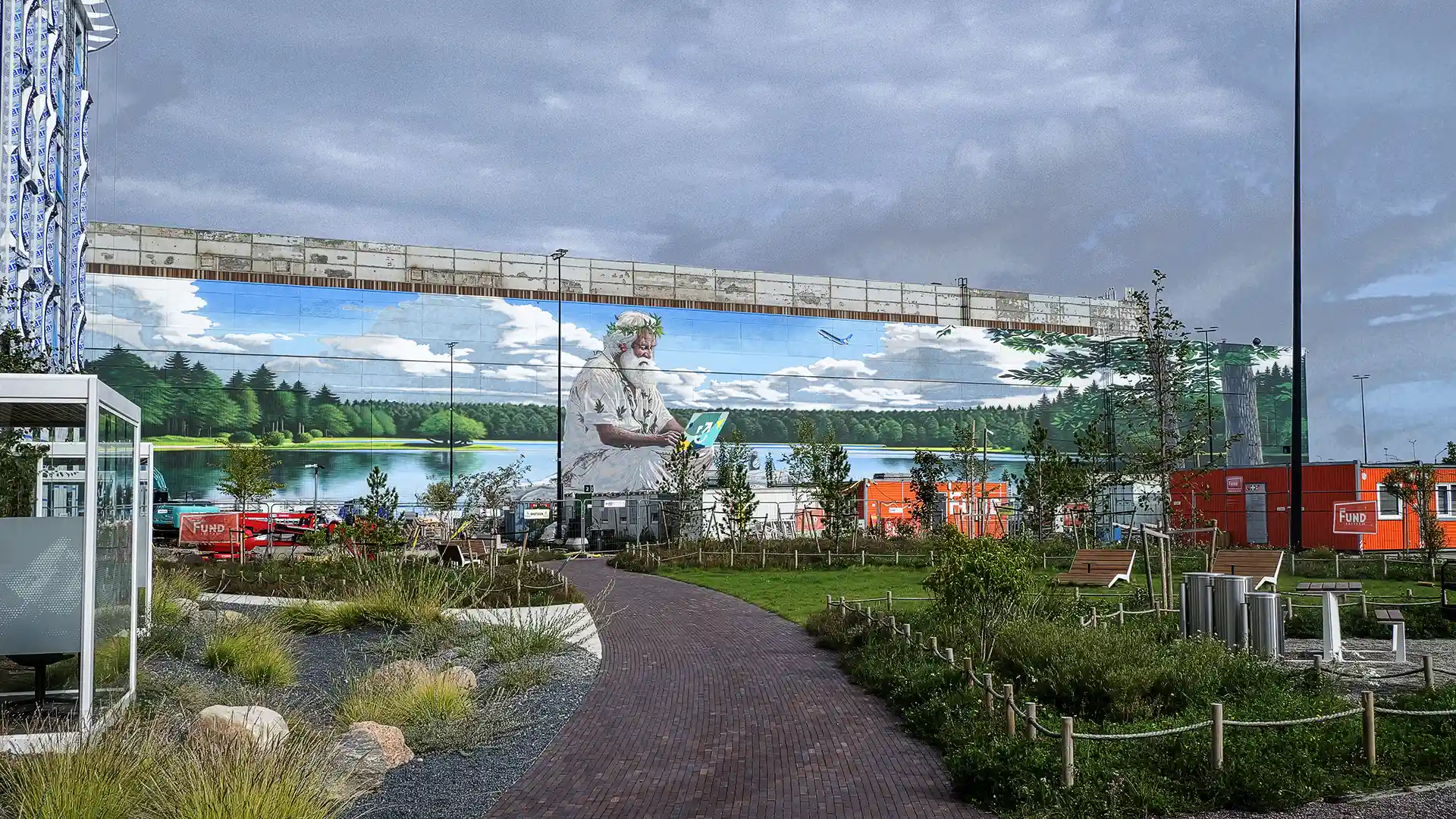
1st, we arrive in Ülemiste, a development area near the airport. The old Soviet-style houses are being replaced by posh apartment buildings, while old factories are being converted into spaces for small companies and businesses. It’s also home to some of the most famous street art in town.
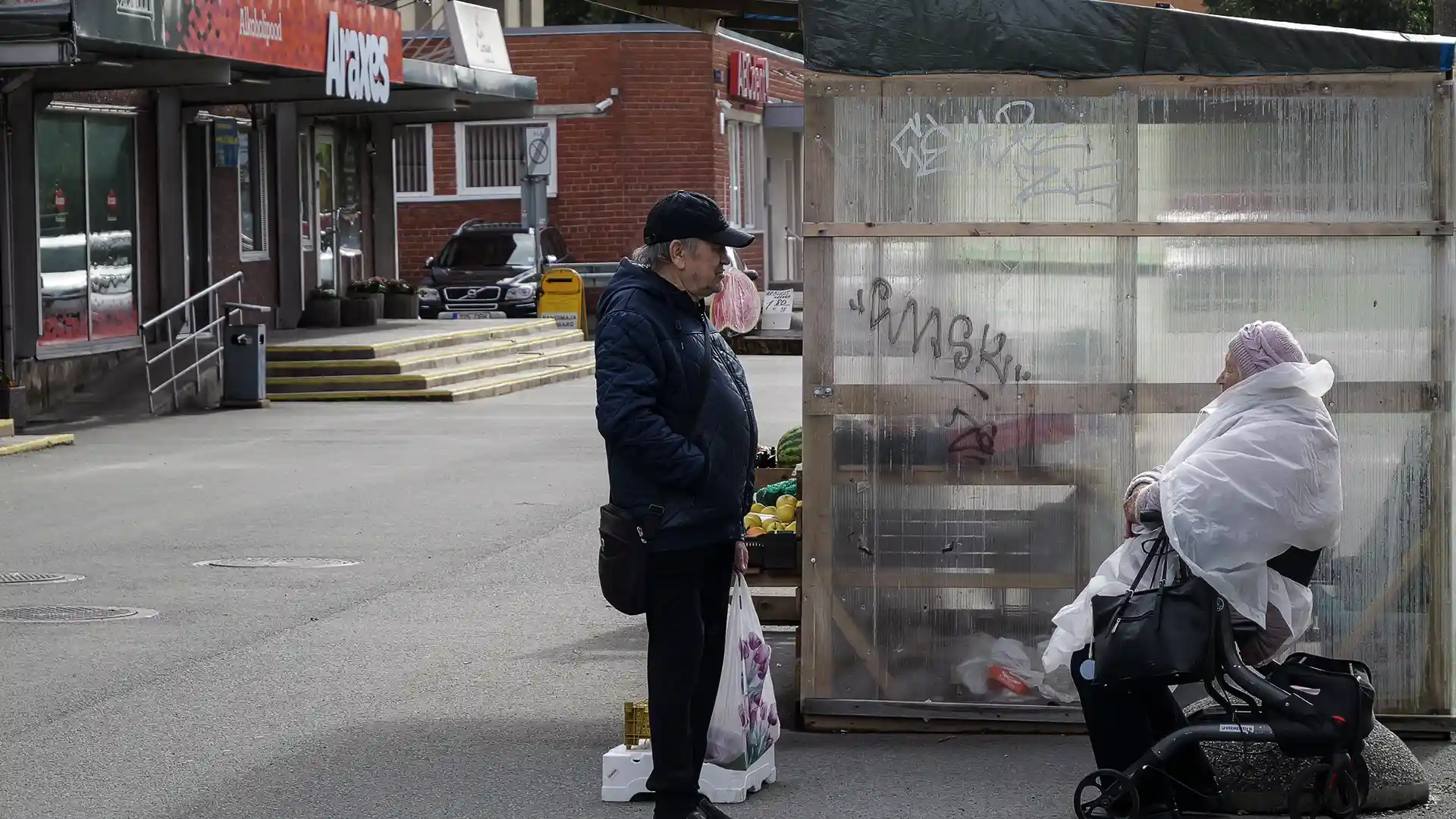
Then on to Lasnamäe: a huge area, 1 apartment block after the next. All prefabricated Soviet architecture, a few renovated, most not. In between, wide, overgrown streets, a few lousy shops, and an empty, neglected play-ground for kids. On the streets, mainly elderly people shuffling around.
The contrast is huge. This feels like a completely different Tallinn.
Dear All,
Enough is enough. Even for this post. We hope you had a nice read and remain incredibly jealous.
Nevertheless, there’s hope for a next post. So, please don’t despair.
Cheeeers
Monika’n’Martin