






























Abandoned military bases, atomic cities, Stalinist towns, Russian-speaking enclaves – and a few surprises along the way. Often a different world.
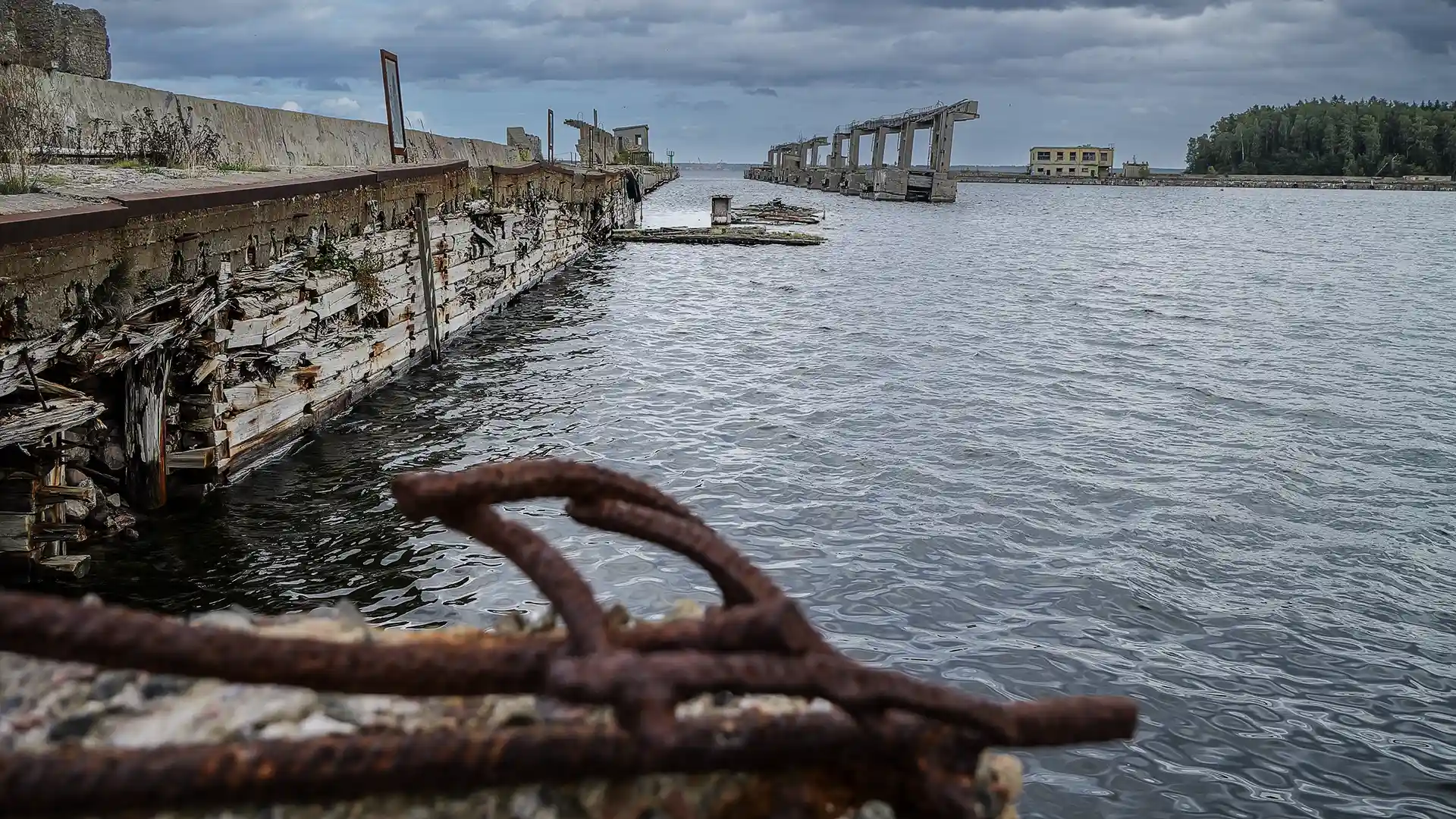
An eroded concrete pier leads out into the sea for a few 100m. Another one, parallel to it a few meters away. They’re the skeletons of a structure, with parts breaking away and rusty steel, once holding the concrete together, now stretching up into the air.
We walk the few 100m to its outer end. We pass numerous graffiti, rusting anchors for ships, and a decaying building. Over a bridge, specially placed for visitors, we get to see another great success of the former Soviet military machinery. The other pier looks about the same, just a bit further in its decay.
We’re in the Hara submarine base, once a top-secret Soviet military facility to demagnetize submarines.
Just, what the hell is that?
As we learn, submarines may be detected and identified by their acoustic and magnetic signatures. So, demagnetization is part of making them less detectable. And that’s what happened here during the Cold War.
When the Soviets left Estonia in 1991, they took all the equipment with them, just leaving the concrete skeleton behind.
A really special destination in Estonia, a place where it’s hard to imagine this was once a top-secret military facility.
As the Soviets had to develop this technology, there was a nearby research institute.
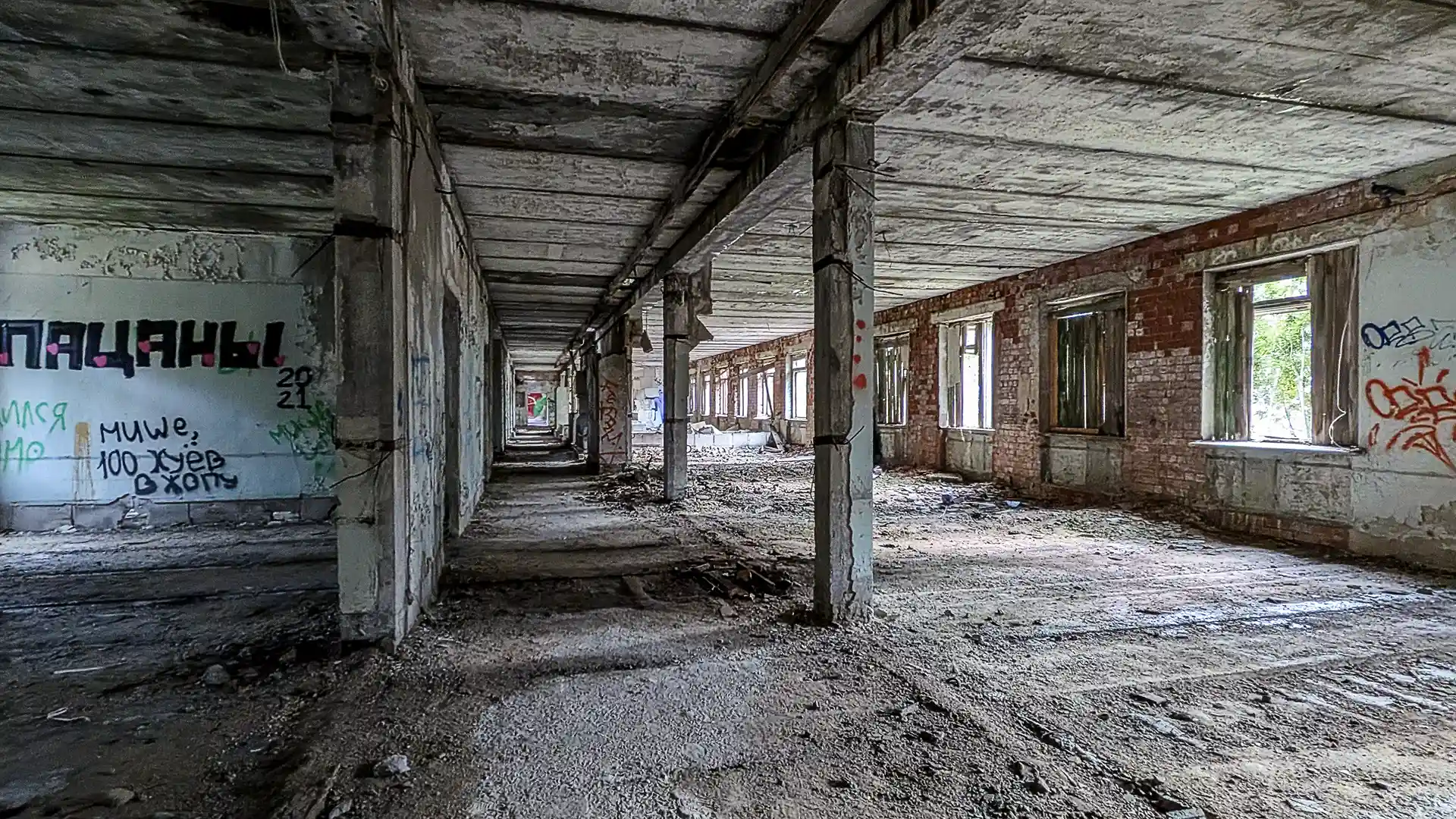
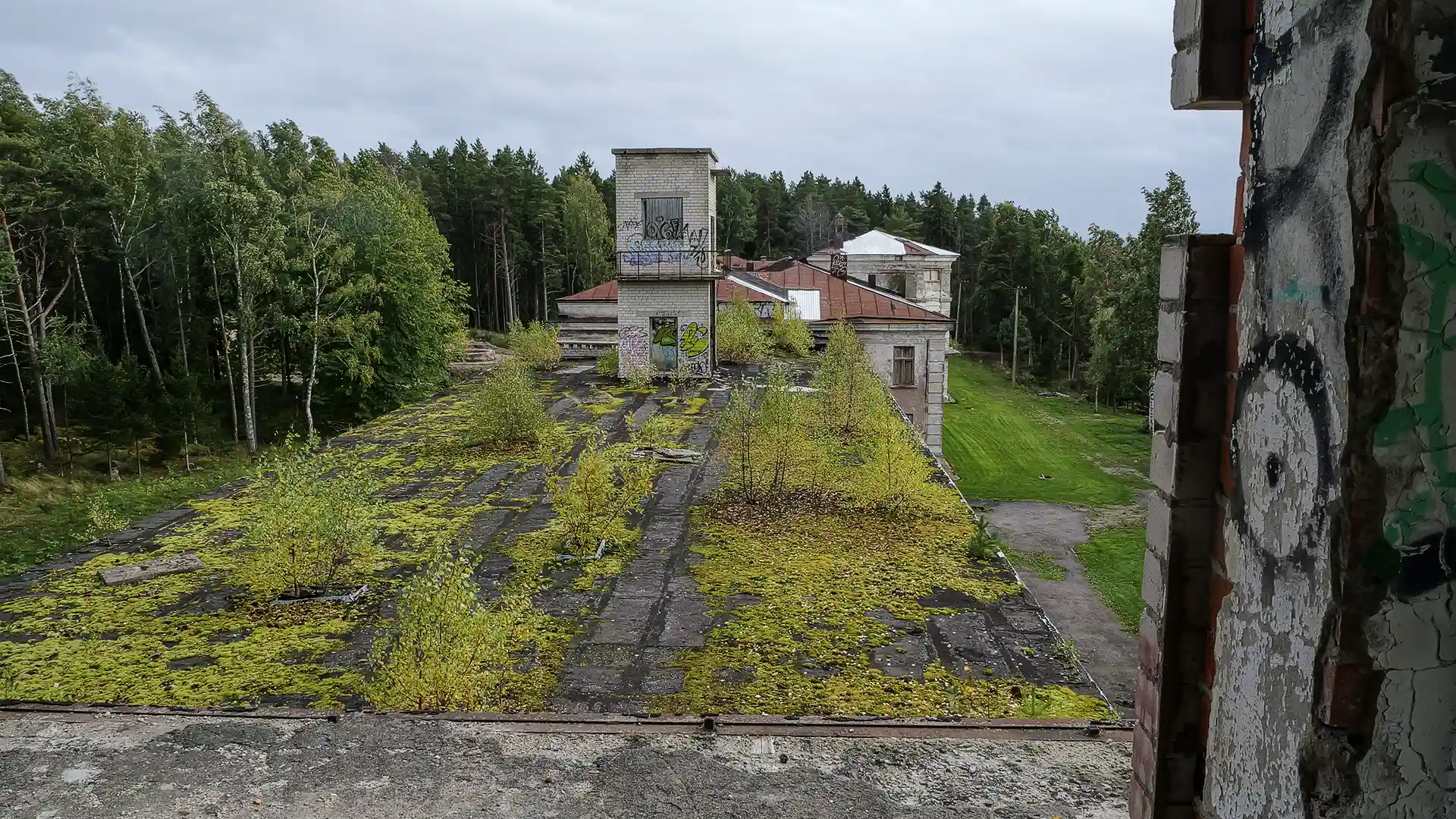
Today, it’s a lost place consisting of a historic building and a Soviet-built annexe. It has been sold to a private owner, but so far, nothing has happened. The place is monitored by cameras, so entering the premises and the building is strictly forbidden.
Still, we manage to get a few pictures from the inside – and, yes, that’s proof that we’ve committed trespassing.
By the way, we’re not writing these lines in a dark cell of an Estonian prison.
We left Estonia’s capital, Tallinn, this morning for a campsite near Hara. Now, in a certain way, we’re on our way back to Swizzyland. Tallinn was the farthest north we can go.
Now, we’re on our 1st leg along the Russian and Belarusian border to the south, to Poland. A trip thru the part of the Baltics mainly populated by ethnic Russians. Let’s see if things are much different.
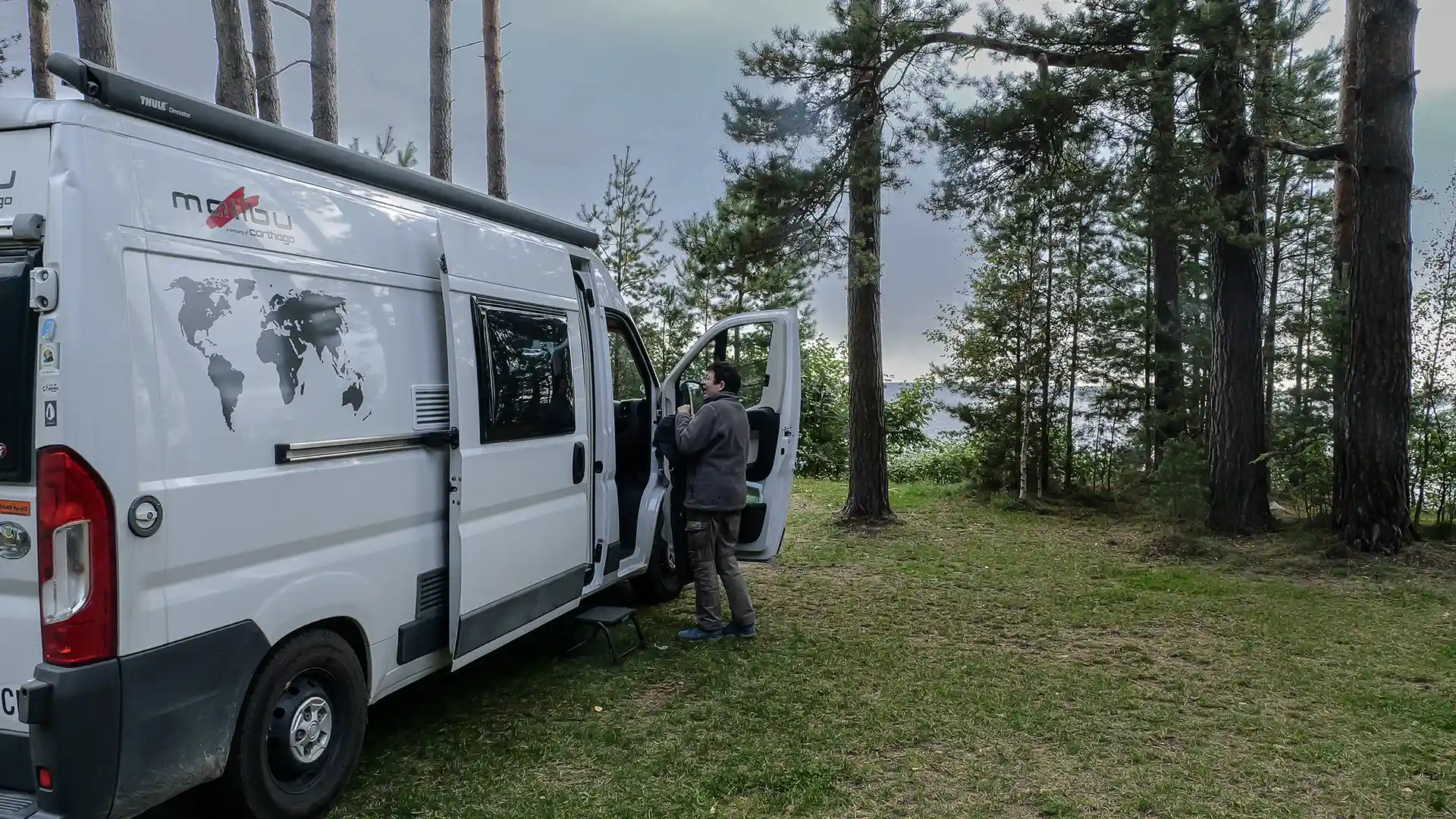
Currently, we’re back from our visit to the submarine base in Hara, freezing in the van. There’s around 10° and an icy wind – and our electric heater still works hard to make the camper a bit more comfortable.
The next morning, the cold and wind are forgotten. We’re heading east, toward the Russian border – and Narva, Estonia’s easternmost city.
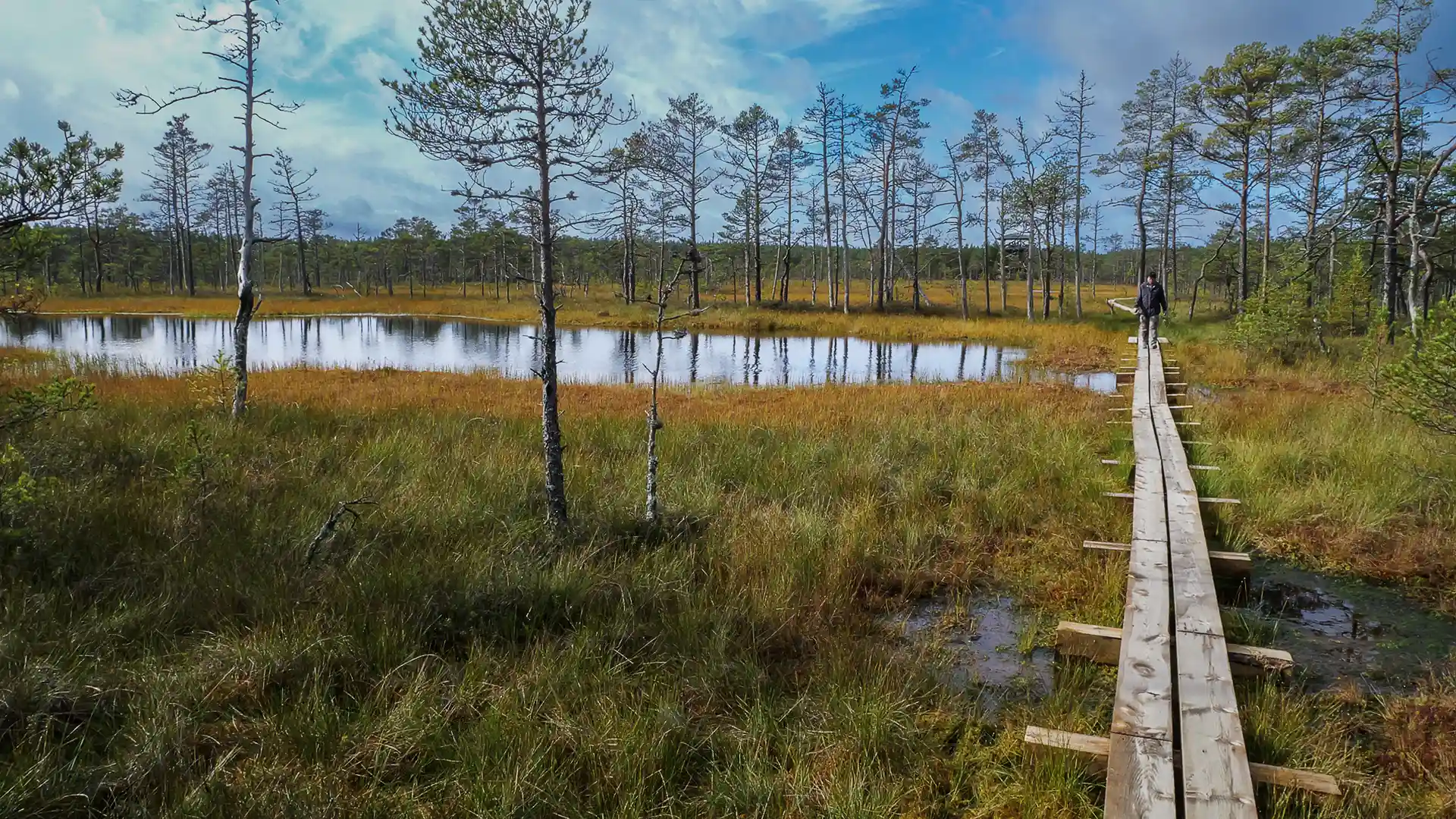
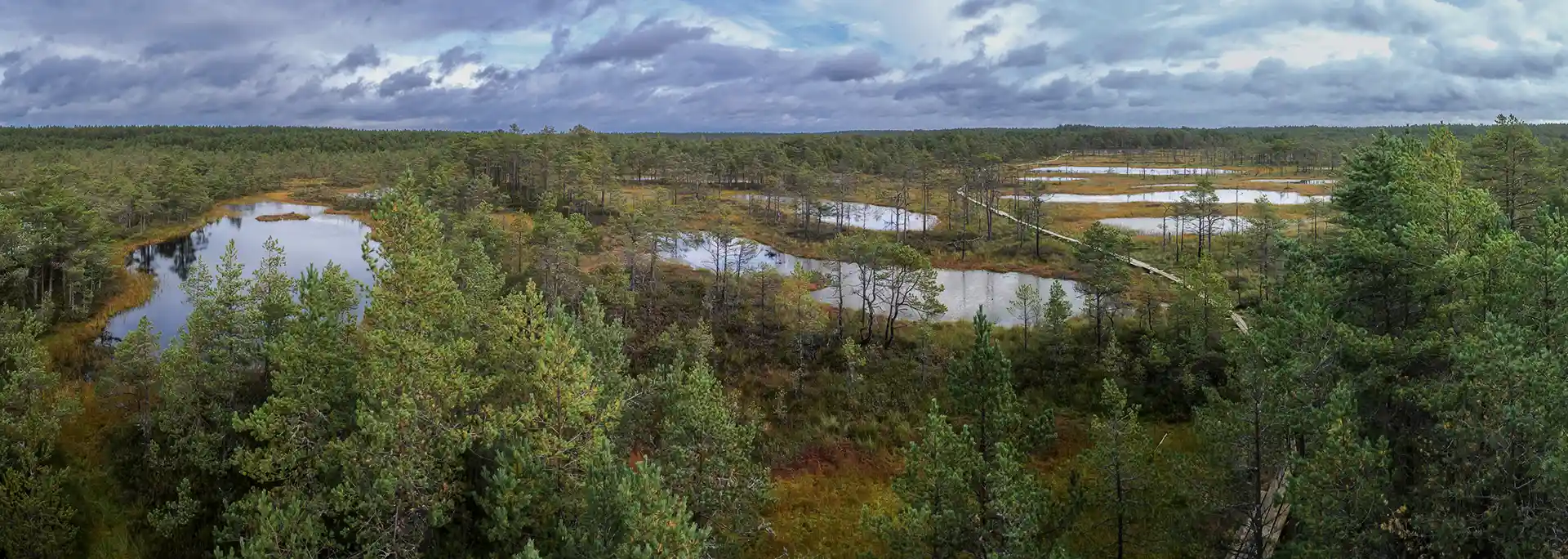
On the way, we take a hike thru the Viru Bog. For about an hour, we stroll on wooden planks over the swampy ground. A beautiful landscape with water all around – and a perfect exercise to improve our balance.
Then on to the next adventure.
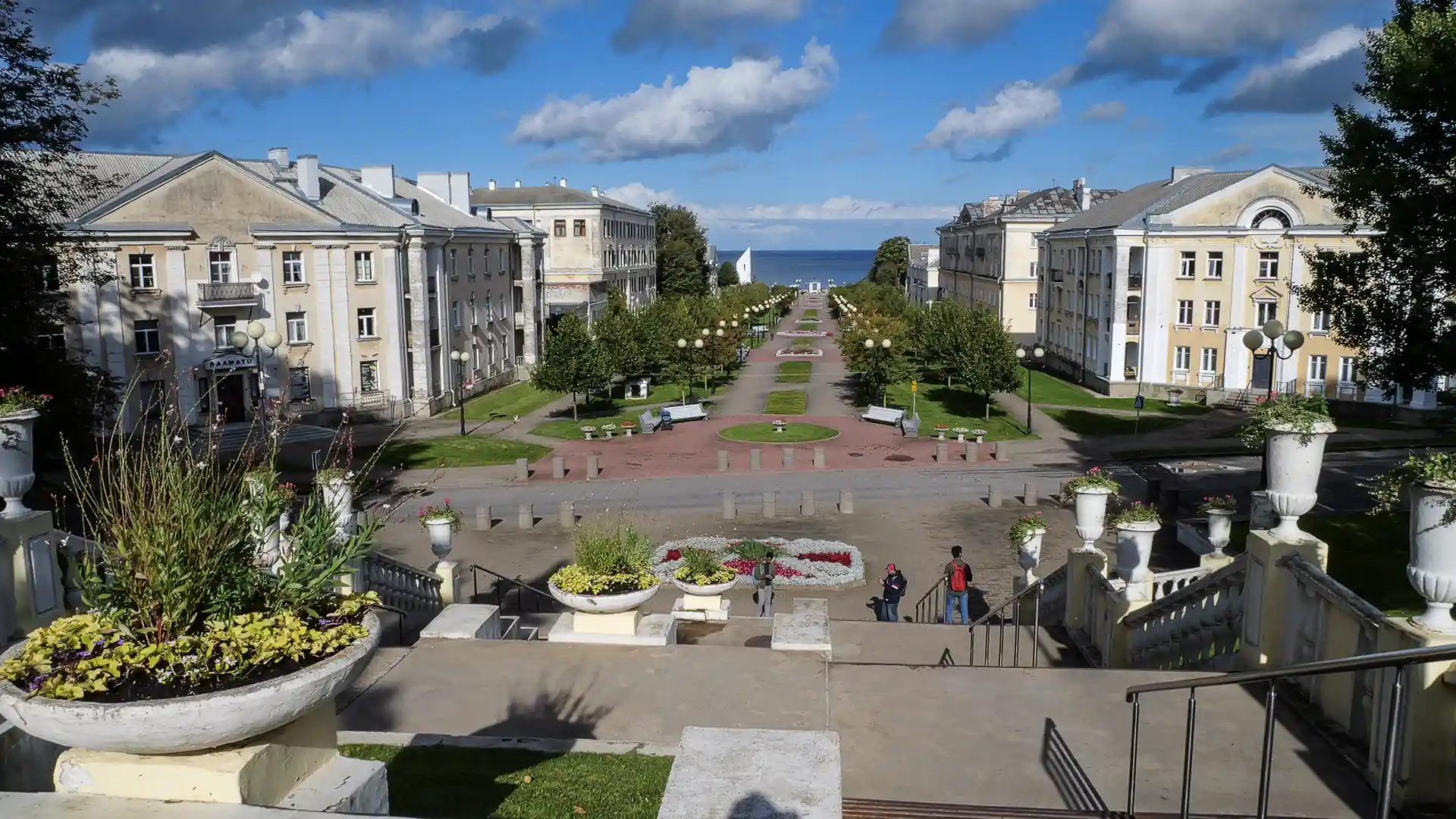
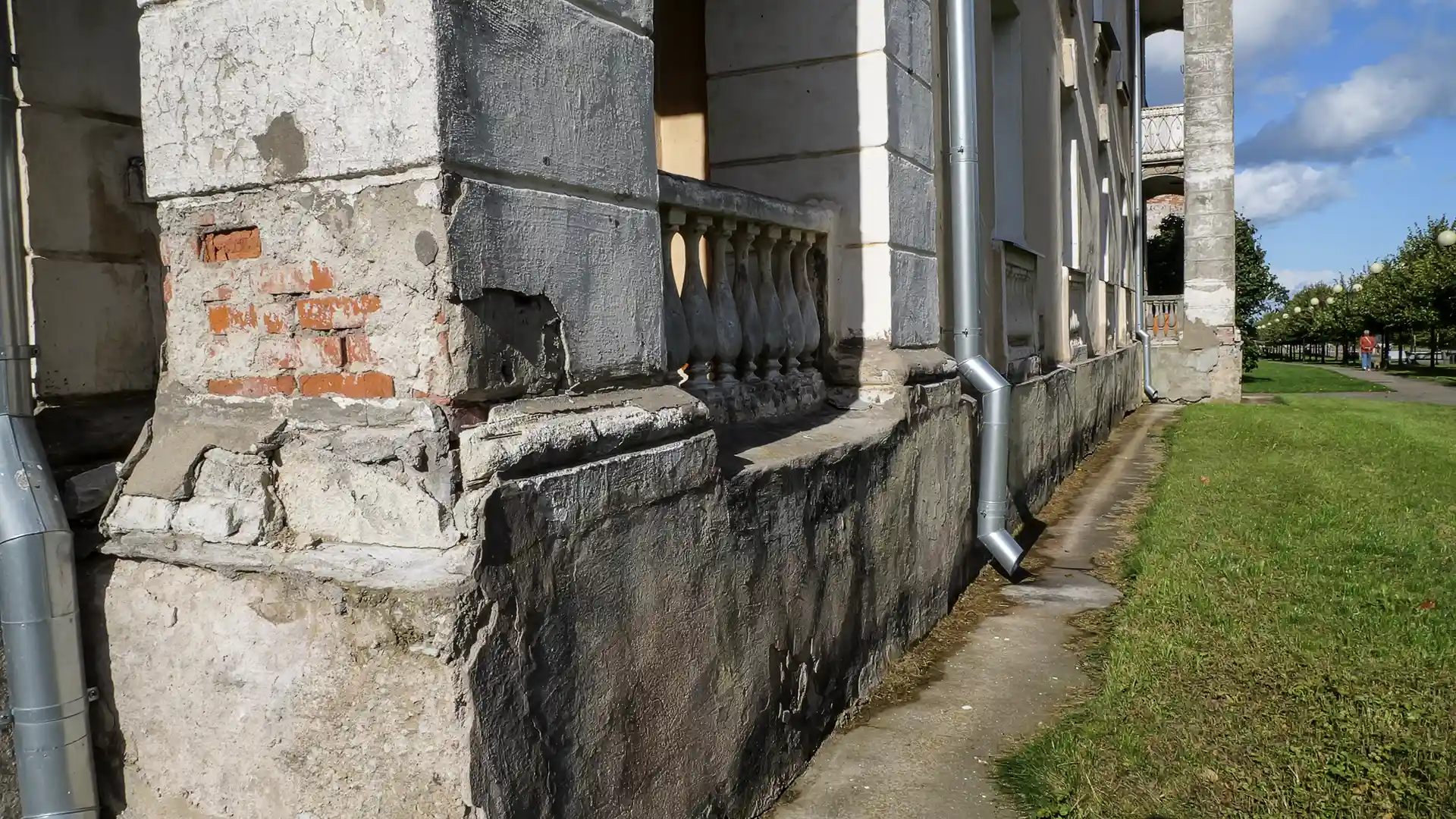
We park our car on a large boulevard in a really strange town: Sillamäe. Opposite us, a monument to the atom. We sneak down towards the sea. Thru an avenue lined with once-splendid buildings, Soviet Stalinist Gothic at its best. Today, most of them are rundown, crying out for maintenance, and some are completely empty.
A little behind this faded splendor, there are areas with the usual prefab apartment houses they built everywhere at the time. Most are in rather bad shape, but still inhabited. A few elderly people shuffle around, giving us the feeling of being in a lonely village somewhere in Russia.
A few small shops look like they’ve survived straight from Soviet times – just with a slightly better selection. Even the cinema still has a Russian sign: Rodina – Fatherland.
But, what’s the story behind this strange place, where the Soviets proofed in an impressive way their principle that some people are even more equal than others?
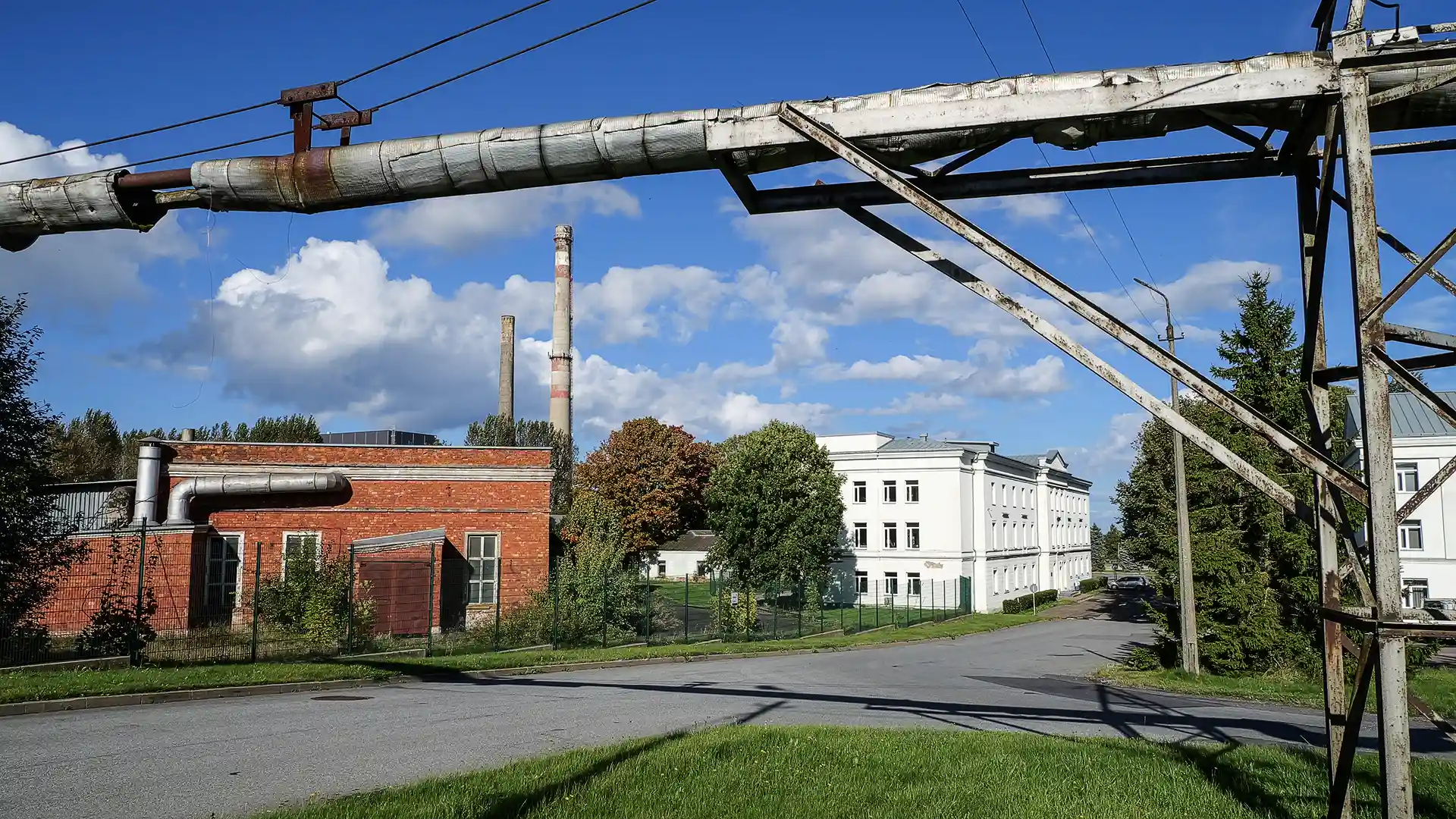
It’s another one of those top-secret towns the Soviets built. A place where ordinary Estonians weren’t allowed during the occupation. Sillamäe was home to one of the Soviet Union’s most important uranium-processing plants.
And the numbers are mind-blowing. It’s said that the material produced here ended up in more than 70,000 nuclear warheads.
70,000 nukes. Let that sink in.
Soon after, we enter Narva, the EU and NATO’s easternmost outpost.
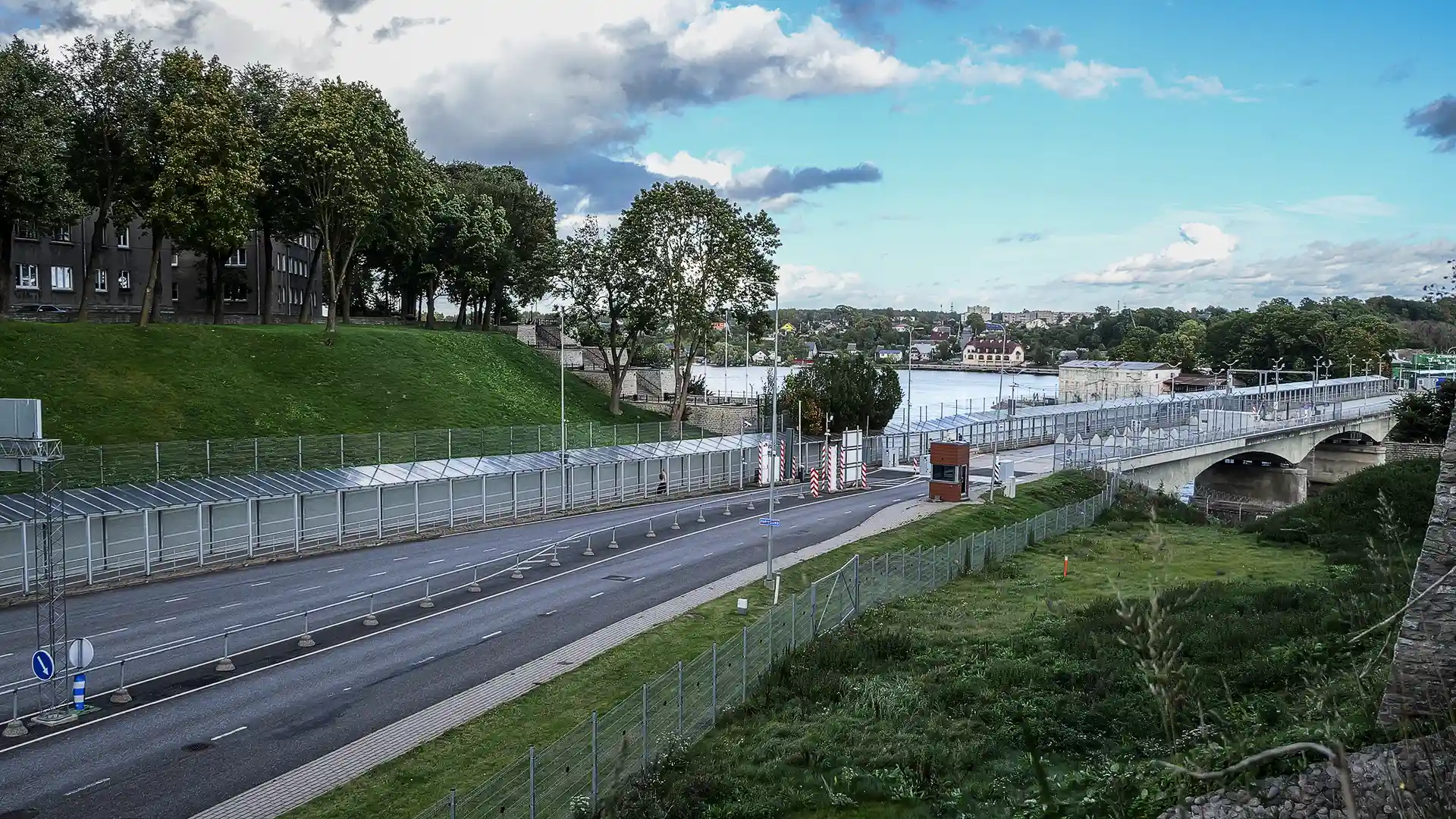
We pass a heavily secured border post. Fences everywhere, barbed wire on both sides, vehicle gates firmly closed. And astonishingly, a queue of pedestrians waits to leave Estonia.
Just a few meters away, we enter the gates of Narva Castle – and suddenly, we’re in a different world. A beautiful place: a huge square surrounded by massive walls, the castle overlooking the Narva River, and a small campsite tucked away in one corner. The perfect place for the night.
Of course, we know Narva is one of the most sensitive spots along Europe’s border with Russia. A place where tensions are never far away. And with around 90% of Narva’s population being of Russian origin, the city feels very different from the rest of Estonia.
Well, we’re optimistic that Putin will keep quiet for another day.
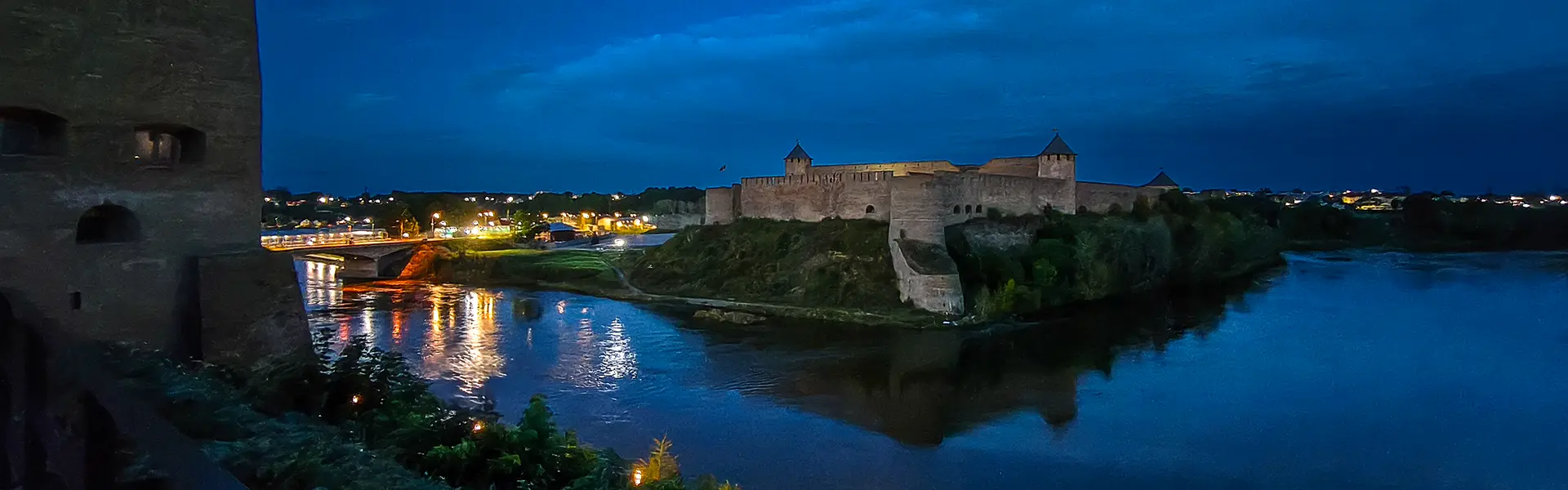
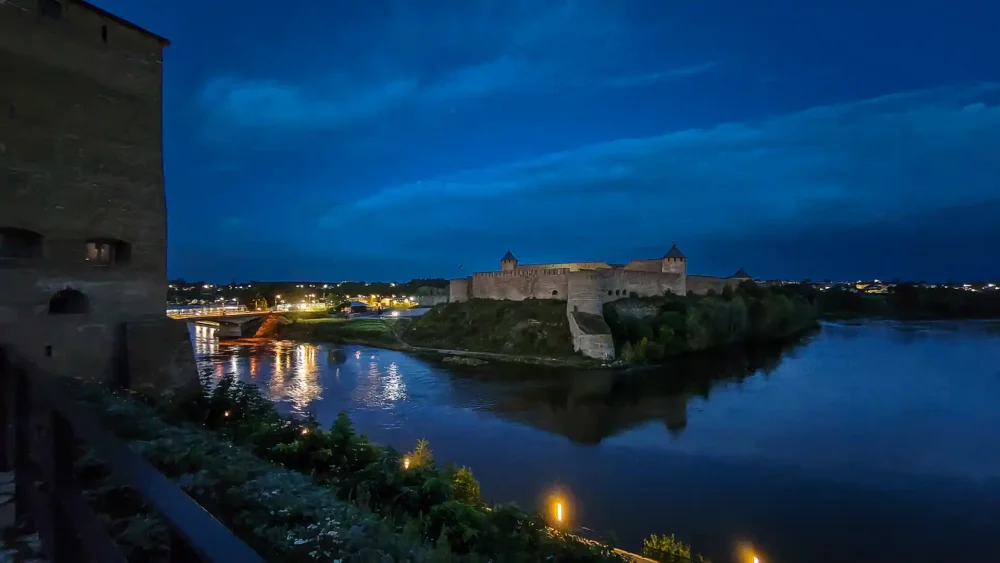
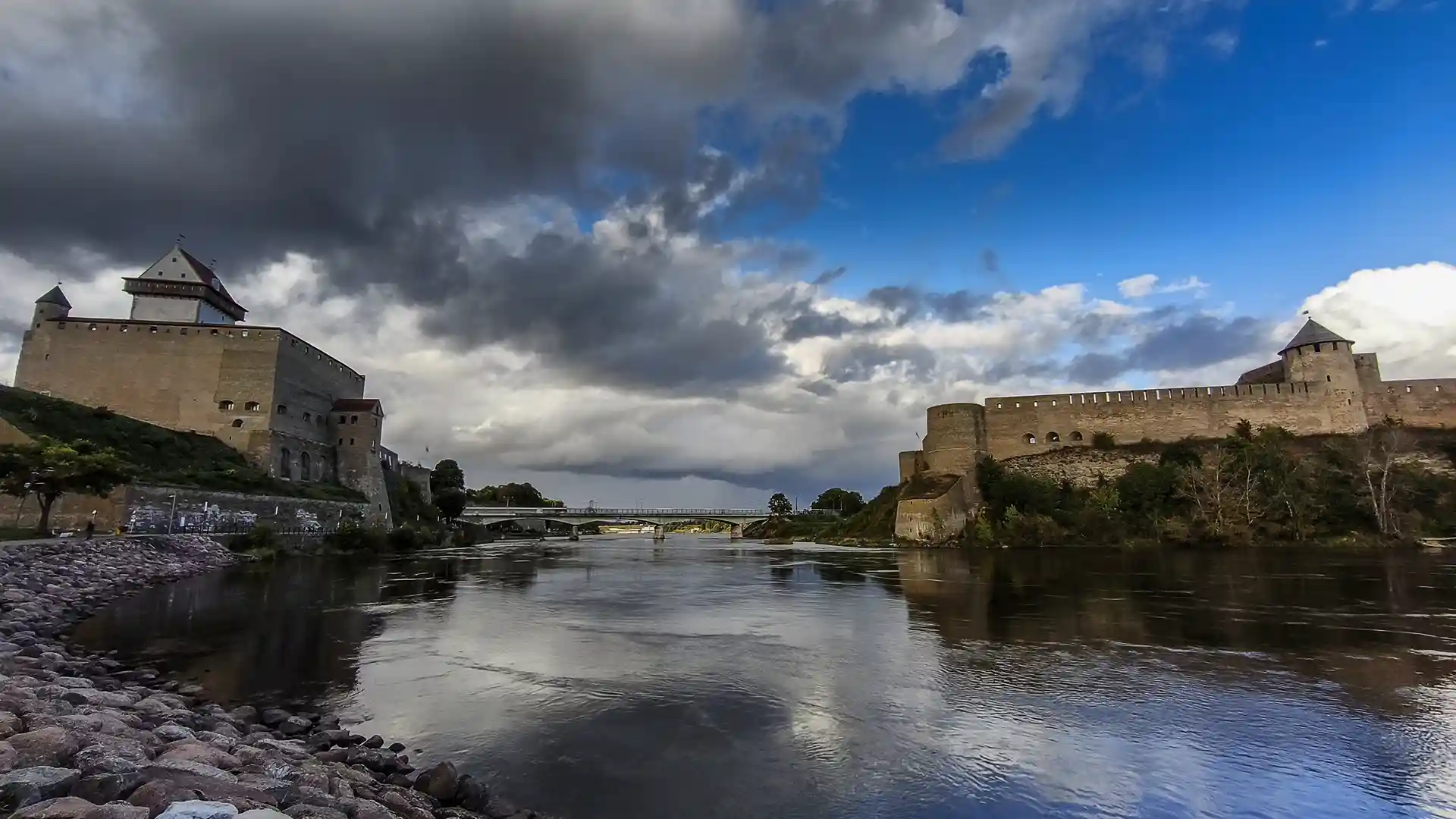
We take a short walk to the castle, with views across the river to the fortress on the Russian side. In between, a bridge connects the 2 countries, with a few people crossing – probably mostly commuters still working in Estonia.
We stroll down to the river, along nice promenades with great views. Everything looks peaceful: a few guys fishing, people out for their afternoon walk. But the atmosphere feels different. Russian is the language we hear everywhere. The blonde-haired Estonians we’ve seen elsewhere in the country are suddenly nowhere to be seen.
People also seem more reserved, and the city clearly looks poorer than the rest of Estonia. Maybe that’s no surprise in a place so closely tied to Russia – but we have no idea how much influence Putin’s propaganda has here.
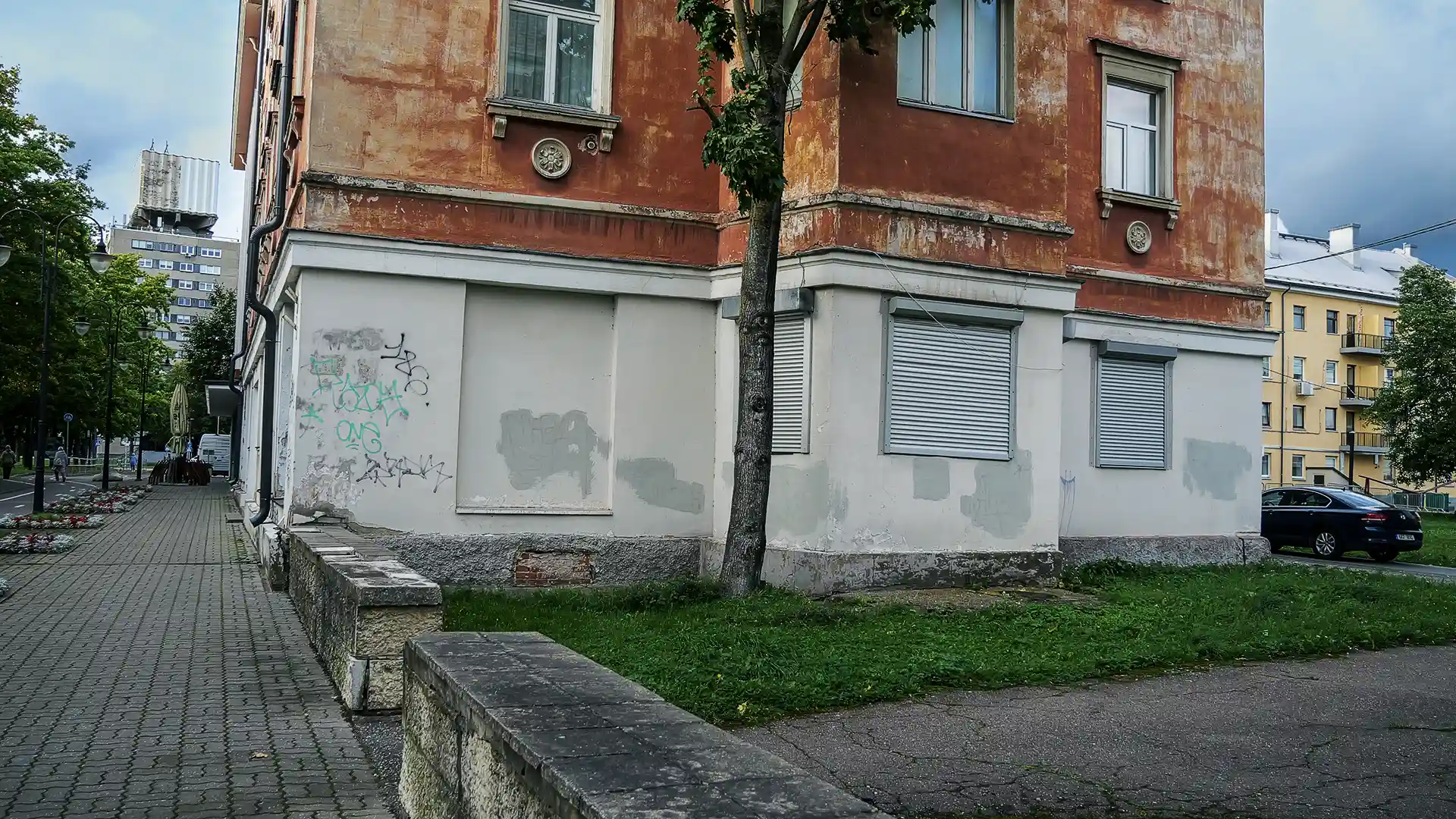
We stroll a bit thru Narva’s streets. Definitely, it’s not a beauty. Signs of decay are everywhere, with many closed-down shops in the city center and surprisingly few people on the streets. For us, it’s a completely different world from the rest of the country.
Still, we don’t want to tempt fate. We don’t know Putin’s plans. So, the next morning, we’re on our way south to Tartu – thru empty, forested landscapes along Lake Peipus.
Not exactly the most exciting drive.
We have no idea what to expect. It’s Estonia’s 3rd-largest city, home to its most famous university, and way out in the east of the country – Tartu.
Bolt brings us from the campsite into town. We’re sneaking along narrow alleys, passing formerly posh houses, now begging for some basic maintenance, neglected sidewalks and backyards well into advanced decay, …
… then we head to an area famous for its traditional wooden houses. They look like they belong in a remote Russian village. Well, the streets are much better – no potholes, solid tarmac all the way.
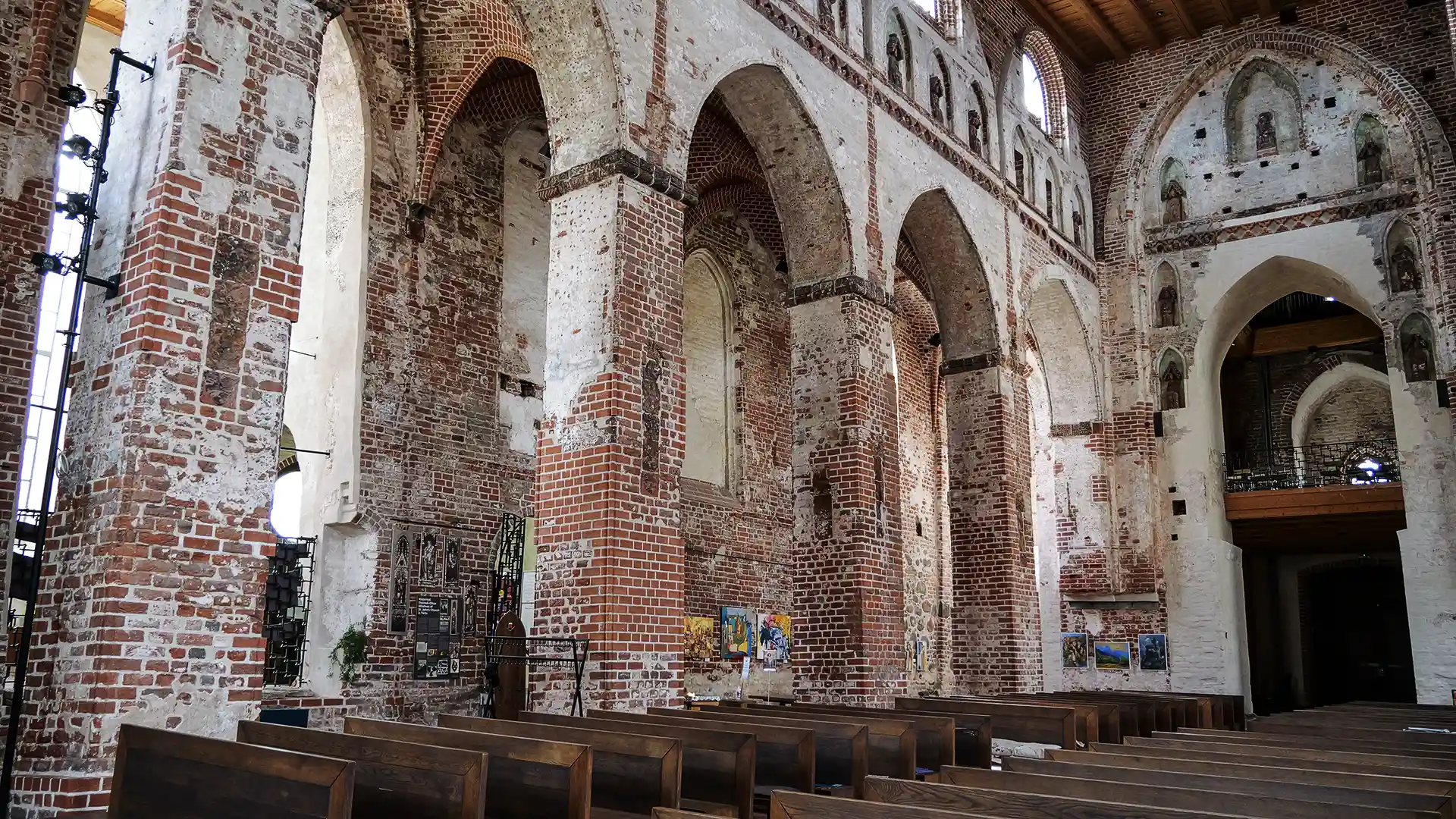
We pass a church. Inside, we get the feeling it’s slowly falling apart.
Still, the atmosphere in this town is completely different from what we experienced in Narva. People are strolling along the streets, chatting and laughing – things we haven’t seen much of in the last few days.
Finally, we arrive at the town’s most impressive building: the university. Students are hanging around everywhere, and we have no idea how they manage to find time for studying. And then there’s the town hall – probably the one place where we might occasionally bump into other visitors.
Yeah, it’s quite an experience to find such an open, lively place this far east in Estonia. After Narva, Tartu feels almost suspiciously normal.
It seems we’re again the only visitors here. No wonder – it’s cold and drizzling. Or is the town simply not interesting enough for tourists? We’ll find out.
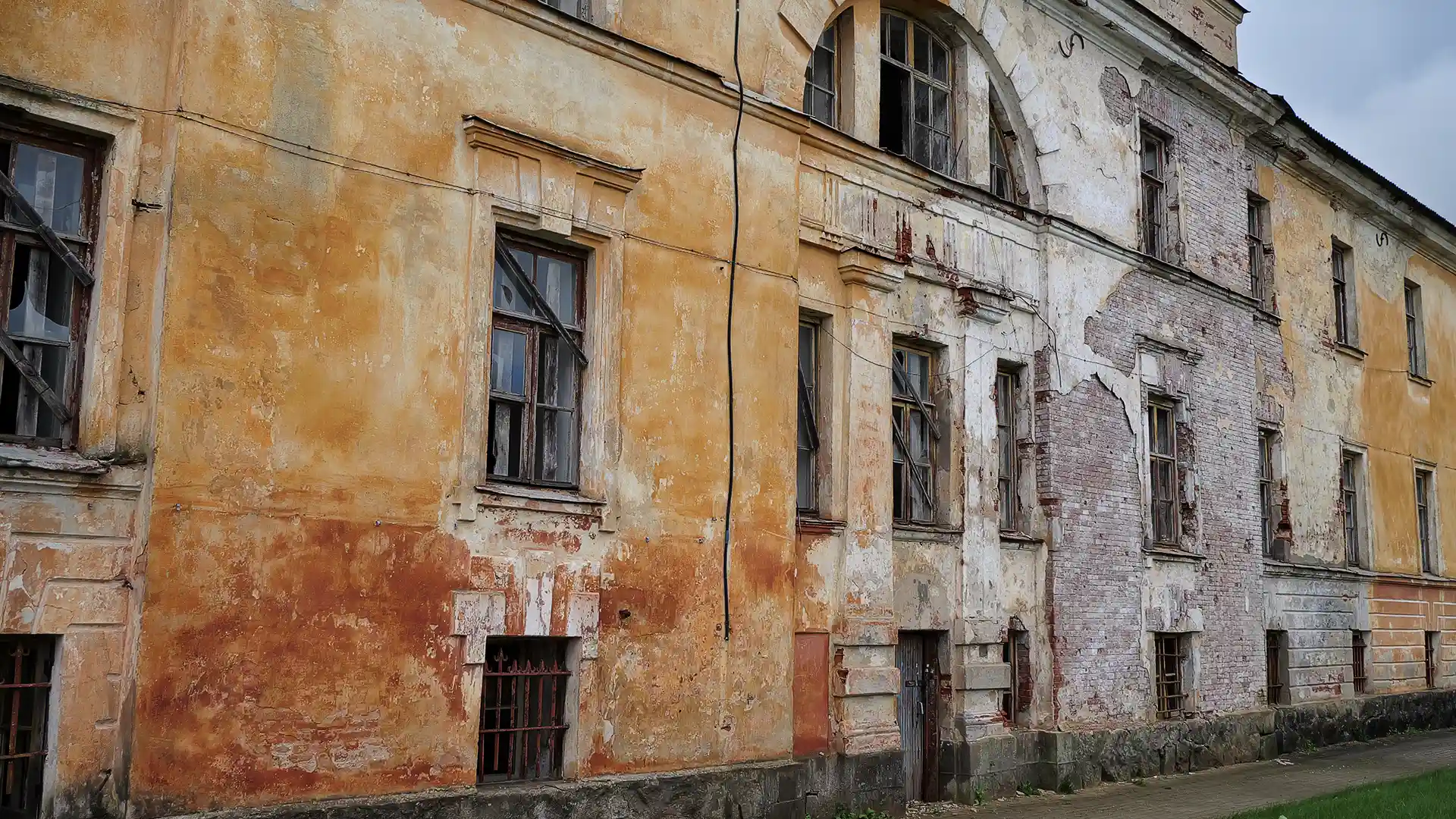
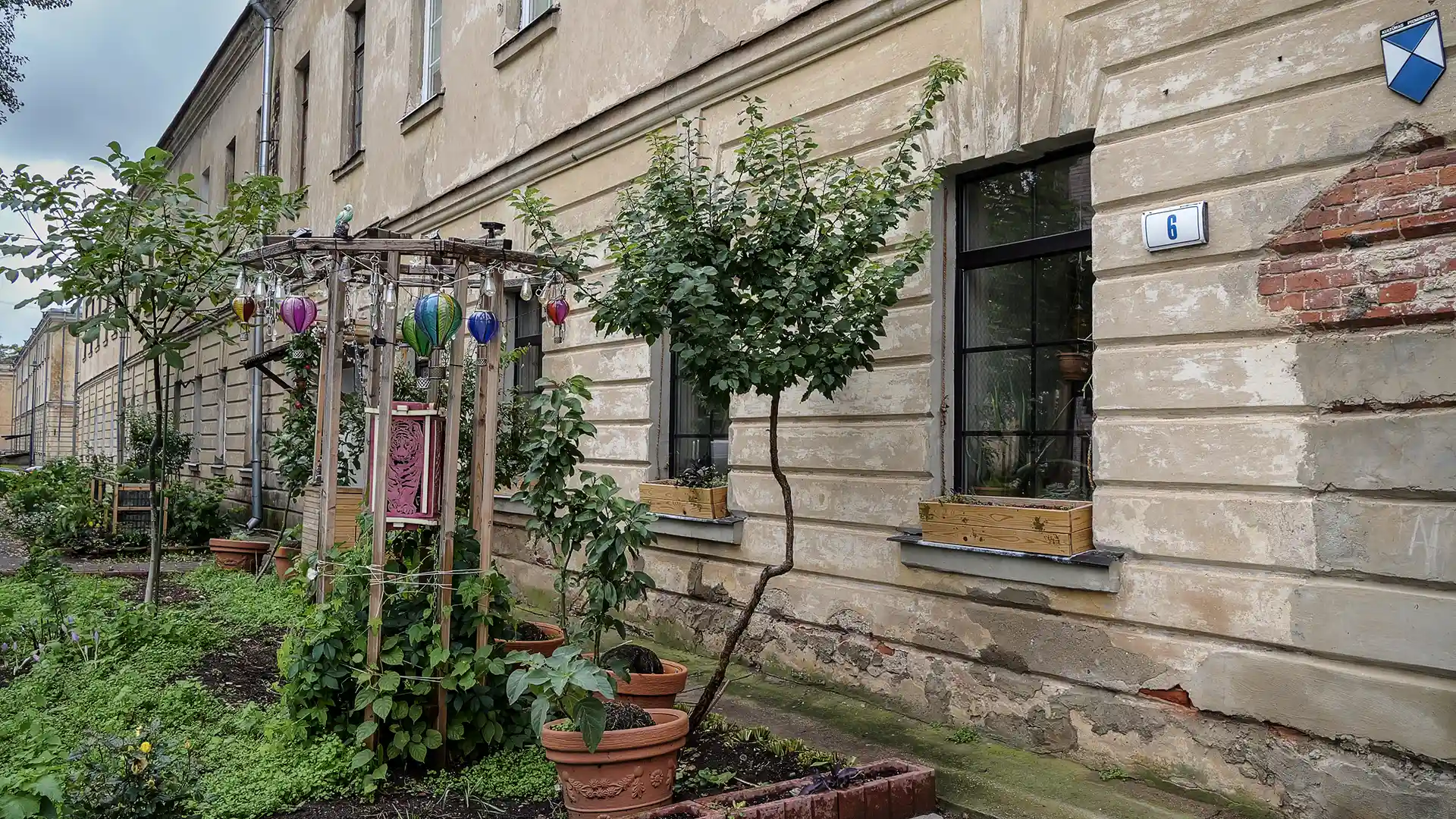
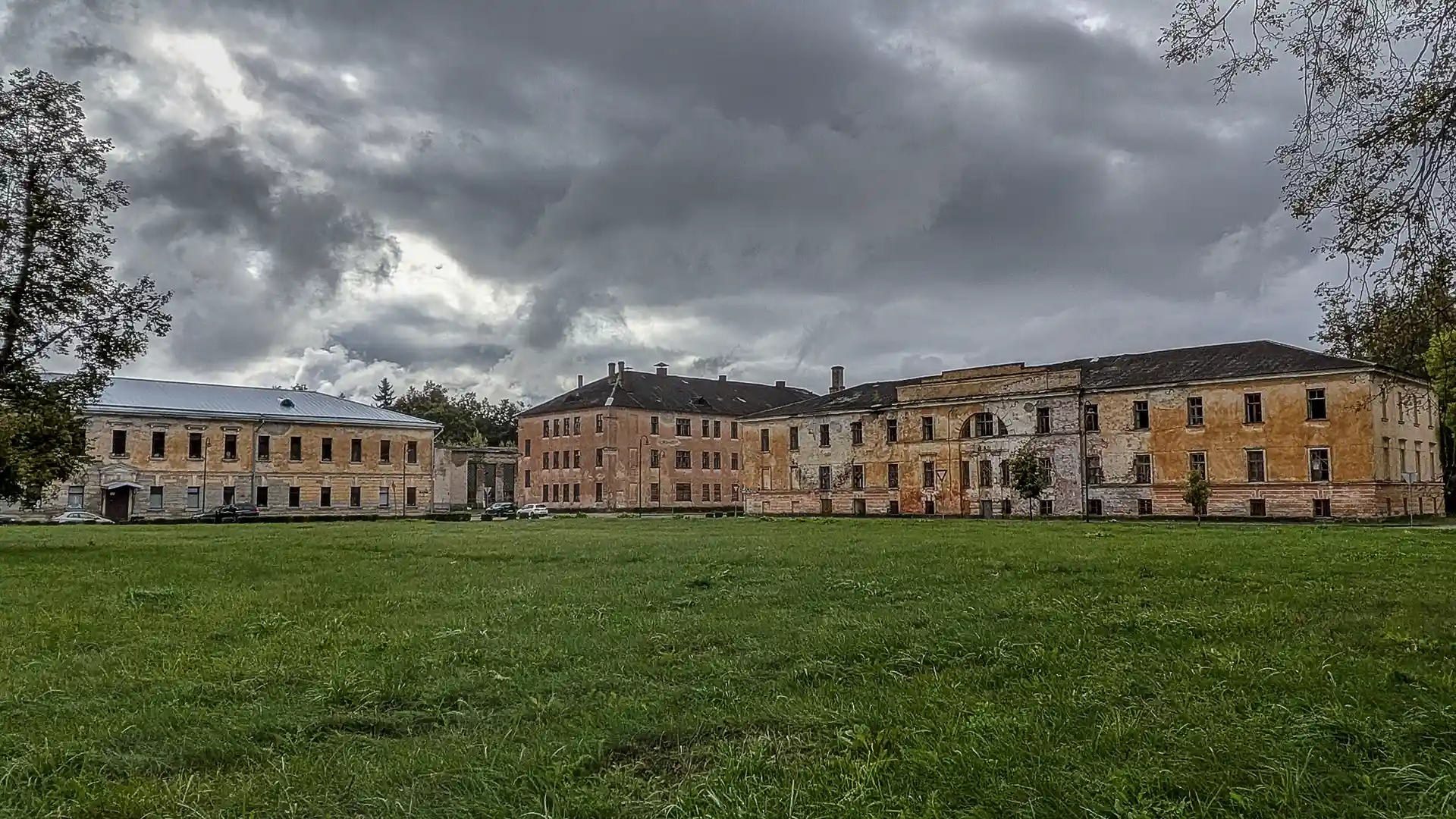
On both sides of the newly paved road, massive, yellow-painted buildings. The walls are damp, often covered with moss, and crumbling plaster is everywhere. Doors and windows are firmly boarded up with wooden planks. Still, a few houses are inhabited. We can see curtains, the occasional plant behind a window – and here and there, a freshly renovated section.
Still, it’s obvious we’re in a place that was once important. The rectangular street grid, the huge park with its old trees, and the massive walls and fortifications surrounding the whole area.
We’re in Daugavpils Fort – a largely abandoned part of the city, built in the early 19th century by the Tsars. It remained in use until the 1990s, serving different purposes along the way. There are signs that someone has tried to develop the area, but little seems to have come of it.
Surely, it’s impressive to see the scale of the efforts once made to defend the Russian Empire. Still, it’s a bit sad to see nobody seems to be able to stop the decay and turn this enormous historic complex into a living part of Daugavpils. Despite the many excellent examples in the country.
A forgotten city within a city.
Let’s see if we can find more hidden jewels in town.
There’s the street of the Russian Old Believers. An area on the outskirts where a small community of descendants from Russia follows a strict interpretation of the Orthodox faith, rejecting the reforms introduced by the Orthodox Church over the centuries.
We’re astonished by how small their area is. Just 2 roads, lined with a few traditional wooden houses, with 2 churches in between. We visit 1 of them, at least partly. A ceremony is going on, so we only peek in from the entrance – we don’t want to disturb.
True, 2 pretty special things we’ve seen in this town. But we still need to have a look at the center.
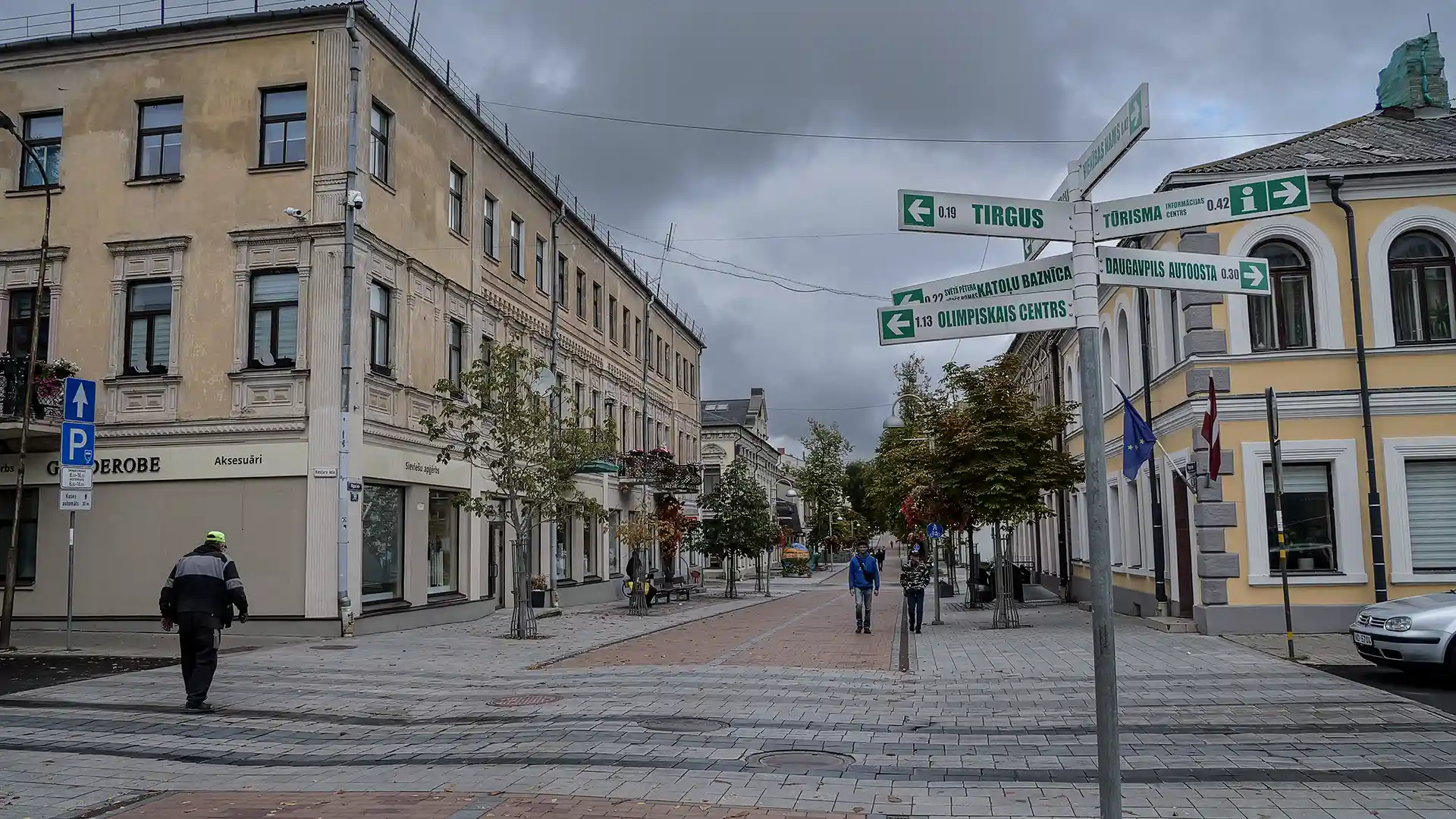
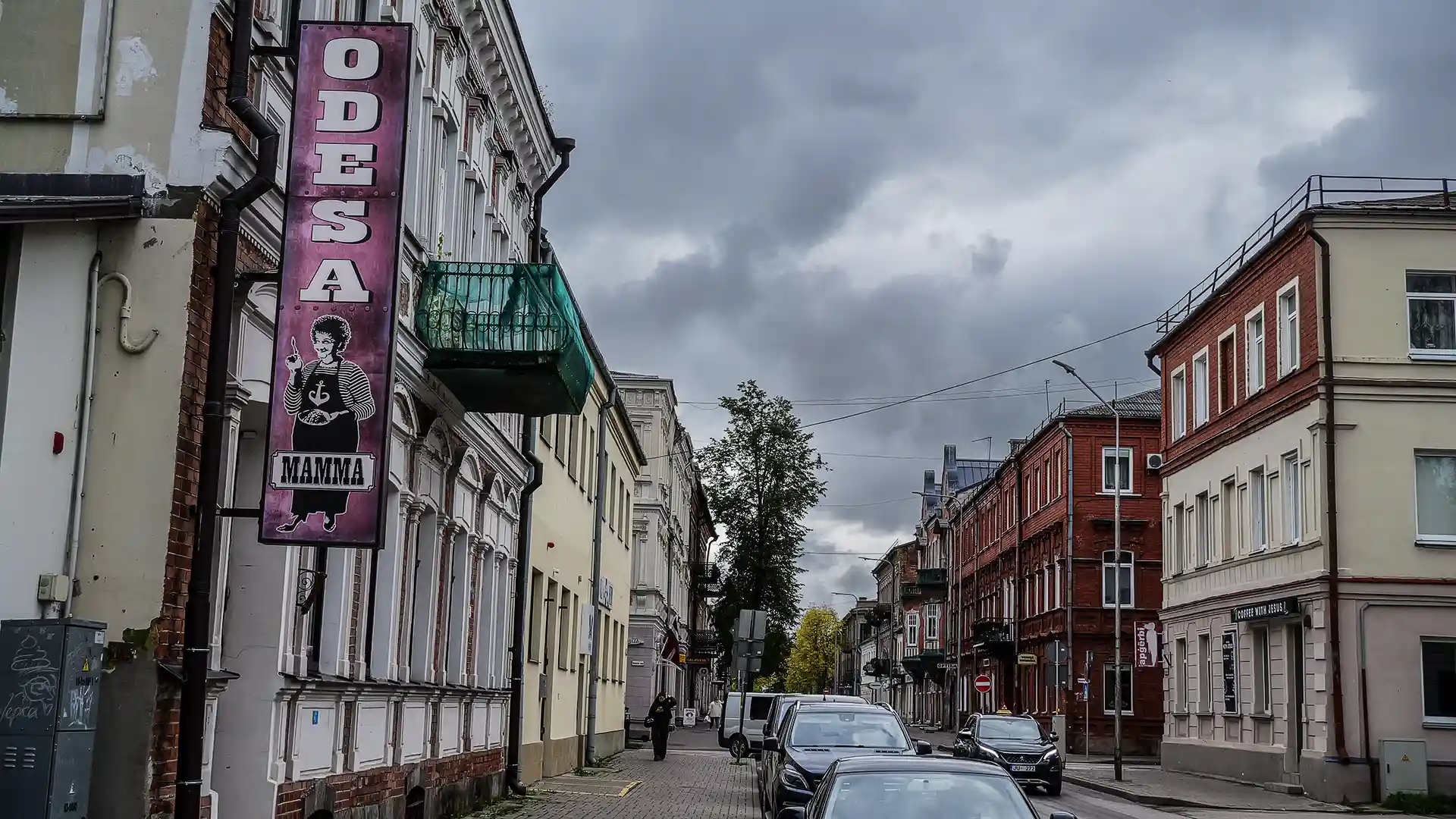
Shortly later, we stroll along the pedestrian zone. Again, we have the strong feeling of being in the Russian part of the Baltics – which, considering that nearly half of the population is of Russian origin, isn’t exactly surprising.
The city center is a bit dark and grim. Rather narrow streets squeezed between massive buildings, little space for pedestrians, and mostly pretty old-fashioned shops. A world away from the polished centers of other Latvian cities.
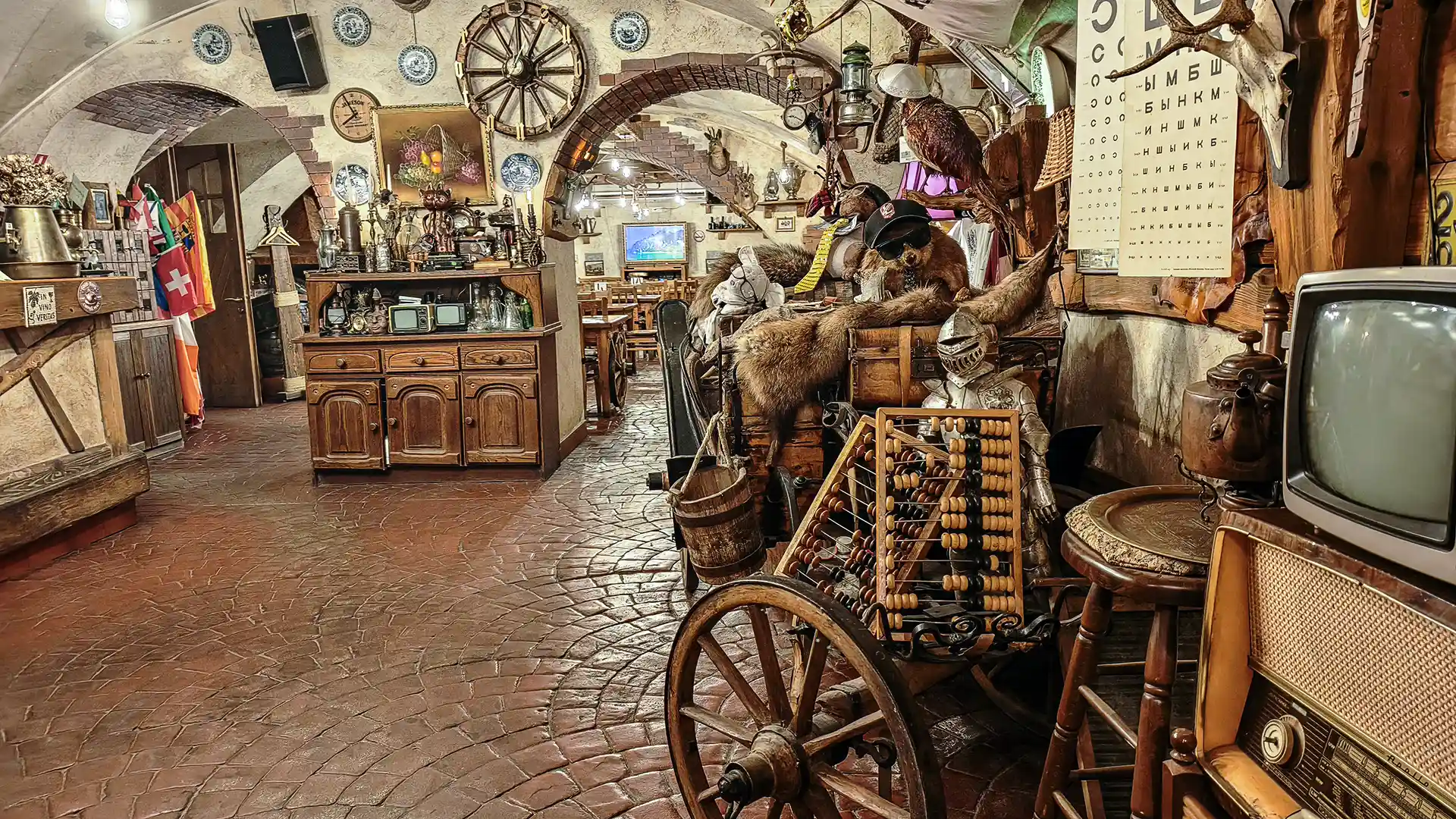
And in the evening – to give an unusual day an unusual ending? Gubiernator.
A cellar restaurant serving Russian food. Mainly meat, topped with cheese, bacon, or whatever else you can imagine.
Subtle? No. Russian? Absolutely.
We drive as far as we can. Unfortunately, there’s no way to go any further. All entrances to the office buildings are closed and huge fences line both sides.
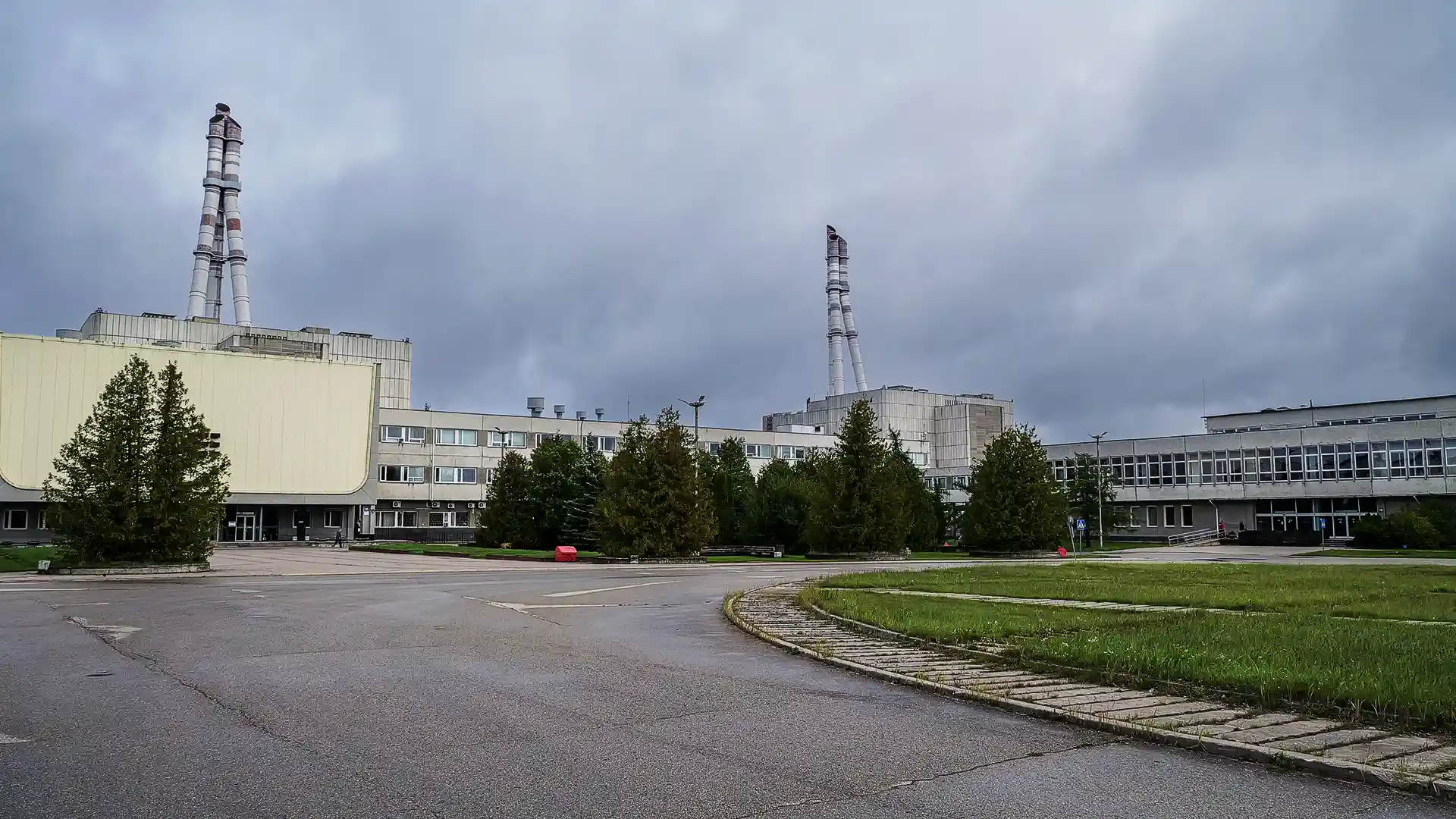
We’re standing in front of Chernobyl’s sister nuclear power plant. This one didn’t explode and poison large parts of the world. No – its shutdown was simply the price Lithuania had to pay for joining the EU.
Today, the whole place is a gigantic construction site. Dismantling the complex safely will take decades and cost billions.
OK, we’ve seen the Ignalina nuclear power plant. We’re actually happy this one doesn’t work anymore. So we turn back towards nearby Visaginas – a town built entirely around the power plant.
Back then, it was one of the most modern and comfortable urban developments in the Soviet Union. Today, most of it is still inhabited, mainly by ethnic Russians. Quite a bit run-down, but clearly in better shape than many ordinary Soviet-built neighorhoods we’ve seen in Lithuania. Walking around, it feels like a Soviet town transplanted straight from Russia.
Still, something feels different. We’re getting stared at everywhere we go.
After nearly a week along the Russian and Belarusian borders, we need a change.
Vilnius, Lithuania’s capital. Back to civilization? Let’s see if it lives up to our expectations.
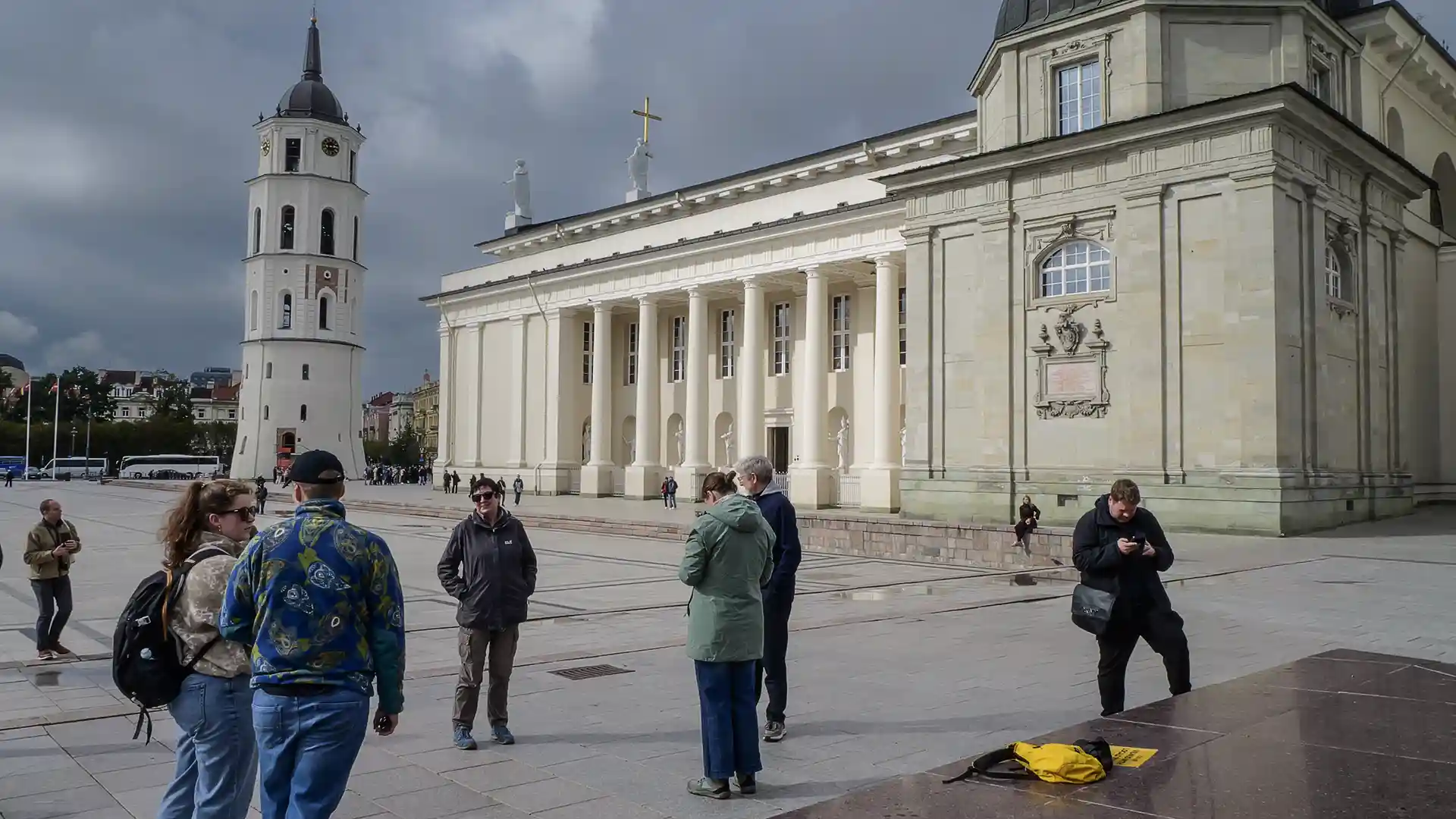
We’re sneaking our way from our campsite cum lousy hostel to the huge Cathedral Square. At the foot of the monument to Grand Duke Gediminas, a tour guide is waiting for us – along with a number of other participants.
Of course, it’s difficult for us to admit that we’ve booked a tour. But this one? This one promises to show us what life was like in the capital during the Soviet occupation.
Monika couldn’t resist booking it with Meet a Local.
The nice lady quickly explains what to expect. No nostalgia for the good old Soviets, she makes clear. Her family suffered, as did millions of others. And for her, that time remains a serious warning against glorifying Russia’s current government today.
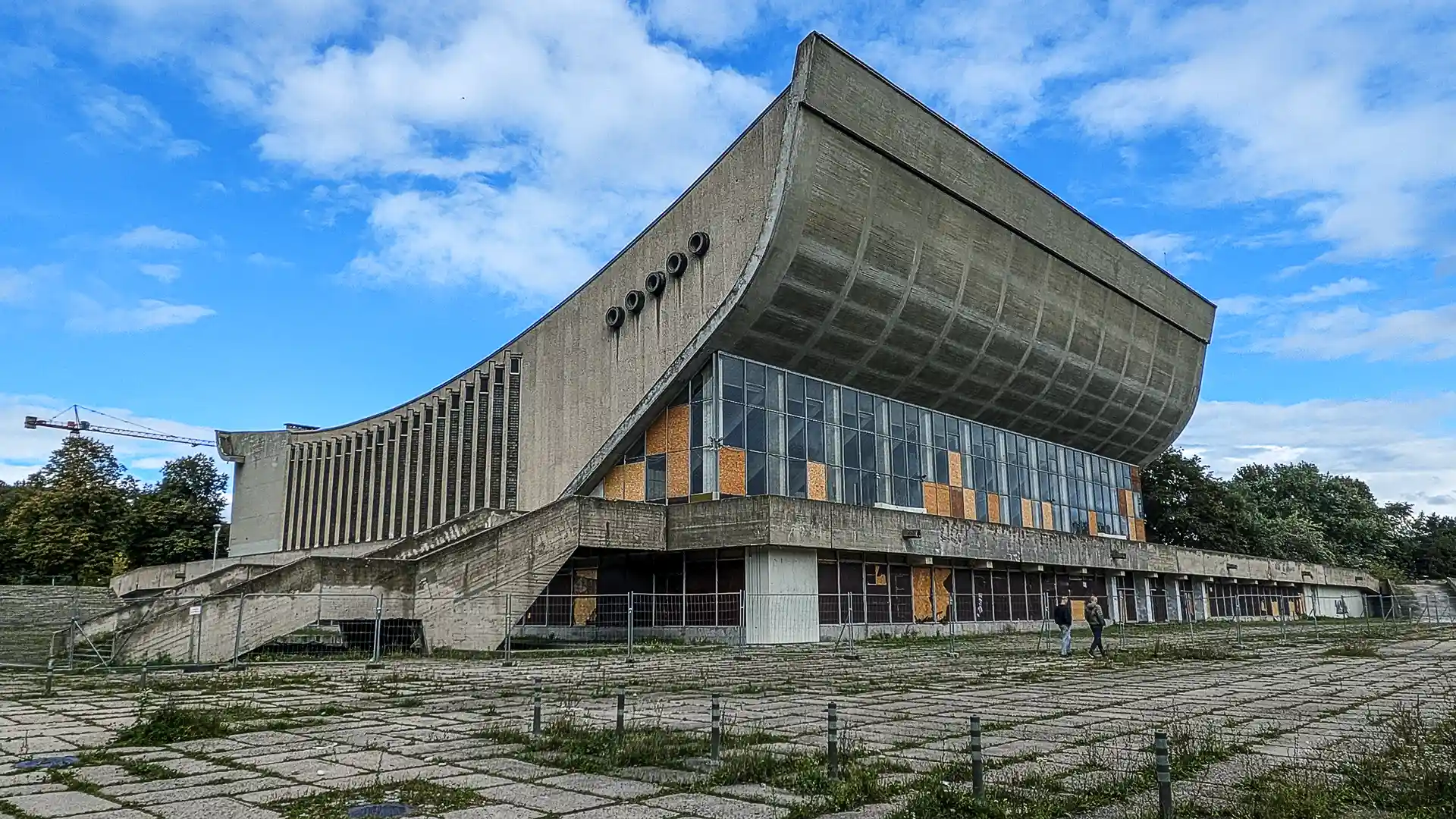
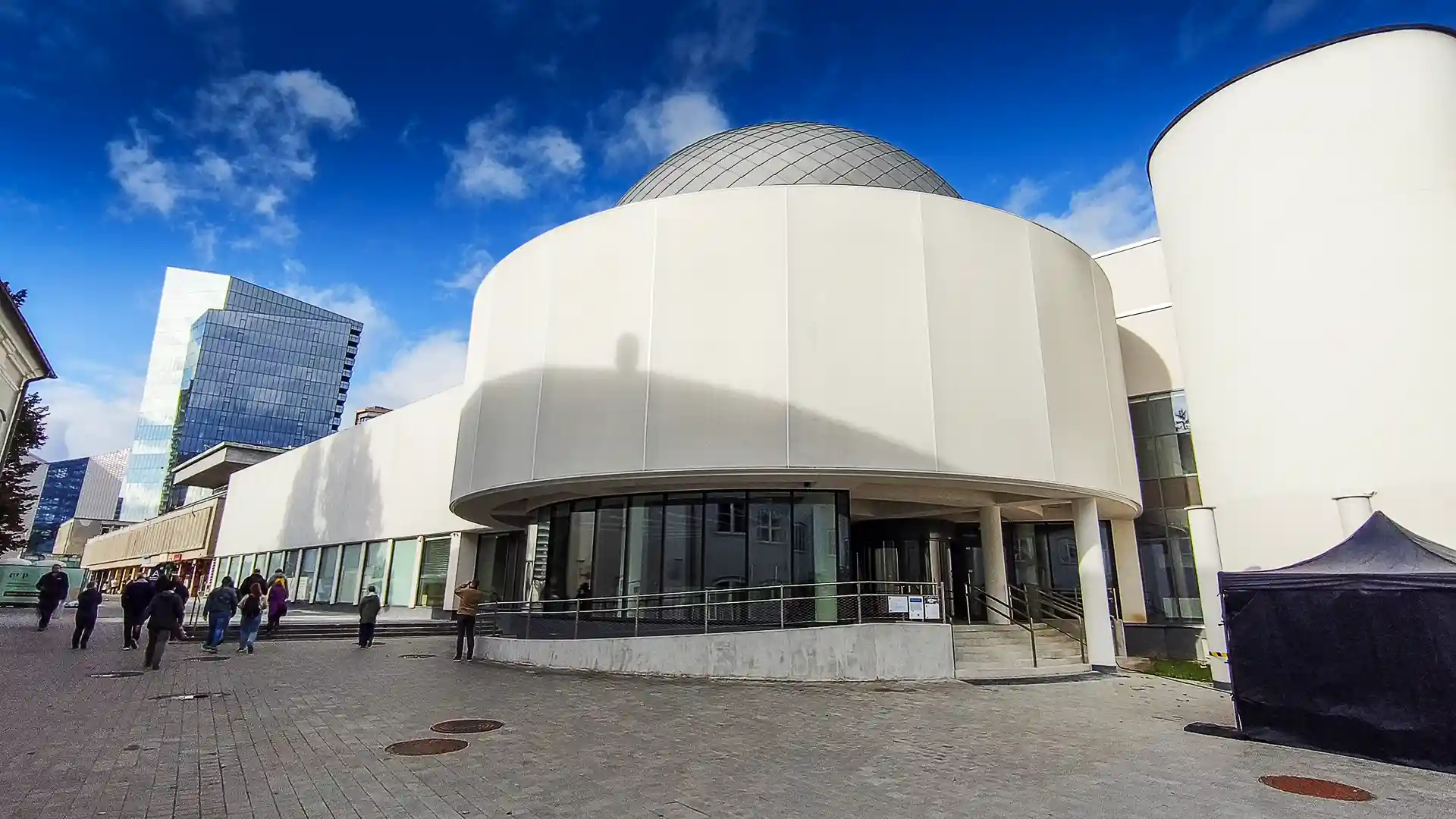
A short walk later, we’re standing in front of the Soviet-built Palace of Concerts and Sports. Today, it’s closed, decaying and firmly fenced off. Apparently, it’s too dangerous to enter.
Still, nobody razes it to the ground – but nobody wants to renovate it either.
There’s a simple reason: the palace stands on the site of an old Jewish cemetery, destroyed by the Soviets to make way for it.
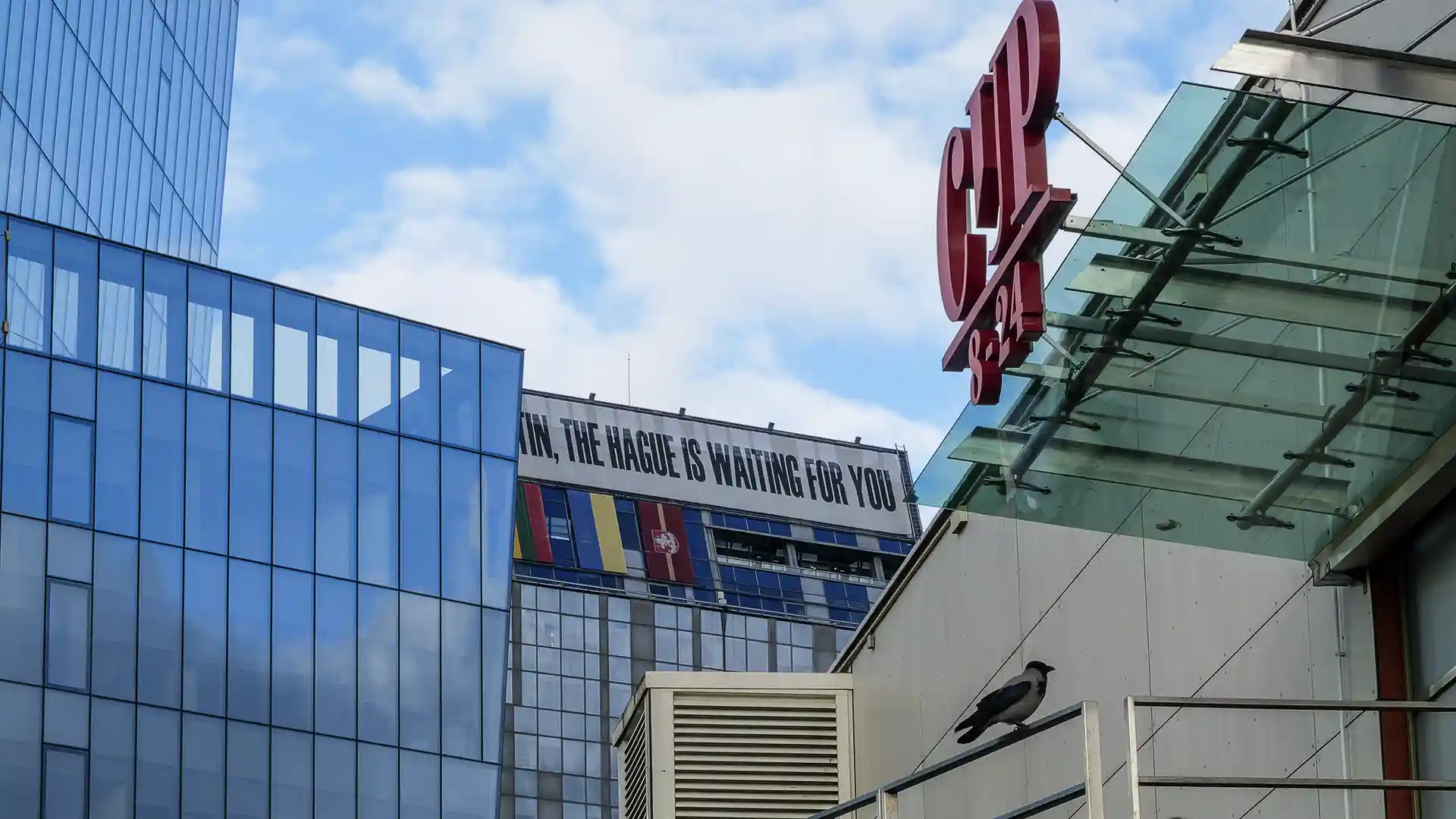
Next stop: the former showpiece hotel, once the only hotel in town allowed to accommodate foreigners, and the adjacent shopping mall. The mall was where visitors could see for themselves that everything was supposedly available under the wonderful Soviet system – while everything they heard in the West was dismissed as political propaganda and fake news spread by the media.
Today, the hotel is run by Radisson. Next door, a posh shopping mall has taken over.
We continue along formerly grand avenues to Lukiskes Square, once dominated by a giant Lenin statue, and to the memorial of the victims of Soviet occupation. Next to the KGB headquaters.
Finally, on to Parliament – a building in the modernist style of the Soviet era in the 80s.
And then, we’ve seen it all.
The tour? Well, not too much new information for us. We grew up with the Cold War somewhere in the background. Stories about suppression, deportation, political prisoners, endless waiting for basic services, and privileges reserved for those willing to play along with the system – we’ve heard them all before.
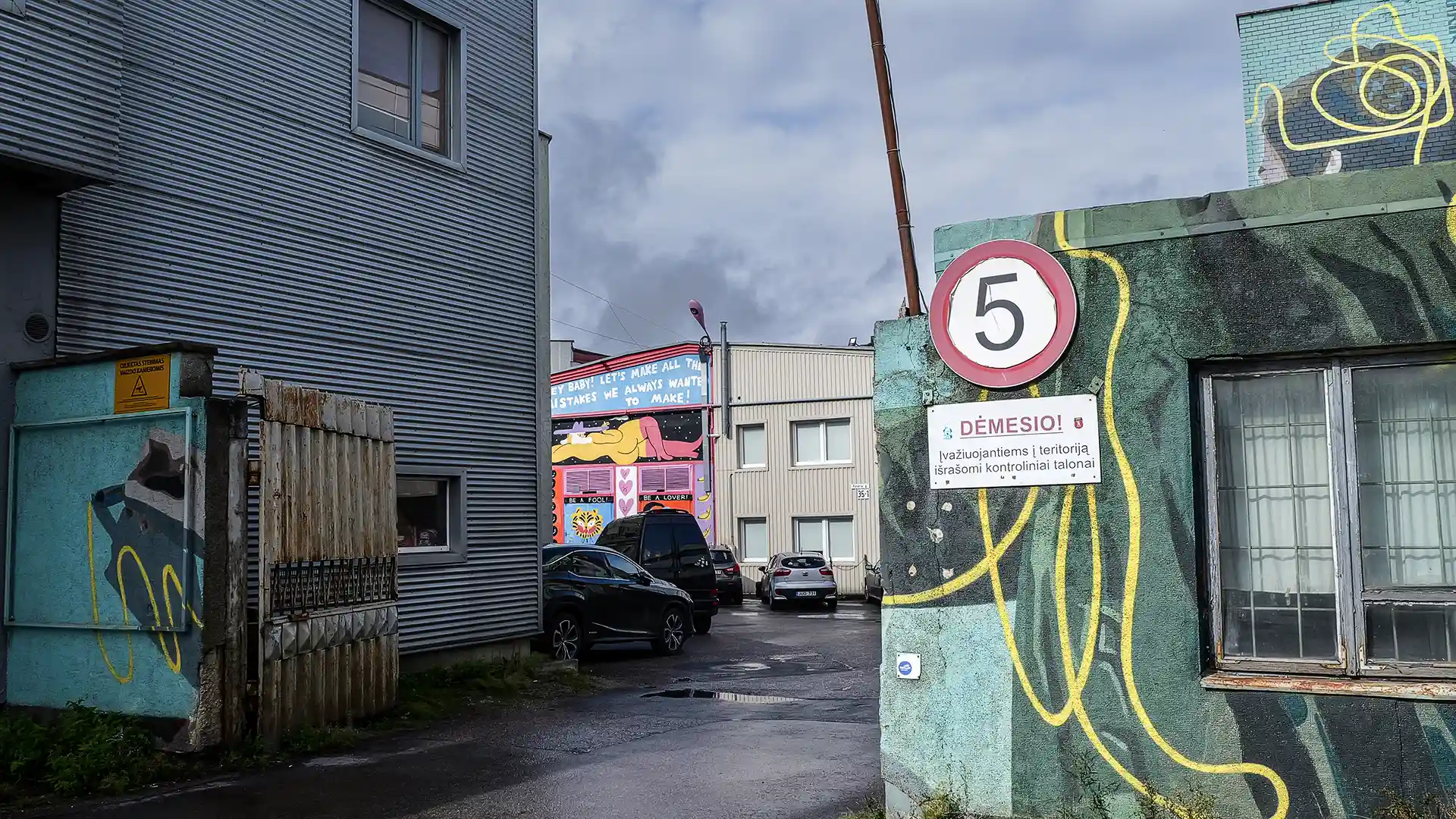
It’s been a pretty long walk from the city center thru rather nondescript suburbs, along endless highways, to finally reach the gate of the former ELFA factory – home electronics at its best, Soviet style.
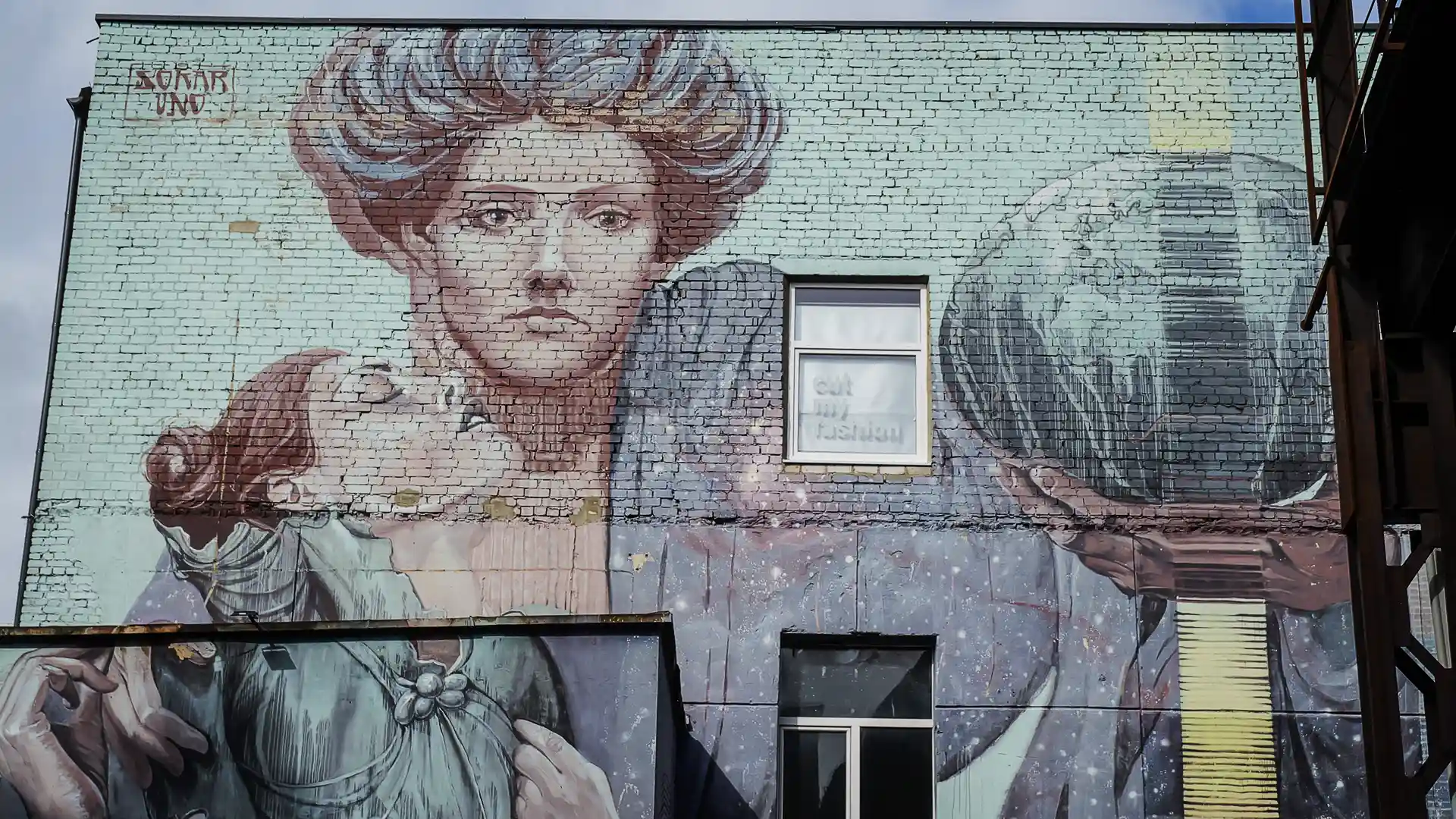
We enter, wondering if this is really the place where we’re supposed to find the best street art in all the Baltics.
It’s a bit spooky. Strange guys hanging around, 1 or 2 watering holes, and a few small companies going about their business. Not exactly the kind of place where you expect to find great street art.
We ignore all that. We’re too curious to turn back.
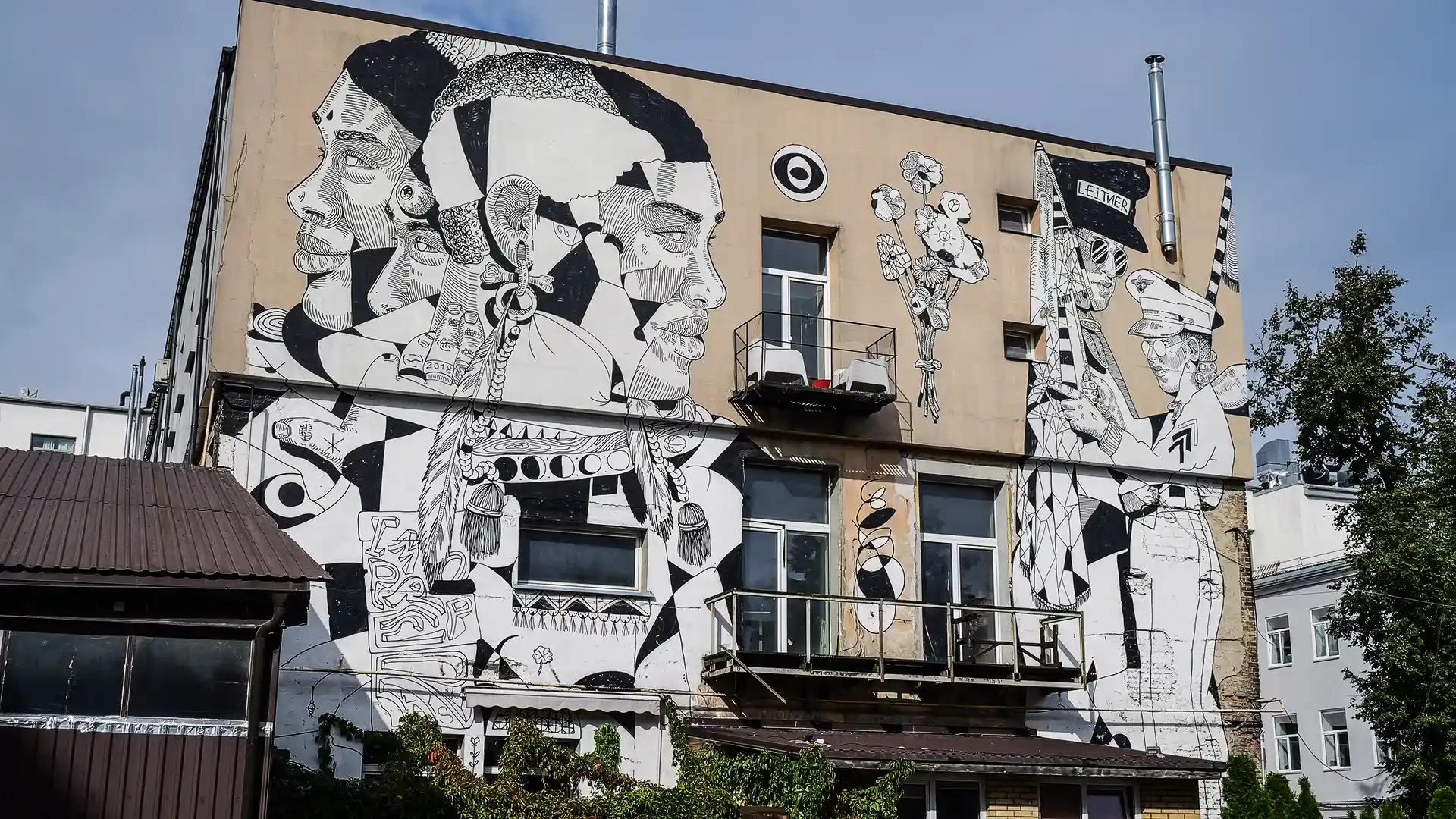
We sneak thru the passageways and small alleys, cross parking lots – and we spot them. The murals are definitely here. Everywhere, on the decaying walls of the old factory.
We just have to search a bit – and ignore the guys hanging around.
Whatever. It’s worth the risk. We’re still alive.
What we’ve seen so far in Vilnius is definitely not what tourists come for.
As we’re already here, for once, we’re following the tourist trail: the city’s famous Old Town. Let’s see why it’s considered better than many others.
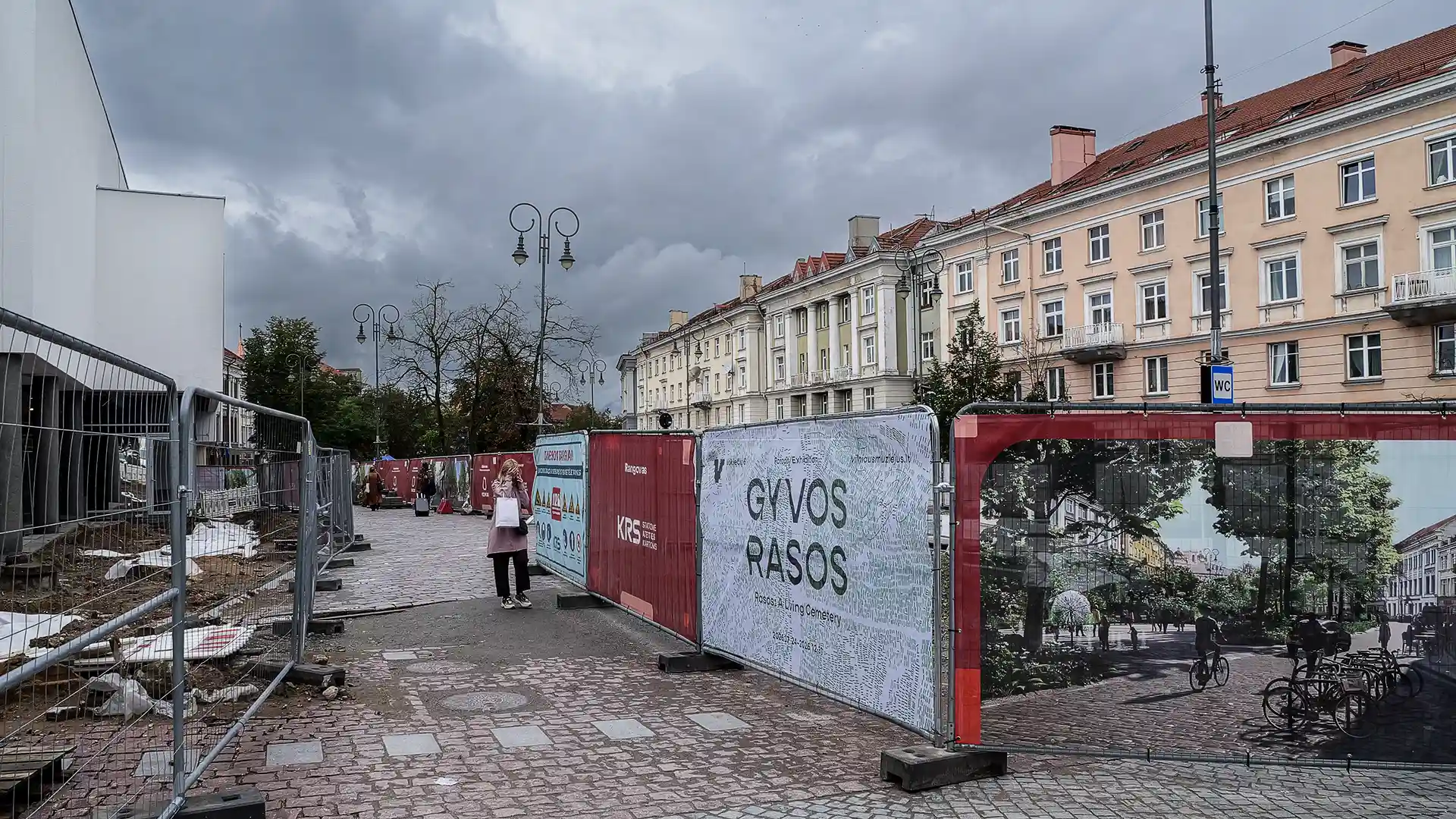
Arriving there, our 1st observation is a construction site. They’re tearing up the road, with fences everywhere and huge machinery at work. It’s difficult to communicate over the noise. Clearly, the guys are busy.
We head towards the old Jewish Glass Quarter. Of course, not much people of the Jewish community remain and commerce that flourished here for over 600 years in the narrow alleys has changed completely. History has taken its toll.
Just a few signboards and some murals remain. Much of the rest has been converted into restaurants and shops for tourists.
On to some of the main streets thru the Old Town. Visitors everywhere, restaurants, souvenir shops – and more construction sites. A mix of old and new buildings.
Sure, the main street where all the tourists stroll is lined more or less continuously with historic buildings.
But that’s about it.
Not exactly what we expected.
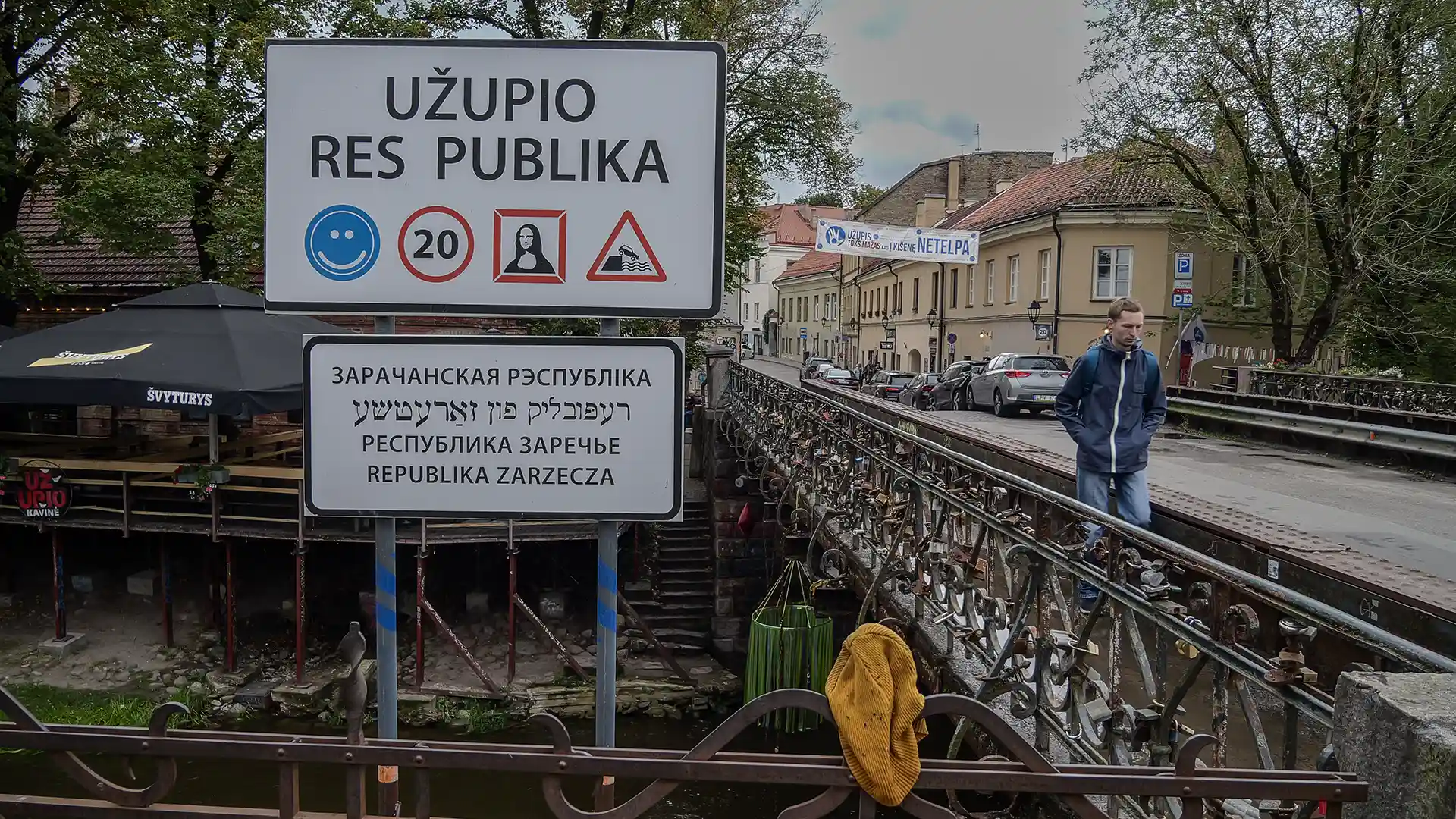
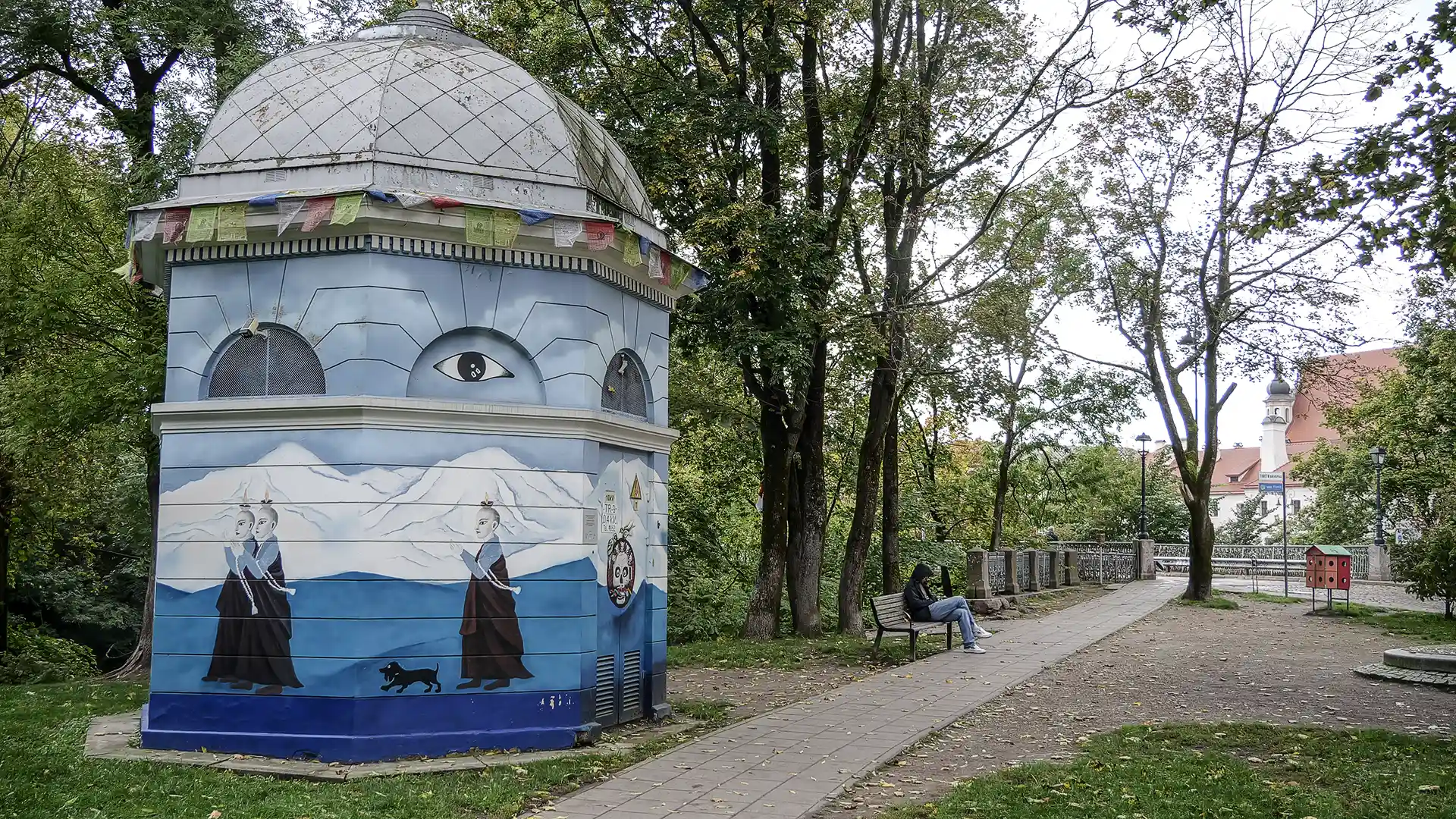
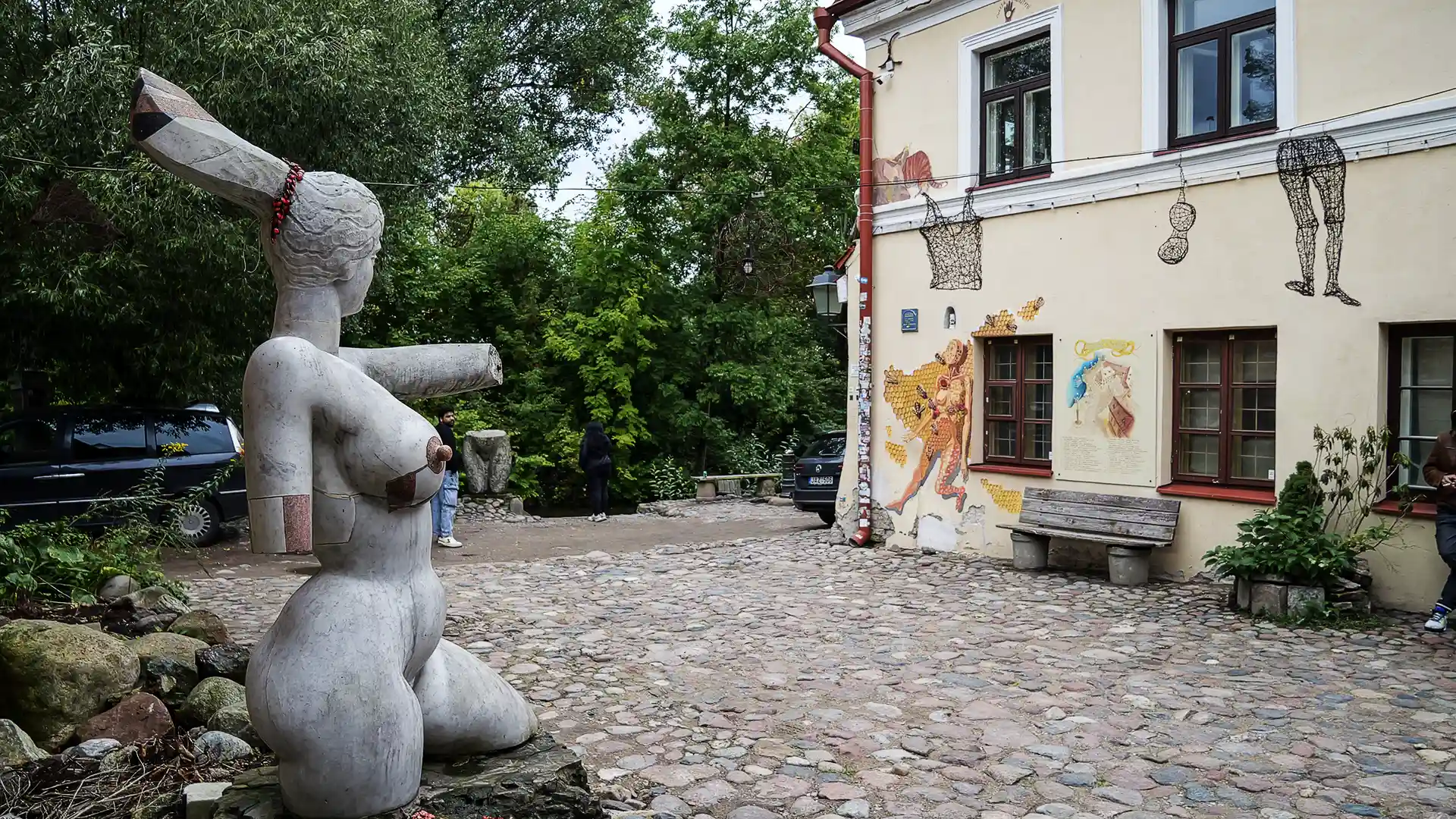
So we head on to the major curiosity in town: the Republic of Uzupis. A self-declared republic on the other side of the Vilnius River. A republic run by the local community, with a constitution, a president, and even an army of 12 brave members, ready to defend their citizens’ guaranteed right to own a cat.
A great place with an even greater atmosphere.
We’ve nearly reached the southernmost point of the Baltics. Poland is not far away.
We’ve seen so many remnants of the Soviet occupation, learned about the brutality of the KGB, the ruthlessness of the Soviet bureaucracy, and the bleakness of life under Soviet repression.
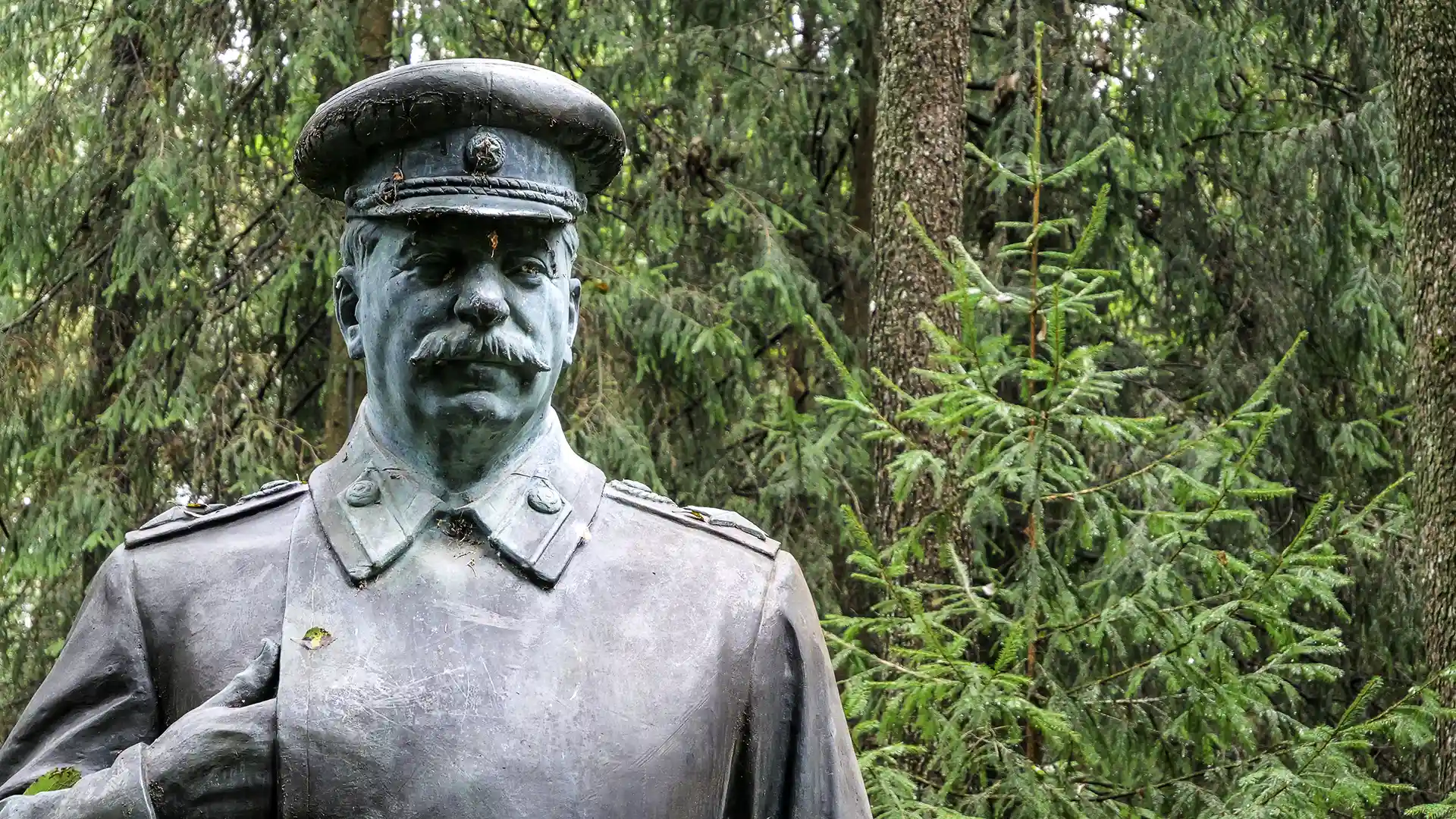
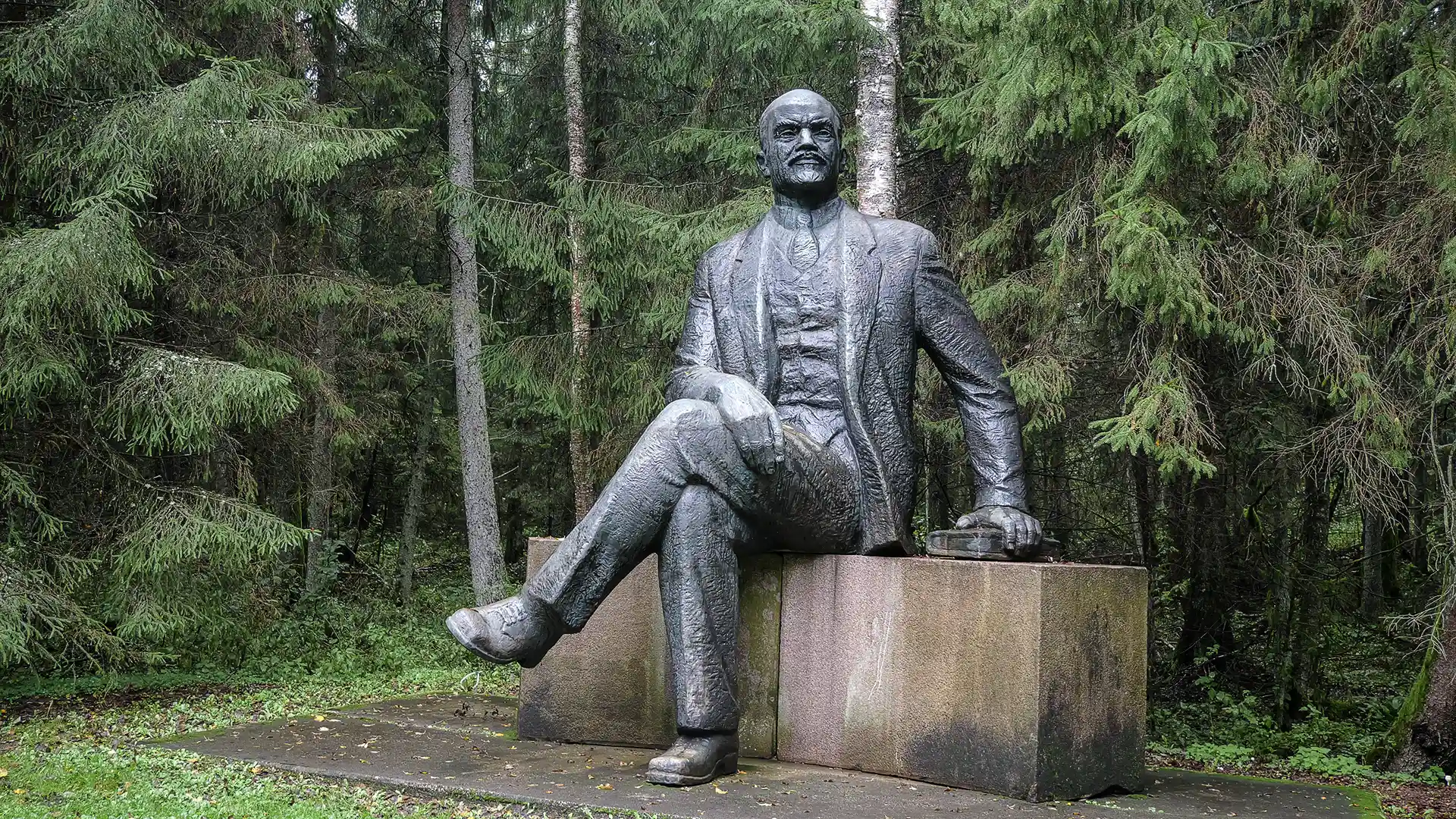
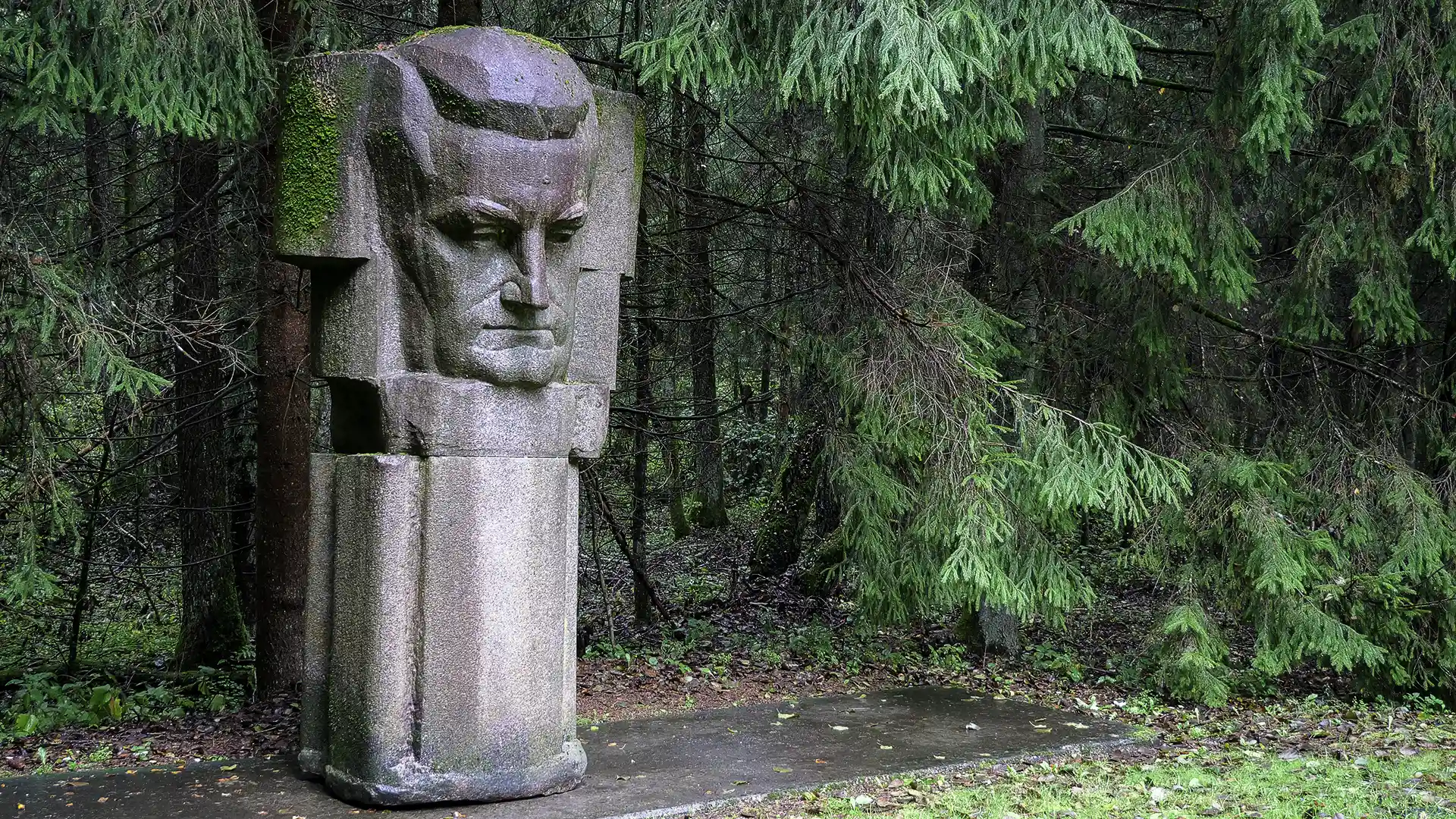
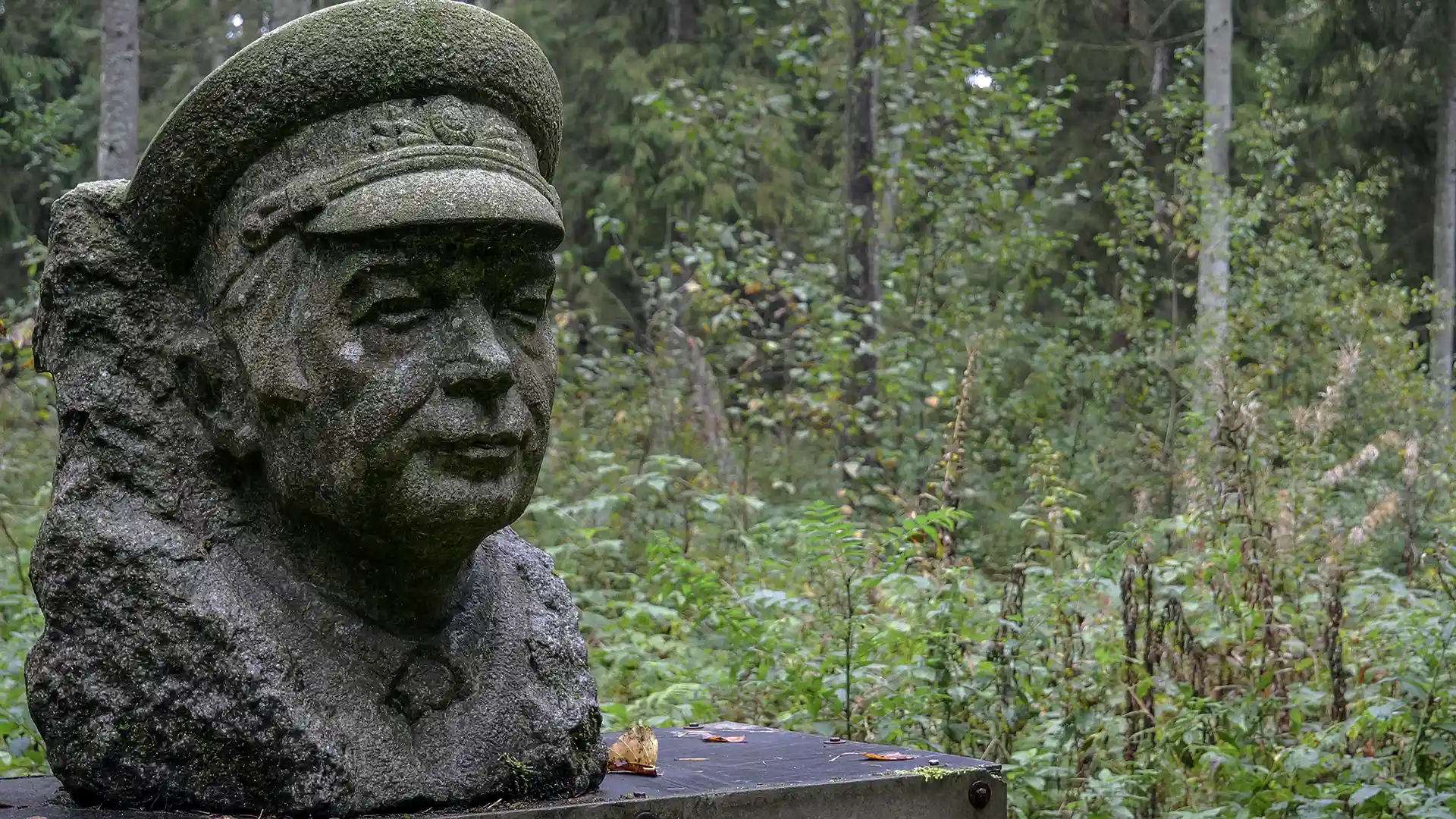
Now we’re wondering what happened to all those Soviet heroes we’ve heard about – at least, the ones made of concrete, stone, or steel, once standing proudly in the middle of most town squares.
There’s an answer to that.
We find it on a farm near Druskininkai, at Grūtas Park. A farmer and Soviet memorabilia collector has gathered dozens of these statues and placed them in a park on his property. To make the place even more attractive, he added a zoo with all kinds of animals.
That’s where we are now.
In the middle of a heroes’ graveyard, where they’ve finally found their well-deserved rest – slowly being eaten away by rain, snow, and time.
Dear readers,
That’s it. We’re at the end of our journey thru the Baltics, and once again, Poland awaits us.
Let’s see if we can find anything interesting there.
Soon, in the next post. Promised.
Cheeeers
Monika’n’Martin