
























From Kraków’s socialist utopia and Wieliczka’s salt-mine Disneyland to Katowice’s brutalist concrete, Wrocław’s hidden corners, and Czechia´s wild rock formations. Off the beaten track – before heading back to Swizzyland.
After our trip thru Kazimierz Dolny, Lublin, and Tarnów, we really need an alternative to picturesque old towns in Poland.
Visiting 1 or 2 is definitely worthwhile. But more? For old-town aficionados, sure. For the rest of us, enough is enough.
But let’s see what else Poland has to offer.
We’re really keen to see something completely different: one of the largest settlements ever planned in the style of Communist Realism.
An ideal city built for the workers of the Vladimir Lenin Steelworks, established in 1954 and Poland’s largest at the time.
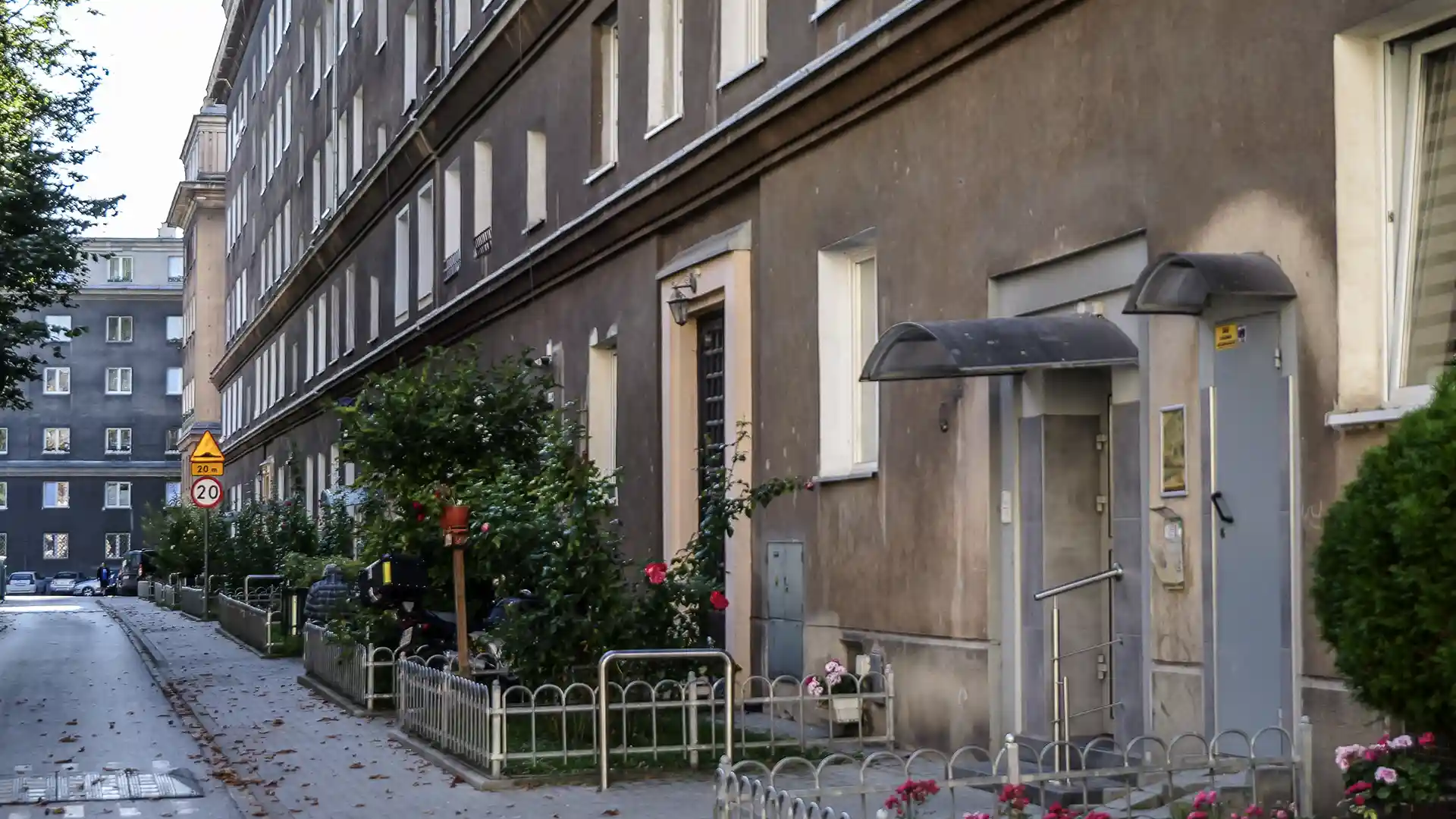
So, we cross the huge Central Square and enter the Avenue of Roses, lined with colossal apartment blocks. Of course, the massive Lenin statue is no longer there – may his soul rest in peace.
It all looks a bit dead, despite the many people hanging around. The apartments are clearly inhabited, and the buildings look pretty well maintained – at least until we take a look at their backsides.
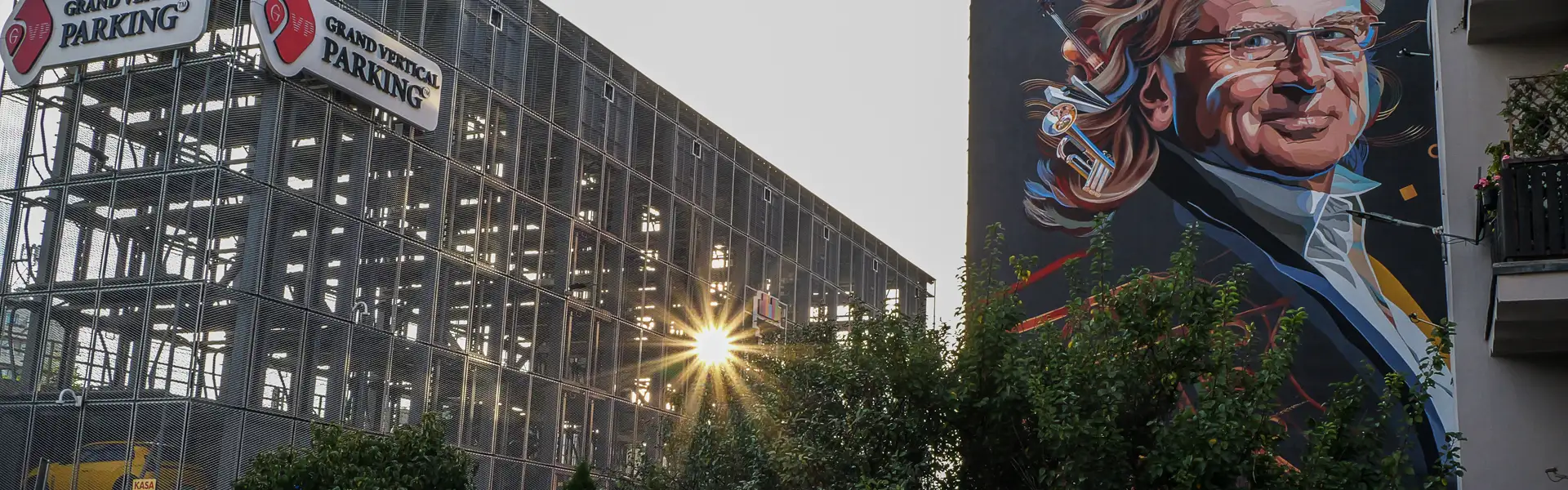
That’s Nowa Huta: a city within the city of Kraków.
Today, this socialist utopia – considered a success in its time – has turned into a well-developed neighborhood and, somehow, even a tourist destination.
But the relationship between its inhabitants and the communist ideology – especially its atheism – wasn’t always a happy one.
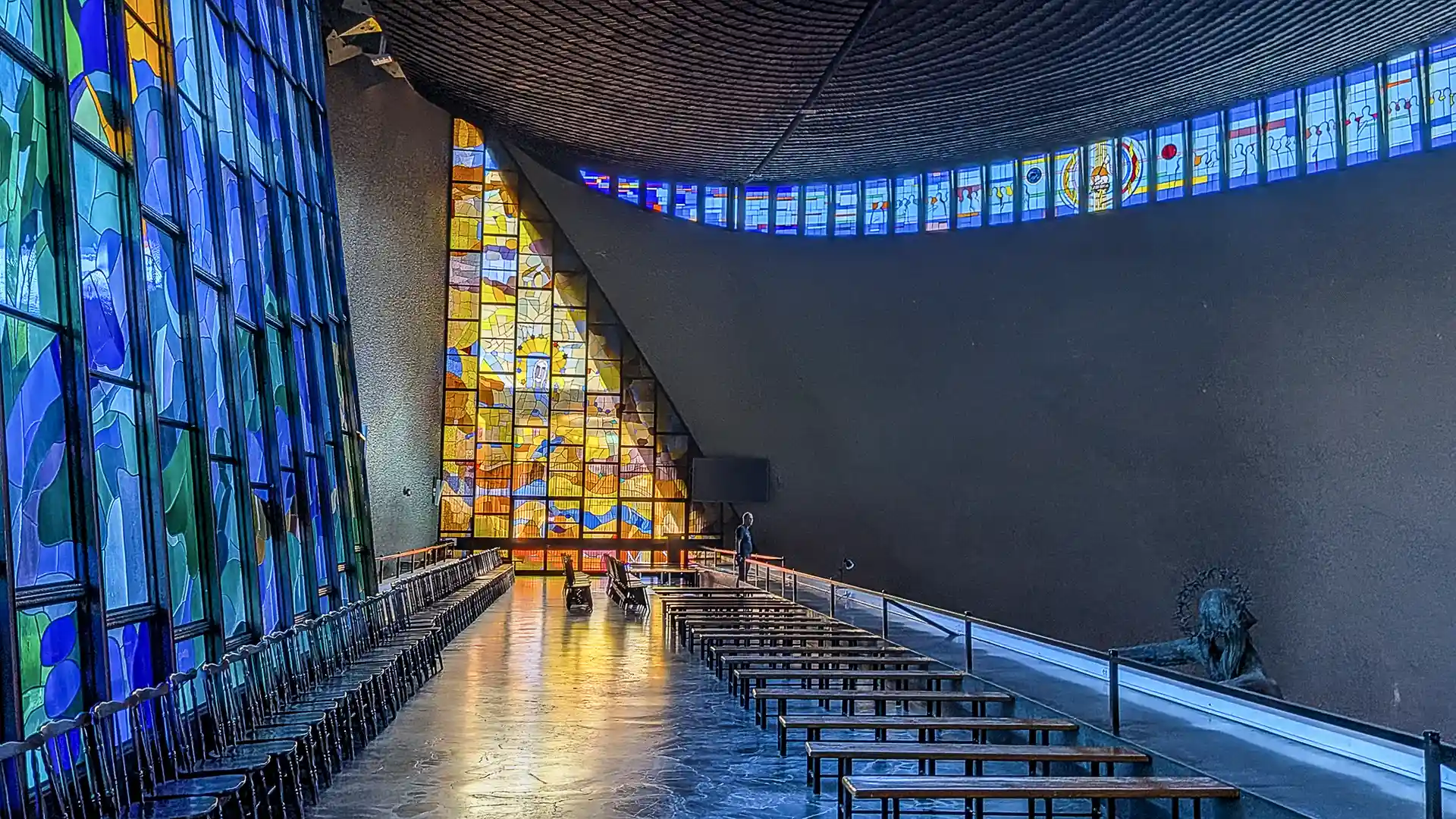
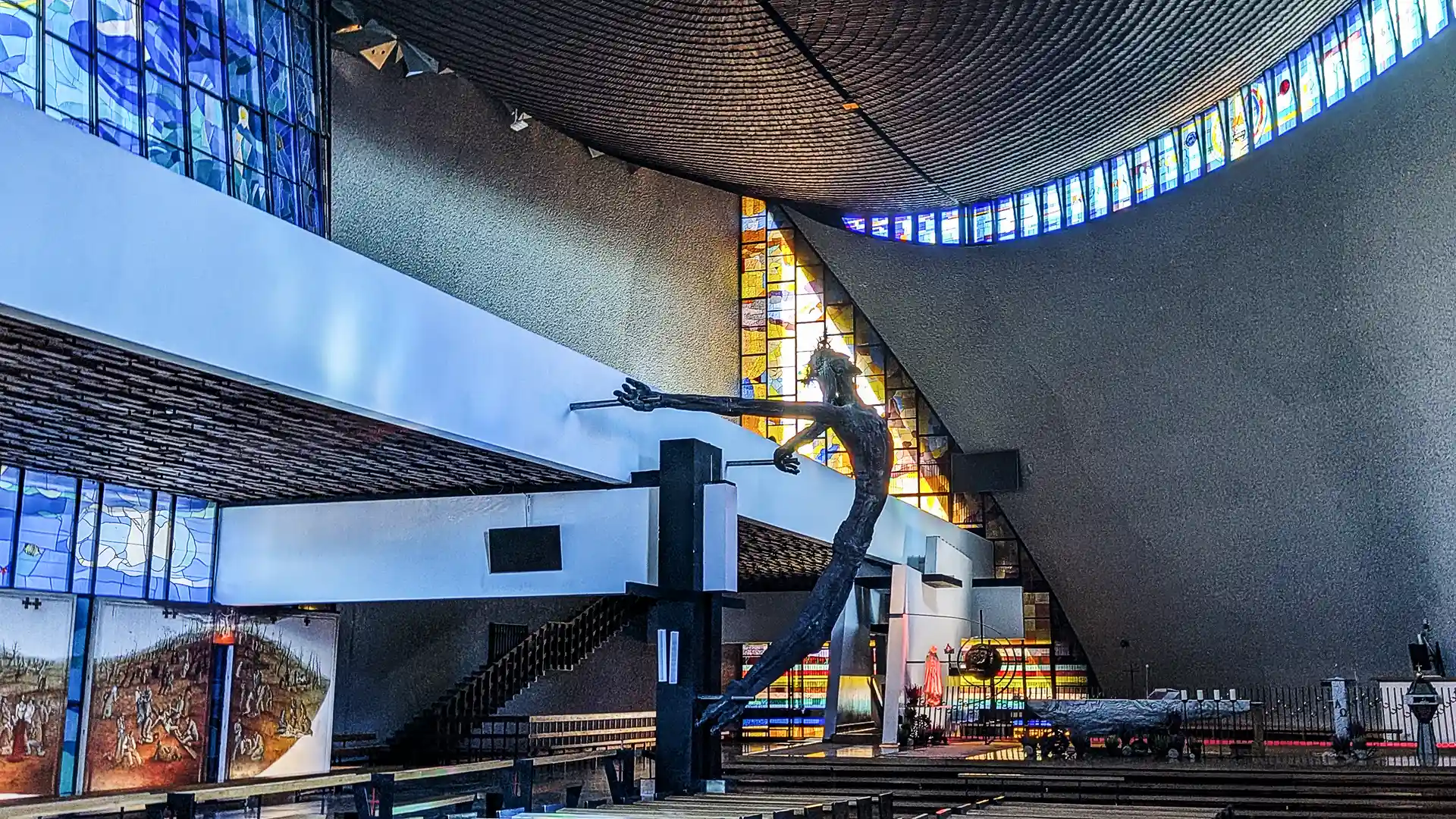
The result was demonstrations and riots in the 60s, eventually leading to permission to build the Arka Pana Church.
Another place definitely worth a visit.
The next day: We know it’s a pretty touristy place just outside Kraków, and we’re well aware that busloads of visitors may be shuffling thru the cold, damp mine tunnels.
To avoid long queues, we pay the hefty entrance fee and the overpriced parking fee online.
Now, we’re with our van in front of the parking barrier, trying to scan the QR code. Nothing happens. We try again. Same thing.
A lady rushes over, clearly annoyed, and tells us rather rudely that camper vans cost more. We have to pay the correct parking fee all over again and write off the ticket we’ve already bought. We should have read their website properly, apparently.
There’s no point arguing. Maybe her kids have already driven her crazy this morning.
Eventually, we find a nearby parking lot at a fraction of the price. The online parking ticket is lost anyway.
Later, we discover that she was right. Somewhere in the general terms and conditions for visiting the famous Wieliczka Salt Mine, there’s a paragraph buried among 100 others explaining that camper vans pay more. Fair enough – we missed it. Still, what a rip-off.
Whatever. Let’s forget about it.
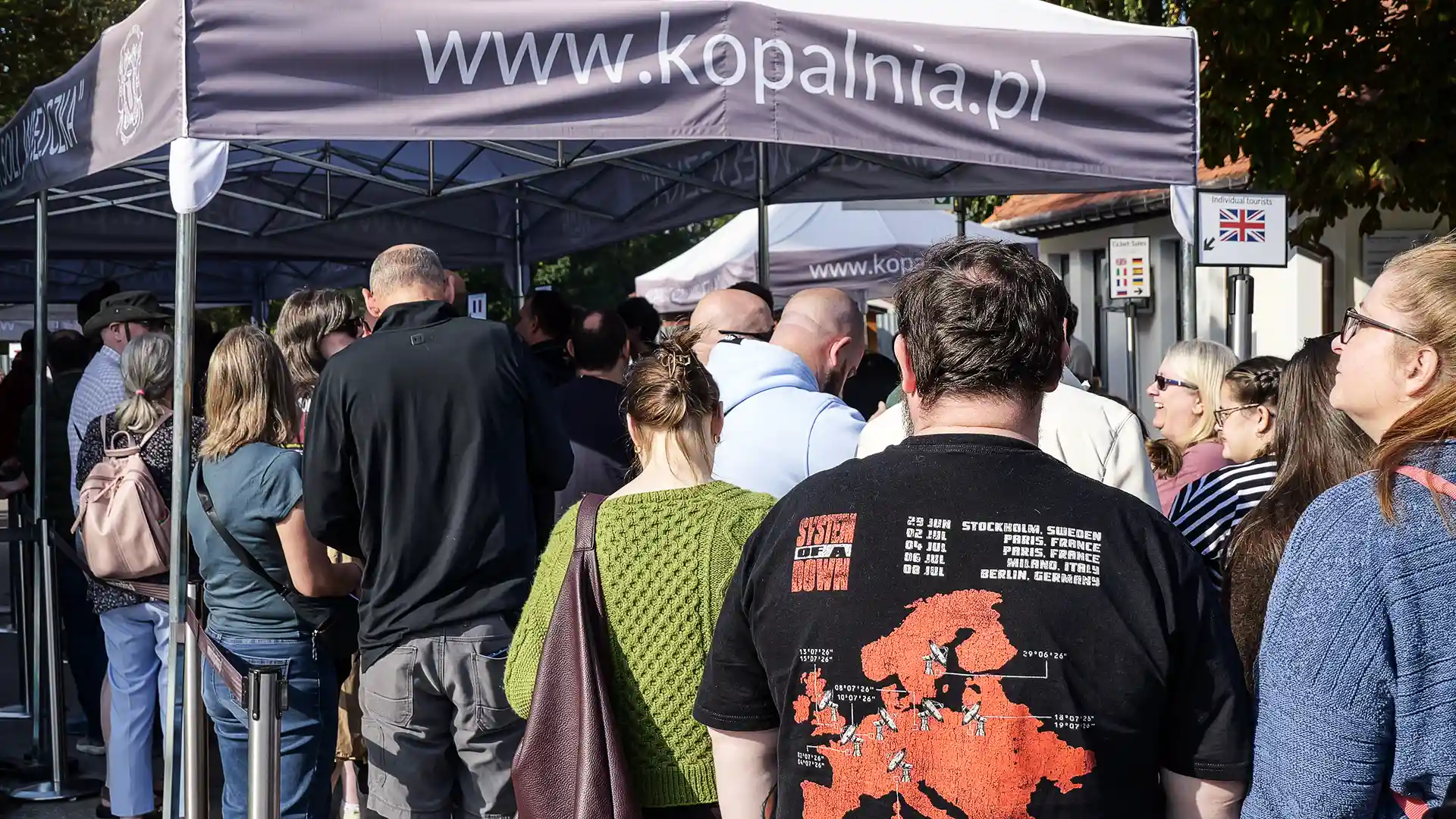
We head for the entrance, where we find a row of enclosures, each assigned to a different language. The biggest groups are Polish- and English-speaking. Clearly, there are plenty of tourists to organize.
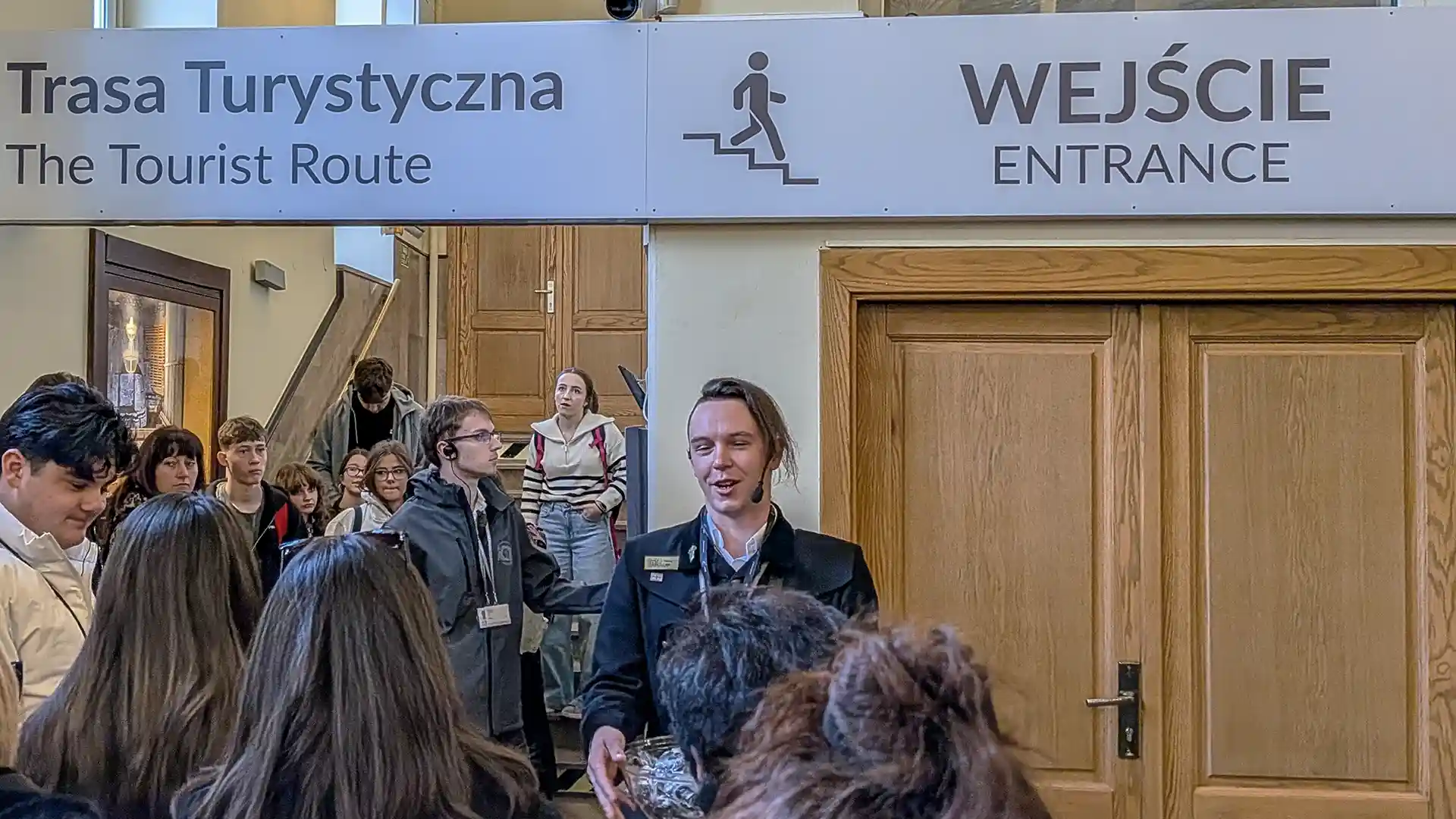
We join a group of 40 or 50 people, get earphones and a little receiver, …
… and listen as our guide launches into a running commentary on the mine, Poland, the world, and his philosophical thoughts on pretty much everything.
He promises us 3 hours of this.
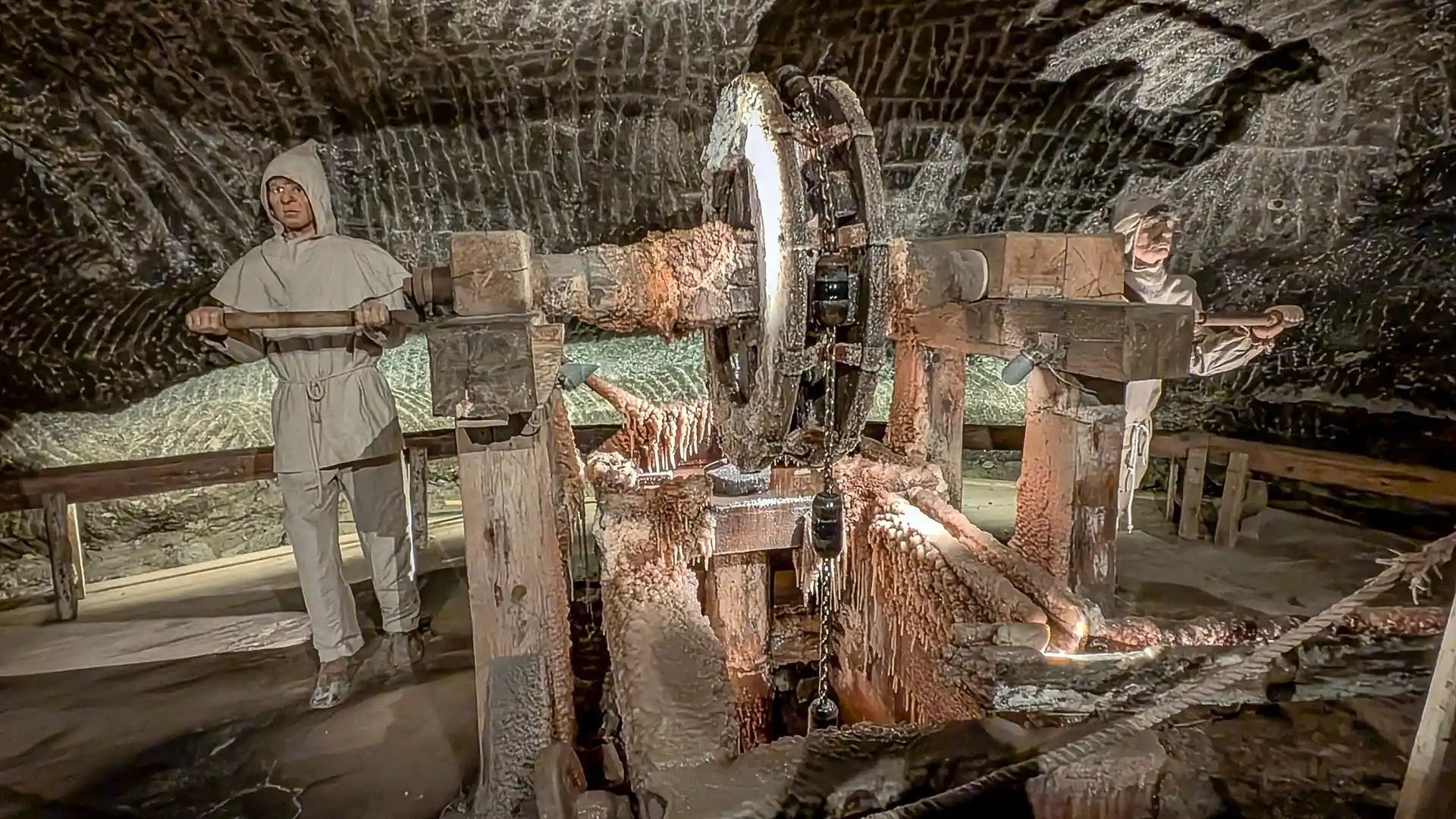
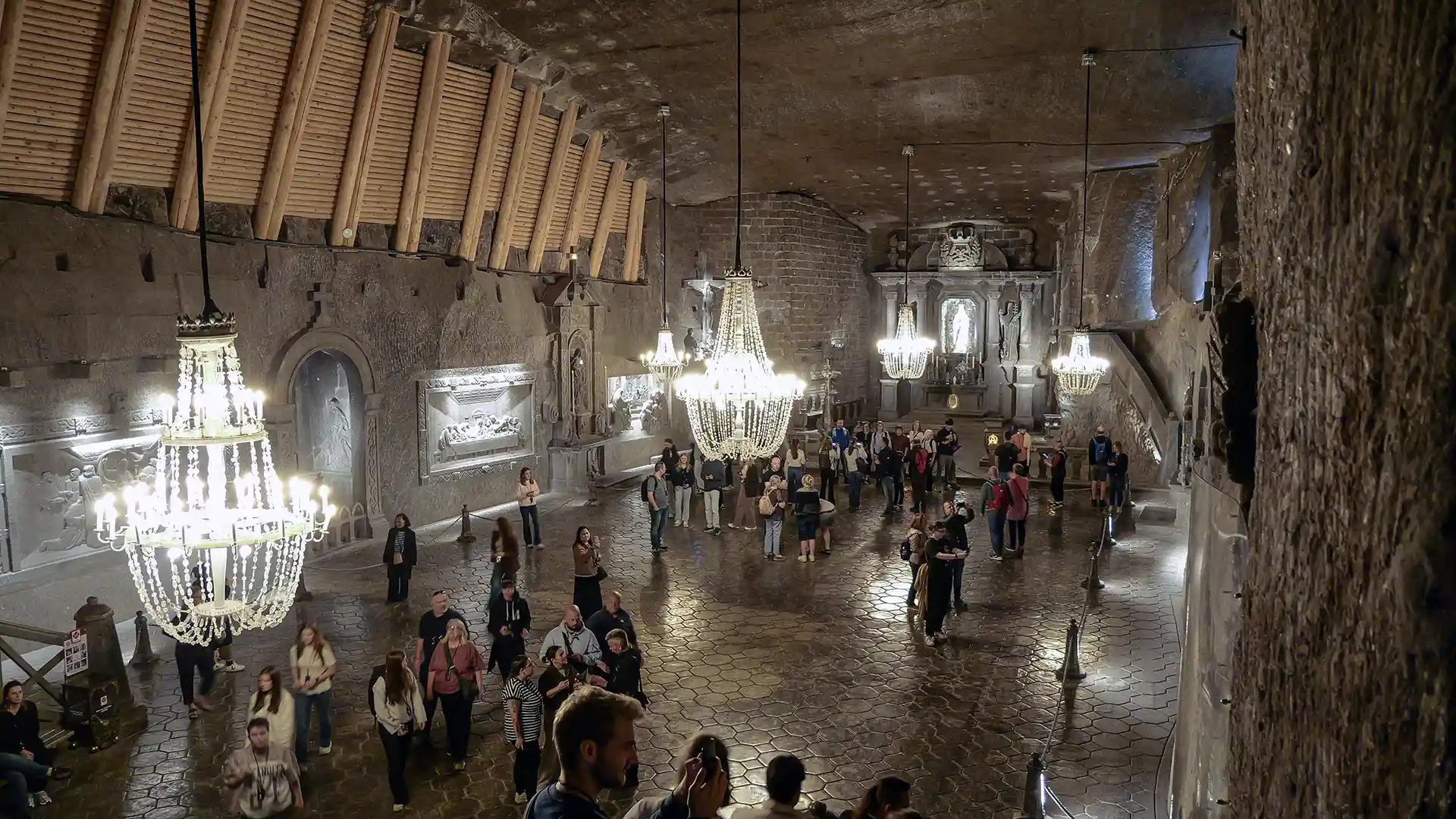
We follow him thru endless corridors, inspect recreated scenes from the miners’ lives, admire statues carved out of salt, and even visit an underground church.
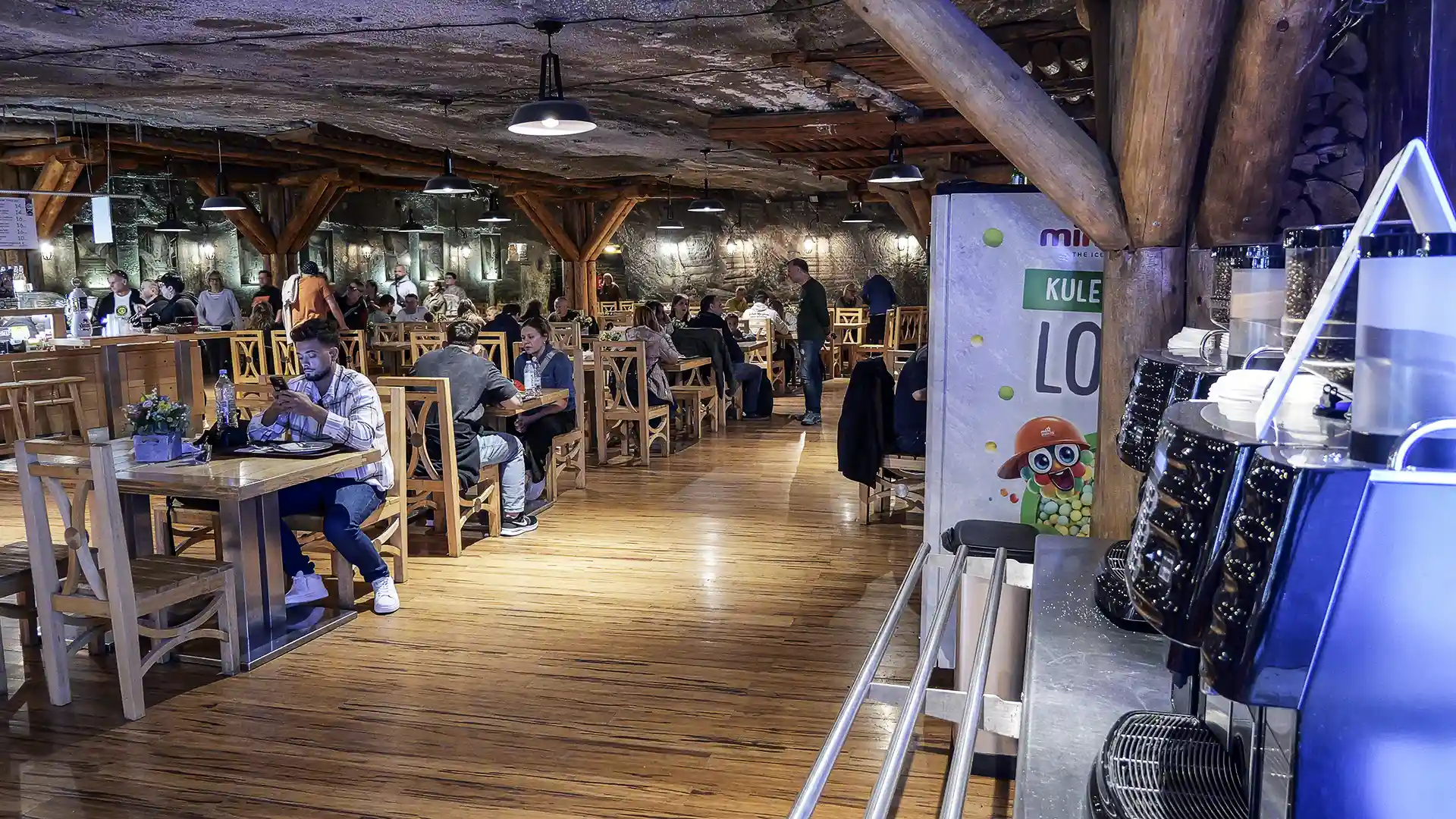
We resist the temptation to buy souvenirs in the underground shops and eventually make our way back to the surface – but not before passing thru what seems to be the world’s only underground restaurant in a salt mine.
Somehow, we’re delighted when the 3-hour tour ends after just 2 hours.
Another hour in this over-commercialized underground Disneyland, with no chance of escape? No, thanks.
OK, we’ve seen it. That’s it.
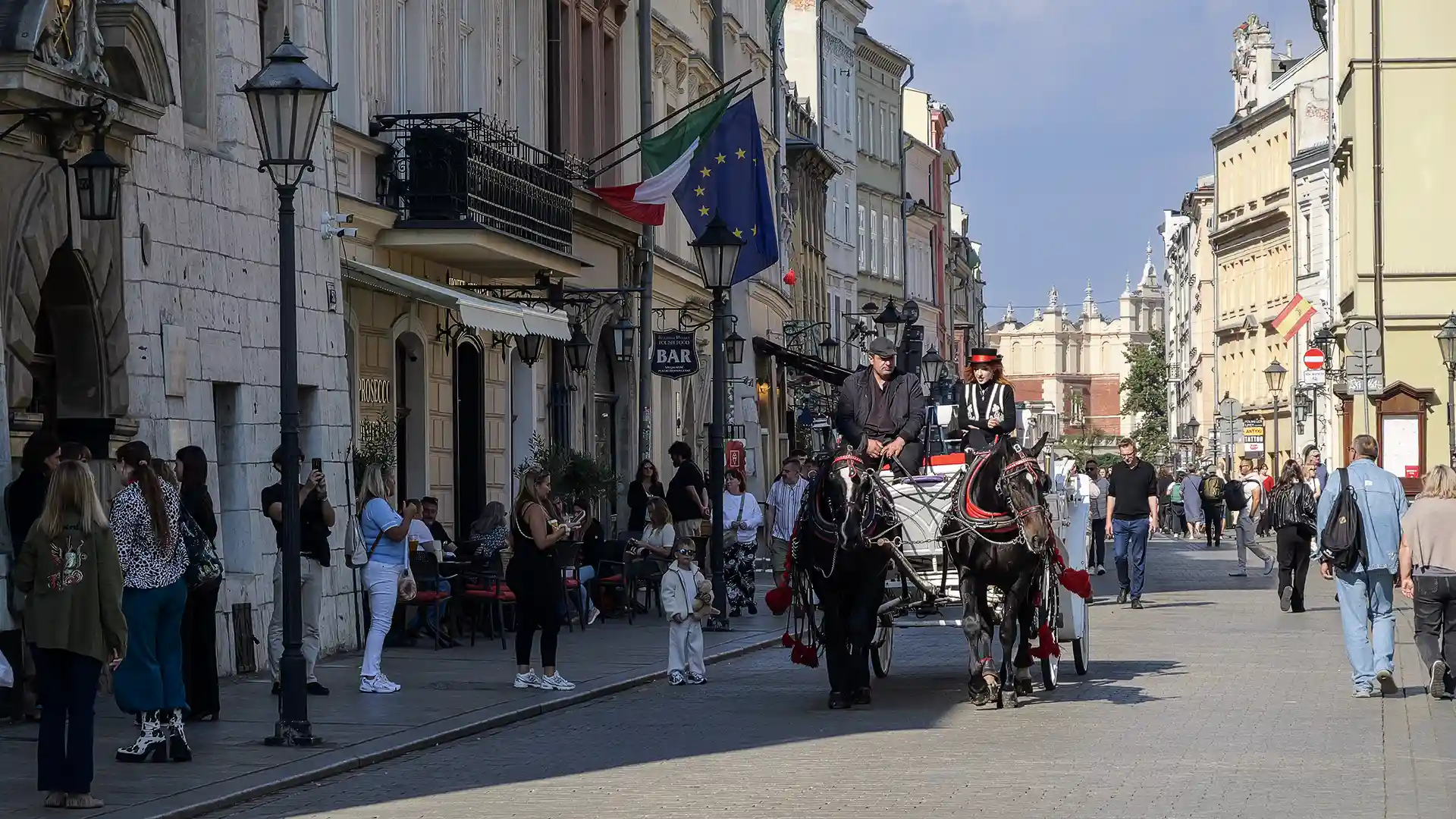
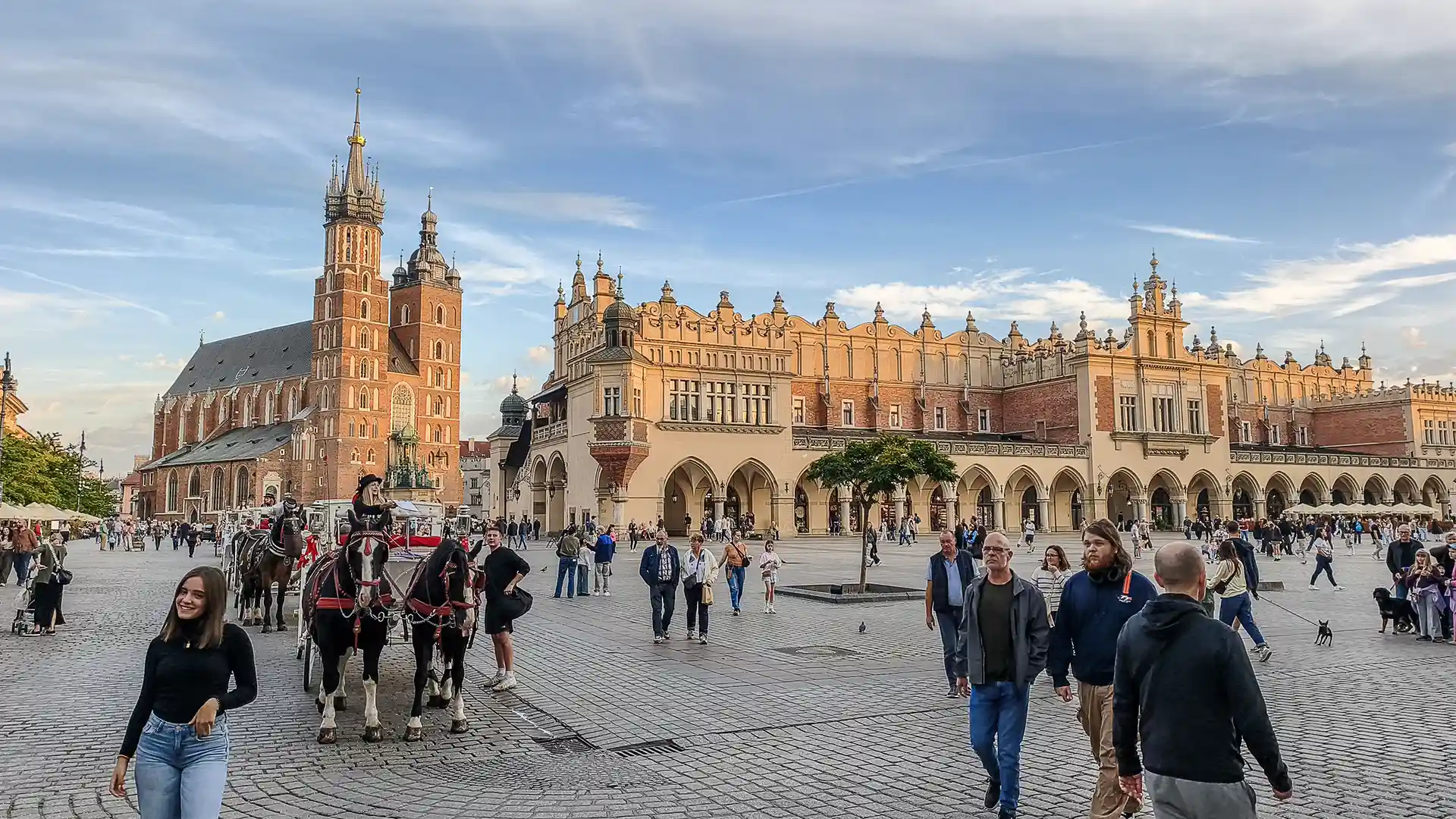
Of course, visitors don’t come to Kraków to see a socialist model town or a salt mine turned into a sort of Disneyland. They come for the famous historic center, carriage rides thru the alleys with drivers in traditional costumes, and Polish cabbage rolls in one of the eateries around the Rynek.
Fair enough. It’s one way to do Kraków. We do it too – briefly. After all, we’ve already visited the city on our way to Ukraine in 2016.
By the way, should someone be looking for Poland’s best pierogi? It’s at Kogel Mogel´s, despite its strange name and hard-to-believe fact that they don’t serve cabbage rolls. Thanx for the recommendation of a good friend!
Everyone knows Katowice isn’t worth visiting. There’s barely an old town, no particularly exciting museums, and the city was once all about coal mining. But Katowice has reinvented itself as one of Poland’s cultural, music, and technology hubs.
It also is notorious for certain buildings constructed during communist times: Brutalism at its best, or worst.
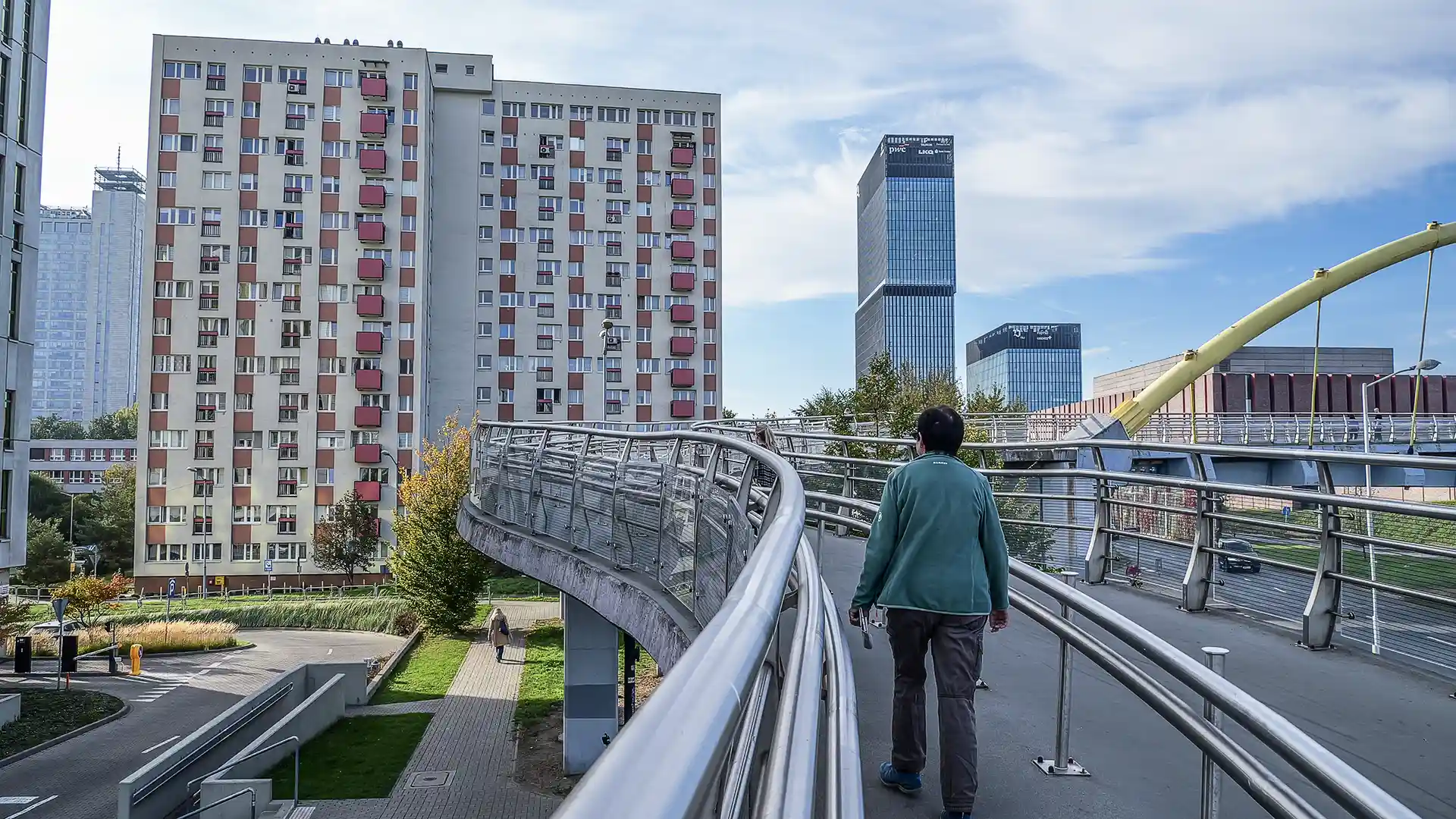
We walk thru a huge residential neighborhood of communist-era apartment blocks, …
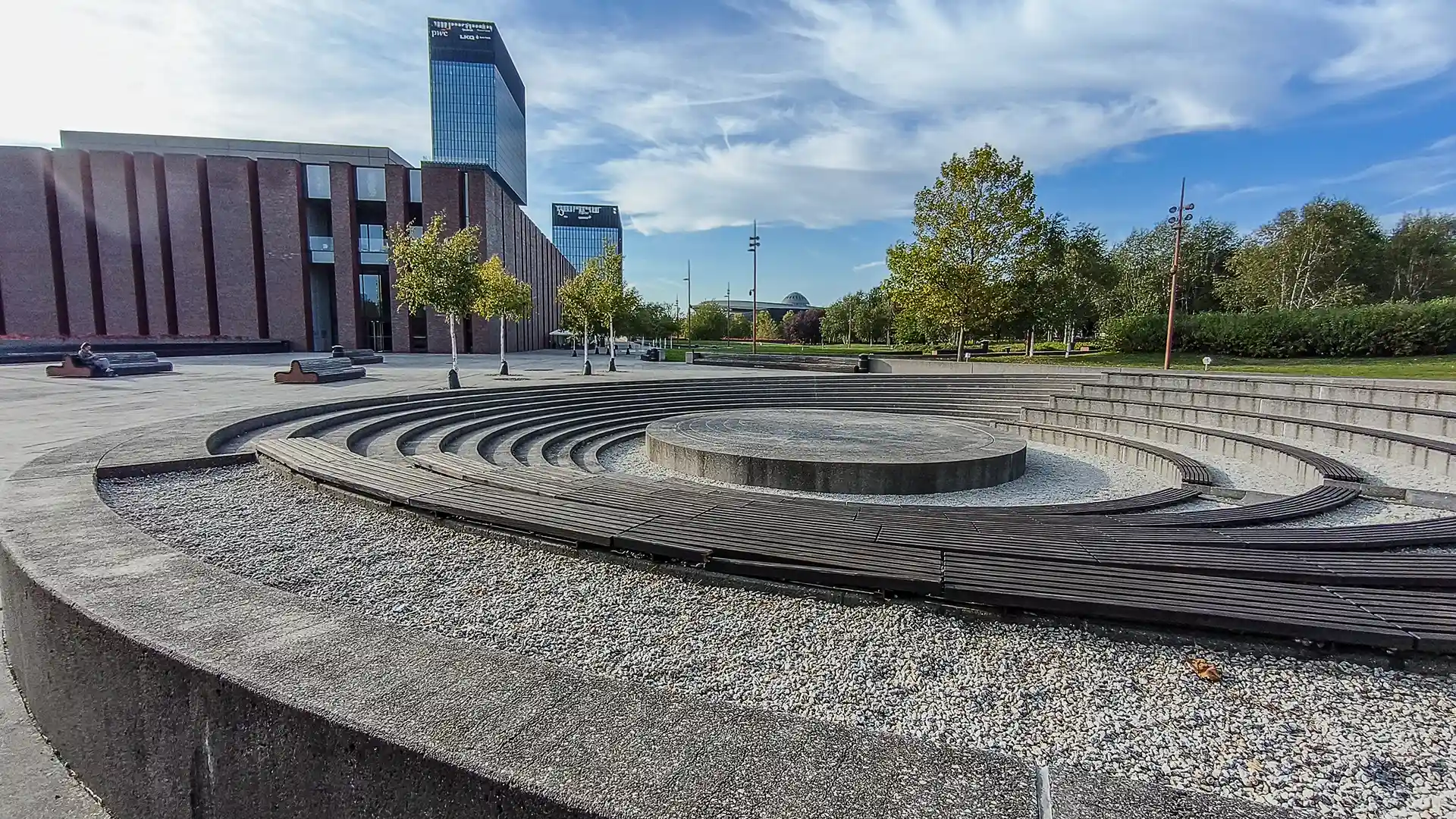
… passing an apparently abandoned amphitheater and the massive concrete building of the Polish National Radio Symphony Orchestra.
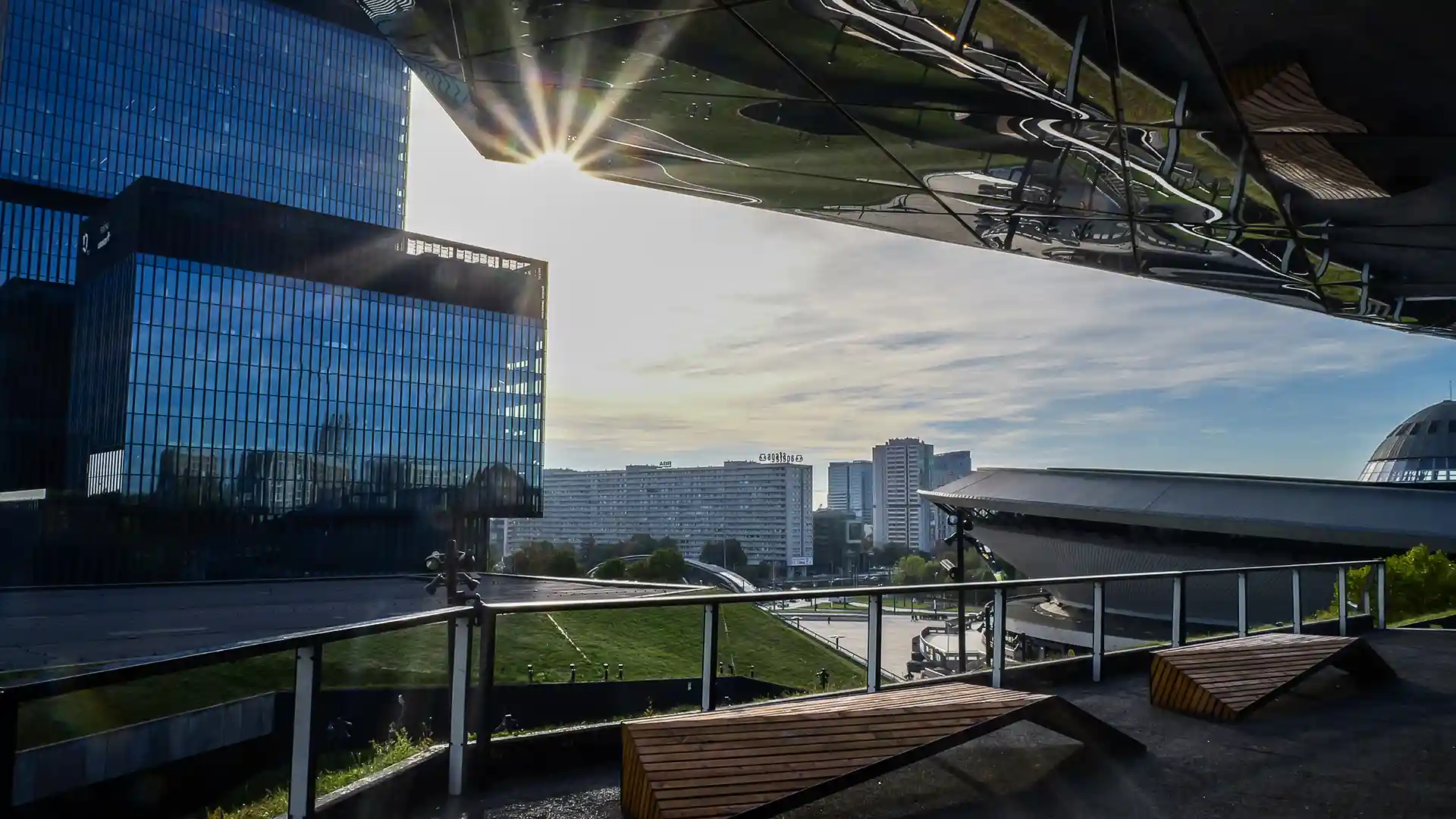
To our left, a high-rise office block. Nothing to write home about, but clearly newer. To our right, a bizarre overgrown hill with dark glass facades built into its lower slopes and a path leading to a viewing platform on top. What on earth is that?
We climb up for the view, although the congress center we’re standing on is hardly visible from here.
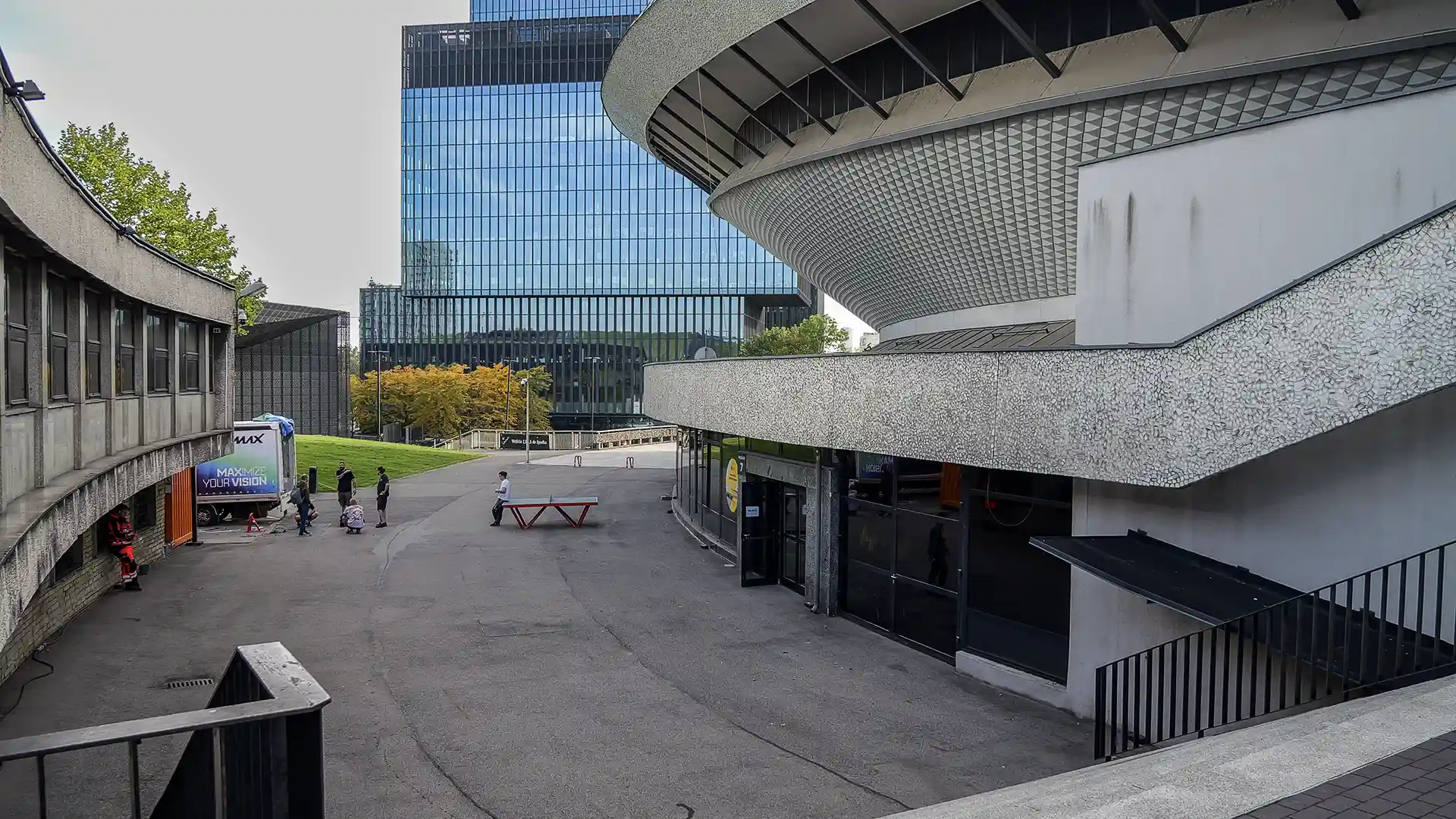
Then we spot it: Katowice’s famous Spodek (Saucer), a concrete spaceship of an arena, built in the spirit of modernist communist architecture at its most bizarre. It’s still hosting sports events and concerts, even if parts of the structure look like they’re slowly falling apart.
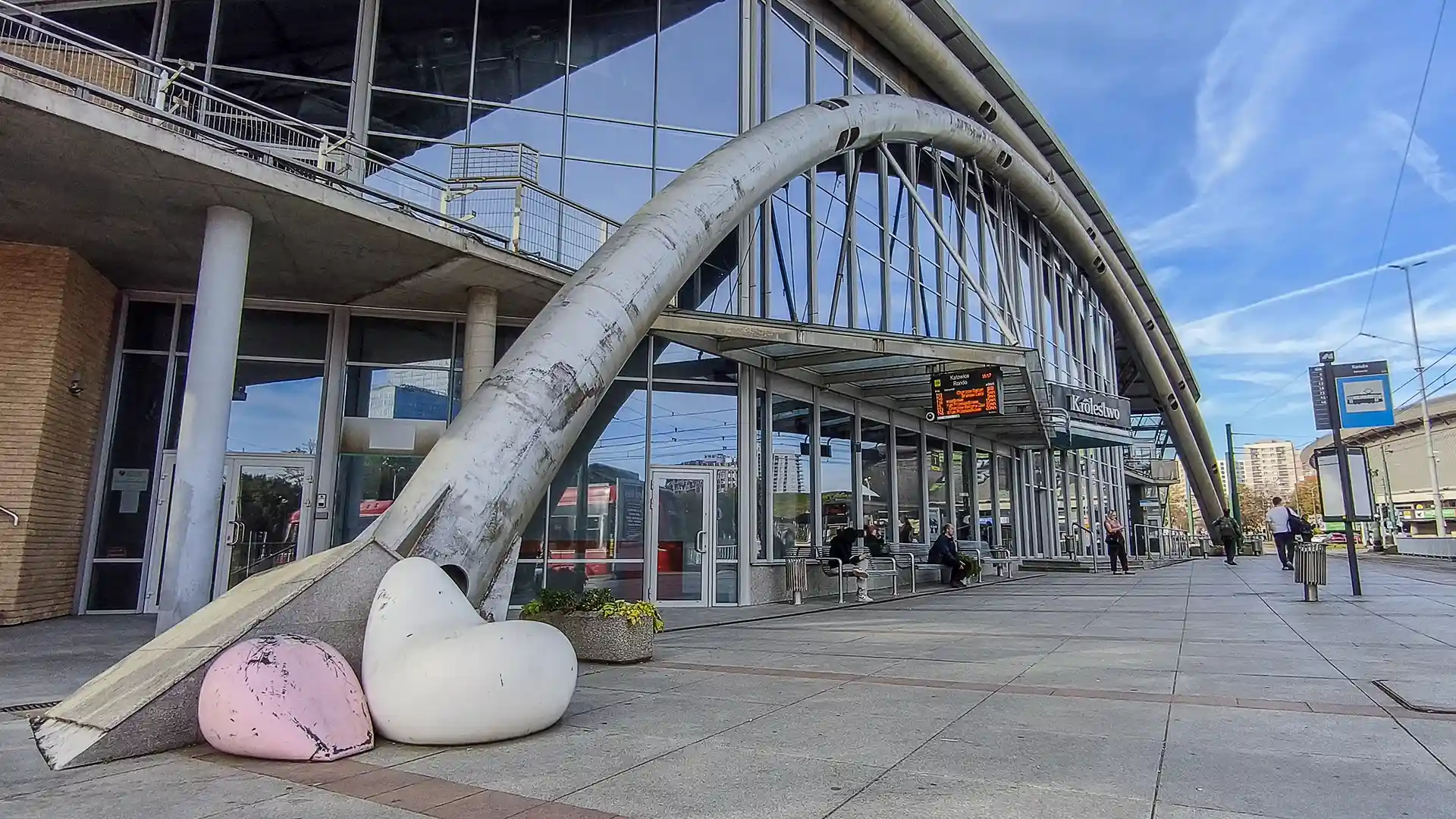
Next up, a futuristic tram stop straight out of a 1960s James Bond movie.
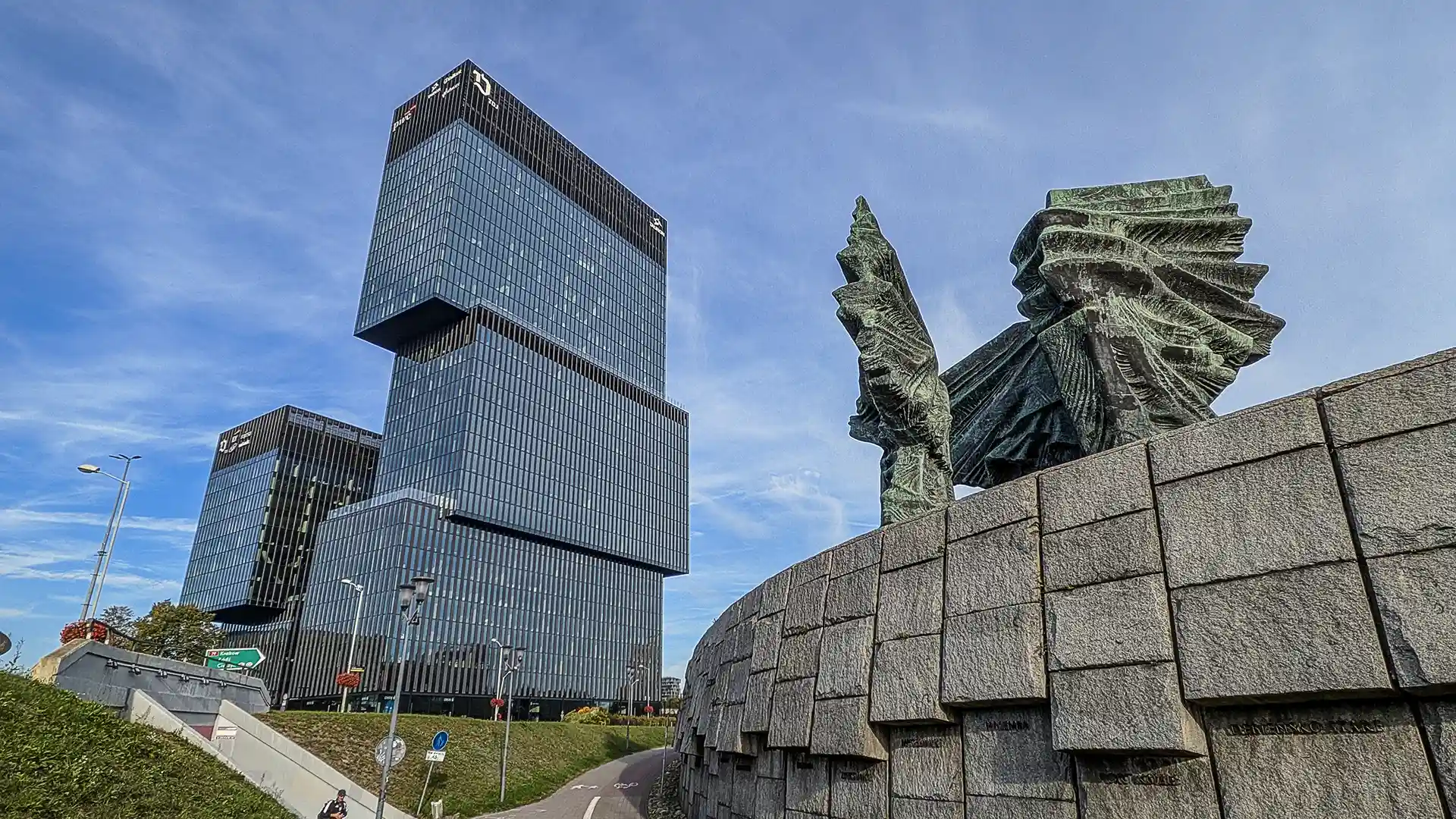
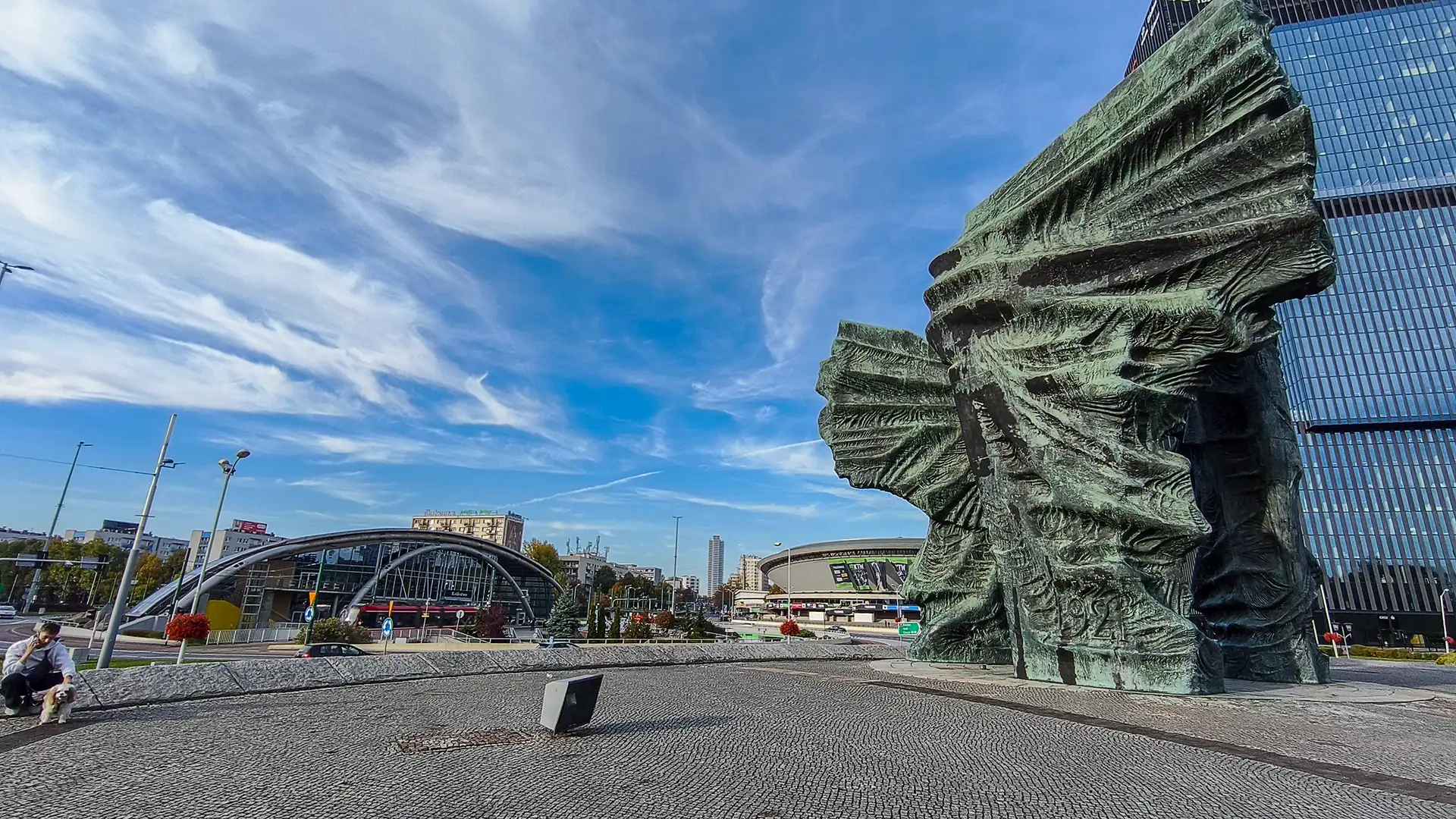
Finally, the Silesian Insurgents’ Monument – another striking example of communist Poland’s very particular architectural taste.
Katowice is worth a look. It’s a welcoming change from the same old historic squares and cobblestone streets found in just about every other Polish town.
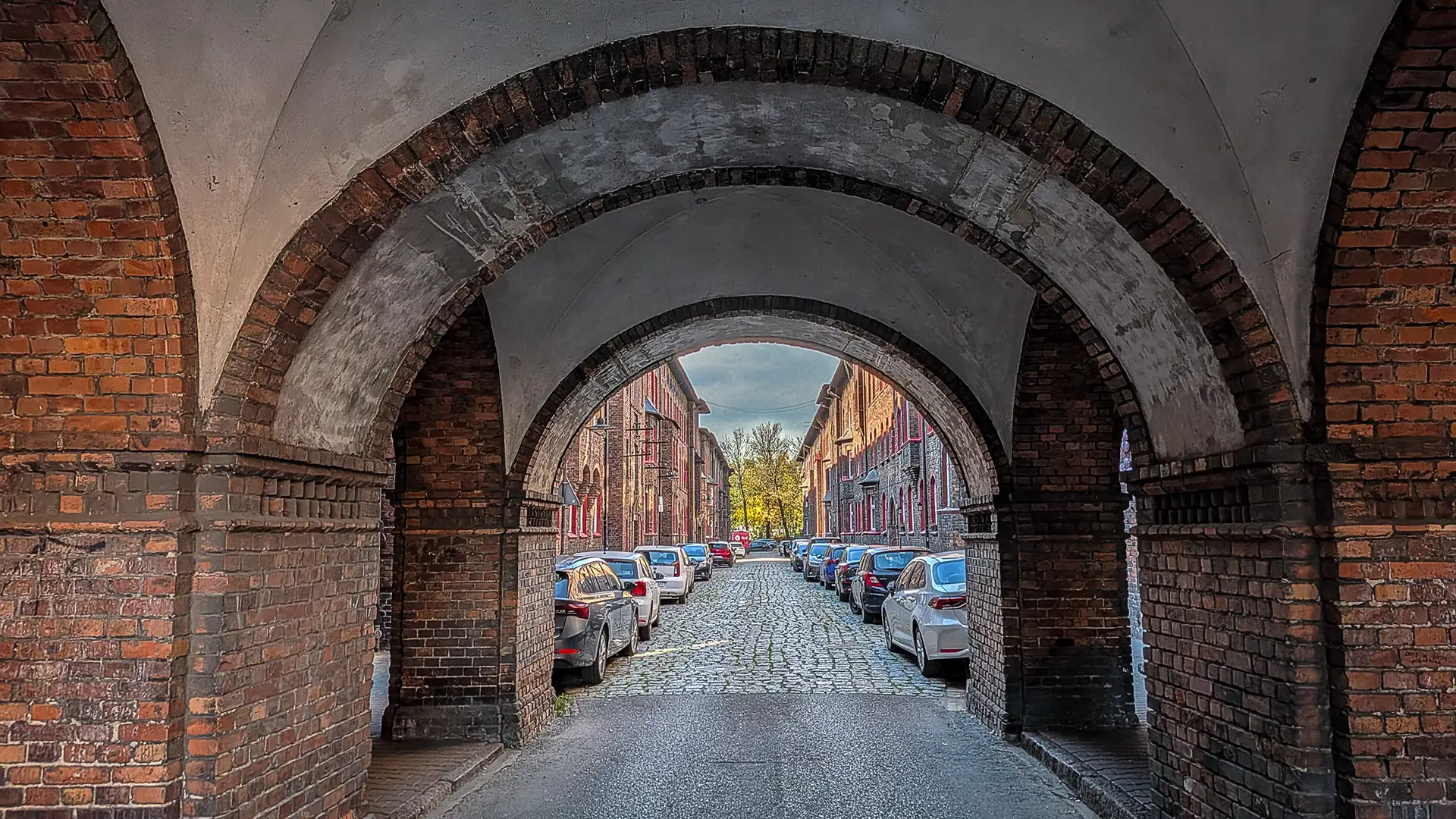
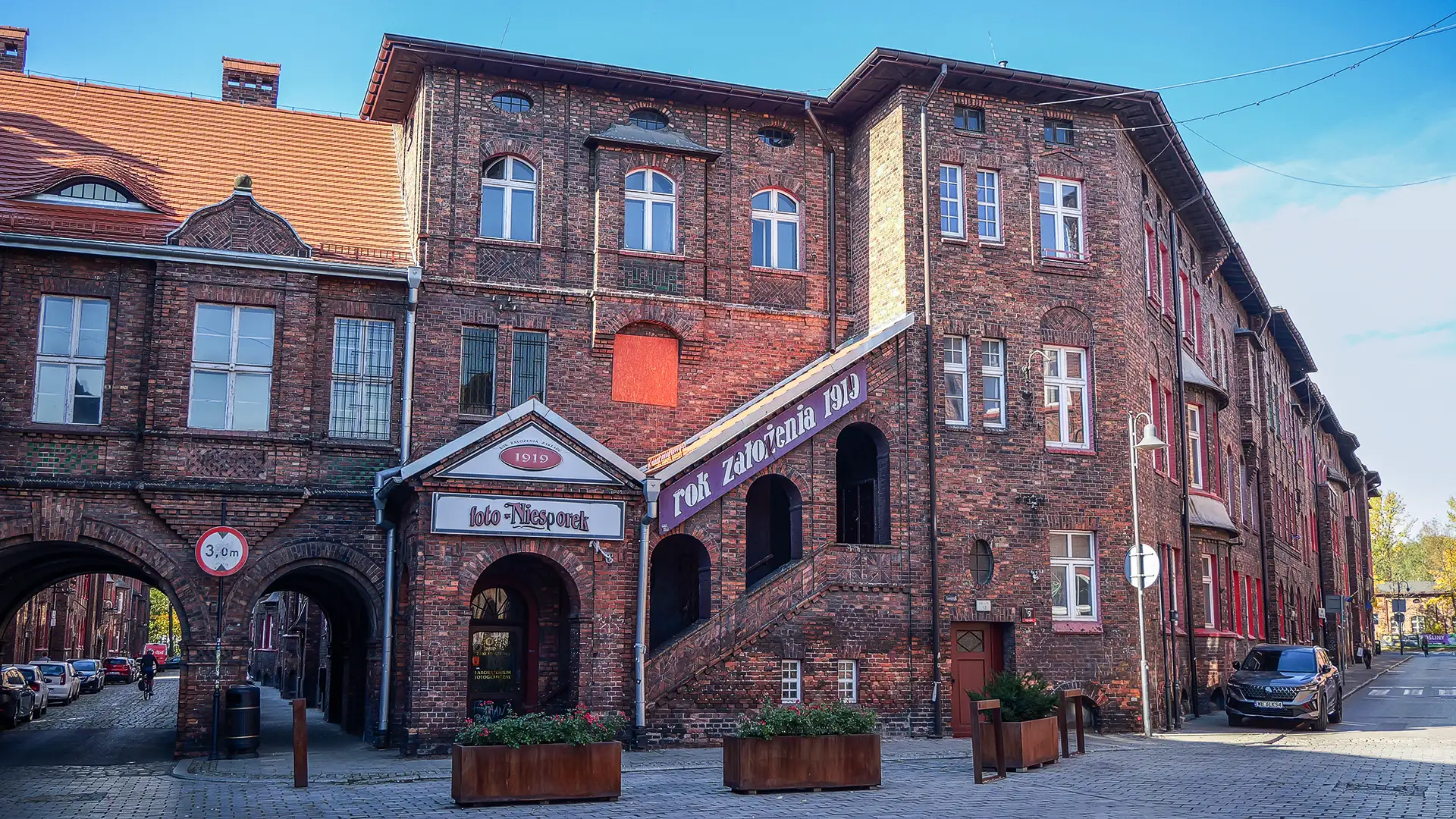
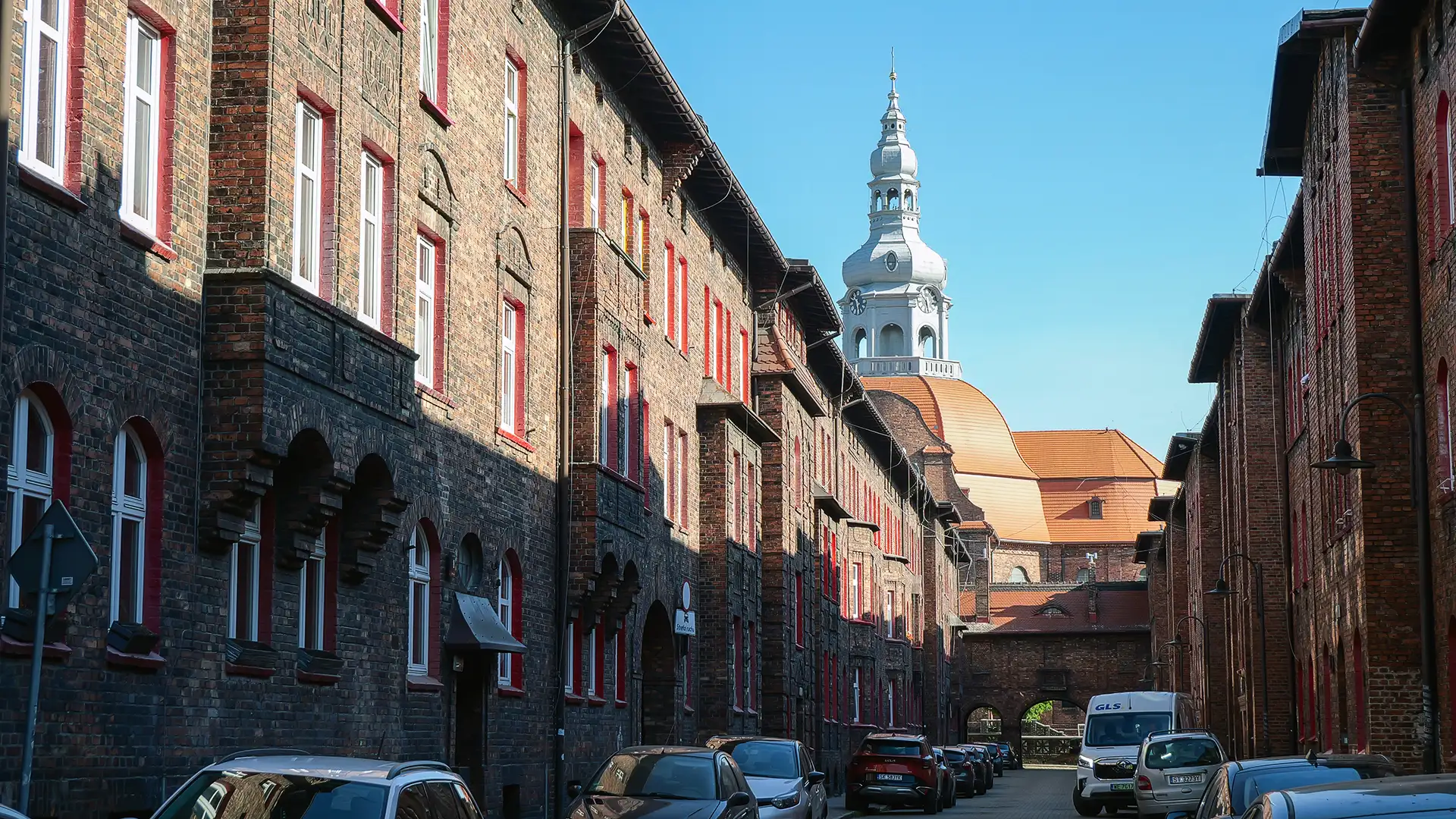
By day, they toiled in the coal mines. By night, they returned to the company-built settlement of Nikiszowiec.
A bygone era. The Nikiszowiec mine shaft closed in 2018, and the miners’ no-frills apartments have since been turned into modern homes, while former shops now house art galleries and eateries. Only the church and school still serve their original purpose.
A walk thru a historic settlement that has found a new lease on life.
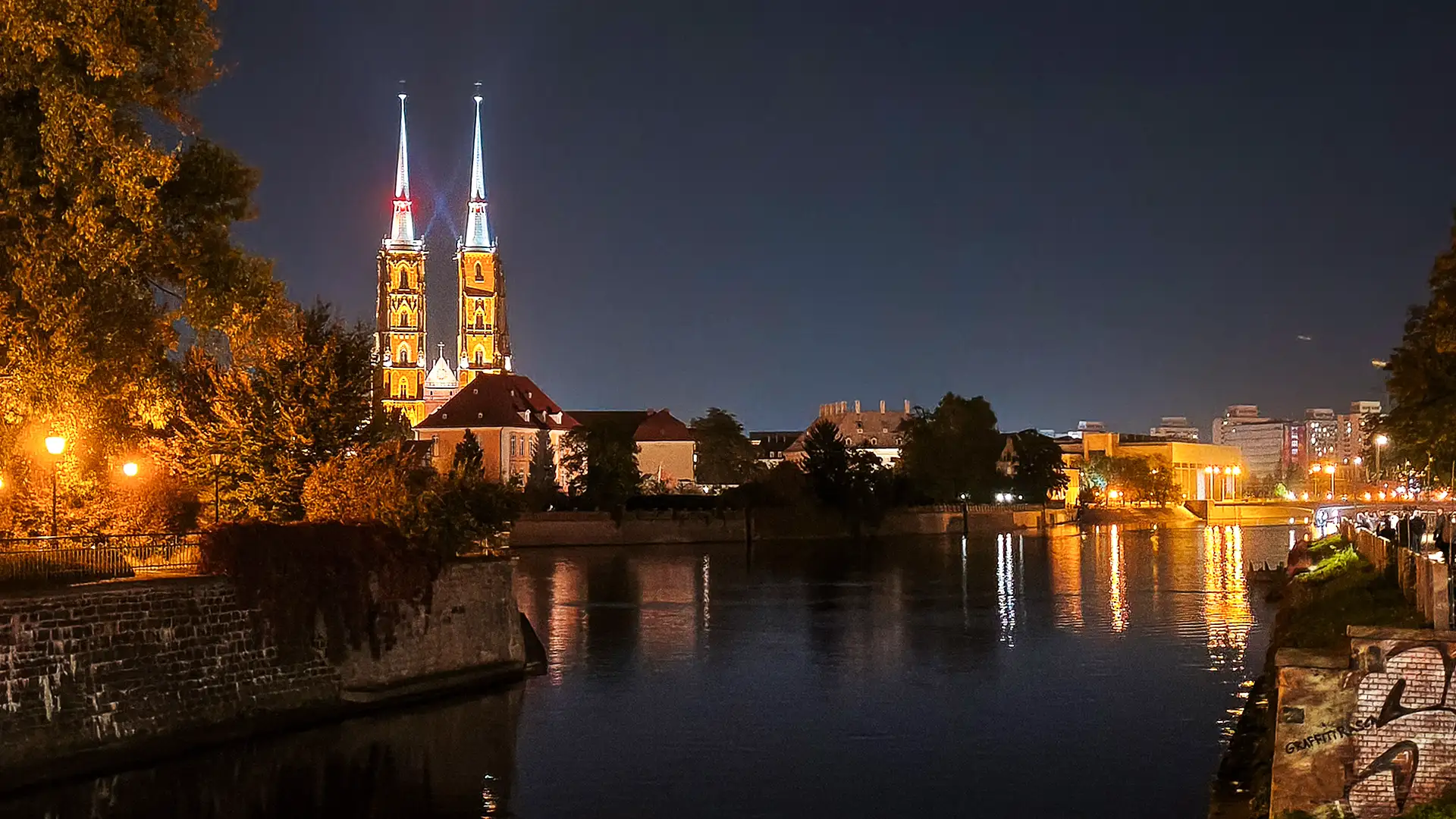
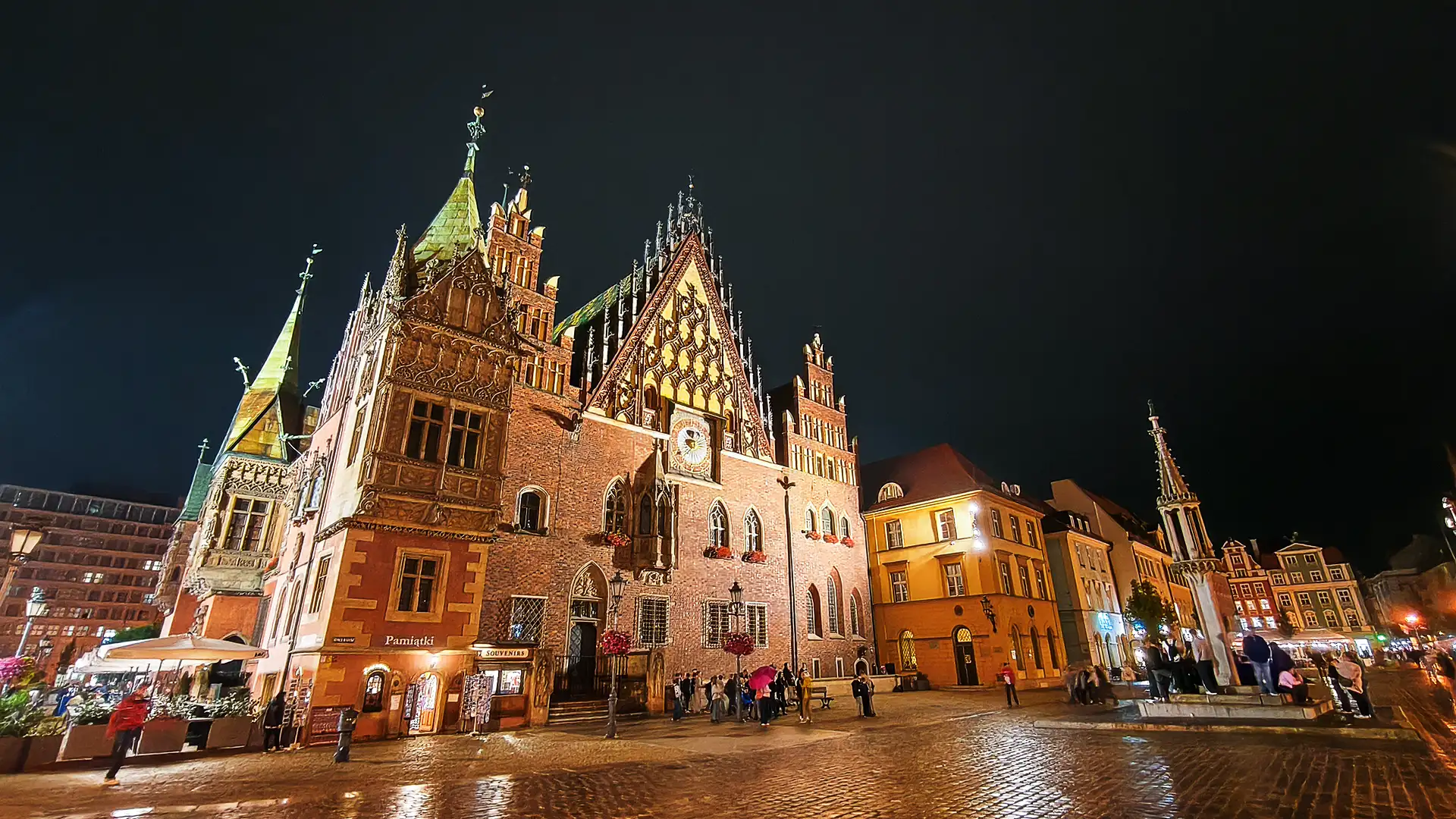
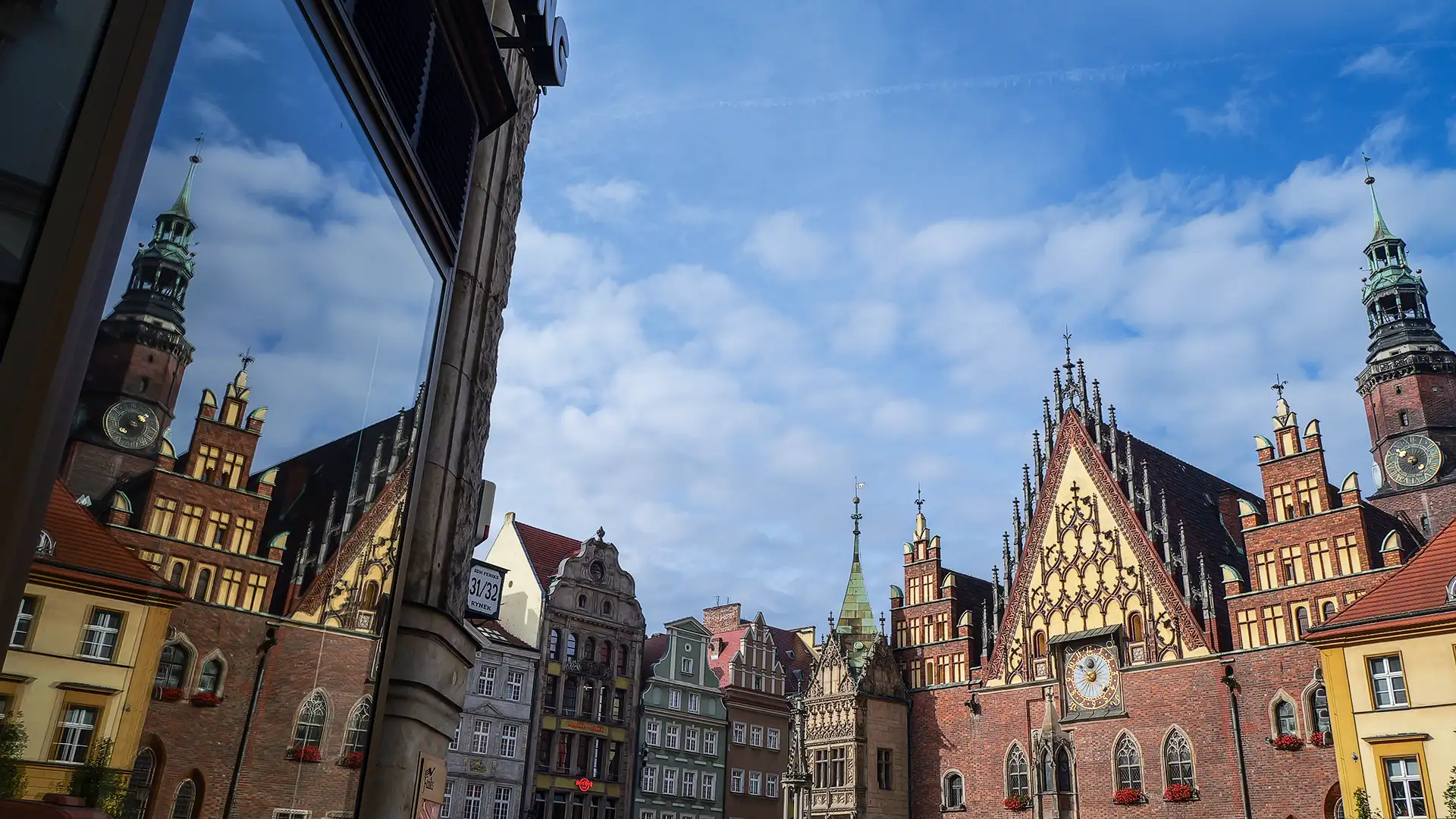
Wrocław is famous for its beautiful Town Hall on the Rynek and the Cathedral Island.
Fair enough. They’re pretty – and highly Instagrammable, especially at night.
But let’s see what else the city has to offer, beyond the usual tourist trail.
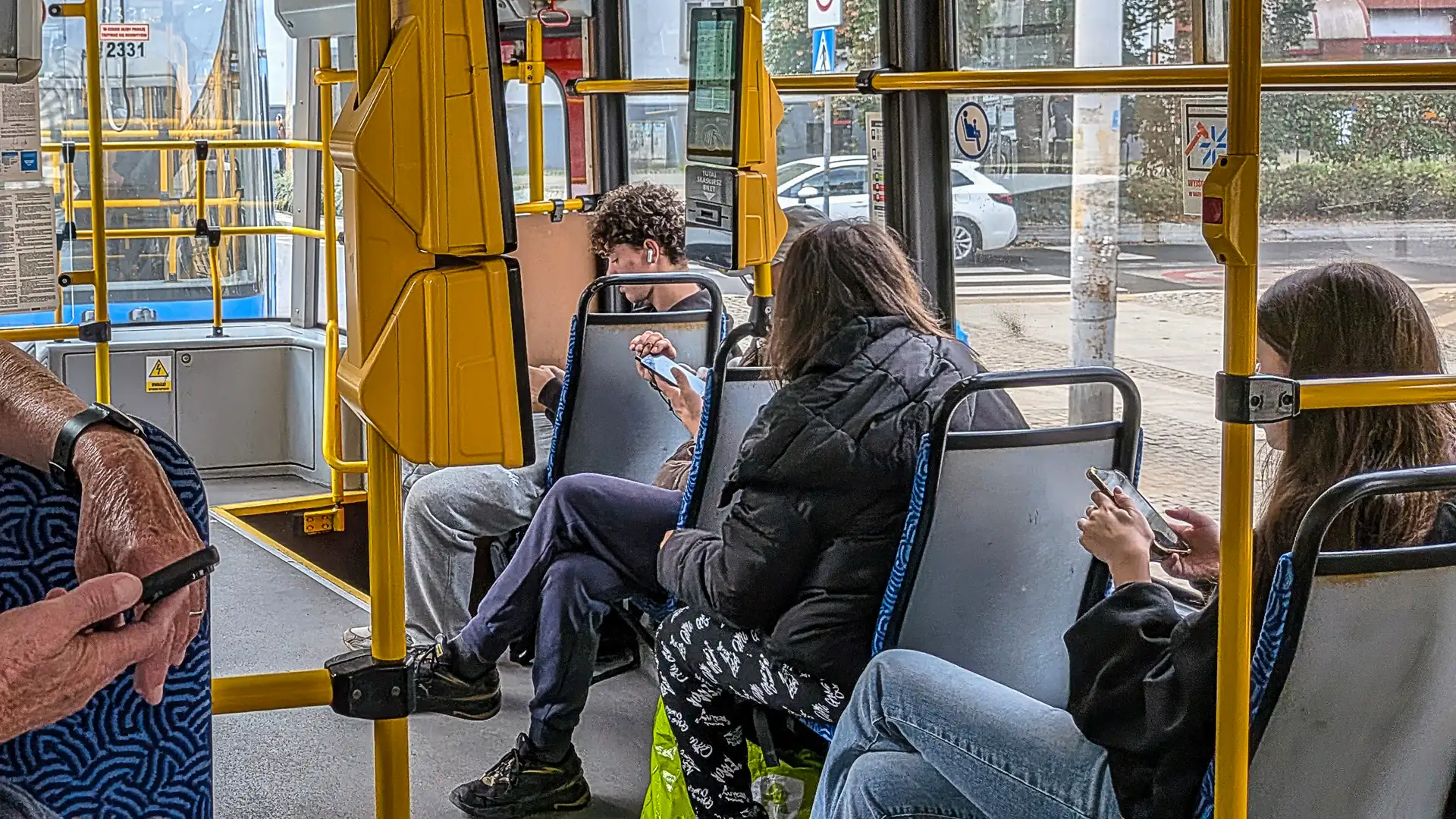
We hop on a modern tram that connects the different parts of the city. It doesn’t take us far, but getting to Nadodrze, a neighborhood on the other side of the Oder River, takes a while. Not because of traffic or an incompetent driver. No, the tracks are so old and bumpy that even the newest tram can barely pick up speed.
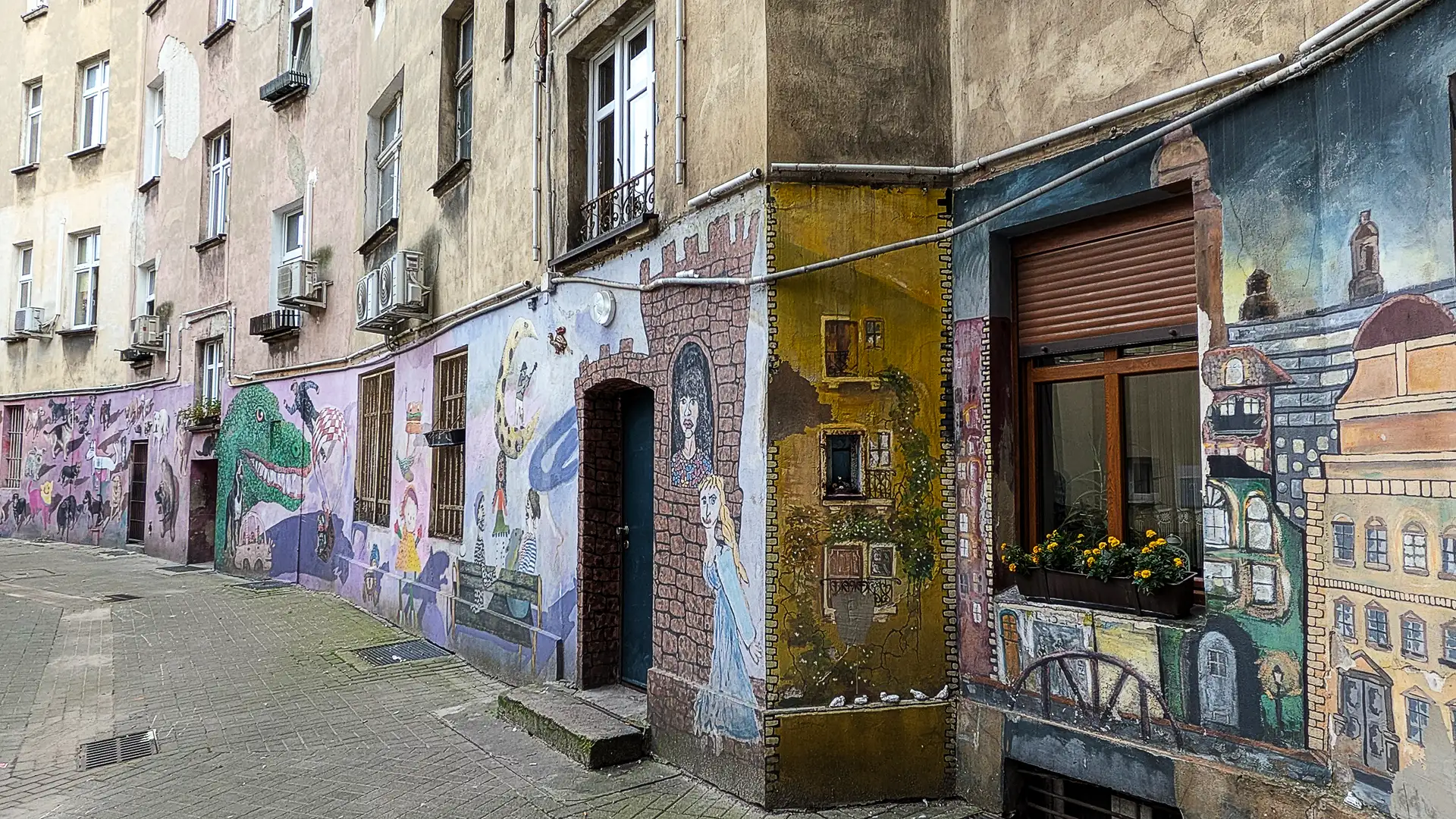
After a short walk, we pass thru a gate and step into a series of courtyards.
Once neglected and depressing, these courtyards are surrounded by apartment buildings more than 100 years old. Today, they’re home to the Roosevelta Murals.
In 2013, artists teamed up with local residents to cover the courtyard walls with scenes from everyday life. What was once a run-down, post-industrial corner of the city has become one of Poland’s most unusual open-air galleries – and a place where art has helped bring the community together.
A great place to visit. And the murals? Even better.
Since we’re already in Wrocław, we might as well check out a few more places off the beaten track.
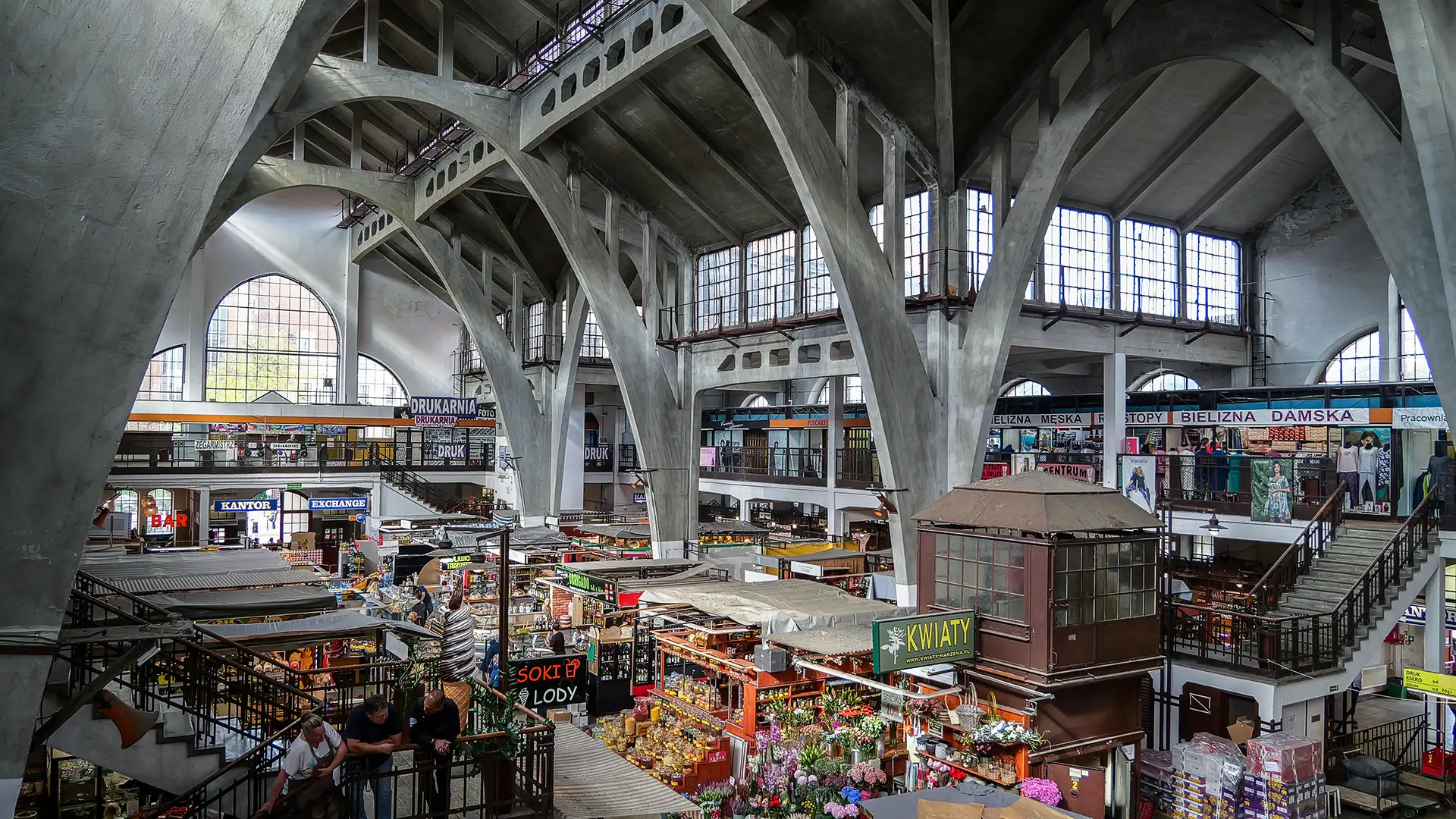
First stop: Hala Targowa, the market hall built by the Germans in the early 20th century. From the outside, an old-fashioned brick building. Inside, a brutalist concrete construction. Quite a contrast.
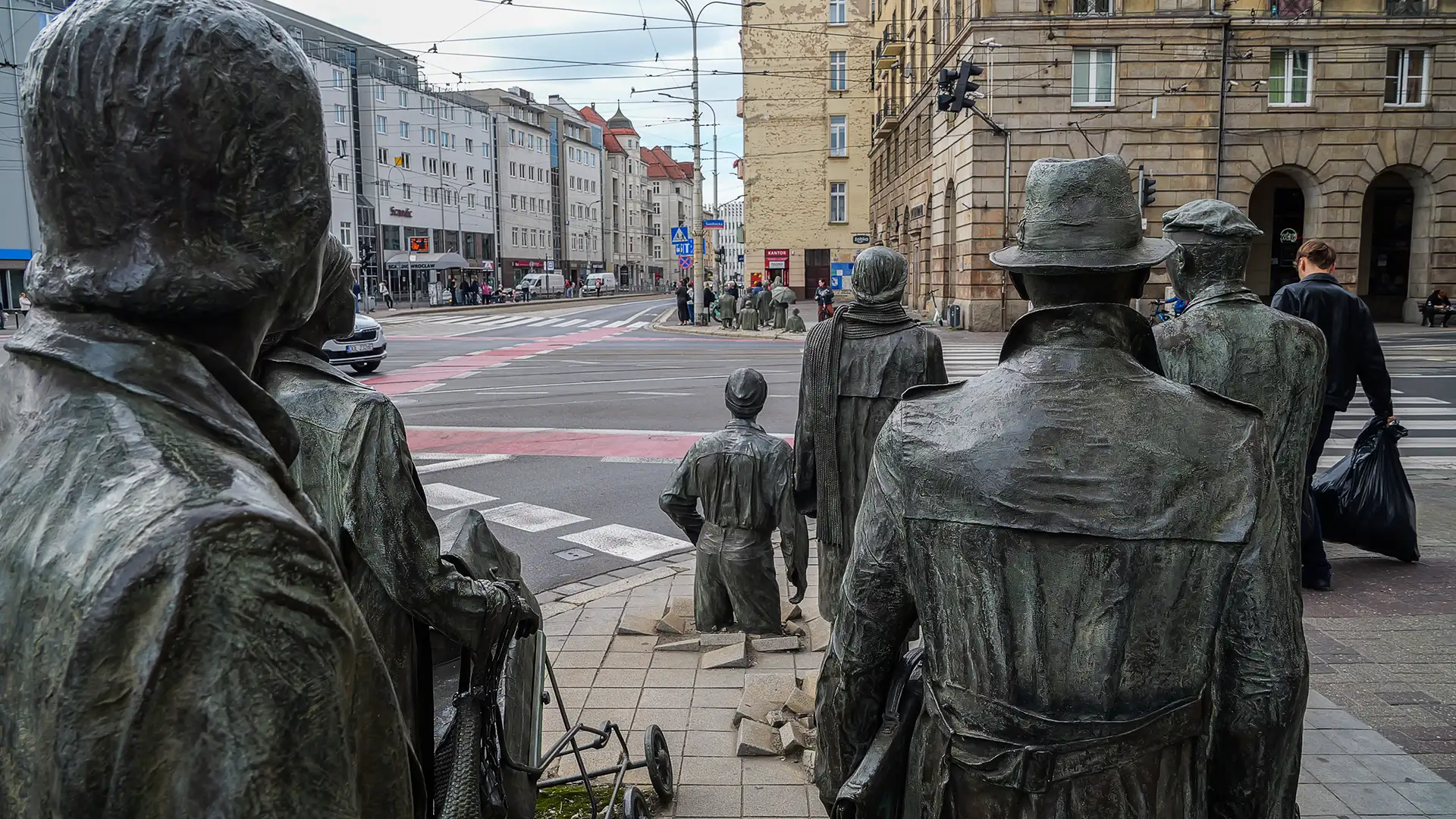
Next, the Monument to the Anonymous Passerby – a group of pedestrians seemingly sinking into and emerging from the pavement.
No, it’s not a new way to cross a busy street. The sculpture commemorates the imposition of martial law in 1981, when people were forced out of public life, and their return to the streets in 1983.
Finally, a UNESCO World Heritage Site: Centennial Hall. Unfortunately, it’s closed, and from the outside, it doesn’t exactly blow us away.
Anything else? Of course, the dwarfs? They’re everywhere. Apparently, we’re supposed to care.
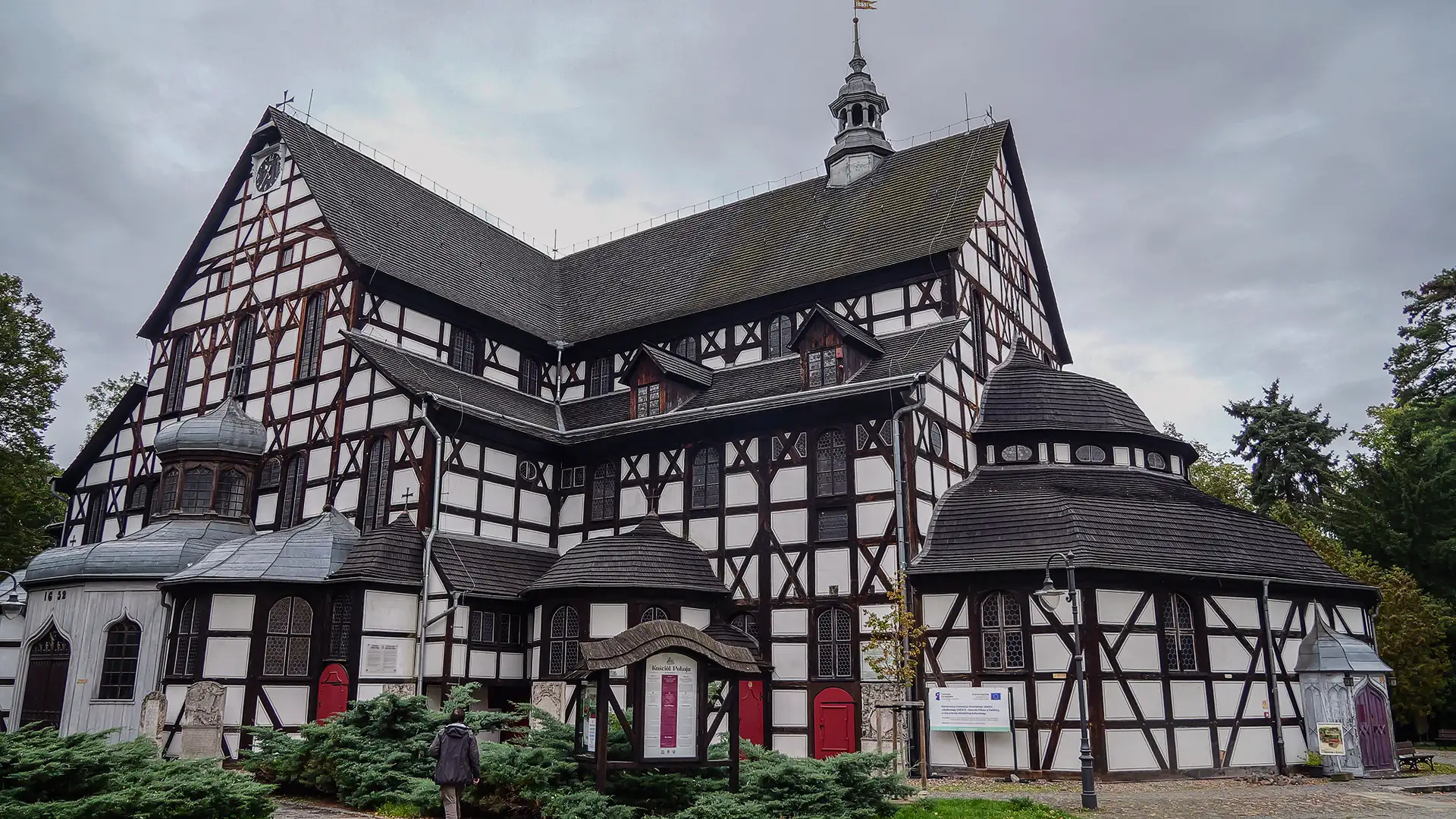
Our last stop in Poland: Świdnica, near the Czech border. Day-trippers from Breslau flock here to see Poland’s largest wooden Baroque church – the Church of Peace.
Finding a parking spot for the camper is no easy task. The tour buses are already piling up, and we’re beginning to wonder whether this was such a good idea after all.
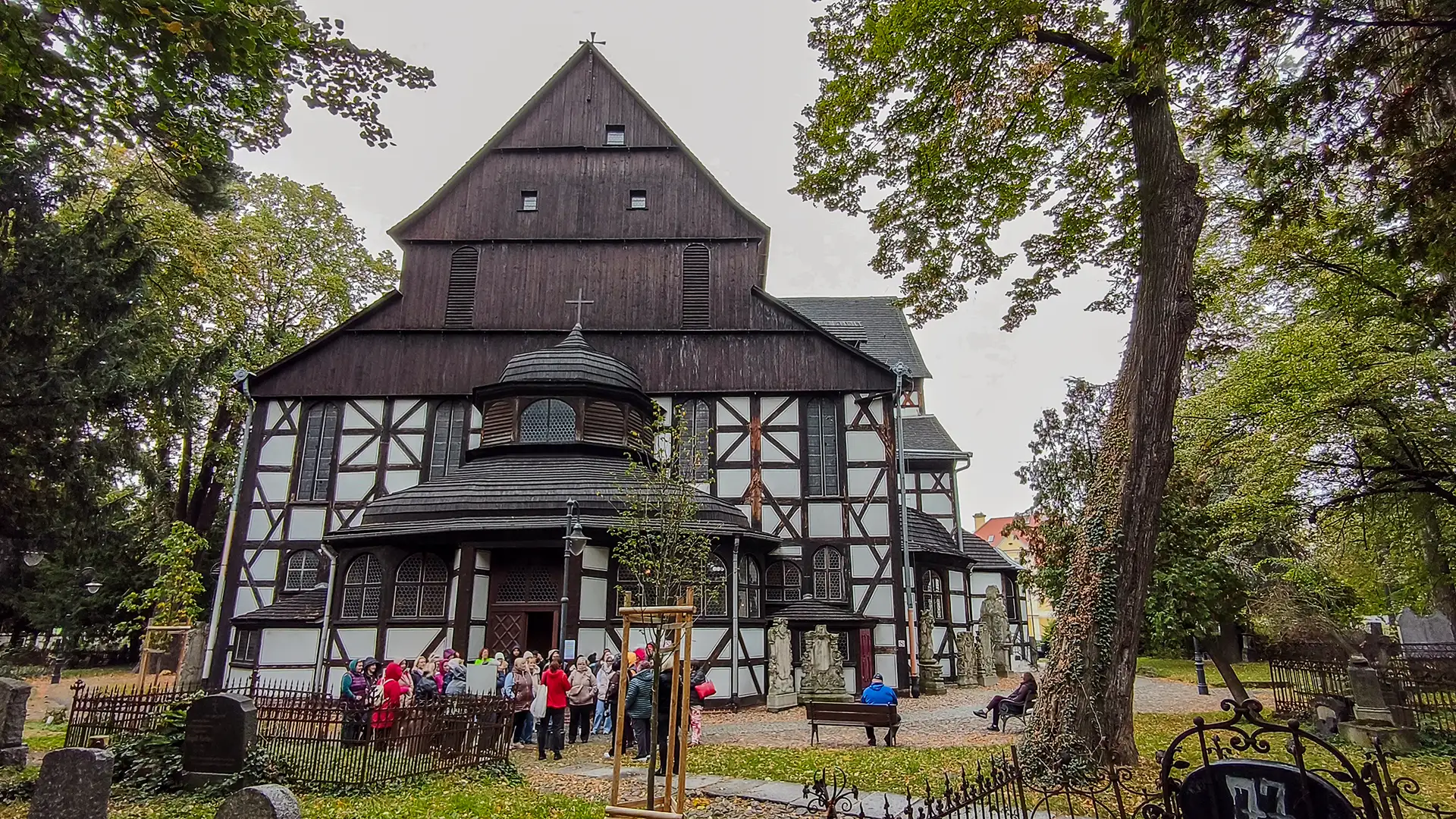
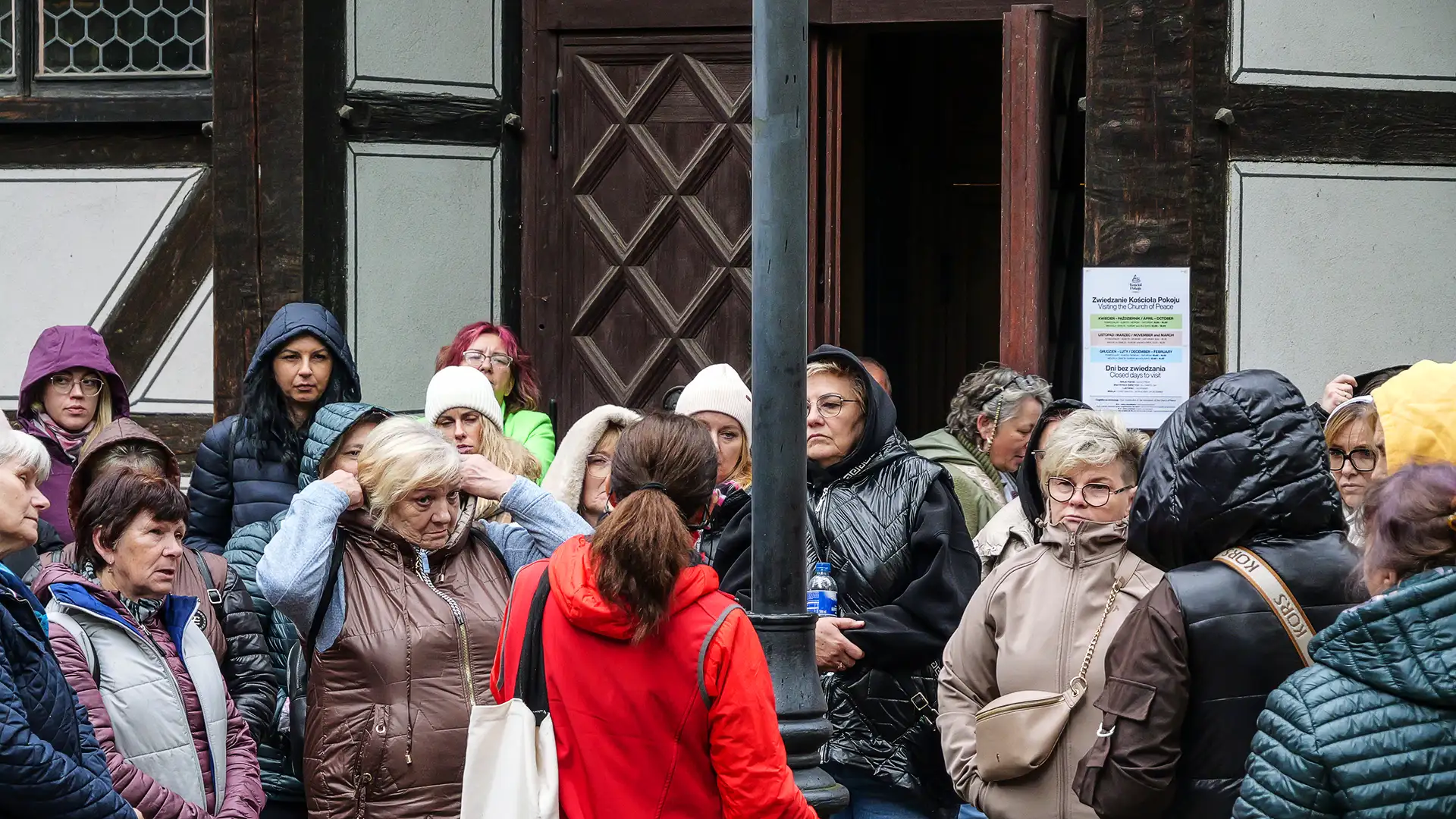
Too late. We pass a huge group of Germans in curious traditional costumes, listening intently to their guide’s long-winded explanations. We pay the modest entrance fee and step inside.
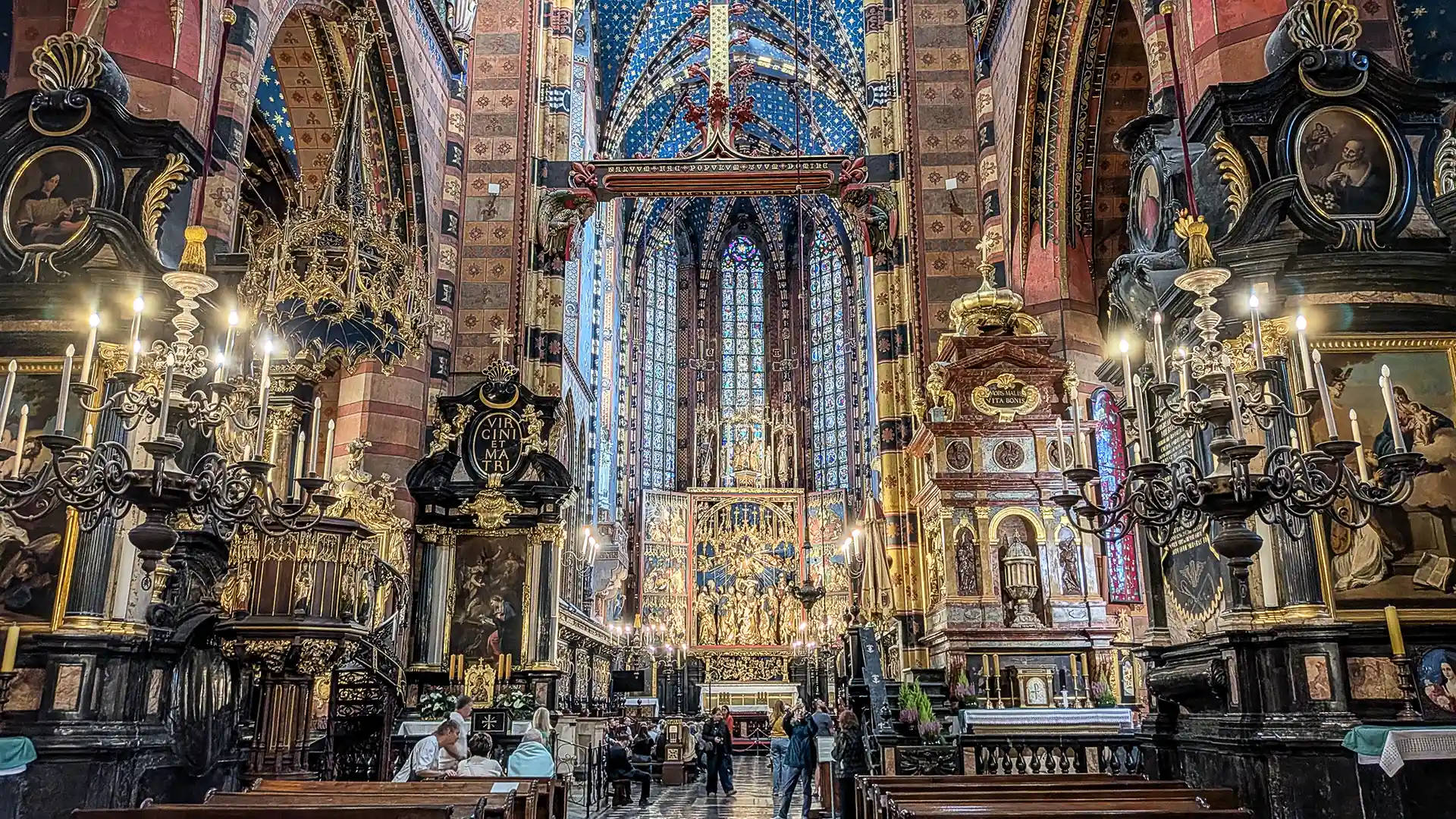
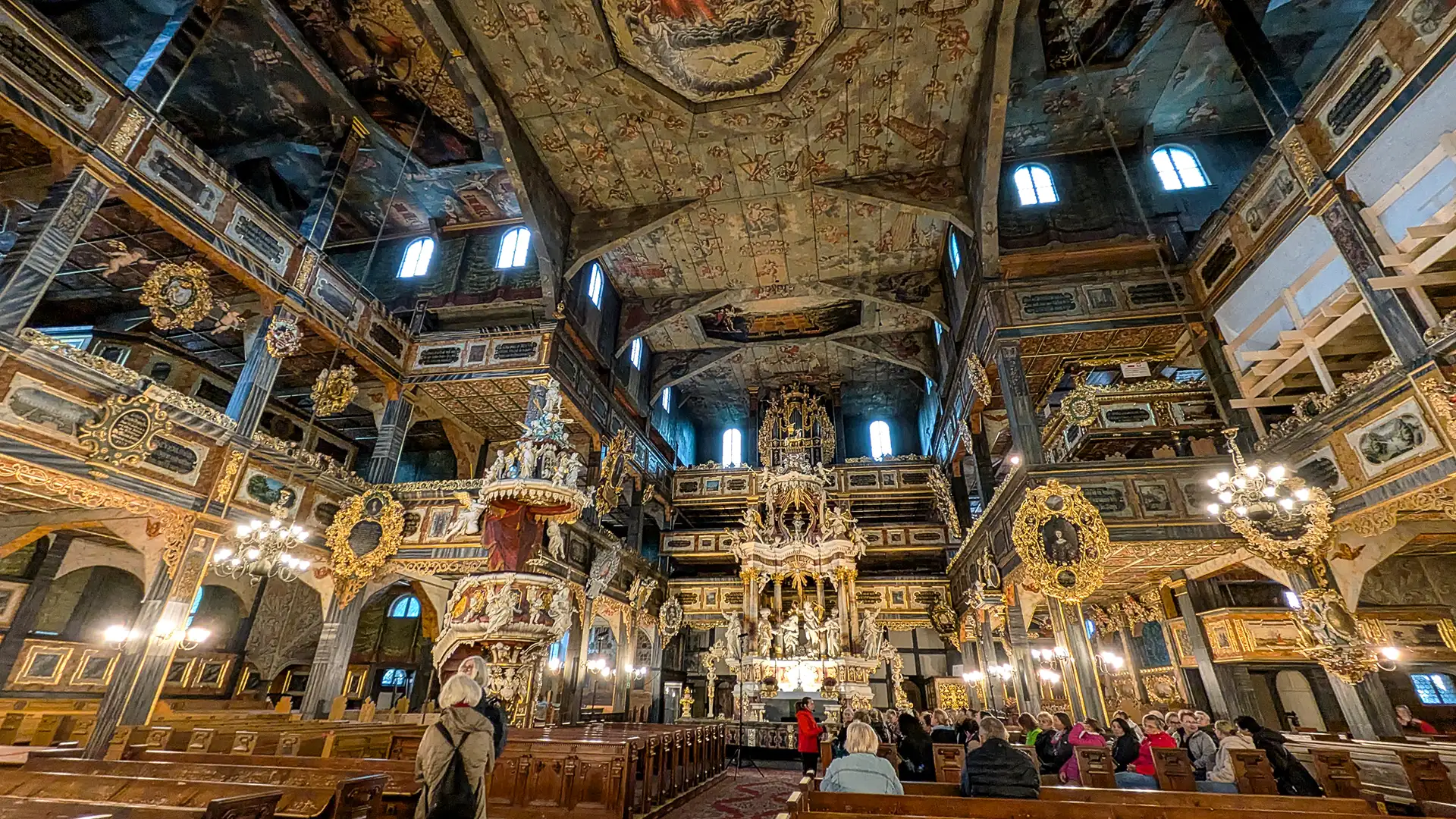
Quickly, we get it. The opulence is off the charts – even by Mexican standards. And now we understand why the group outside has to endure the guide’s endless rambling. Inside, another busload of visitors sits on the benches, hanging on every word of the official Polish recording. Then comes some organ music, the group files out, and the next busload is in. This time, the soundtrack is in German.
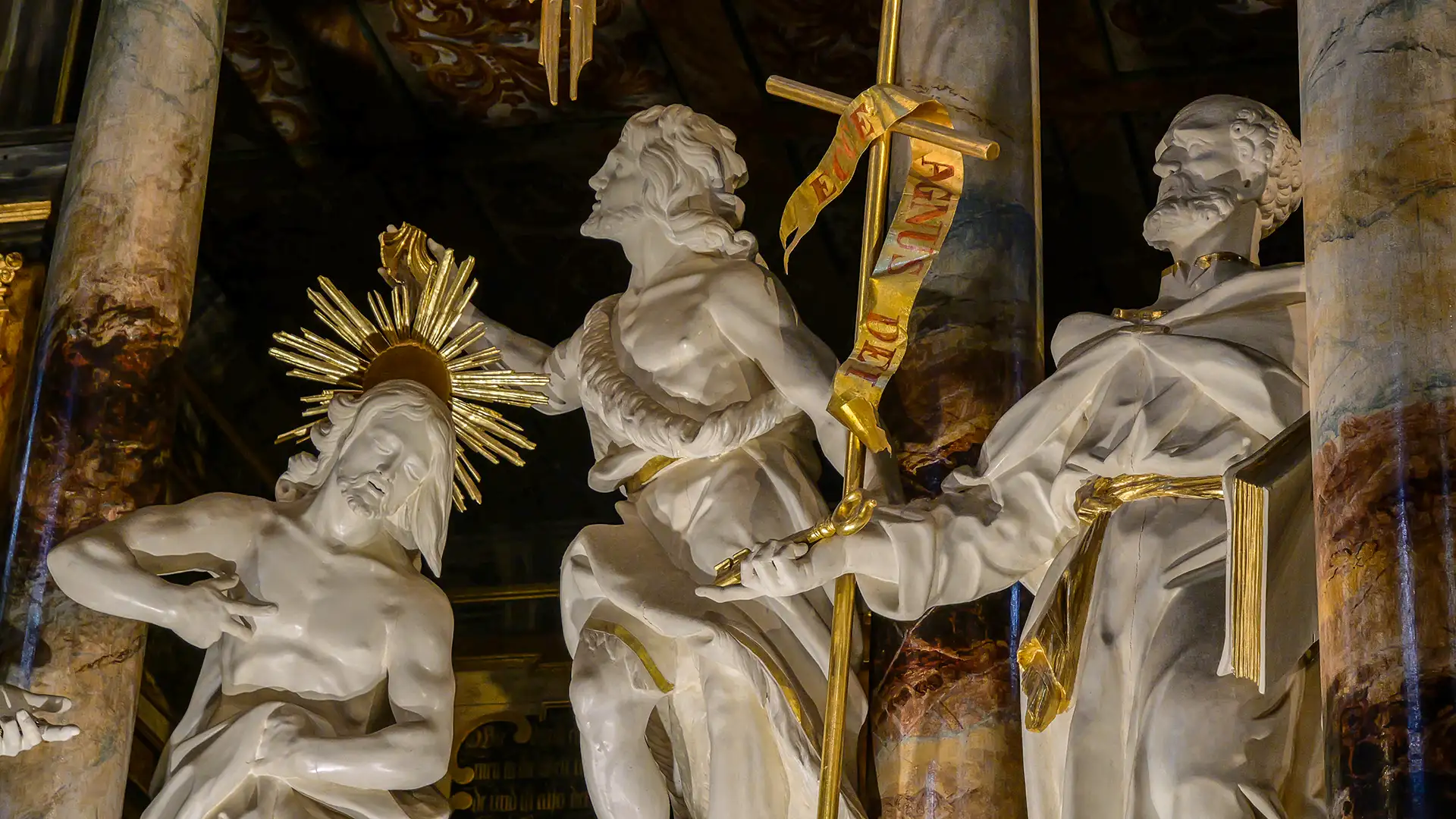
It’s a little disturbing. But let’s put the tourist conveyor belt aside for a moment and admire the church’s incredible splendor.
After a while, we’ve had our fill of angels, gold, and wall paintings. We head out just as the organ music starts for the German group.
Outside, we run straight into the next busload, already listening to their guide’s long-winded introduction.
Still, an experience not to be missed – both the church and the finely tuned machinery of mass tourism.
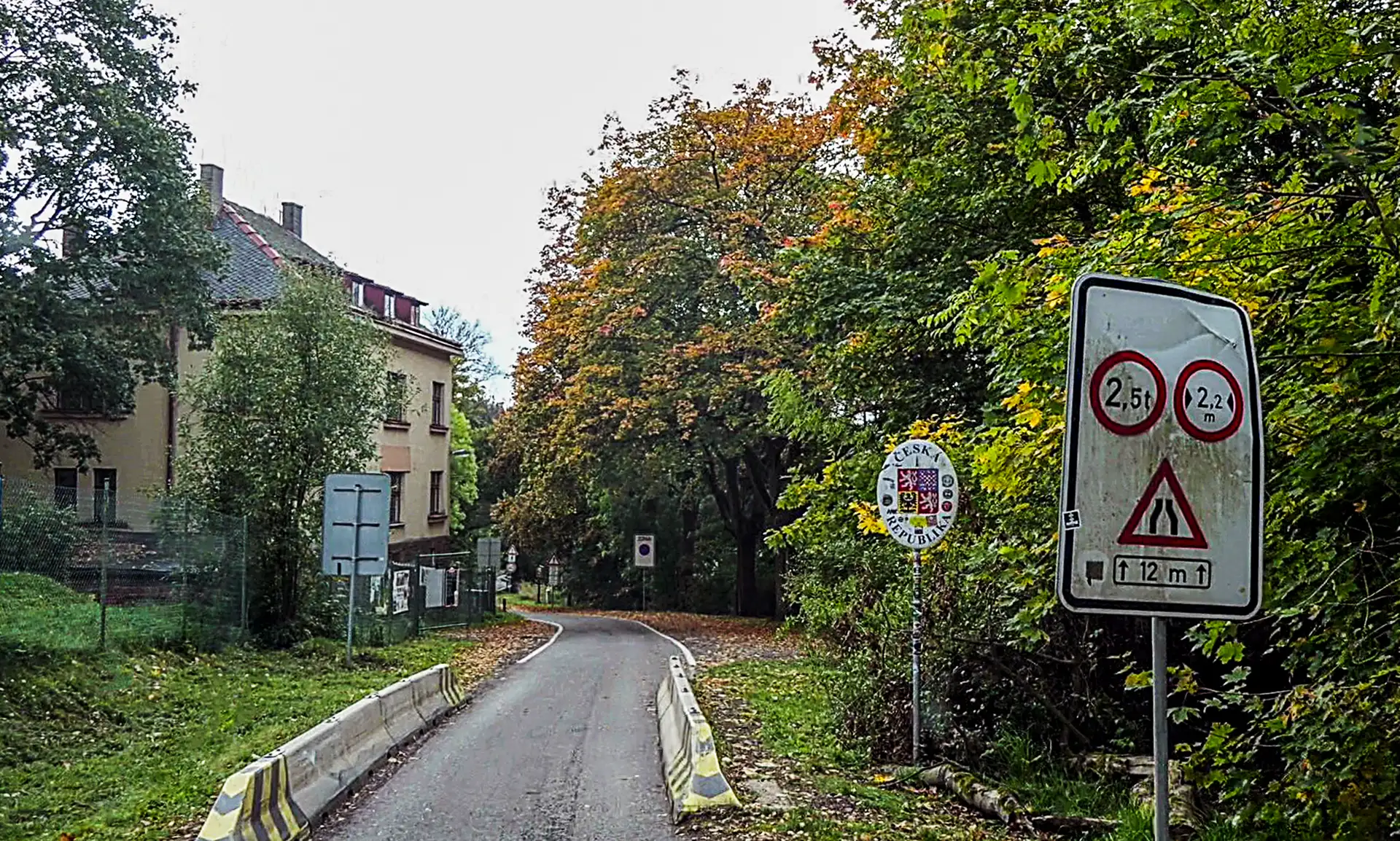
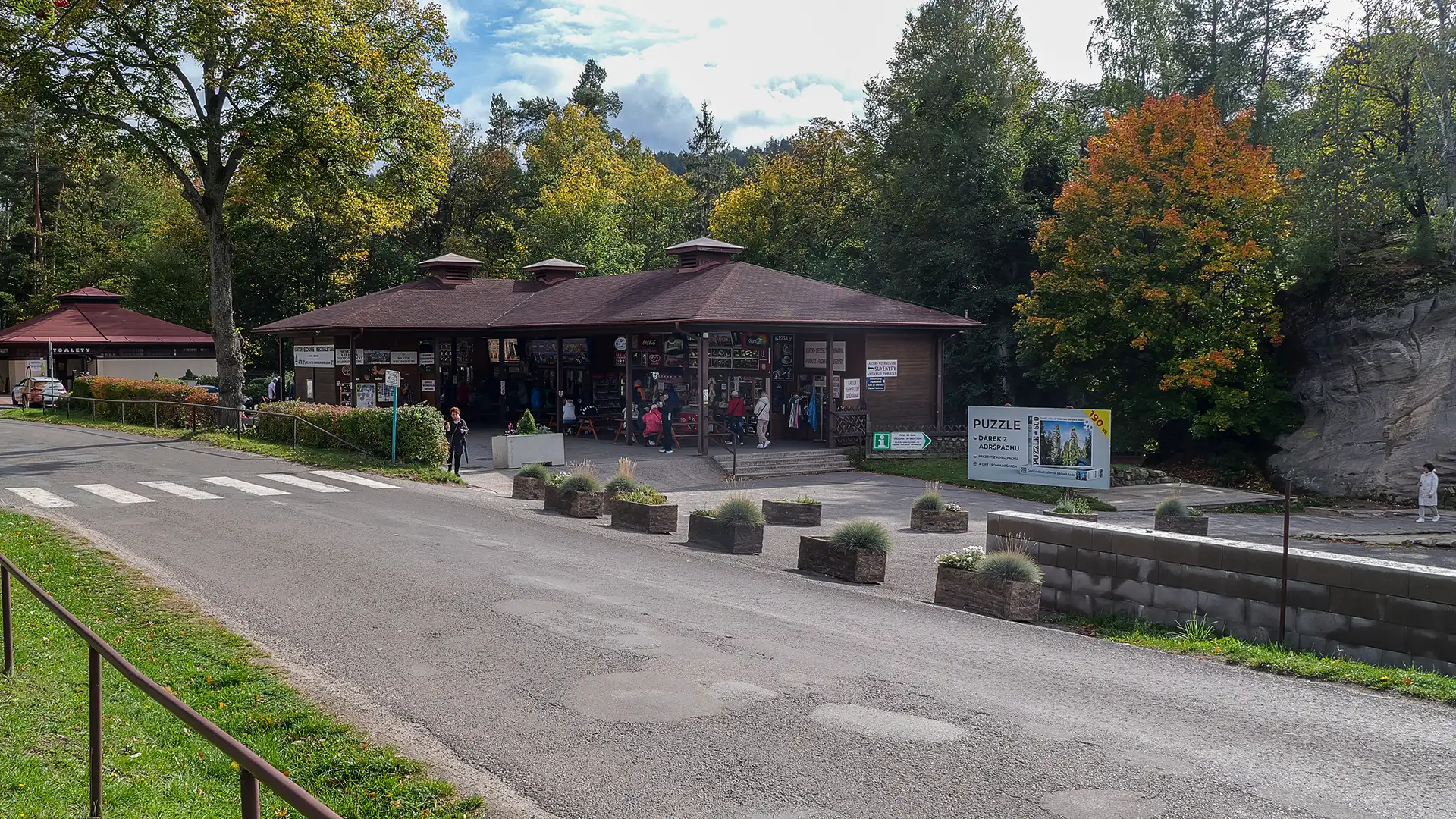
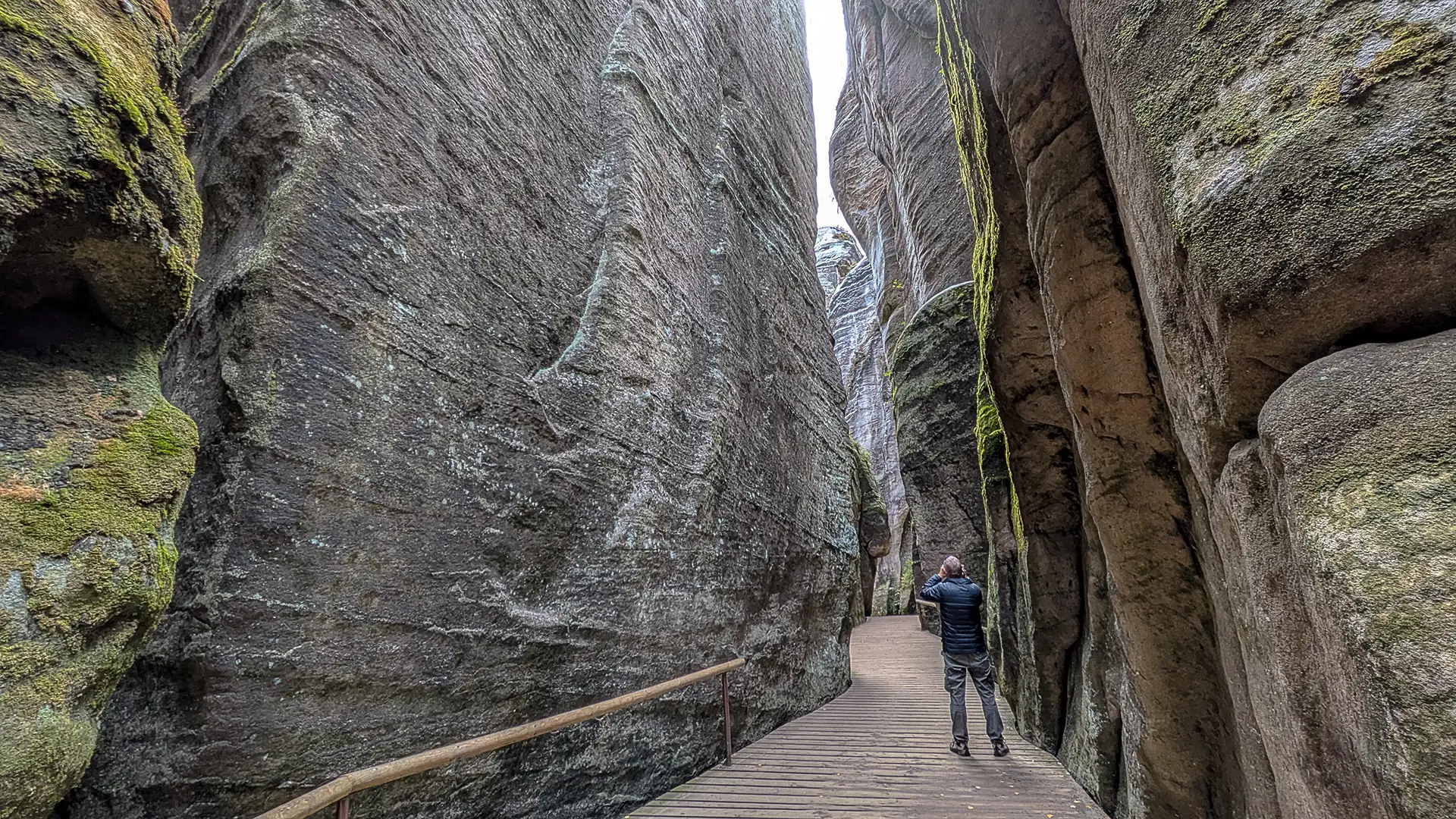
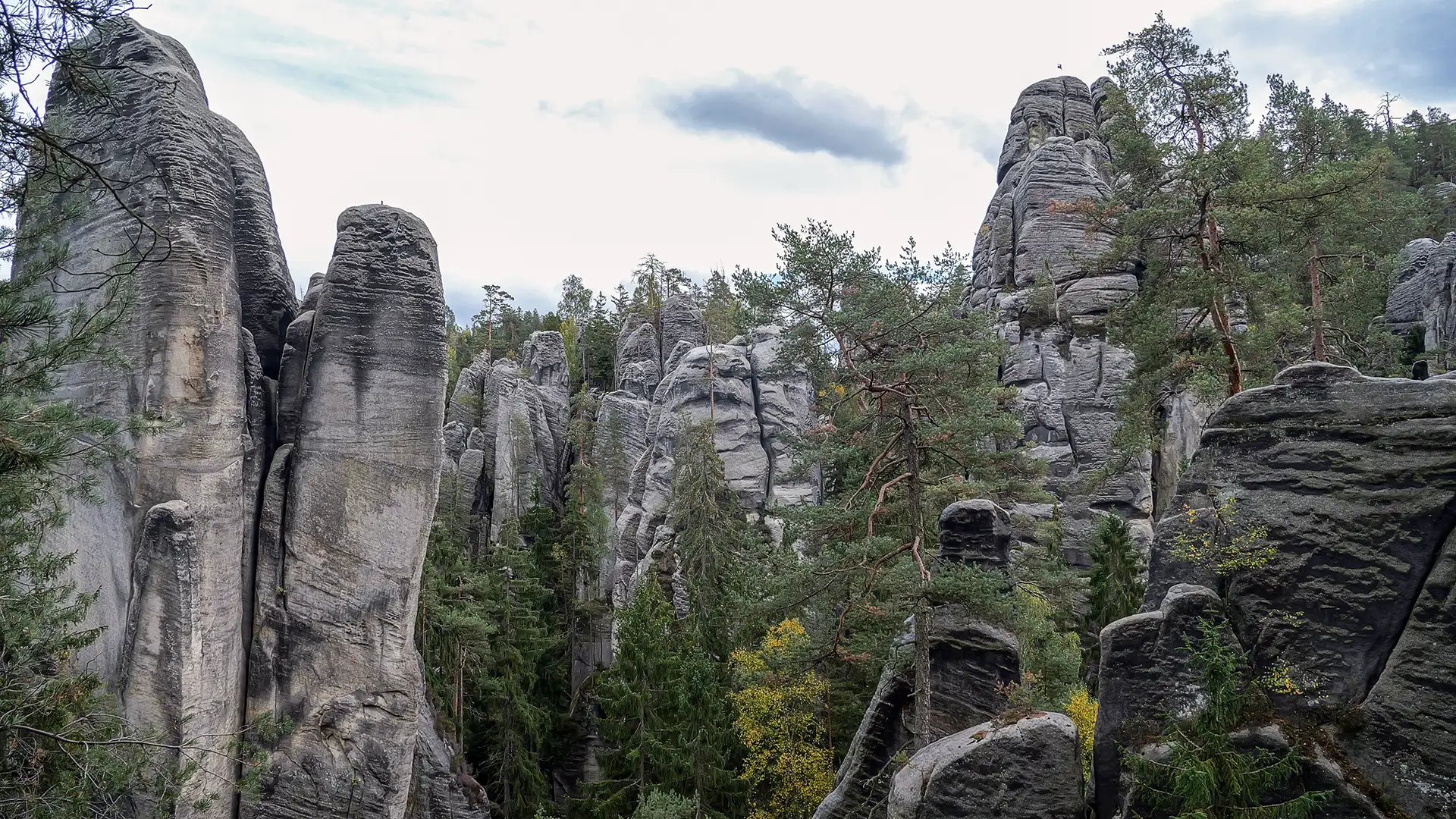
The roads are definitely a bit narrow for a camper van. At the border, they’ve squeezed the road down to just 2 meters with curbs and made it crystal clear that the weight limit is 2,5 tons. But nothing can stop us from navigating this maze of narrow roads along the Czech border until we reach the small village of Adršpach and its spectacular rock city.
One of the country’s most famous natural attractions, it draws up to 10 000 visitors a day in high season. Hopefully, a few less now.
We’re optimistic. The parking lot is almost empty, with just a few buses and cars.
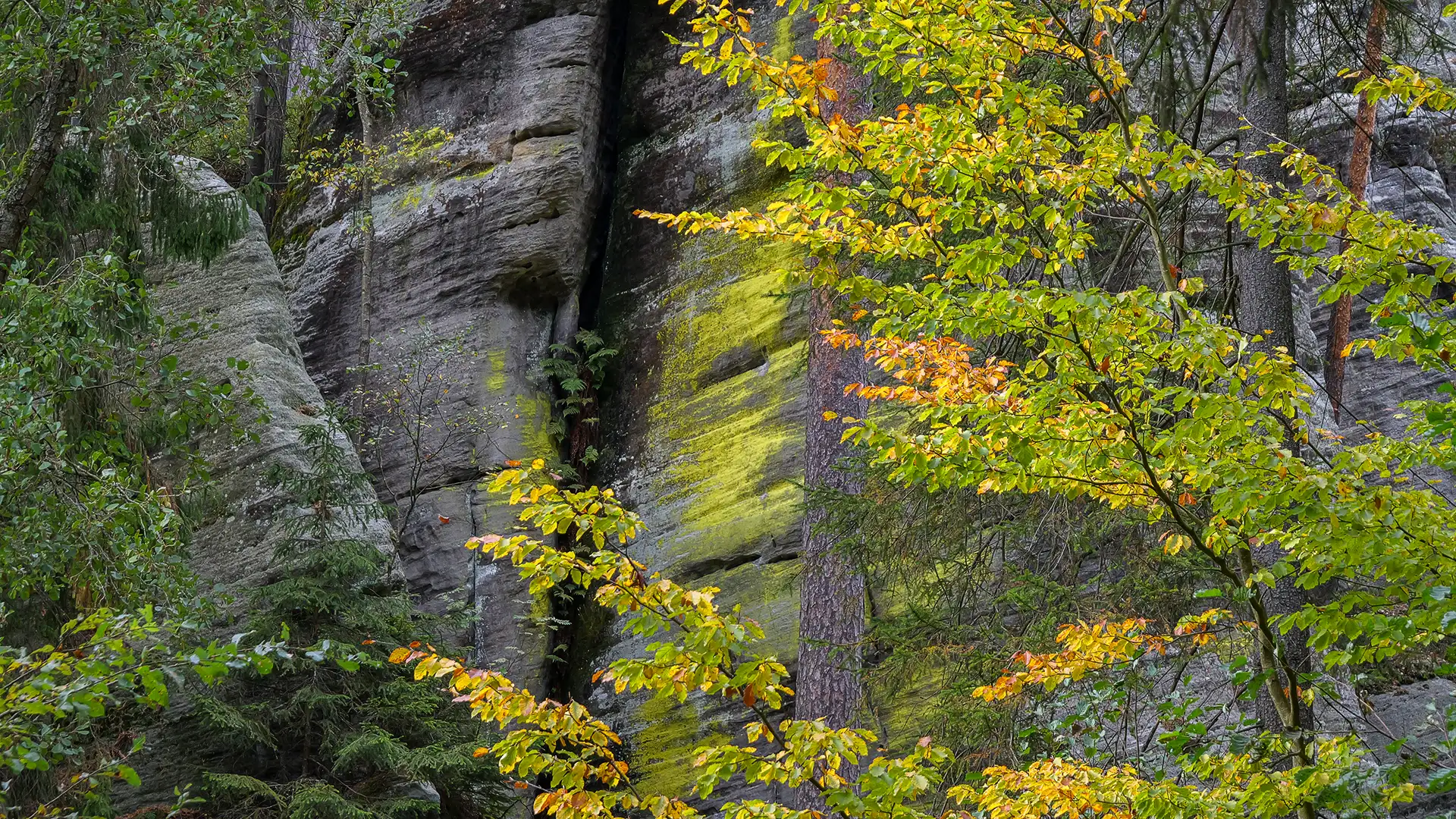
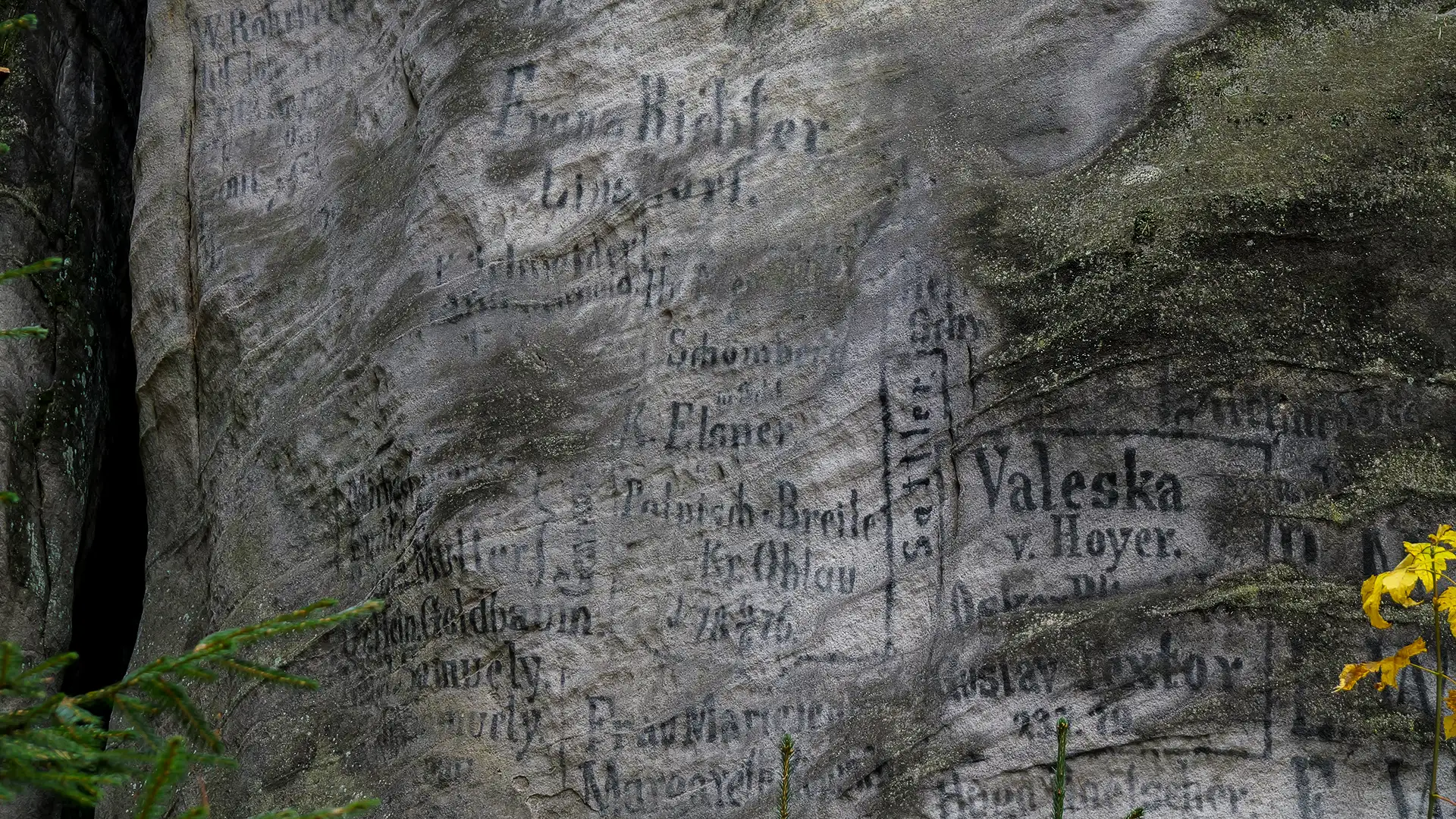
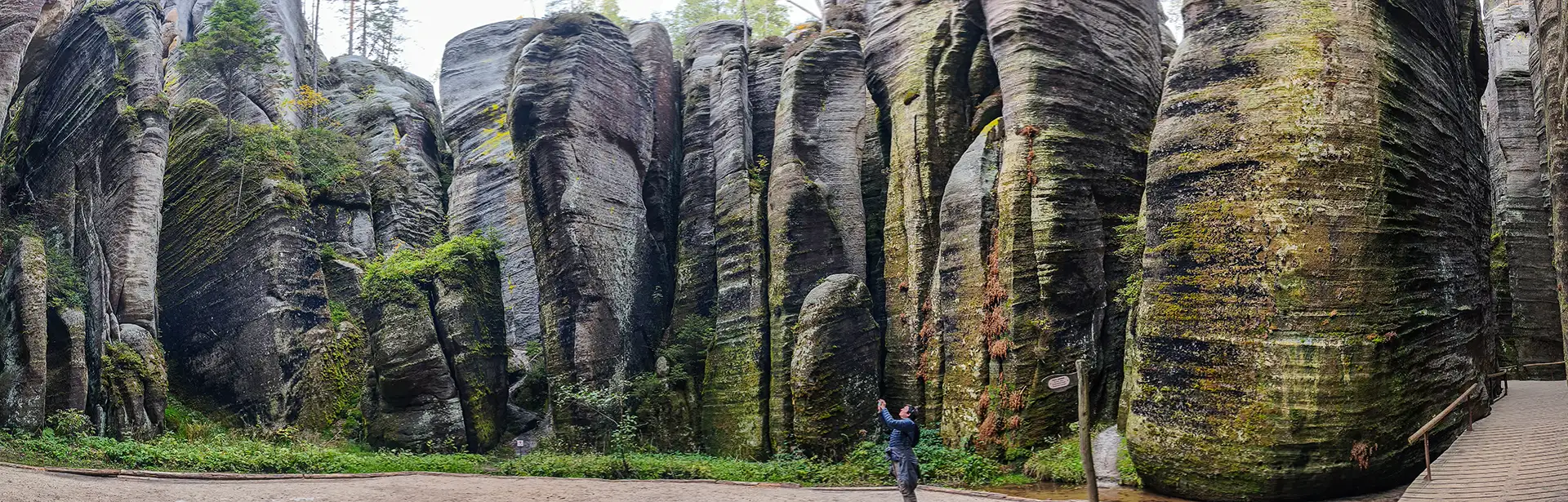
Ticket in hand, we’re ready for the adventure. Well-maintained trails loop around a nearby lake and then thru the most impressive section of the rock formations. For much of the hike, we have the place almost to ourselves. We wander along the trails, marveling at the bizarre rock towers, their contrast with the autumn leaves, the colorful moss covering some of the rocks, and some engraving of people who visited the area more than 100 years ago.
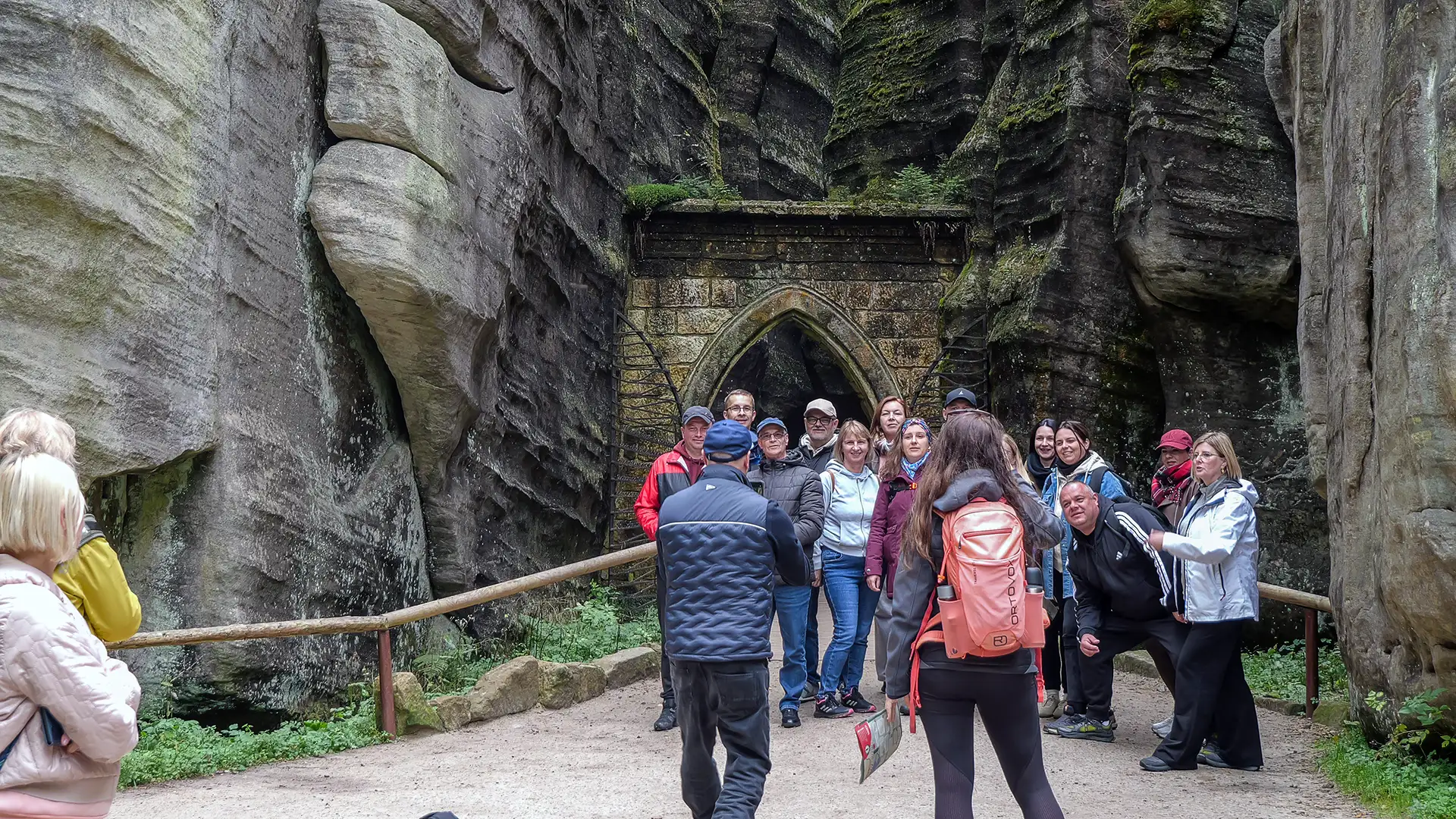
In a few spots, though, the crowds catch up with us: a busload of visitors listening to their guide, taking endless selfies, or calling Auntie Julie to tell her how amazing everything is.
We get lucky. Despite the dark, looming clouds, not a drop of rain falls during the hike. It starts only afterwards, on our way to our sleeping quarters. Ah, autumn – cold and wet.
And then? Time to head back to Swizzyland. The weather is cold, wet, and unpredictable – even when the forecast promises sunshine and tropical temperatures.
Just over 900 km to Luzern. One night in a strange, forgotten village near Adršpach, another in Germany, …
… and we’re home.
Dear esteemed Readers – and everyone else,
That’s it. Not just for this post, but for the entire trip. We’re back in Swizzyland, preparing for hibernation, slurping lousy local beer, and waiting for better times.
Still, we’re ready to turn this grim fate into a brighter perspective: we’re already plotting another trip. Somewhere in the world, far away from the fog, rain, and cold in Luzern’s winter.
Cheeeers
Monika’n’Martin