

Prado
More than 400,000 kilometers. Countless borders. One unforgettable companion.
The fuel station attendant talks non-stop. Diesel smugglers from Nigeria, creative police officers constantly supplementing their salaries, and the country’s decline – he has an opinion on all of it.
From time to time, he glances at the pump display. Suddenly, he kneels down, checking under the Prado, then the pavement beneath it. Finally, he shakes his head in disbelief. Looks again at the pump. Prado has taken more than 100 liters. He’s never seen a car take so much – maybe a truck, but not an ordinary Land Cruiser.
By the time the tank is finally full, the pump has delivered 170 liters of diesel. We pay a small fortune.
Now we’re ready to drive the 600 km to Natitingou. Our very first journey with Prado is about to begin.
At that time, we couldn’t imagine how important Prado’s huge fuel tank would become. We had no idea that this would be the start of Prado’s 400,000 km journey.
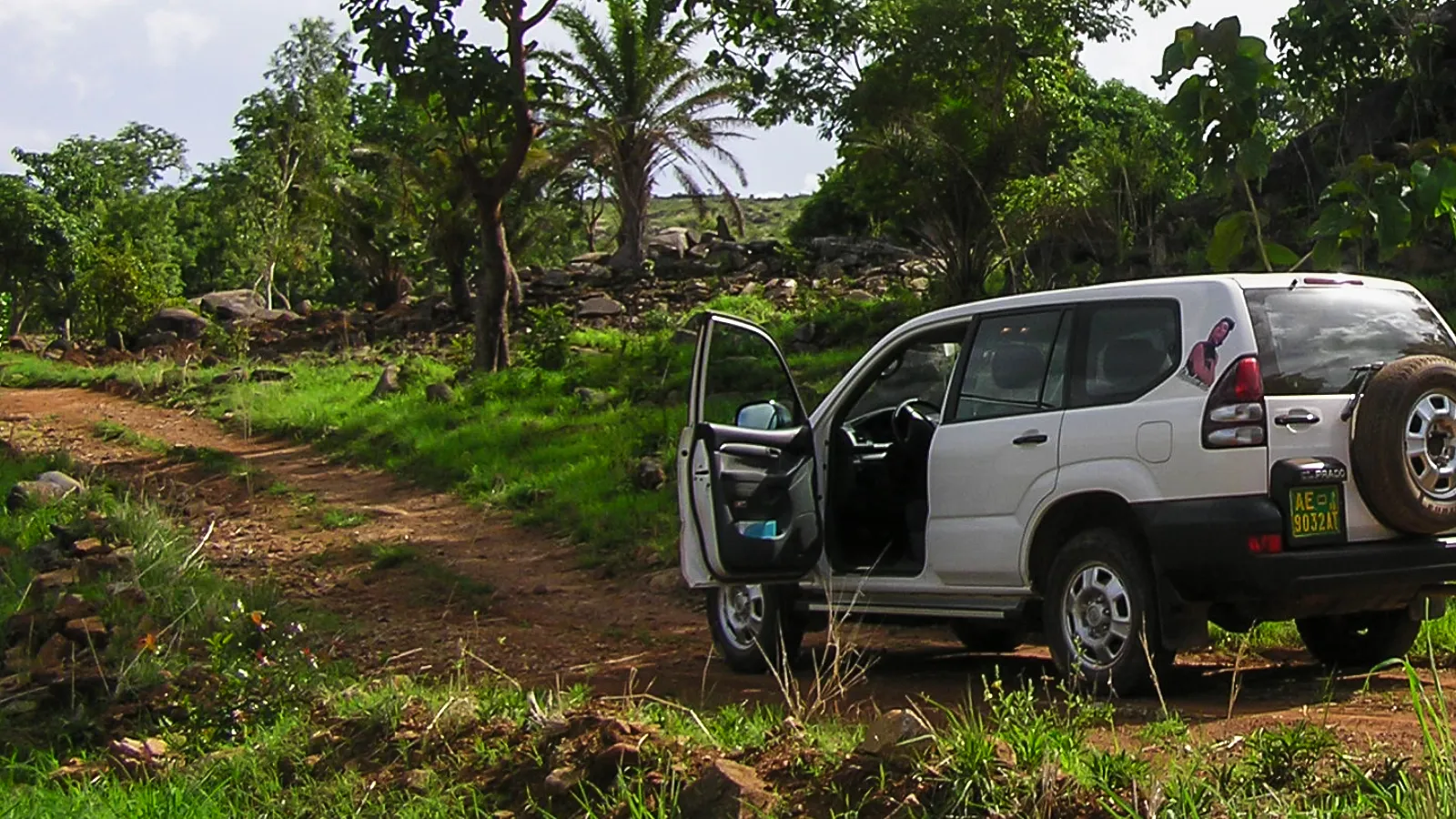
During our assignment in Benin, we imported Prado directly from Japan – a version built for African roads. The first years, Prado was our car for all kinds of shorter trips across the region and daily use. Eight years later, it was ready for something much bigger. We finally started our 1st long overlanding trip from Lesotho to Switzerland, Prado was already a well-traveled car with plenty of experience on African roads.
It was more than ready for the next chapter. Over the following 12 years, it carried us all the way to the southernmost point of South America – and even beyond.
Of course, even the most reliable travel companion has its little aches and pains. A good mechanic, a few spare parts, and a bit of patience usually did the trick.
After crossing the 400,000 km mark, Prado had earned its retirement. With several gears refusing to engage and an engine consuming more oil than diesel, another great journey was simply asking too much.
And for us the time to reorient our travel style.
Looking back, Prado became far more than just a car. It carried us through deserts, mountains, jungles, and across continents. More importantly, it carried us through some of the greatest adventures of our lives.
Desert Roads
That oversized fuel tank soon proved to be much more than an interesting conversation at a gas station. It allowed us to leave fuel stations – and often civilization – far behind. Some of our most memorable adventures started exactly there.
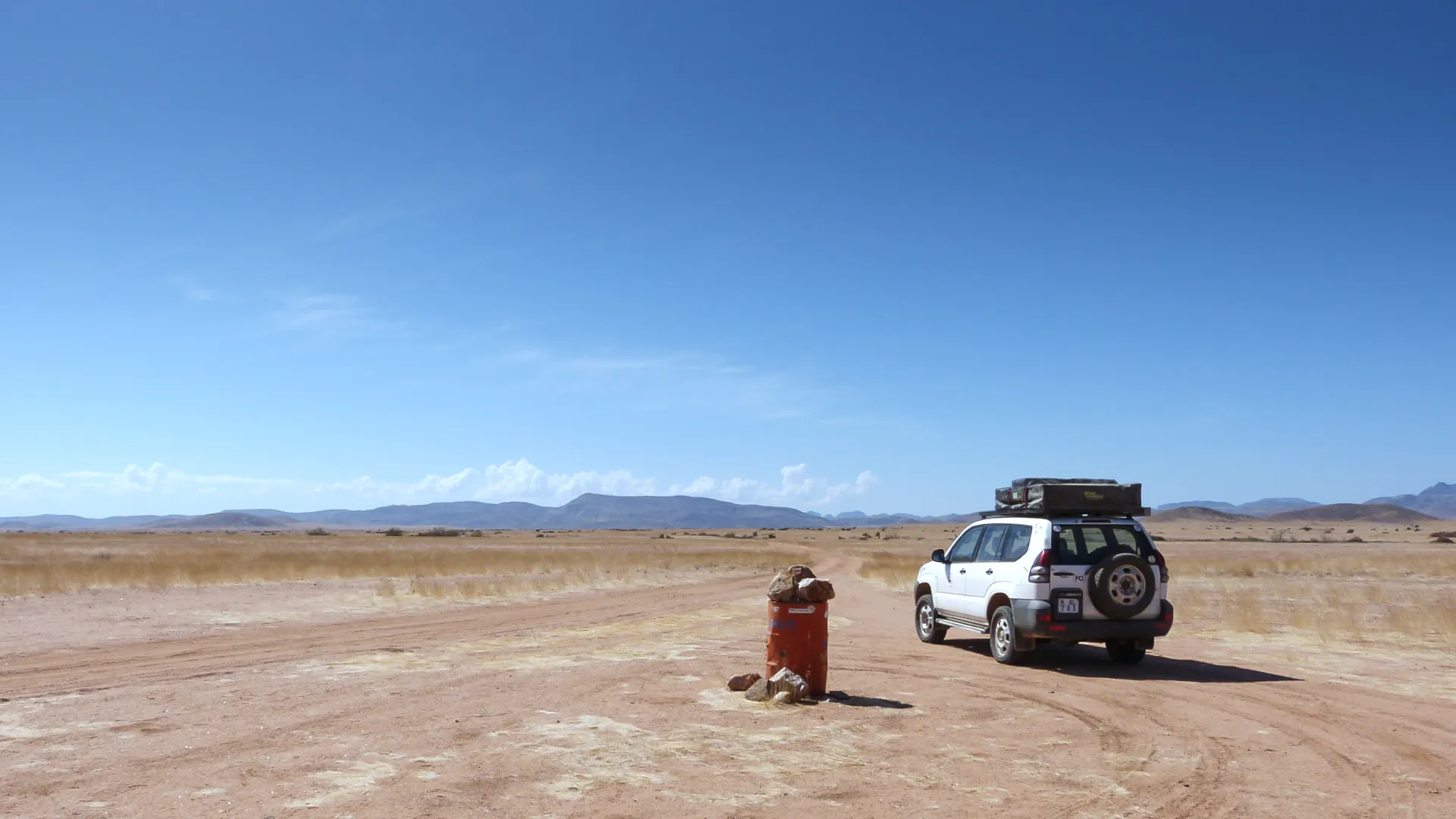
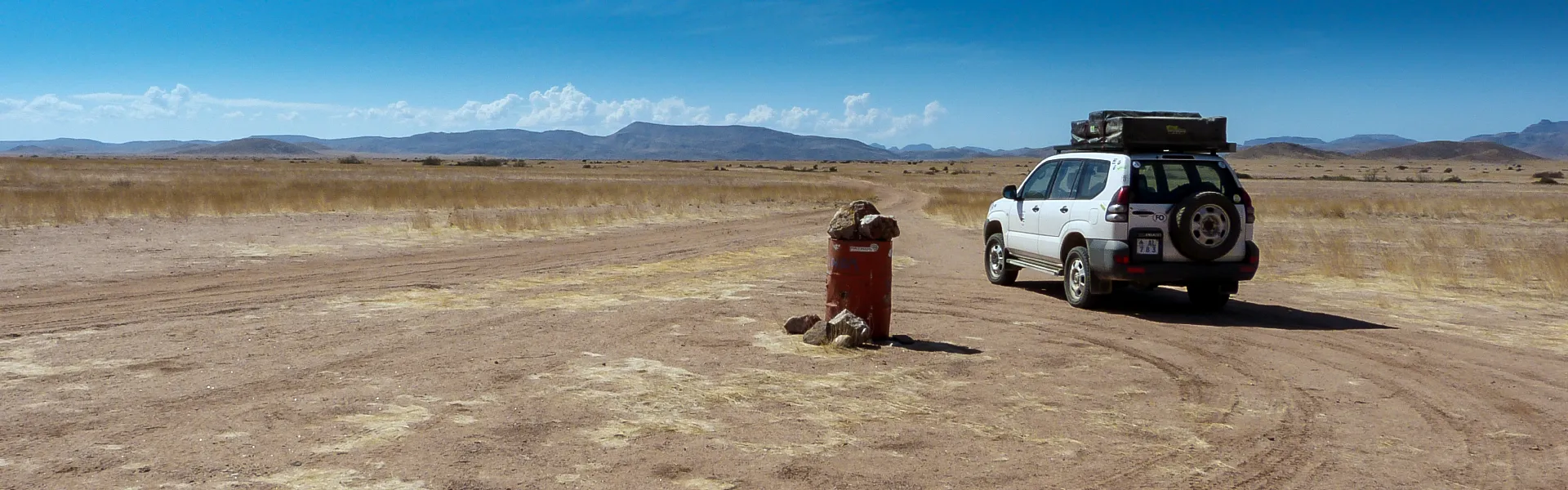
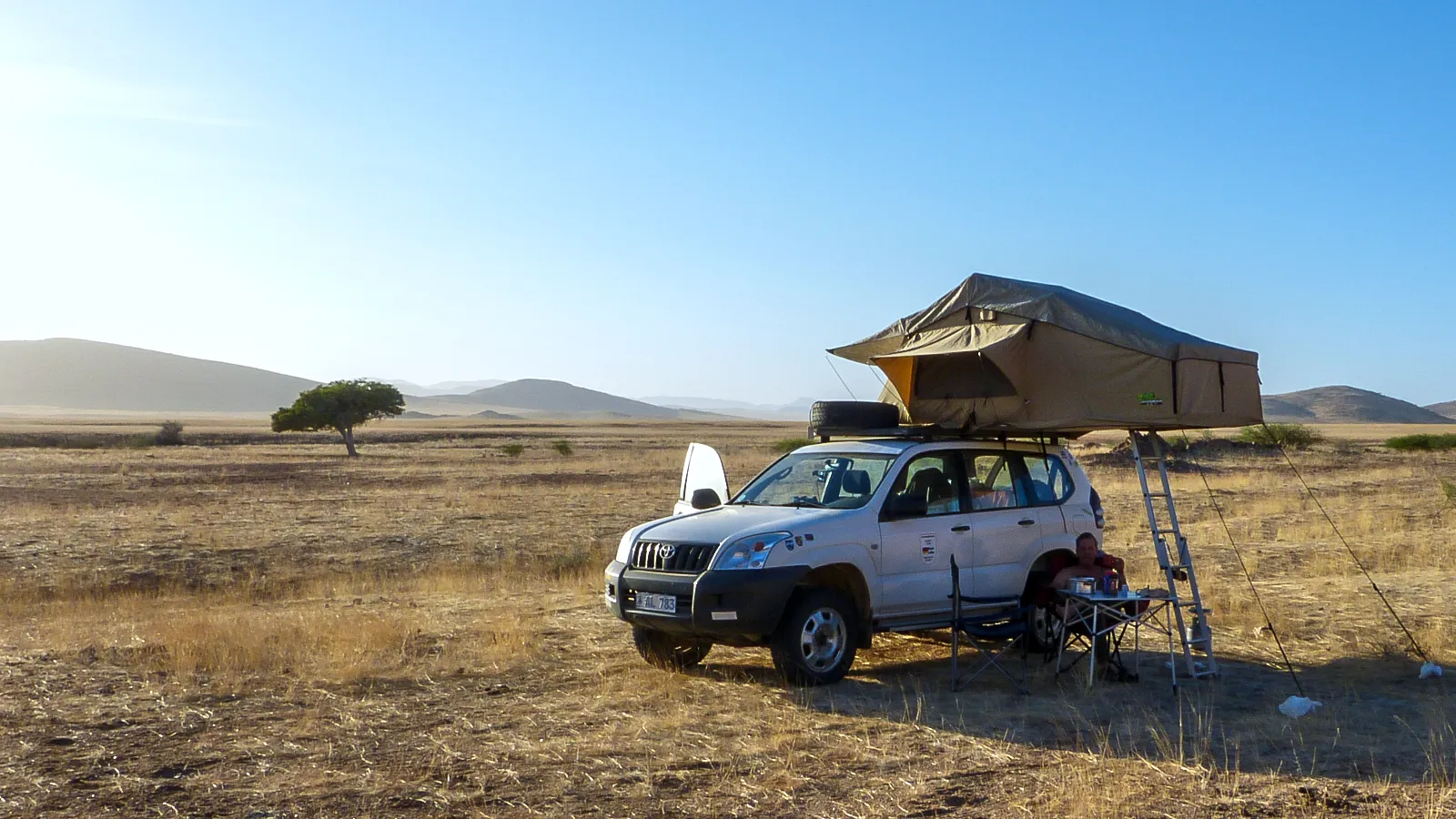
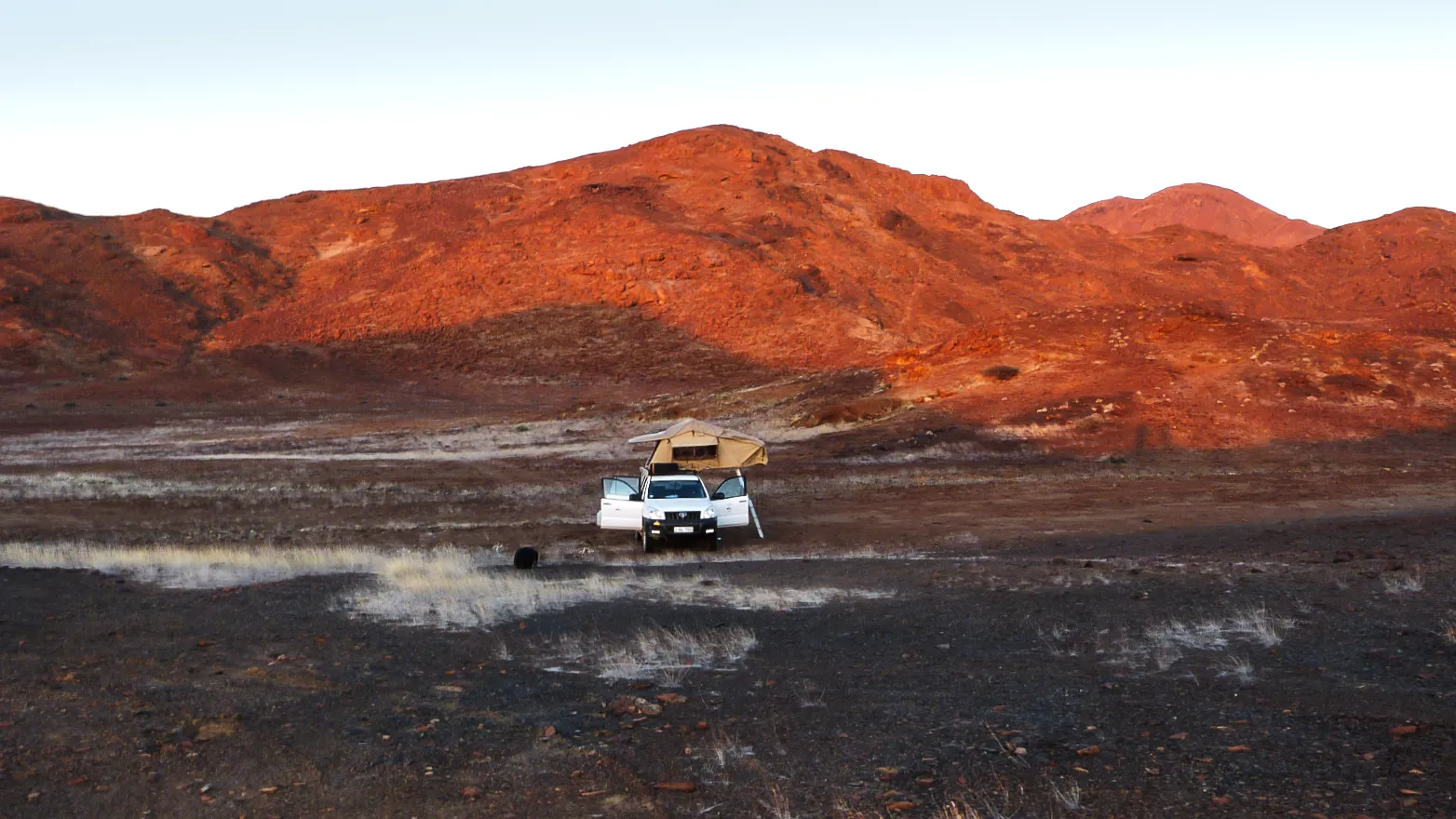
Ahead of us lies the endless Hartmanns Valley track. Dry grass on both sides, painted golden by the setting sun. There’s not much farther to the Kunene River, the border with Angola. The gravel road is not too bad, just a bit corrugated. Even so, we drive carefully. We’re only about one-third into our trip through Namibia’s remote northwest. We know there’s another 1000 km to go before the next fuel station – and if anything goes wrong out here, there’s nobody around to help.
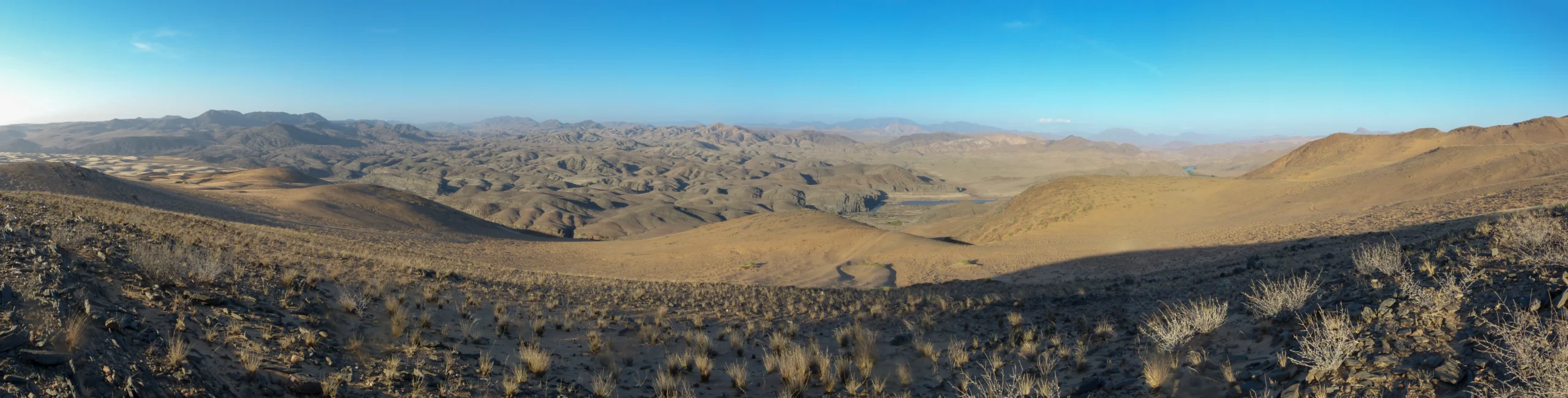
Shortly after we reach the river. A sandy track climbs a nearby hill. Even though climbing it will cost us another liter or two of precious diesel, we can’t resist. What an amazing view – to the left the waves of dunes stretching all the way to the Skeleton Coast, ahead of us, the wild Kunene River and on its other side the desert-like landscape of Angola. Above us, a crystal clear night sky, the first stars just beginning to show.
Moments like this are exactly why we decided to drive ourselves all around the world. Places you can never see with any other form of travel and the freedom to stay as long as we like. None of it would have been possible without a tried-and-true Toyota like Prado.
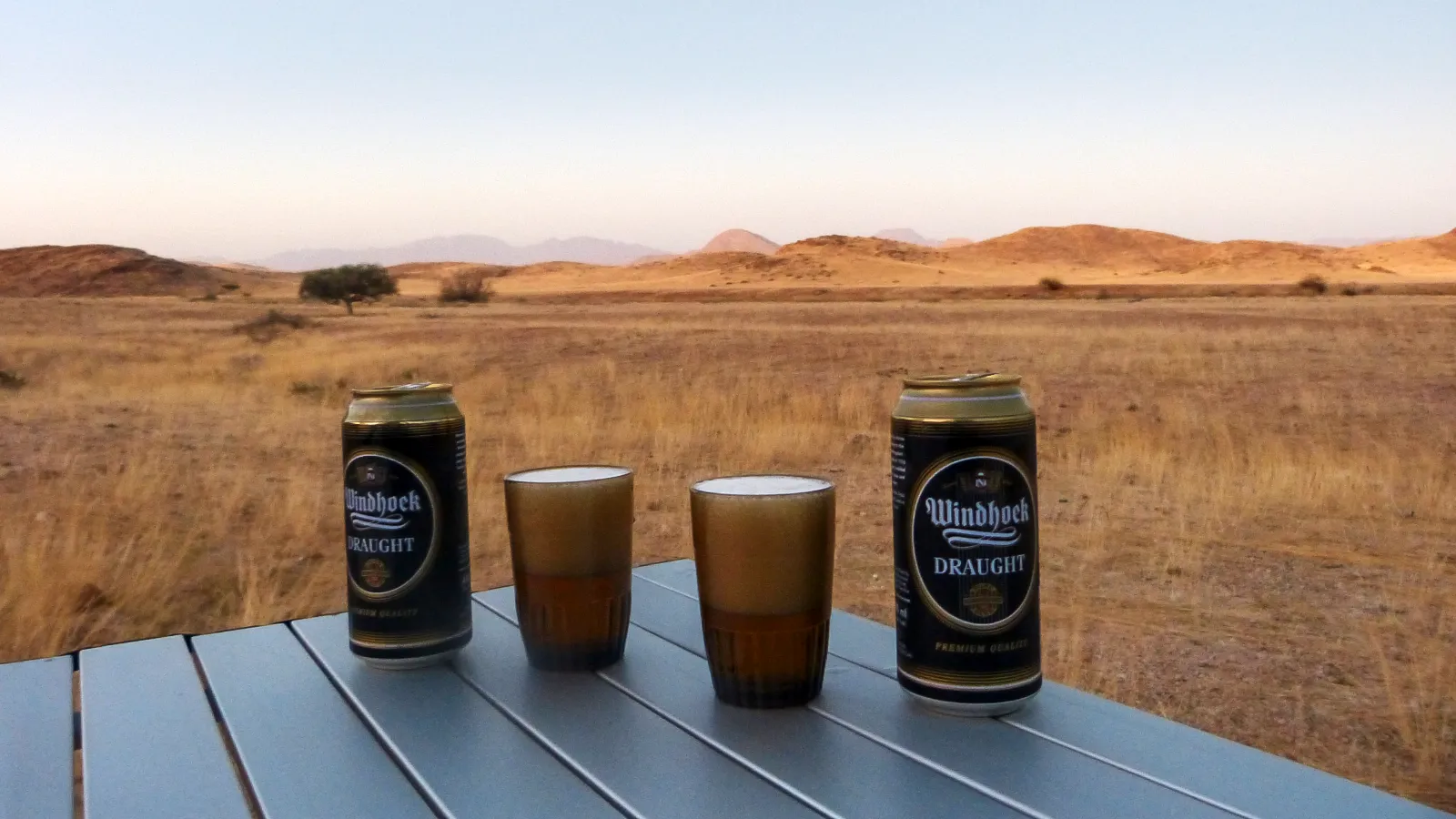
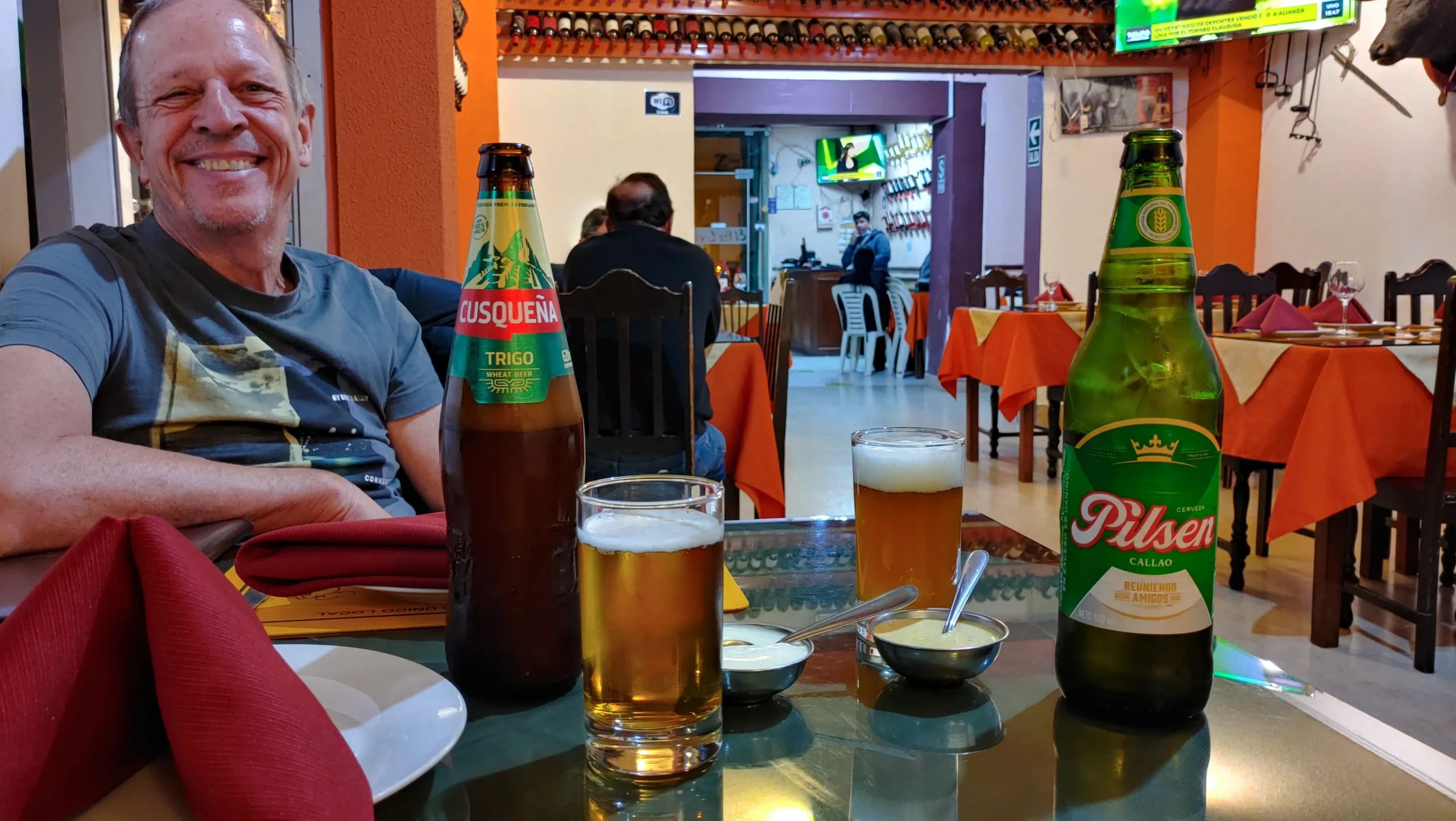
That evening, we camp in the valley. Just us, the desert, and a well-deserved Windhoek Draught.
A few days later, after having passed the famous red and blue drums and visited Mariental, we finally reached Okongwati and its fuel station. Our calculation wasn’t too bad. Prado takes 170 liters of sulfur-rich diesel, ready for the next adventure.
It wasn’t our only trip thru the desert on the way to Ushuaia – but it remains one of the most unforgettable.
High Mountains
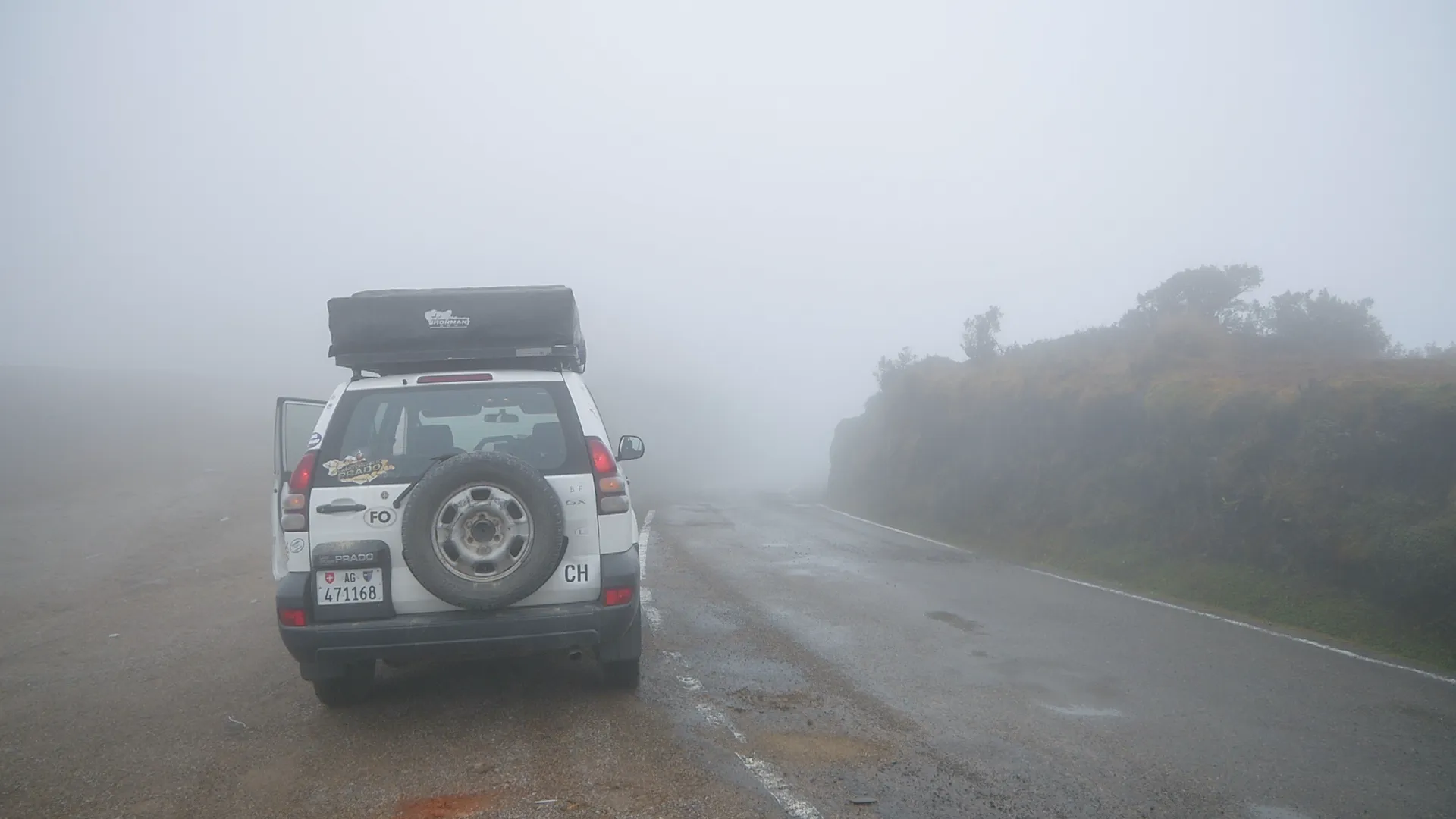
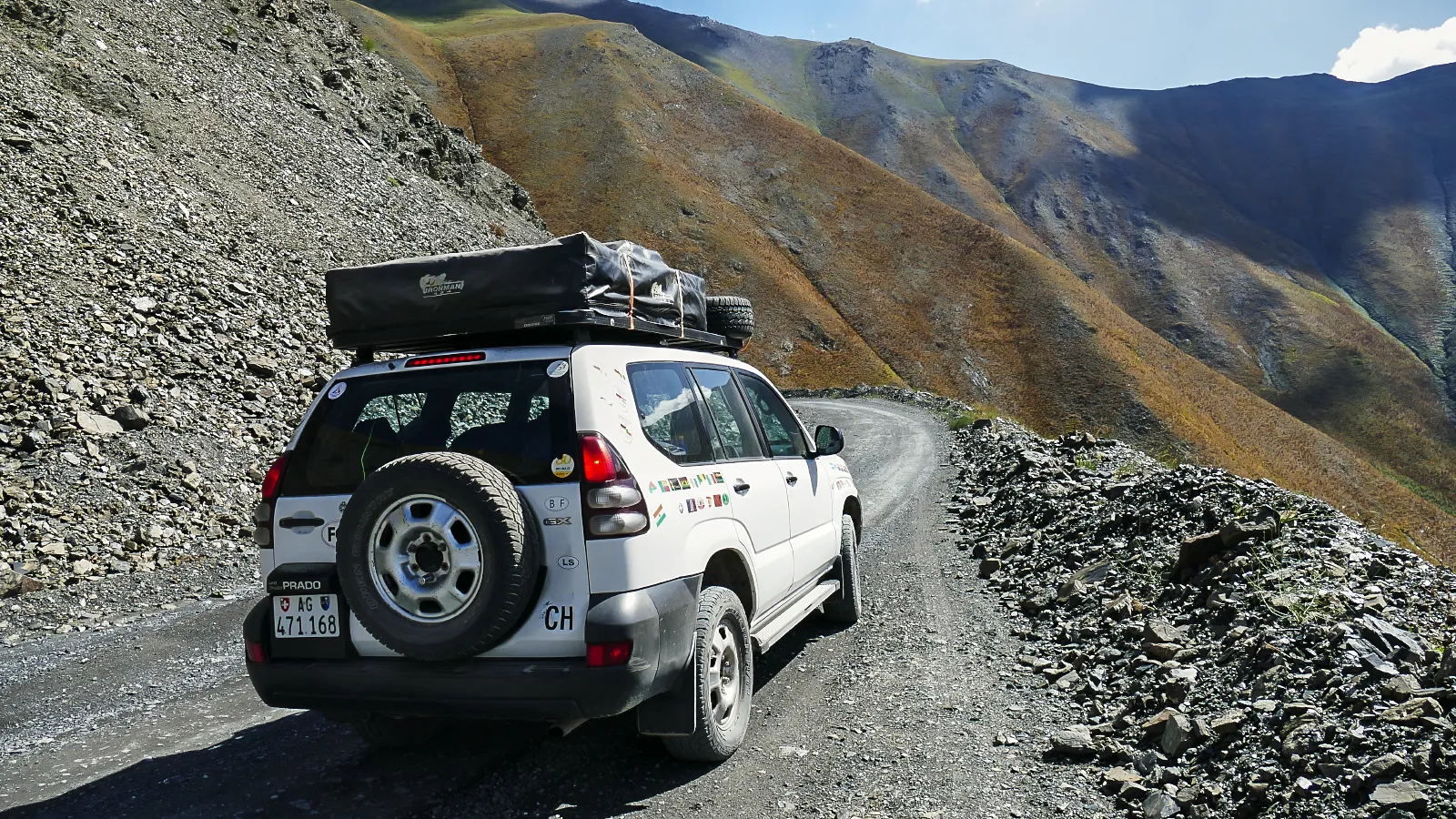
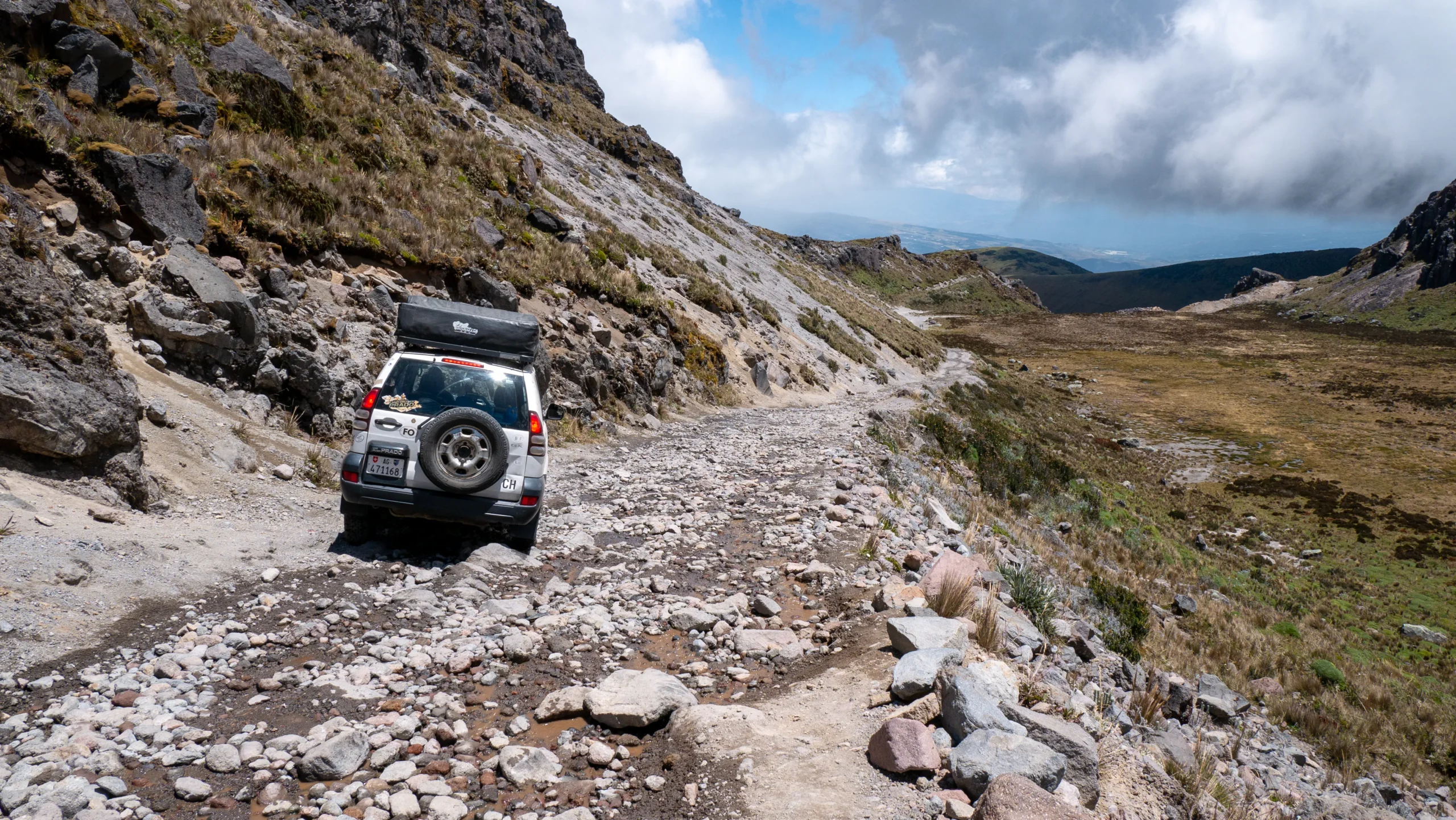
From endless deserts, the road eventually climbs into the mountains. Fortunately, if there was one place Prado really came alive, it was on high mountain roads.
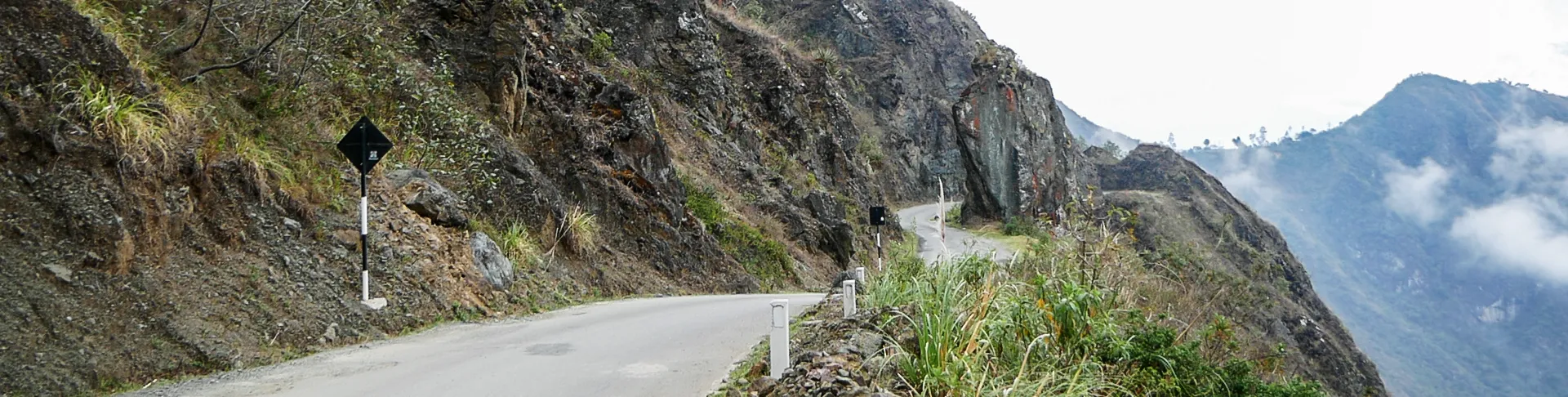
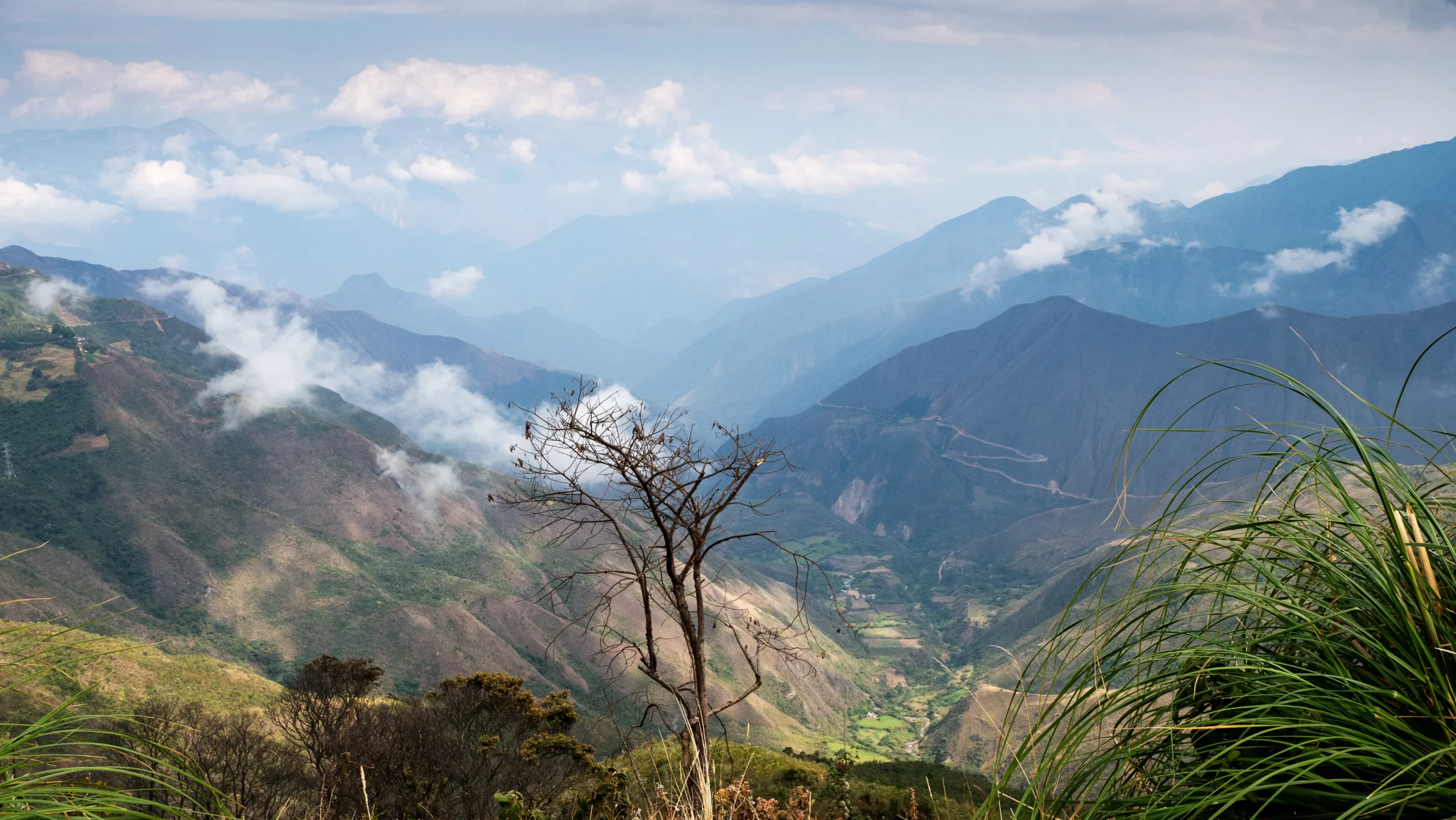
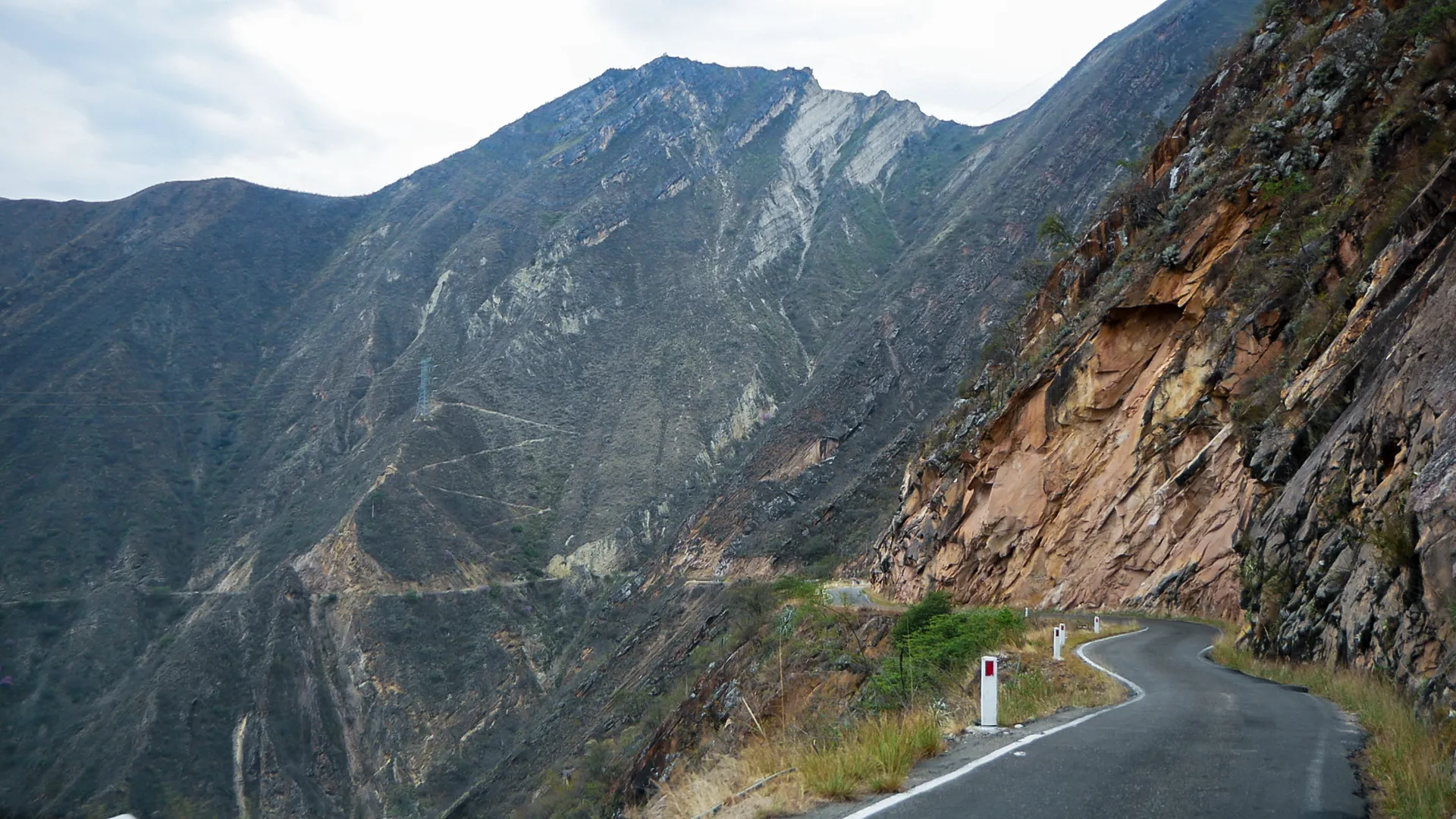
We´ve been following the road for more than two hours. Since dawn we’ve been driving the narrow, pothole-ridden strip of asphalt. A trip thru one of Peru’s most amazing areas, climbing steadily up from the small village of Leymebamba.
Monika reminds Martin every few meters to stay away from the edge, use the horn, and keep his eyes on the road. She’s far too busy watching the thousand-meter drop beside her to admire the spectacular Andean scenery. The scary prospect of an oncoming truck even let her forget to take pictures of this spectacular journey.
Quite different is Martin. He´s too concentrated on driving Prado to realize what´s going on.
Then it happens. An old, heavily loaded truck is bearing down on us. No way to cross, and the last small turnout is a few hundred meters back – and to make matters worse, it is on the steeply plunging side of the valley. Reversing is our only option. Slowly we approach the layby. Monika pokes her head out of the window, constantly tracking the roadside just inches from the tires. Martin tries to do his level best to follow Monika´s constant warnings while trying to avoid the rocks sticking out onto the far side of the road. Finally, we arrive.
Now comes the ultimate challenge: maneuvering the car into the turnout so the truck can pass while keeping us from falling off the cliff. We finally make it!
The truck passes us without a single scratch on Prado. The driver wishes us buen viaje – and salutes us with a bottle of beer in his hand.
Later that afternoon we arrive in the small town of Celendín. We probably deserve that beer even more than the truck driver. But we made the Ruta de la Trembladera.
Of course, that wasn’t the highest pass Prado ever crossed. Surely, we remember the way up to the 5400m high Kudi Daban Pass on the Xinjiang-Tibet Highway. Or, starting its engine at more than 4800m without winter diesel after our return from a hike near Refugio Whymper on the slopes of Volcán Chimborazo.
Still, nothing has ever felt quite as scary as the Ruta de la Trembladera.
Endless Roads
Not every memorable road came with breathtaking scenery or adrenaline. Some became unforgettable simply because they seemed to go on forever.
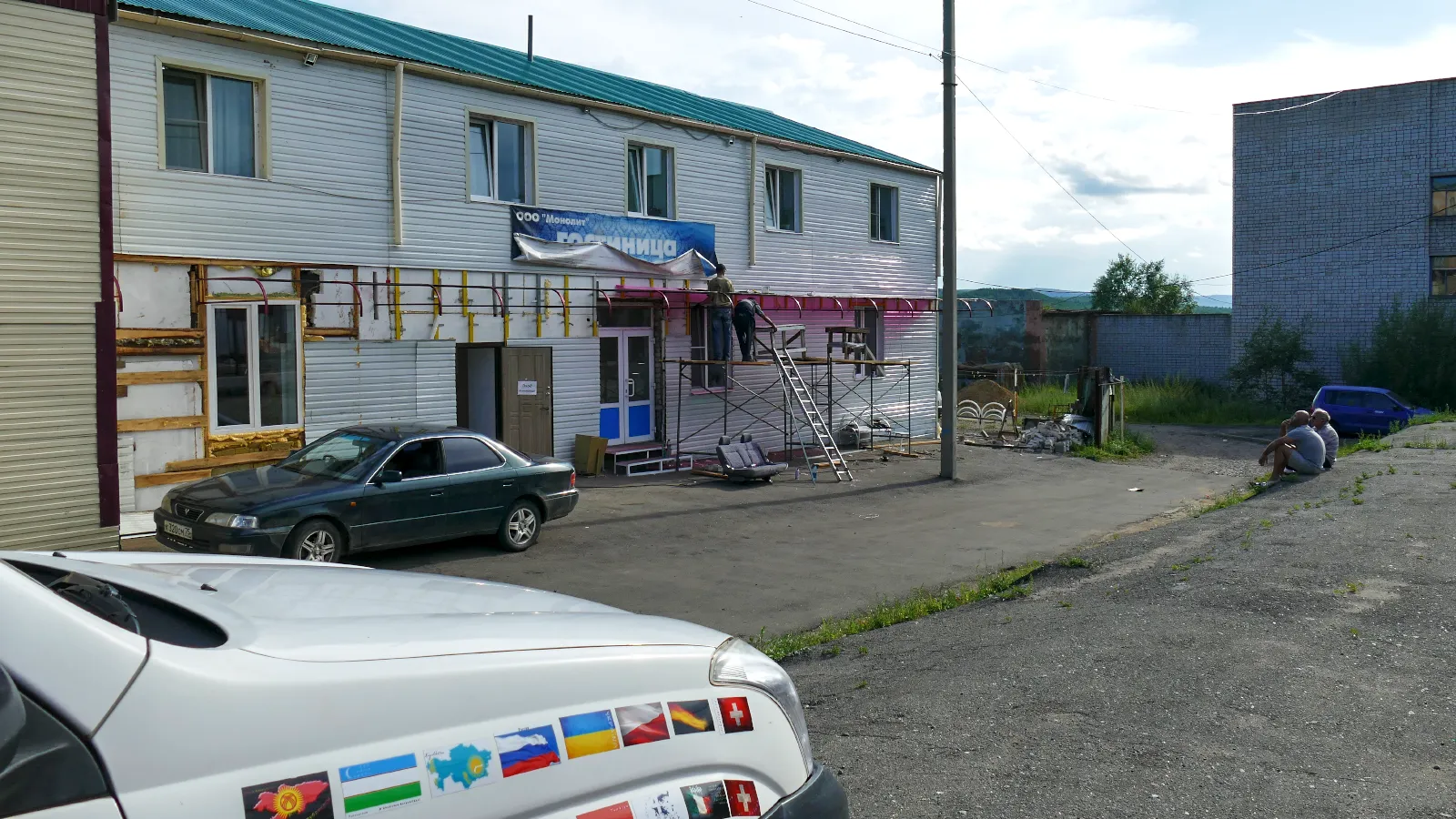
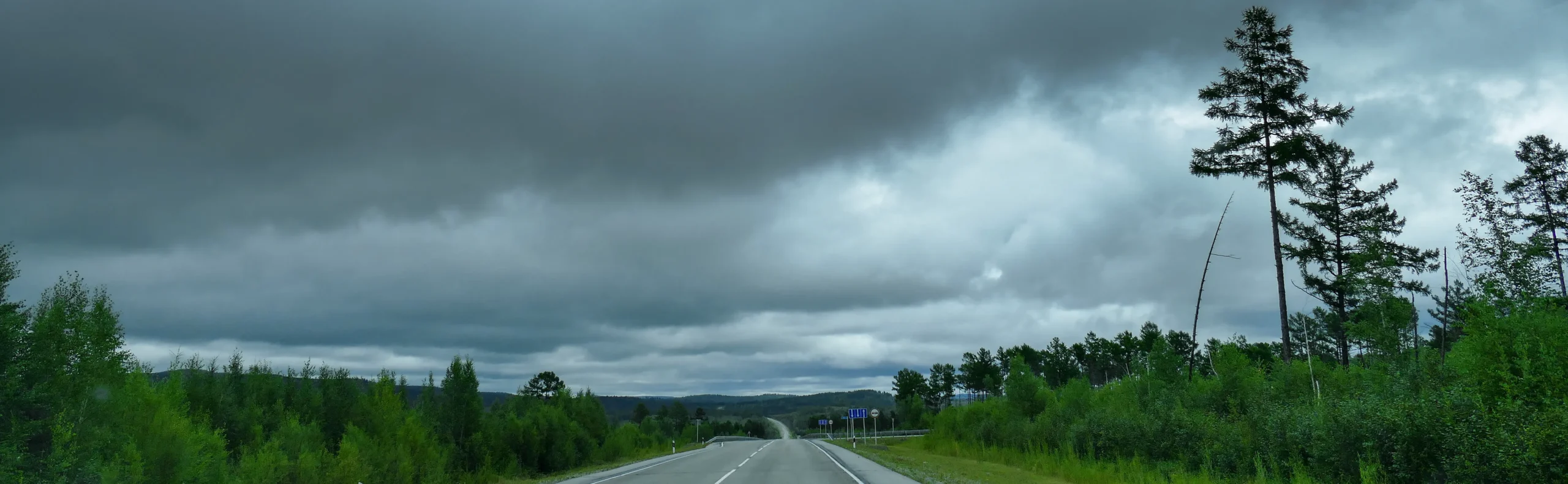
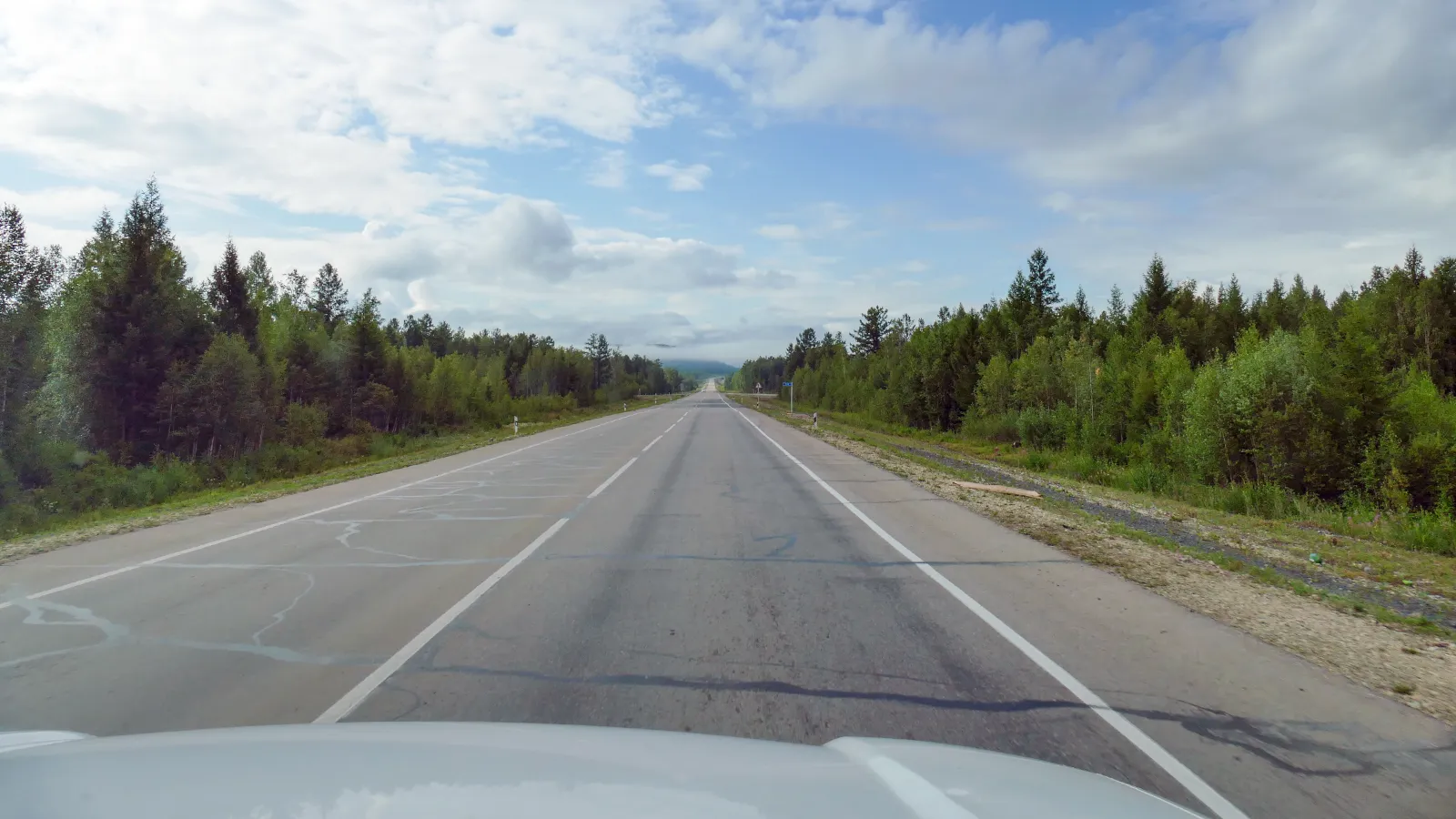
After breakfast in our rather shabby sleepery in Mogocha, a cheerful do svidaniya to our host – and we´re on the road again. To the left, endless taiga. To the right, more of the same. Barely a vehicle on the Transsiberian Highway connecting Irkutsk to Vladivostok. We´re on our third day – out of seven – of making the 4000km trip to the east. Fortunately, we´ve got hours of music on our mobile. From time to time a speeding truck passes by. A few roadhouses – for the drivers, the opportunity to get their well-deserved glass of vodka, or two. Monika is yawning loudly behind the wheel. She´s right, it´s time to change drivers after an hour.
In the afternoon, we arrive in Skorovodivo, another village offering basic facilities on the way to Russia´s far east. At least the evening brings us the laugh of the day. We meet a Dutch couple traveling to Vladivostok on their bike, complaining loudly about the miserable service in Russian sleeperies. They really can´t understand why they never get their urgently needed breakfast, not even a coffee. It takes us a while to figure out what’s going on – we never have this kind of problem. Until we find out that nobody understands what they’re asking for. Learning a few words of Russian suddenly doesn’t seem like such a bad idea for them.
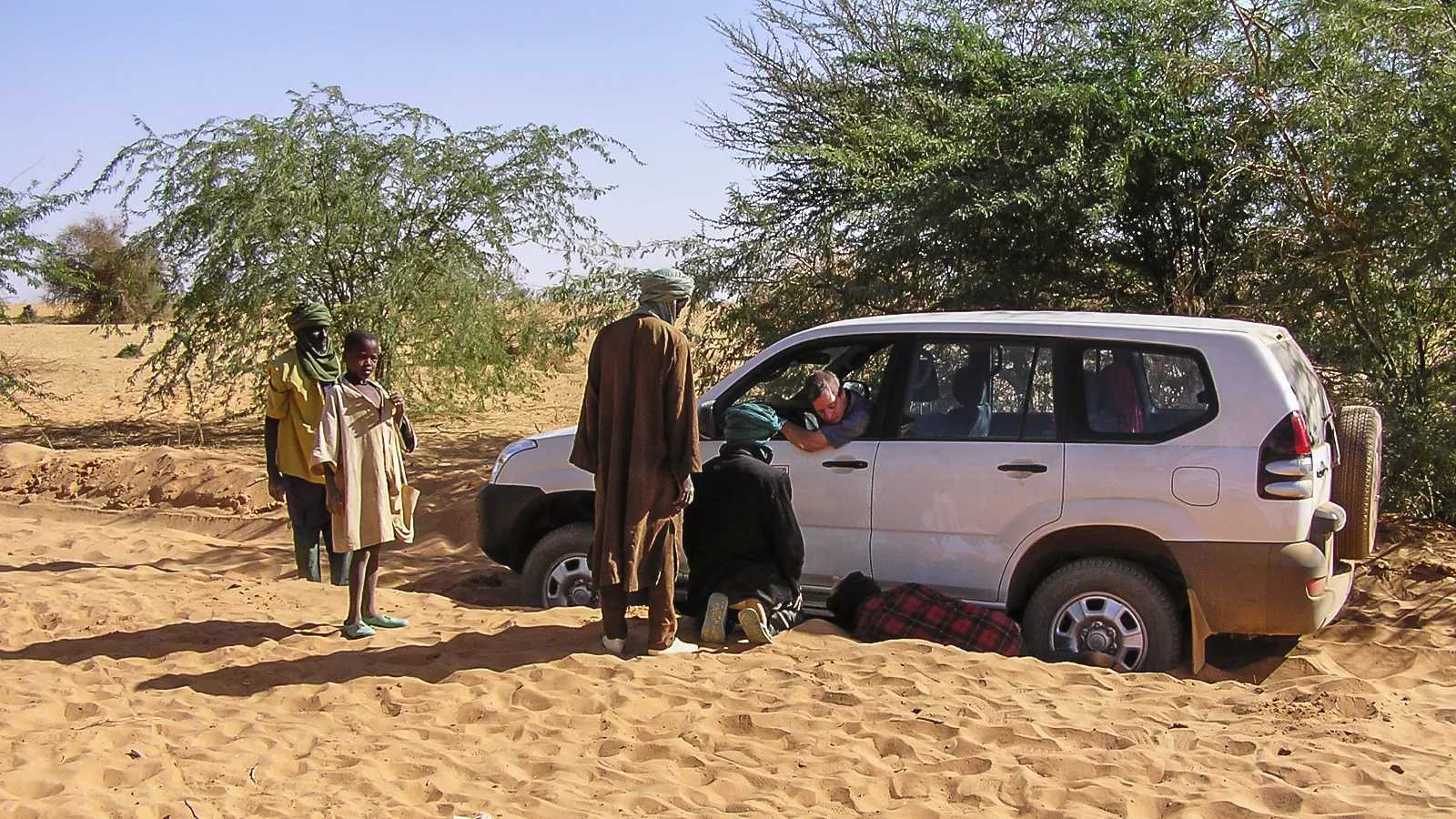
Well, we remember more roads where nothing happened for hours, or even for days. The endless road from Nouakchott to Laayoune in Morocco´s Western Sahara and the never ending highway from Dawson Creek to Watson Lake easily share this appreciation. At least, on the Alaska Highway we’ve seen some bears munching on grass along the roadside.
Prado doesn’t seem to mind these endless highways. For once, it gets a chance to recover from deep sand, muddy tracks, and steep mountain roads before the next adventure begins.
Masterworks of Car Repair
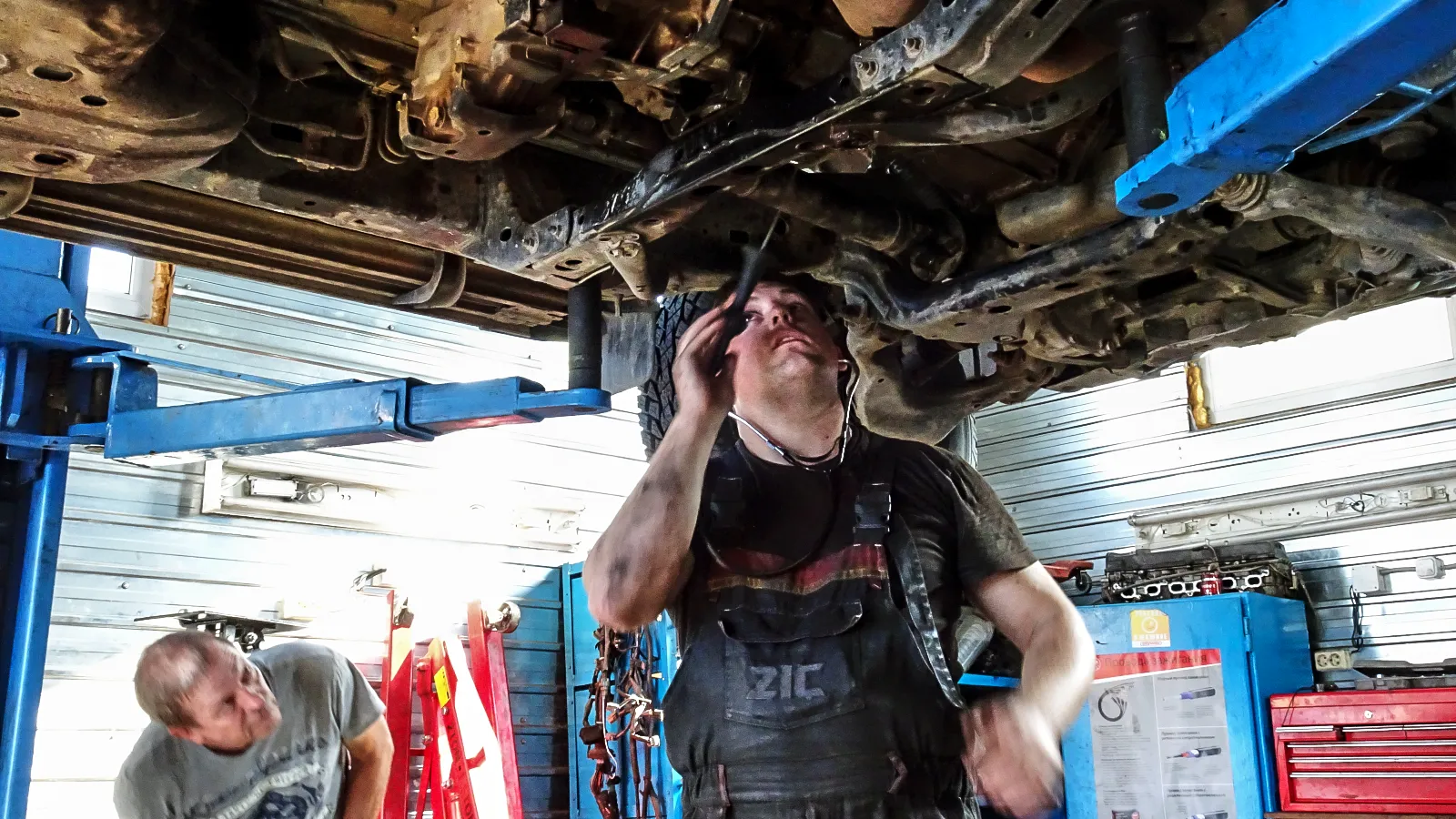
Of course, giving Prado a little time to recover wasn’t always enough. Sometimes it needed a good mechanic – and a few spare parts.
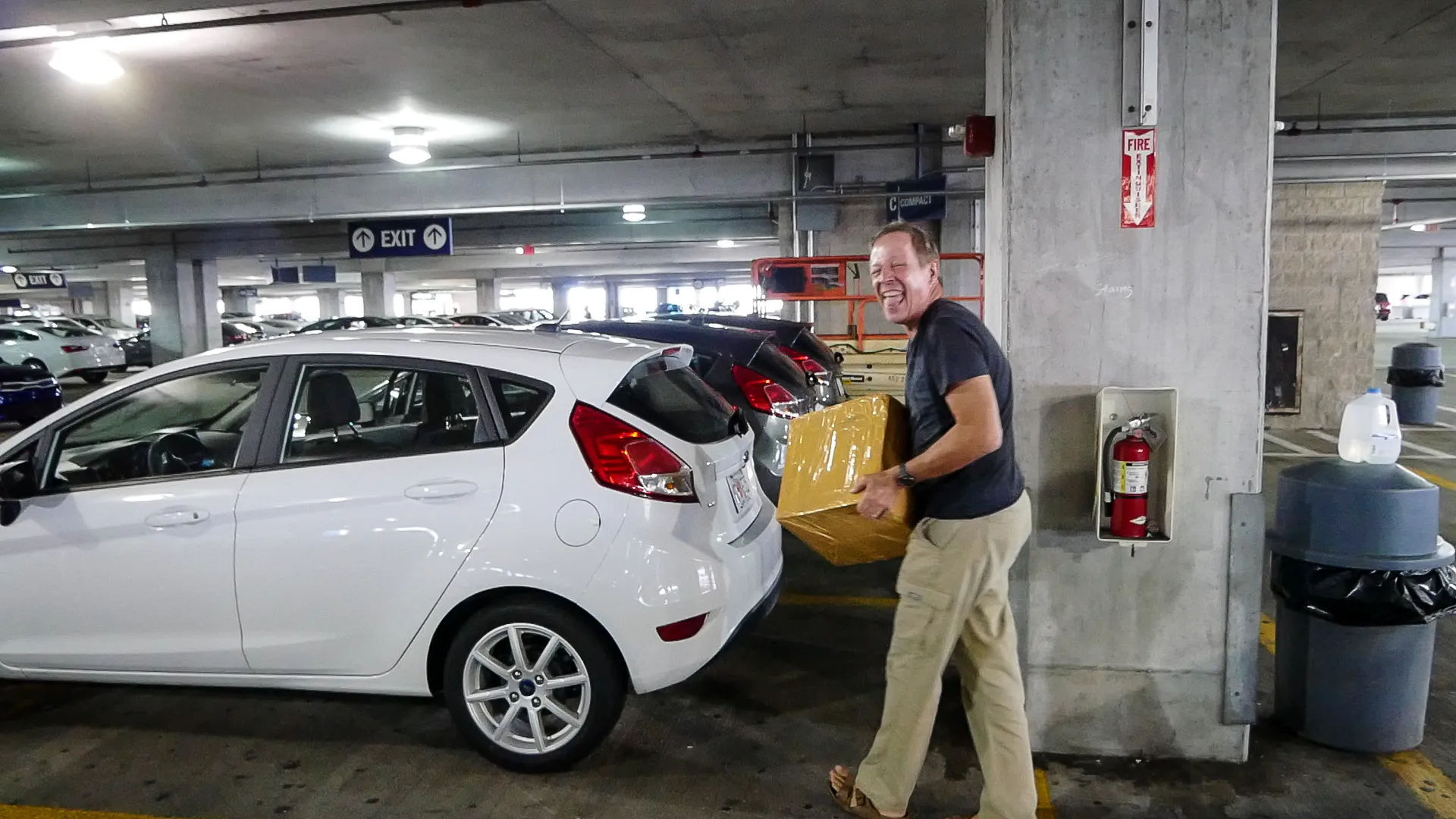
We´re squeezed into the economy seats of one of Spirit Airlines’ cruel planes. Below us, the turquoise waters of the Caribbean, on our way to San Salvador. In the luggage, a brand-new diesel pump for Prado, directly imported from a dealer in Dubai. A somewhat unusual approach to get a spare, but hopefully it would work.
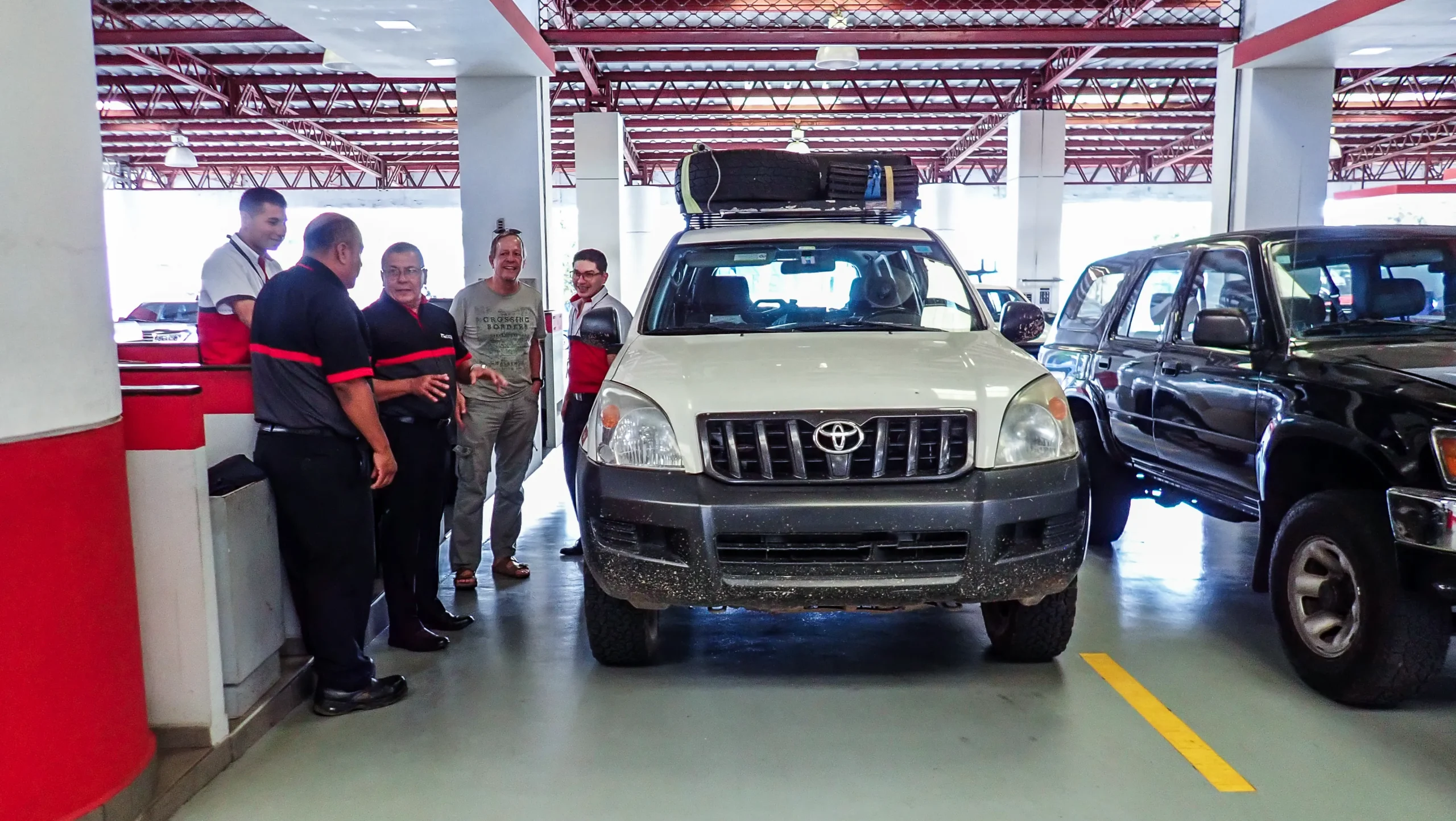
Over the past year, Prado was gradually losing power. We couldn’t get a clear diagnosis from several mechanics and diesel specialists. Some minor repairs had little impact, and diesel boosters were not the solution. Finally, arriving in San Salvador, it became clear we had to act. Luckily, there’s one of the few Toyota workshops in the Americas with an excellent reputation.
Quickly, they diagnose a broken, unrepairable diesel pump. A new one would cost us the modest sum of $6,000, and last 6 months to import from Japan. What to do? Waiting six months isn’t an option. We have to leave El Salvador with Prado within two months.
An express order with one of the large spare parts shops in Dubai seems to be the solution. Indeed, they deliver within 3 days and send it via DHL to any place in the world – at one-third of the local price. Great.
Just after an inquiry we find out that DHL is fast. Customs in San Salvador isn’t. Clearance could take months and cost more than the pump itself.
We’re pretty desperate, thinking of leaving Prado there and continuing with a small rental car. Finally, the saving grace: importing the pump into the US, pick it up, and bring it ourselves back.
So, 2 weeks later, we were sitting on a plane, pretty afraid of the Salvadoran customs. What to do if they discovered what we had with us? After 2 hours, we arrive at the airport and quickly pass immigration, knowing well that customs was next. They don’t seem to be strict. Most fellow passengers walk right through. No idea why, but that isn’t the case for us. An officer politely asks us to put all our bags through the x-ray scanner – the worst-case scenario has arrived.
We received the diesel pump within a very short time, flew to the US to pick it up, and now at the very last hurdle – customs – we might lose it all. No way. We have to come up with a solution, whatever happens within the next few minutes. Just what could it be?
Then, all our bags pass the scanner. Nobody stops us from picking them up and quickly leaving the airport.
A quick glance back explains everything. The customs officer is so absorbed by his phone that even an elephant could probably have walked through unnoticed.
A few days later, Prado has its new pump.
It was probably the craziest repair Prado ever needed – but far from the only memorable one.
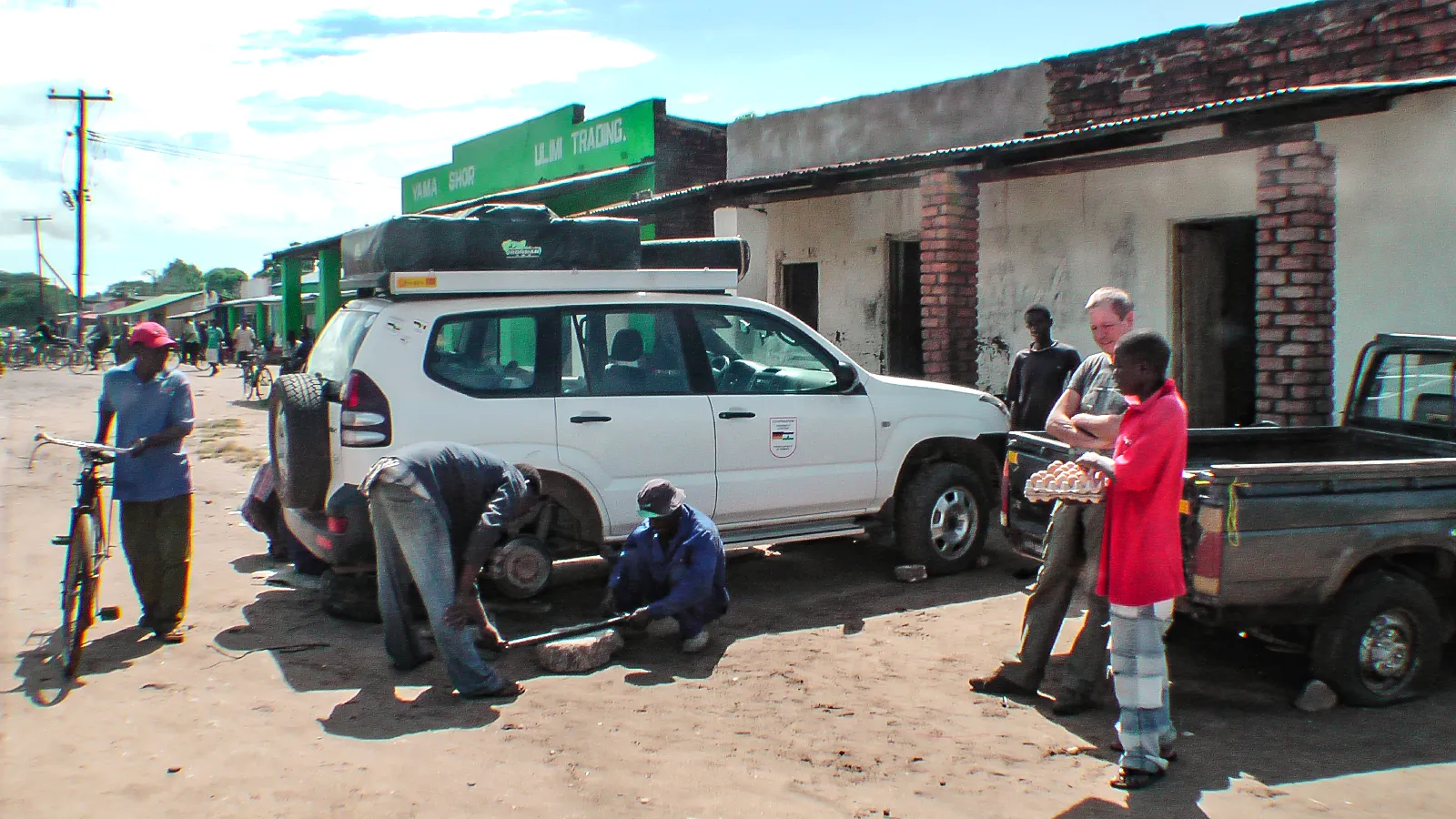
Still, we remember the village workshop in Lwegza, Malawi, where they replaced a broken wishbone with a pipe cut out of an old bicycle frame. Or the mechanics in Anchorage who fixed everything other mechanics in the US did wrong because they had no clue about foreign cars.
Thanks to the team in San Salvador, Prado was ready for another 100,000 km and a long journey through South America. Four years later, it finally asked for retirement – and it was time for us to discover a different way of traveling.